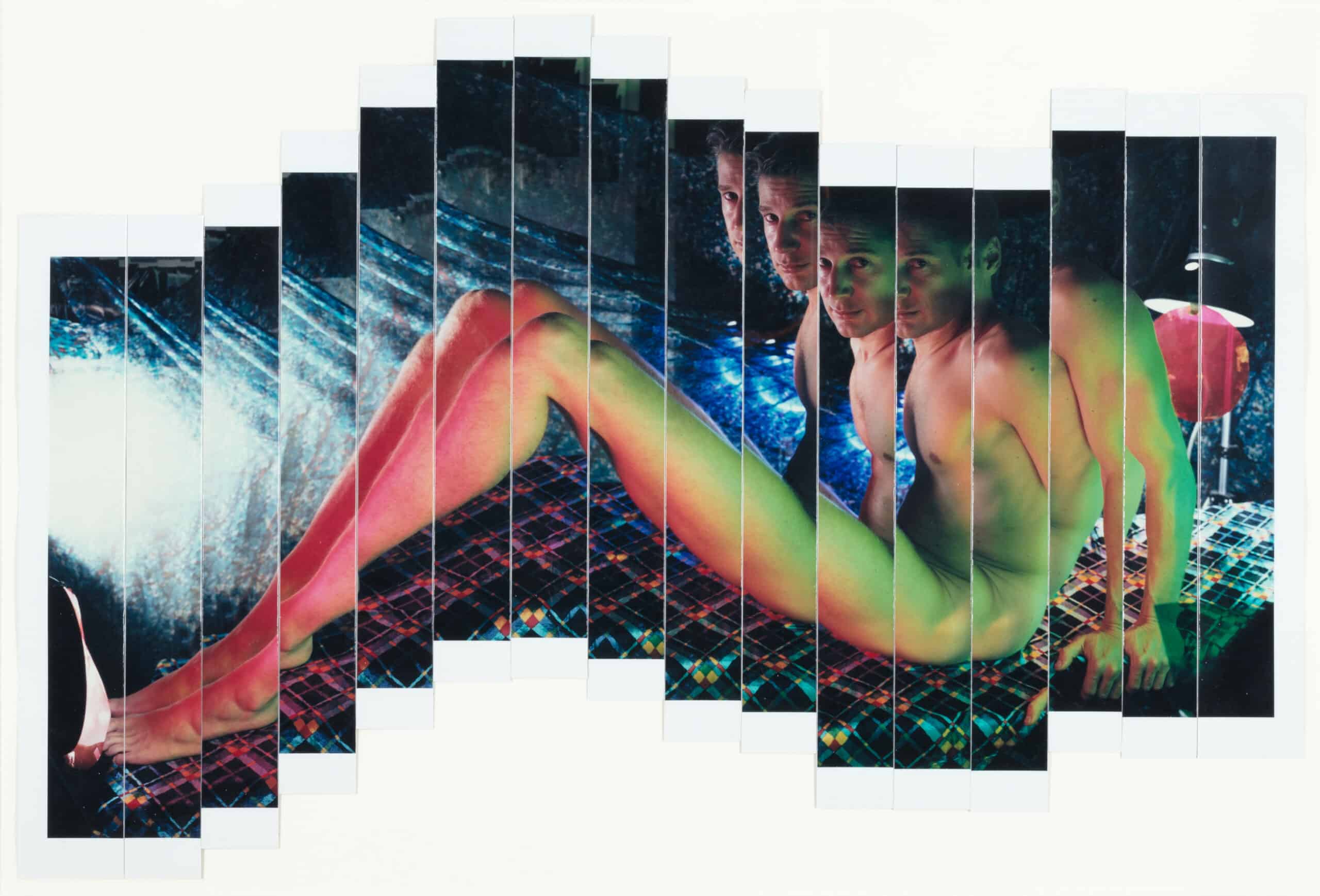
Lucas Samaras. Panorama, 1983–86. The Art Institute of Chicago, gift of Robert and Gayle Greenhill.
IN IMAGES
The Incandescent Polaroids of Lucas Samaras
The Art Institute of Chicago invites us to rediscover the photographic work of Lucas Samaras, an American artist who turned his own body into a hallucinatory field of experimentation.
By Guénola Pellen. Photos by Lucas Samaras.
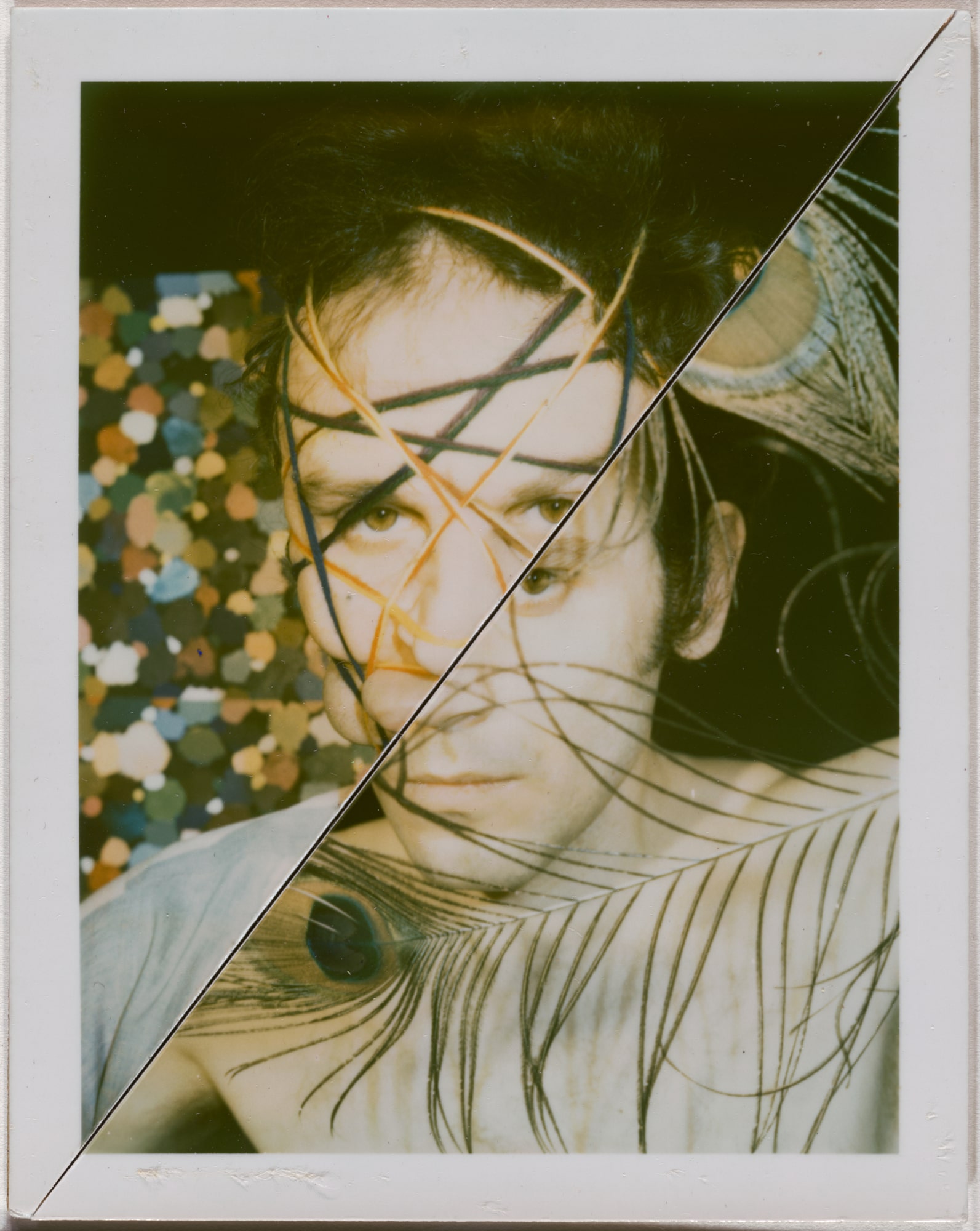
Lucas Samaras. Split, 1973. The Art Institute of Chicago, gift of Robert and Gayle Greenhill.
Born in Greece, scarred as a child by the civil war, Samaras early on transmuted the violence of reality into raw material. Arriving in New Jersey at the age of 12, he soon immersed himself in the New York happenings of the 1960s, those feverish performances in which the body itself becomes the artwork. This obsession with the body-as-spectacle would never leave him.
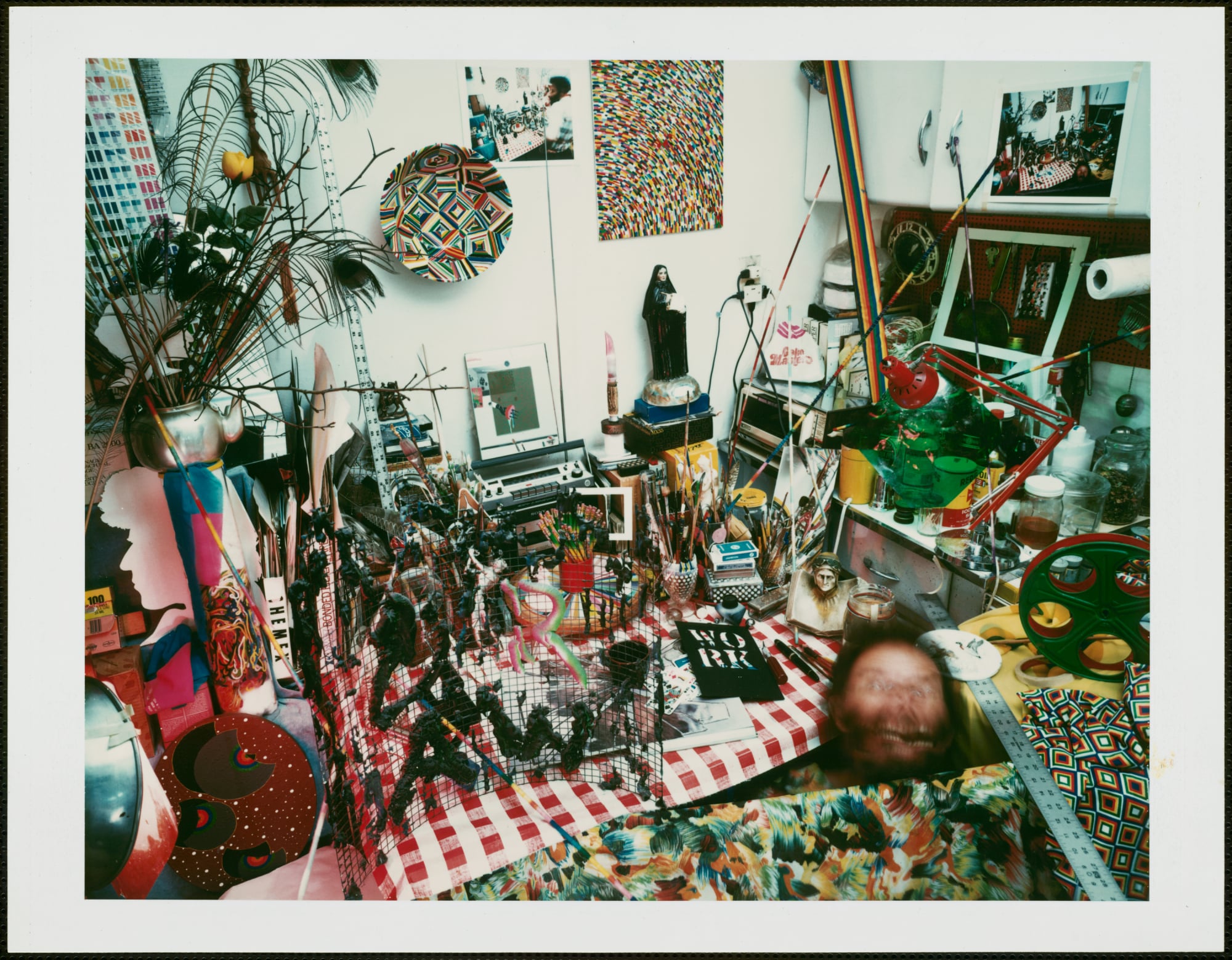
Lucas Samaras. Still Life, June 30, 1978. The Art Institute of Chicago, gift of Robert and Gayle Greenhill.
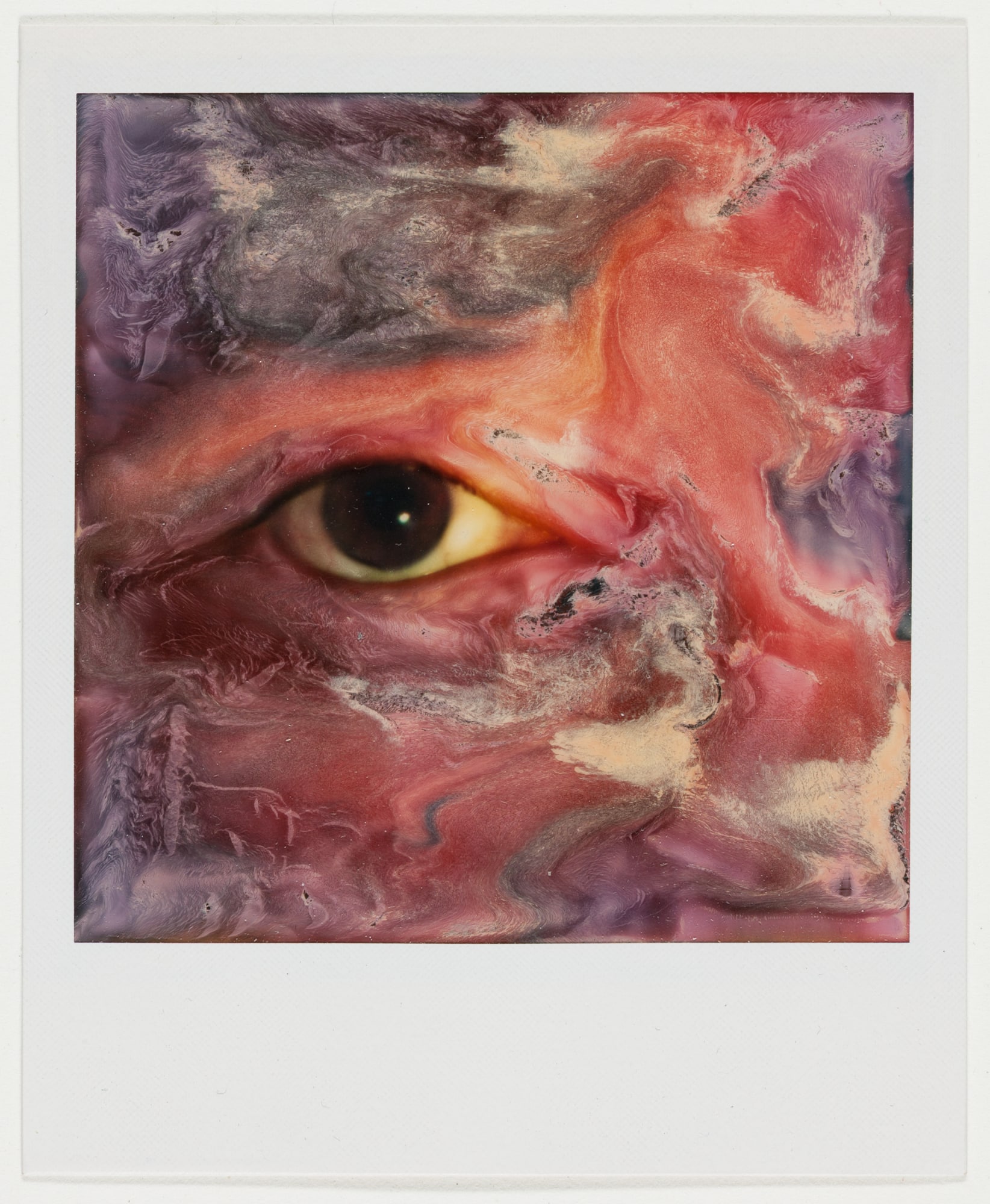
With Polaroid, he found his cardinal medium. He called his approach “auto-polaroid”: alone in his apartment-studio, he photographed himself from every angle — grimacing, gesticulating, stripping bare — then worked the still-warm emulsion to warp flesh and dissolve contours. The results are nothing short of chromatic sorcery.
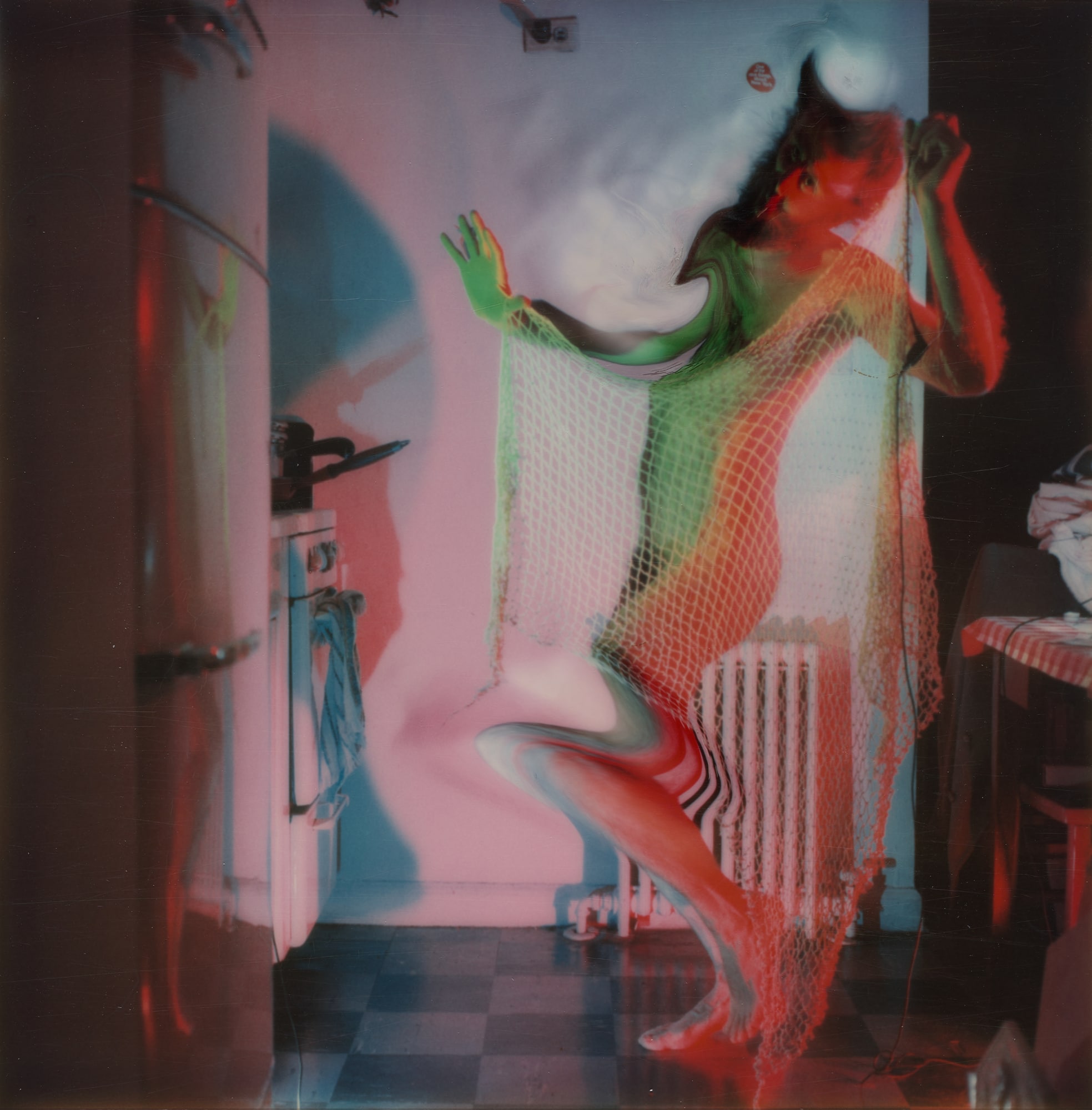
Lucas Samaras. Phototransformation, April 4, 1976. The Art Institute of Chicago, gift of Lannan Foundation.
His Phototransformations of the 1970s remain staggering: his body seems to liquefy into rivulets of pigment, to split and dissolve into a magma of colour. The art historian and critic Jean-François Chevrier saw in him “the Klimt of our time” — the same ornamental labyrinth, the same narcissistic rapture wrapped in an intoxicating geometry.
Lucas Samaras. Photo-Transformation, November 6, 1973. The Art Institute of Chicago, purchased with funds provided by the Polaroid Corporation.
The exhibition brings together photographs, sculptures and paintings from the museum’s collection, including works recently gifted by the artist’s estate. A journey that traces, across seven decades, the magnificent tenacity of a man for whom every everyday gesture became an act of art.