
Since 1989, Dana Lixenberg has walked the margins of American society with a large format camera. This apparatus from another age demands patience, silence and the surrender of spectacle. The Dutch photographer draws portraits of rare intensity, now gathered in her first Parisian exhibition. “It’s like a slow dance between two people,” she says of the exercise.
“American Images” traces, as its name suggests, the artist’s American works, a career launched through press commissions. It opens with editorial portraits made from 1993 onwards for Vibe magazine, founded by Quincy Jones. Rapper Tupac Shakur, Whitney Houston, Prince, Notorious B.I.G., A Tribe Called Quest, Jay-Z: so many tutelary figures of American popular culture, seized in the interstice of a photo shoot, between pose and abandon.
“As commissions accumulated, I realized these were really puzzle pieces adding up,” the photographer recalls. “I was making this portrait of the country.” The Tupac portrait, which became one of hip-hop’s most reproduced images worldwide, strikes through what it refuses: the swagger, the bravado, the mask usually worn by rappers. “We see Tupac not as a rebel, but rather as a poet, someone almost vulnerable, almost feminine, in a meditative moment,” observes Marcel Feil, co-curator of the exhibition.
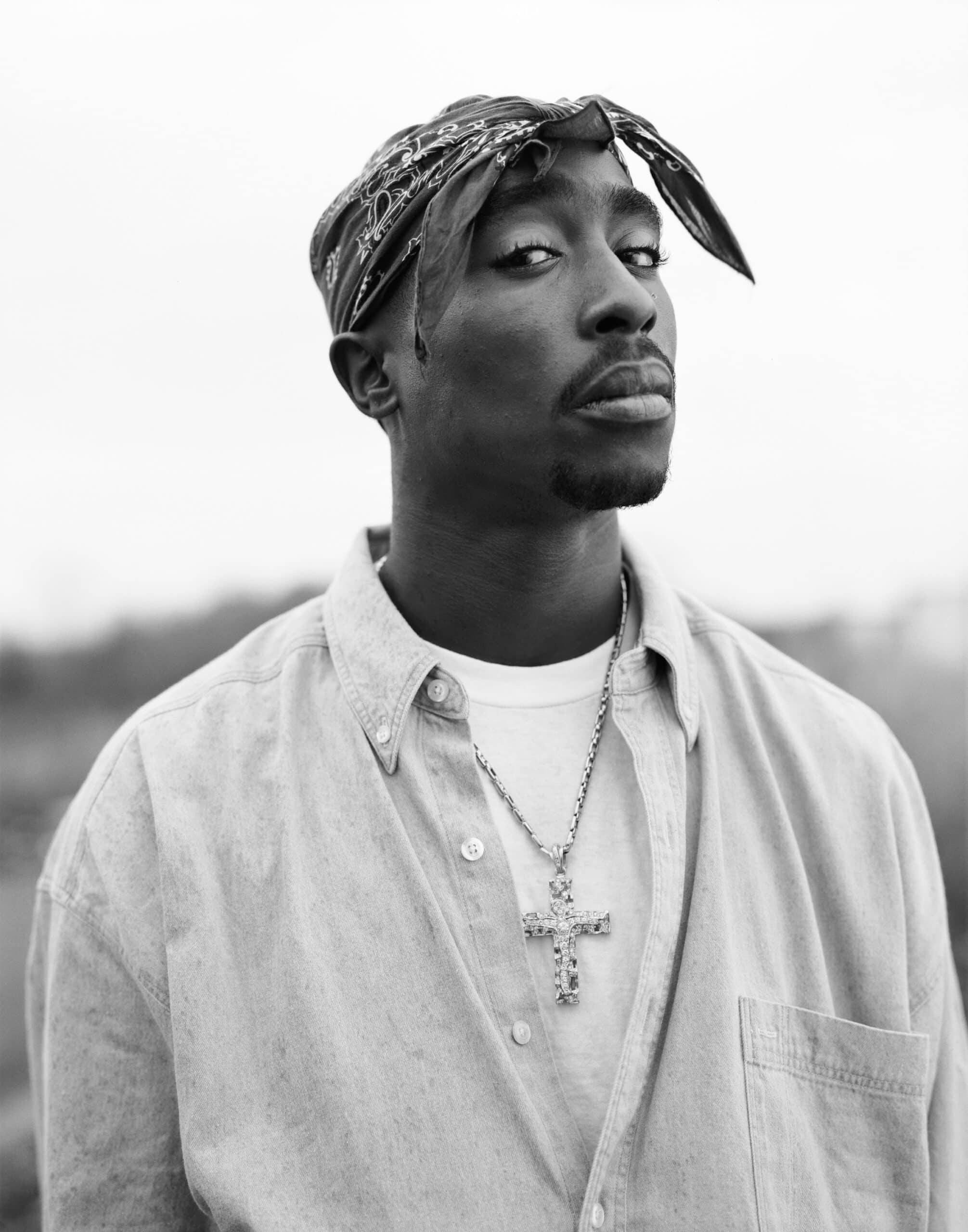
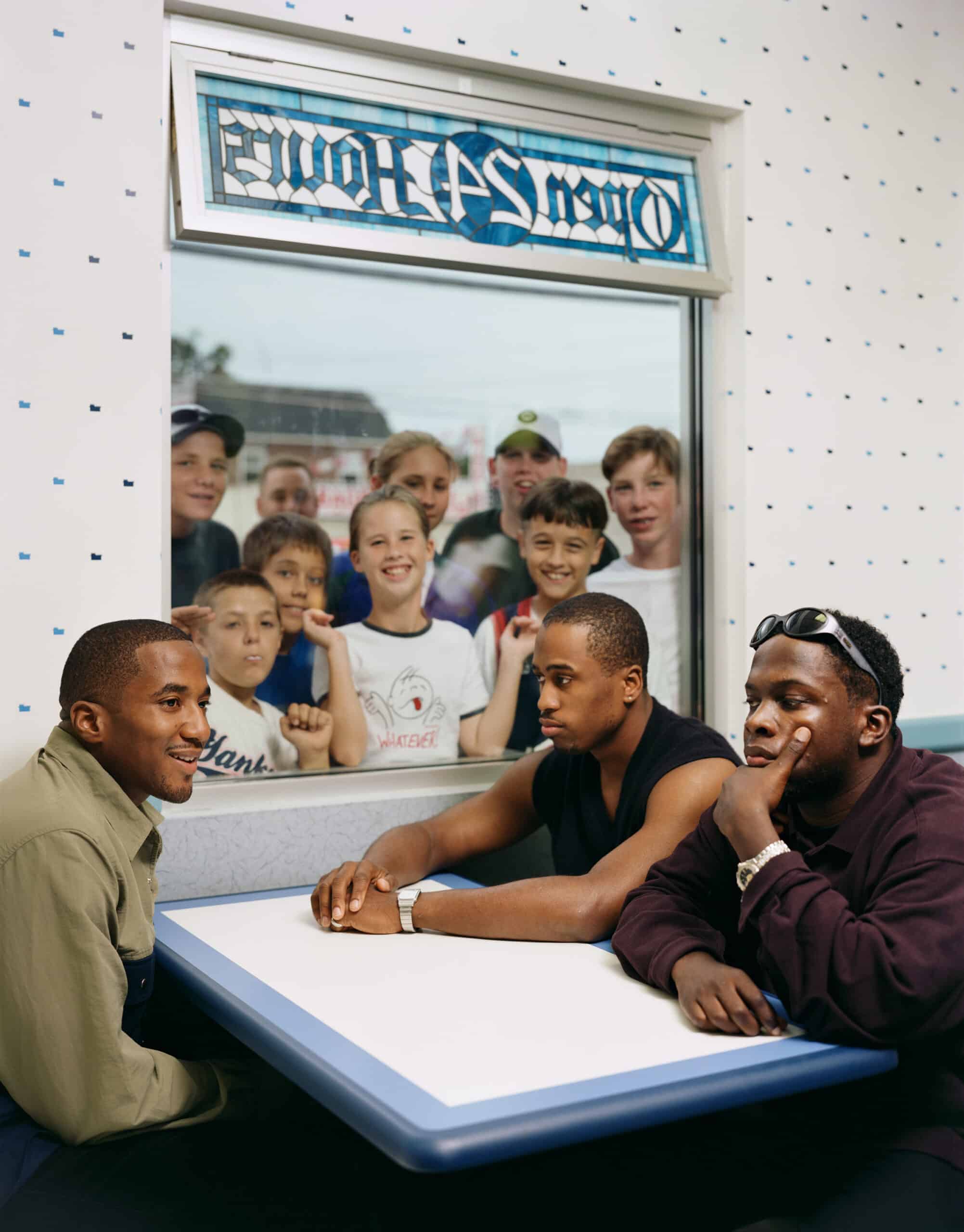
The tilt of his head, the jewel-encrusted cross against the creased shirt, the traces of rain on fabric: it feels as if we’re in the presence of the 22-year-old man, pensive beneath Atlanta drizzle. Biggie, another West Coast rap luminary, bursts into frame, wads of cash in hand, a small elastic band caught between his fingers. “It was not part of the shoot,” specifies Laurie Hurwitz, the exhibition’s other co-curator. “It was something that happened spontaneously, when he was taking out a lot of money, and it has become an iconic photograph.”
When masks fall
But the beating heart of the exhibition, occupying an entire floor, is dedicated to the residents of a Los Angeles housing project ravaged by crime. Titled “Imperial Courts”, the series came to life in the aftermath of the South Central Los Angeles riots of 1993. The city burns after Rodney King, an African-American taxi driver, was viciously beaten by four white police officers. A Dutch magazine sends Dana Lixenberg to document the uprising’s aftermath.
On the ground, she immediately perceives “a stereotyped vision of armed violence” and decides to seek something else: the faces behind the headlines. Tony Bogard, an influent figure of a gang, opens the project’s doors. Mistrust reigns. “At the beginning, they thought I was FBI,” Dana Lixenberg recalls. Each day, she returns with contact sheets from the previous day, Polaroids to share. Gradually, trust builds. On site, the residents’ first question to the photographer is blunt: “And what does this bring us?”

Dana Lixenberg admits she has no answer. But she will return, for thirty-three years. A life’s work, the series remains ongoing. “I’m not very sure it was my intention to make this long project,” she admits. “When I started in 93, I did a first series and following residents’ reactions to my photos, I decided to return.” What should have lasted a few weeks mutated into a monumental opus: nearly four hundred black and white images, a 69-minute three-channel video, working notebooks, sound recordings, and a book crowned in 2017 by the Deutsche Börse Photography Foundation Prize.
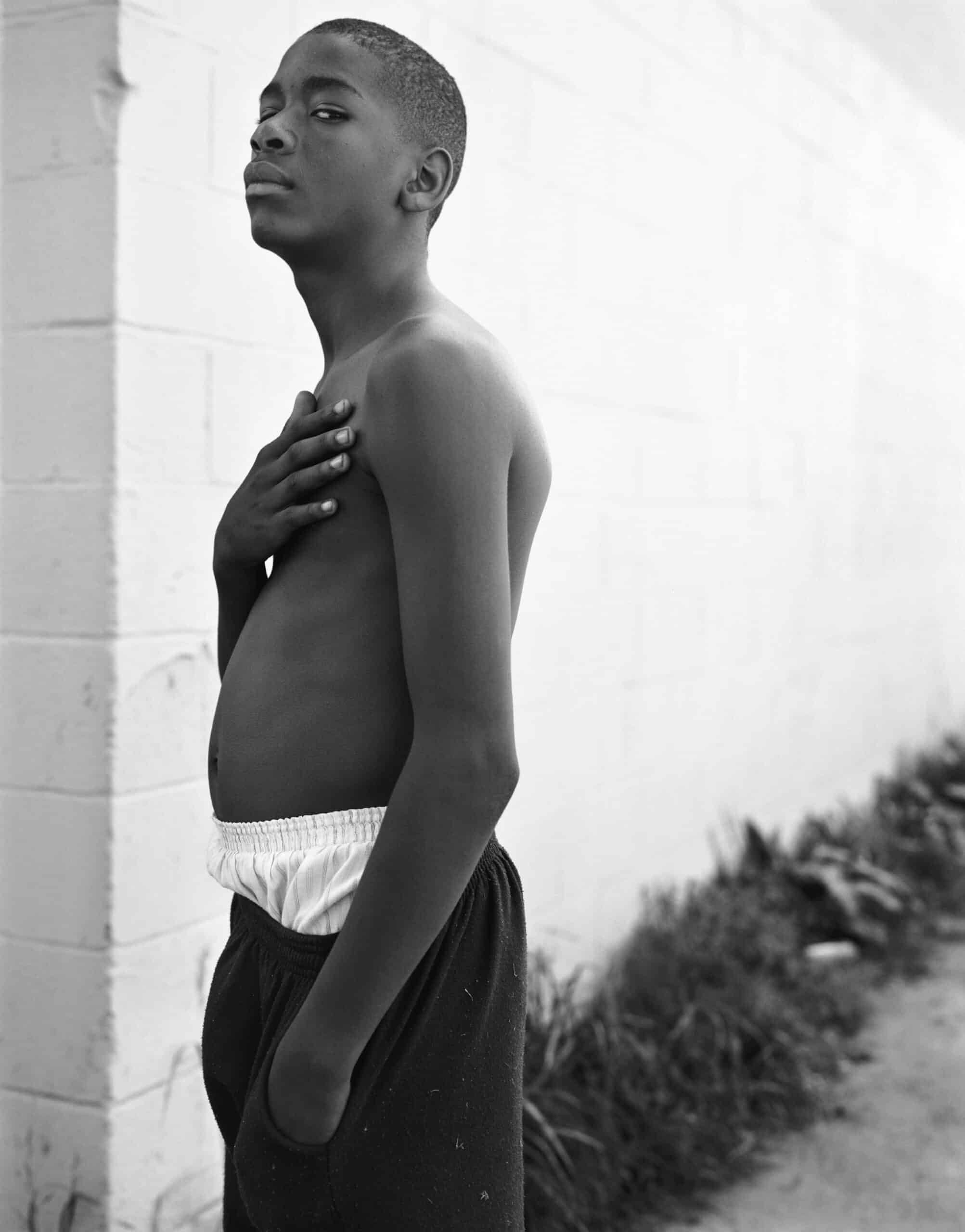
The choice of black and white, from the project’s origin, erases temporal markers and concentrates the gaze on essentials: bodies, eyes, postures. Marcel Feil underscores the materiality of these works: “All the prints are handmade, in silver gelatin. The 4×5 camera reveals a level of detail that is almost, sometimes, surreal or bigger than life. You can see little details in fabric of clothing, in faces, in eyes, which normally cannot be seen or hardly seen.”
This incursion into Imperial Courts introduces us to Peanut, whom we discover as a child in 1993, then as a man in 2023. The same gaze inhabits these two bodies separated by thirty years. We also encounter J-50, self-proclaimed “muse” of the photographer, first as a young woman, then pregnant with Kadisha in 2008, finally as a mother watching over the teenager. We hear Doug, an incarcerated street poet, recite his texts.
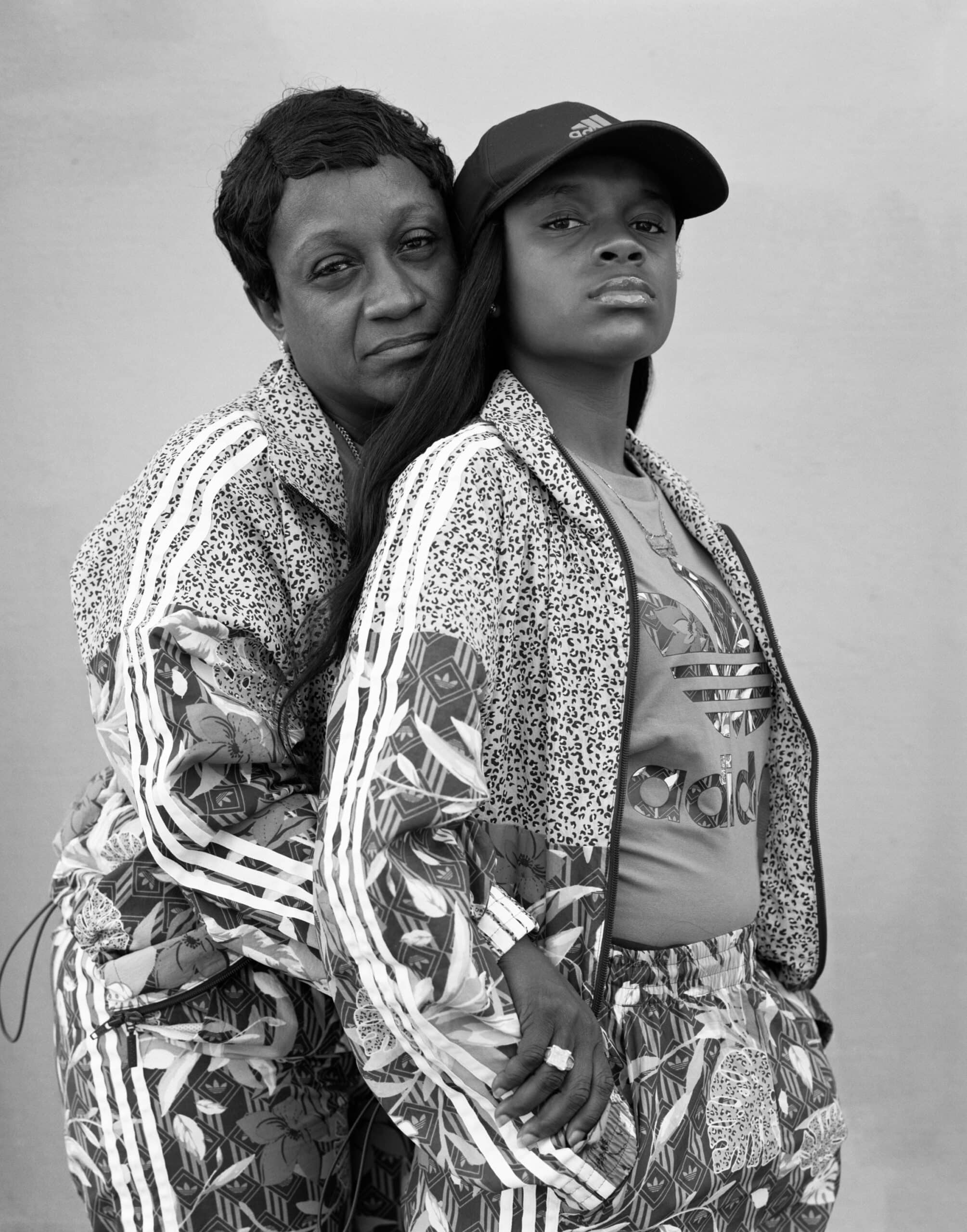
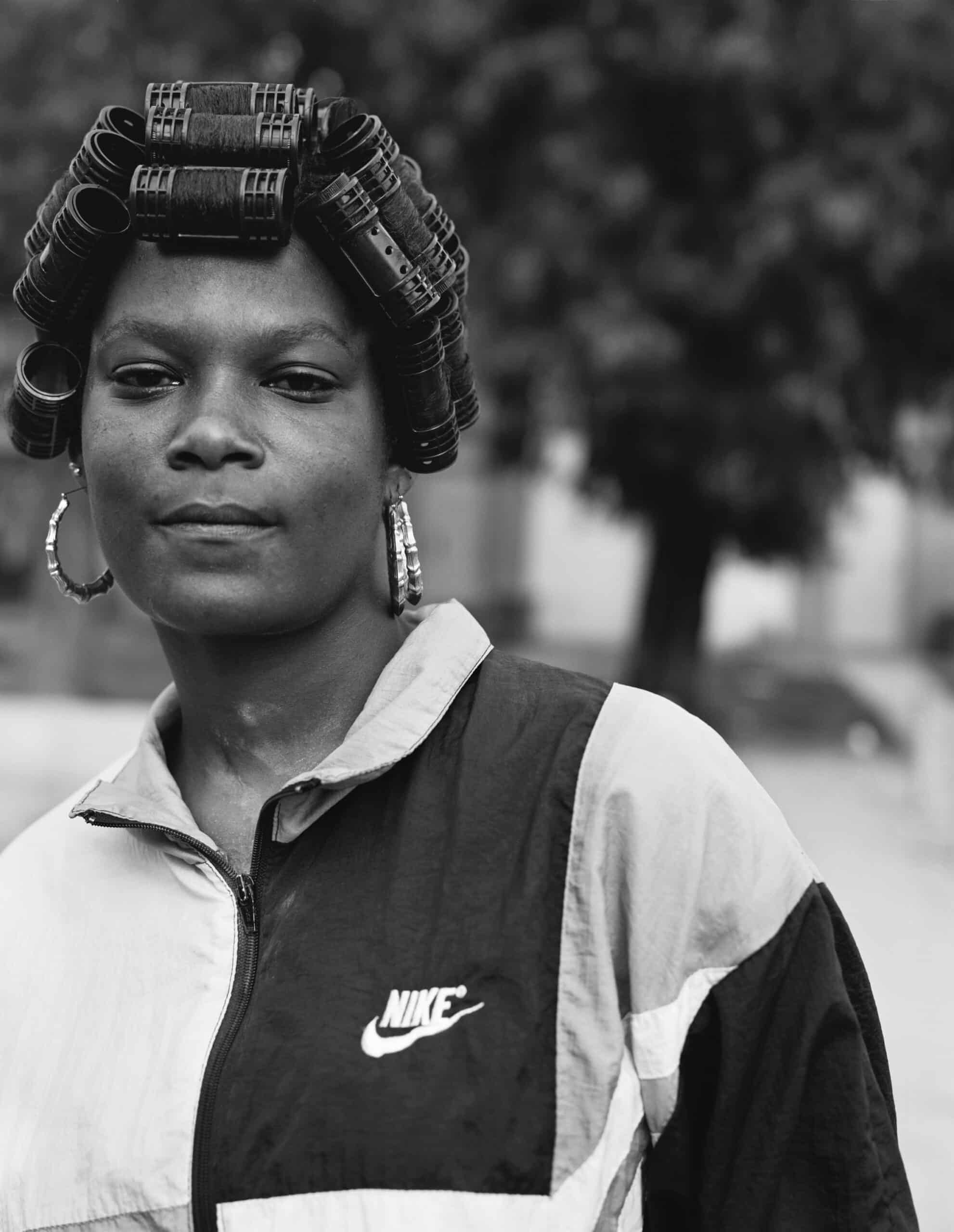
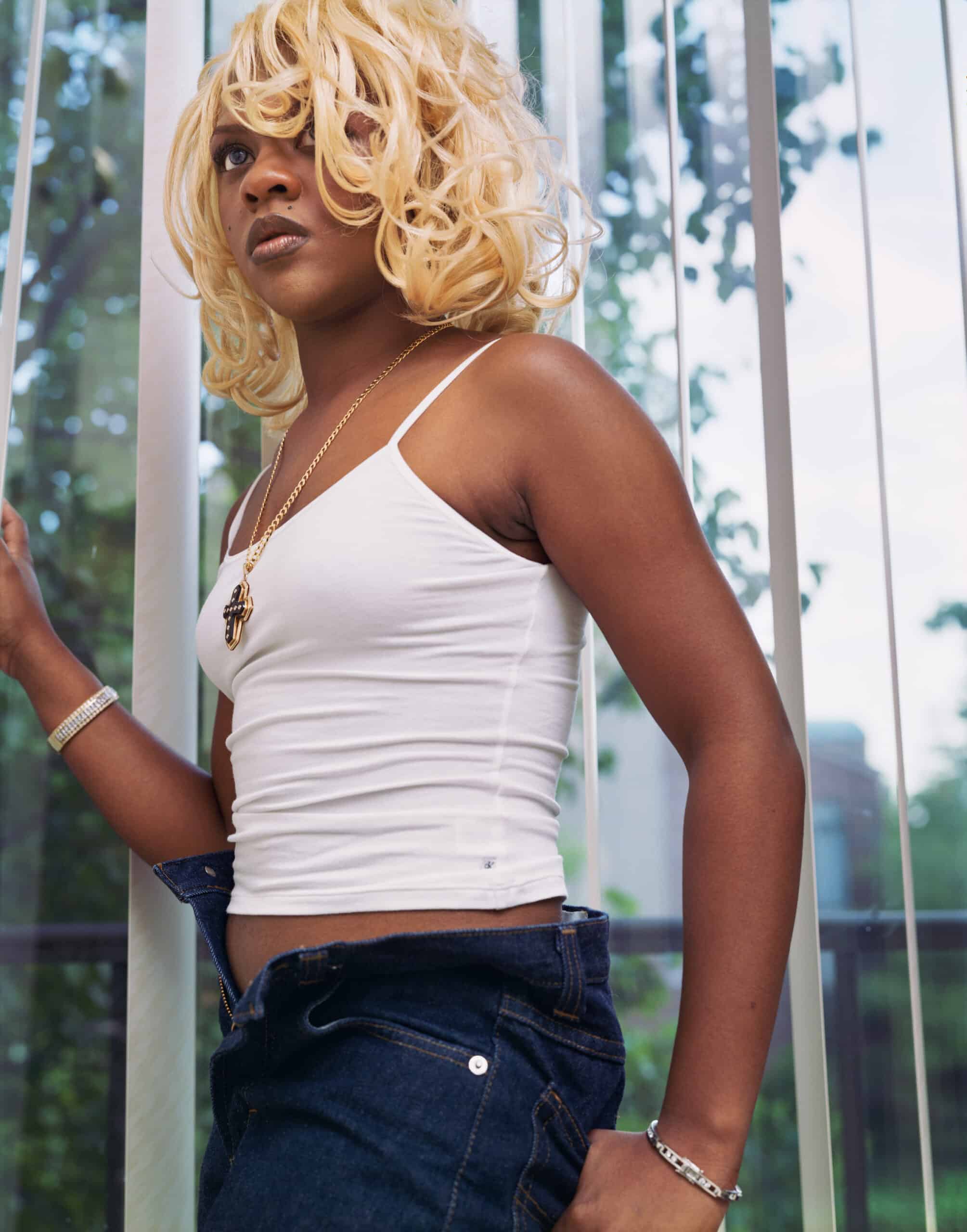
“He spent most of his youth in prison. It’s hard to escape this system and it’s something that breaks my heart,” says Dana Lixenberg, her voice suddenly fragile. We also discover China, in 1993, curlers in her hair, exuberant atop a playground frame, before disappearing in her turn, “probably murdered,” though her body was never found. Tony Bogard, the one who had opened the doors, would also be killed shortly after the photo session.
His mother, in a documentary filmed during the book’s publication, caresses with her finger his face printed on the page. “It’s extremely emotional,” Marcel Feil whispers. What overwhelms in Imperial Courts is not pathos—it is rigorously absent—but the stubborn dignity radiating from each print. “We don’t dwell on these people’s situation, we dwell on who they are,” Dana Lixenberg affirms.
The photographer never enters interiors. She composes her portraits outside, in the project’s collective spaces. Dreamy adolescents, stubborn children, weary mothers: the melancholy of bodies, the sparse backdrop narrate hardship without exhibiting it. “I didn’t want to lock them in a label,” she insists. What she constructs more closely resembles a giant family album, traversed by births and disappearances, incarcerations and reunions.
The residents, grateful, nicknamed her “picture lady.” Five hundred copies of a special edition of the book were distributed to residents in 2015. A restitution testifying to the photographer’s ethics, for whom the portrait is a reciprocal gift between the photographer and the photographed.
The other, without distance
The journey also unfolds series made in Jeffersonville, Indiana, in a homeless shelter where Lixenberg returned annually for seven years. On show are the original vintage prints, a deliberate choice by Marcel Feil: “It was really important to show them as intended, originally, by Dana,” he specifies.
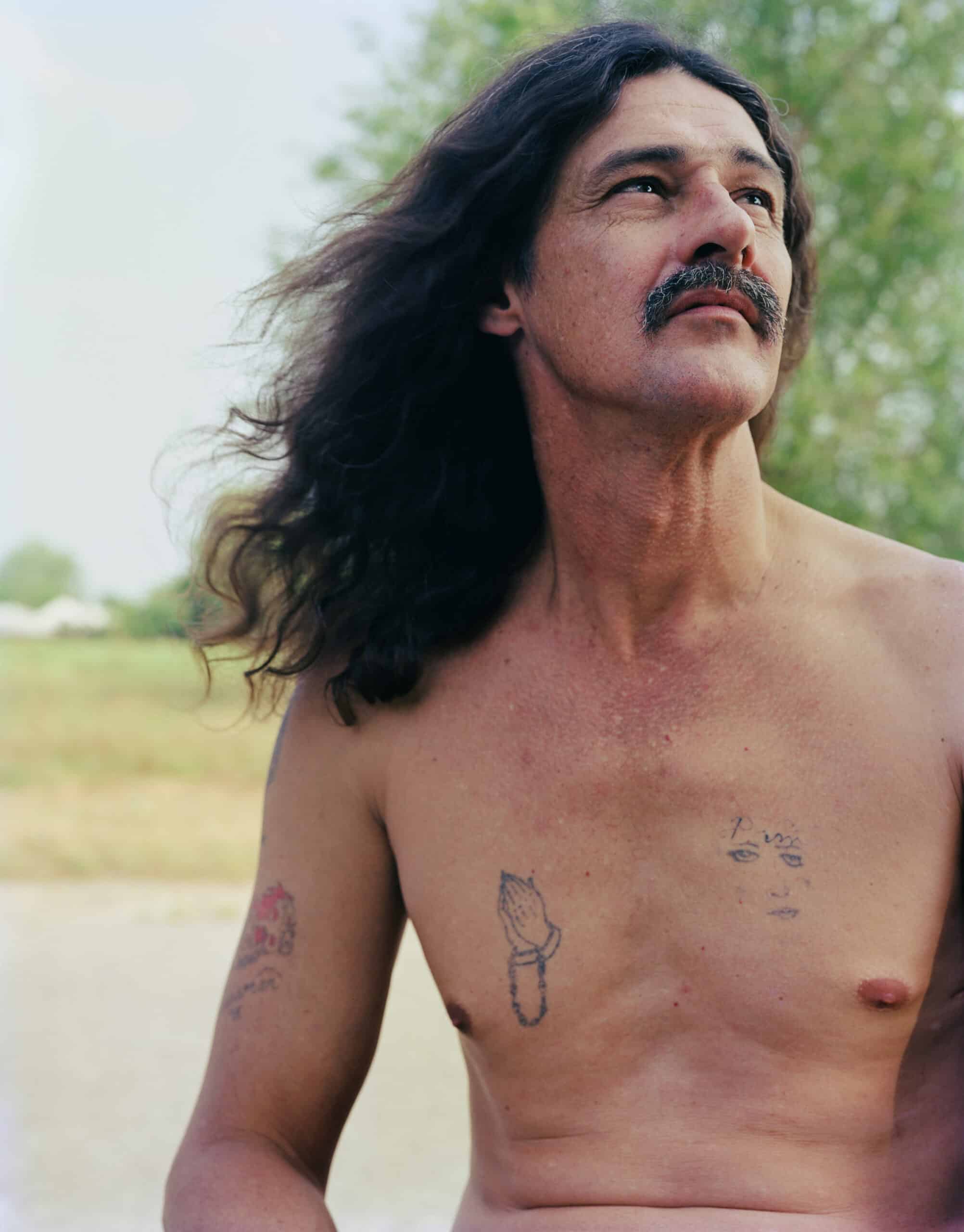
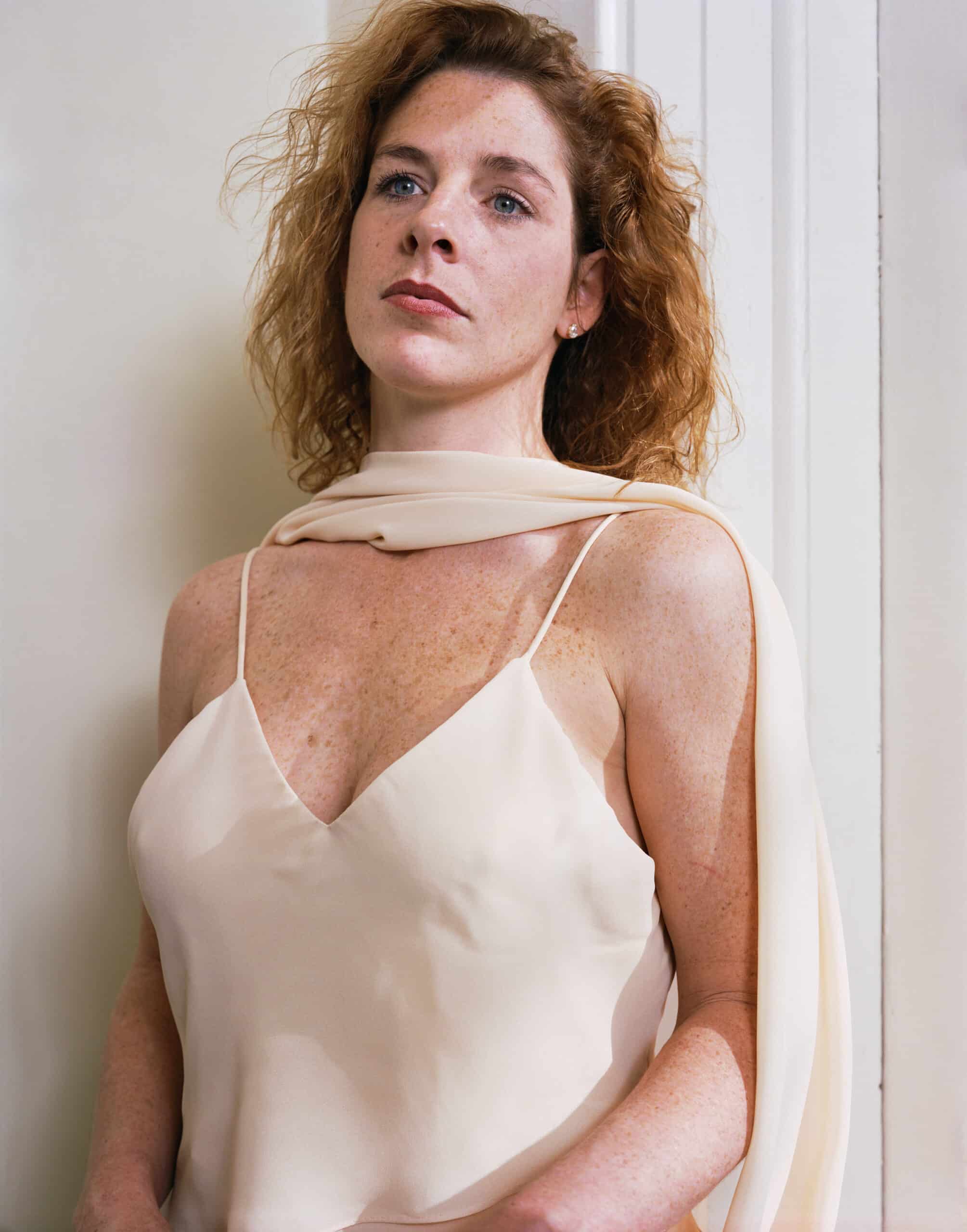
The silver grain remains intact, as does the warmth of tones, the precision of detail. Patricia Miller, homeless, poses in an evening gown and high heels, gaze direct, sovereign: nothing in the image betrays her situation. Justin “Doug” Edwards, bare-chested outdoors, his long hair framing a small tattoo of praying hands, embodies the tension between vulnerability and hope.

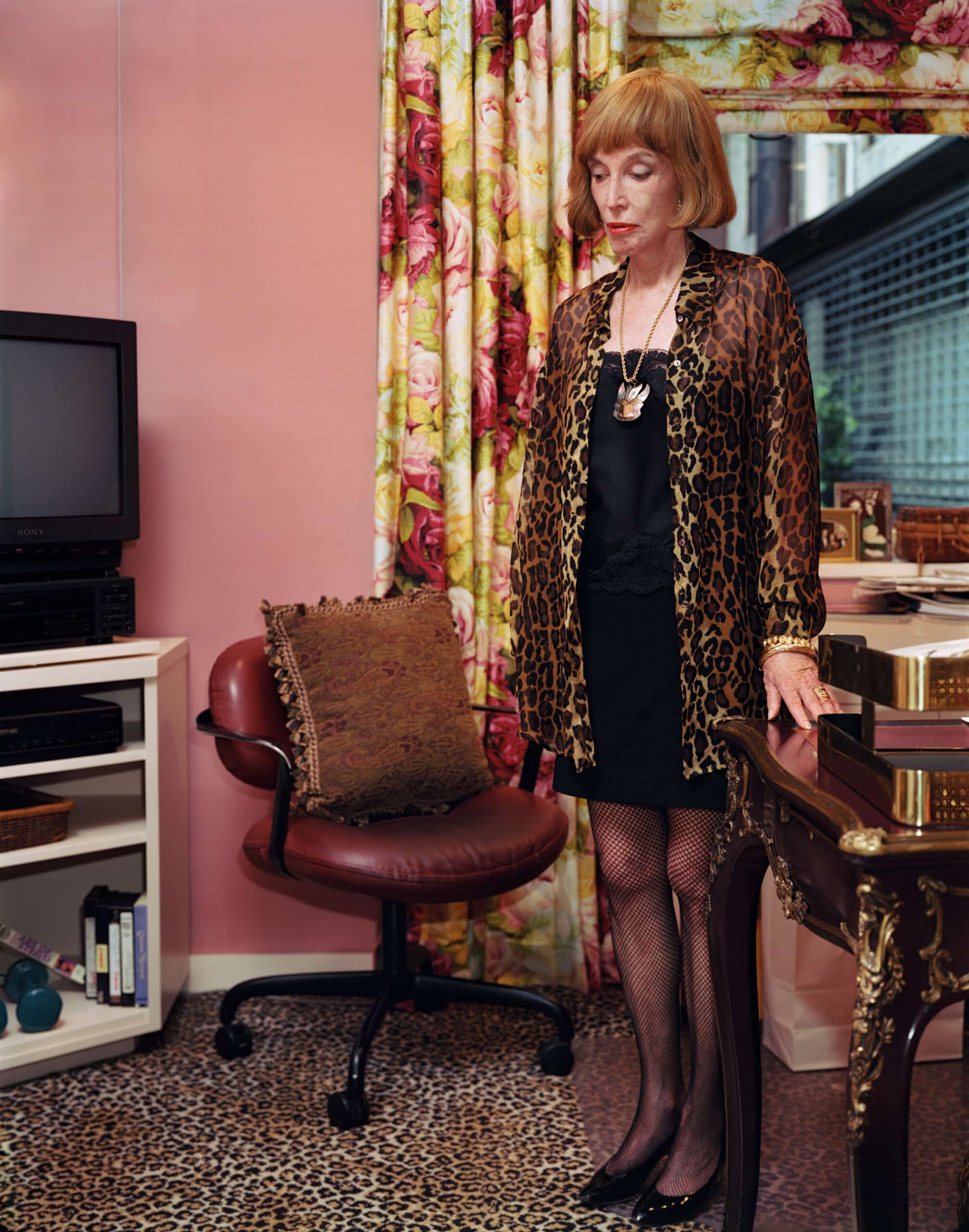
The labels beneath the images indicate only a first name and a date, never a status. Dana Lixenberg formulates the essential with disarming simplicity: “When you see people outside, in the street, you feel at a distance. It’s important to really see and connect with the other.” Marcel Feil drives home the point: “The method is the same, whether you are homeless or Ivana Trump.”
Donald Trump’s first wife, who features precisely in the exhibition, captured dreamlike on a yacht, eyelids half-closed, emerald necklace on red satin, photographed with the same absolute attention. This is perhaps Lixenberg’s most radical gesture: abolishing, through the same protocol of care and presence, the hierarchy between beings.
In Shishmaref, Alaska, her gaze shifts again. This time, to an Iñupiaq village of six hundred souls, gnawed by rising waters, where Lixenberg stayed twice for three weeks in 2007. “Dana adopted a different approach here, more documentary, more cinematographic. We see the link between community and landscapes,” Marcel Feil points out. Vote passed to relocate, funding absent: traditions liquefy with the land under climatic assault.
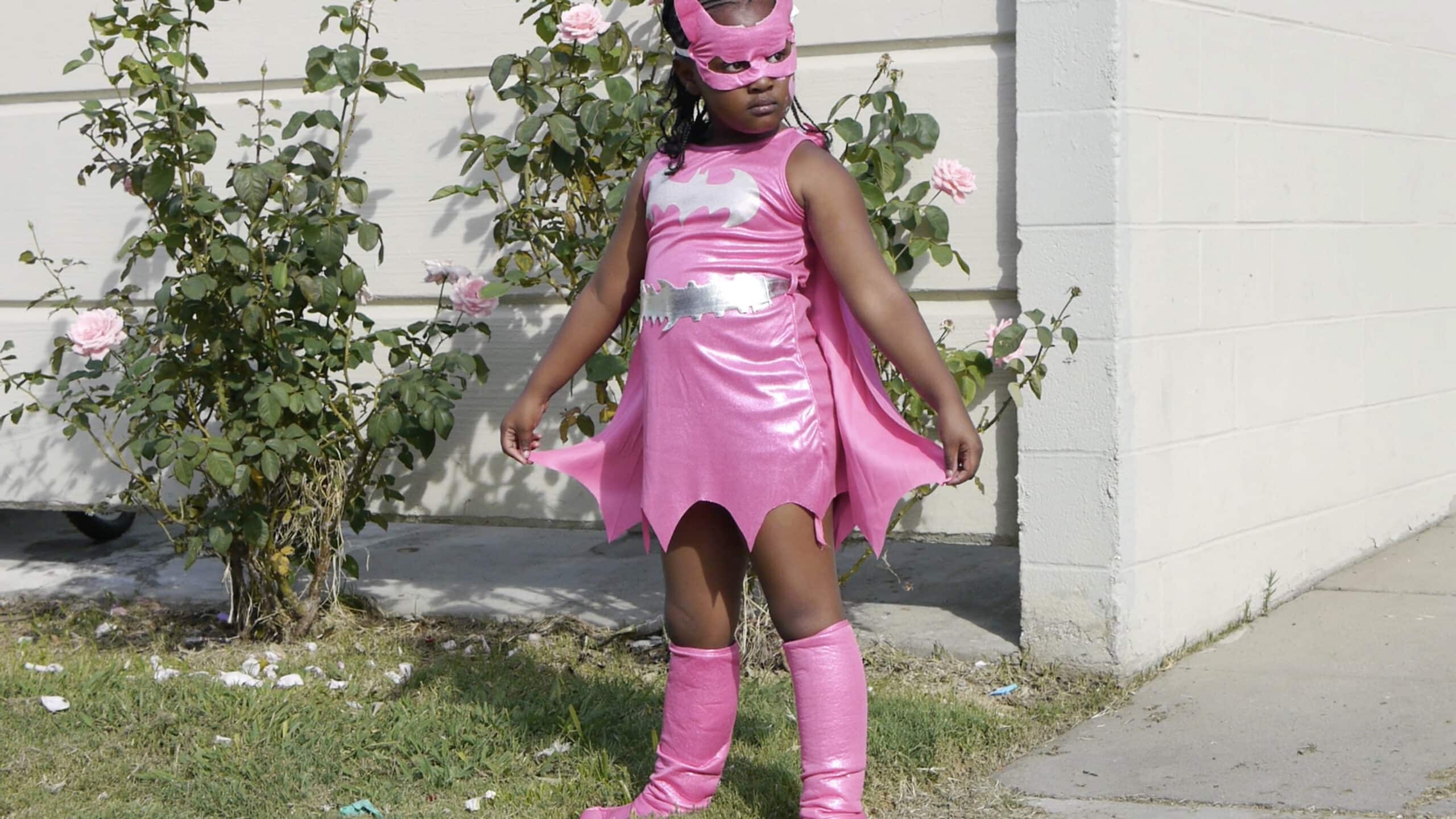
The final room offers a sanctuary to some seven hundred test Polaroids punctuating these decades of work. Tactile vestiges of an analogue art facing extinction, they form a fragile bridge between artist and subjects. “In the 90s, you had to make all prints, it took a lot of time. Dana spent a lot of time in darkroom,” Laurie Hurwitz assures. With the disappearance of Polaroid film in 2008, an entire ritual of trust evaporated: these small images offered, scratched, imperfect, where encounter materialized between two hands.
The distinction is capital. In a world where we compulsively scroll without ever seeing, where algorithms dictate what merits attention, Dana Lixenberg reminds us that seeing demands effort, presence, abandonment of immediate judgment. A welcome antidote to contemporary blindness. May her words resonate with every photographer: “Who are you, you whom I photograph?”
“Dana Lixenberg: American Images“ is on show at the Maison Européenne de la Photographie, Paris, until 4 May 2026.