
In Kingston, New York, the Center of Photography of Woodstock (CPW) opened its doors to the new Winter-Spring season of exhibitions. Running from January 31st through May 10th, the gallery presents the work of Nona Faustine, Ocean Voung, Quiana Mestrich, and the community gallery features Jiatong Lu running itself through March 1st. Together, the exhibitions set the tone for the season, tracing the shared themes of memory, loss, belonging, visibility, and erasure.
Tying the season together is the careful collaboration of Adam Ryan and Marina Chao, who approached each exhibition with intention and care. Rather than pressing a single theme across the galleries, Ryan says, “The goal wasn’t to impose a narrative, but to build a form that could hold the work with integrity.” That dedication lets each artist’s voice stand clearly on its own, while still echoing within the season as a whole.
Between past and present
Walking into the CPW building, we are pulled into the life and vision of Ocean Vuong, a Vietnamese-American poet, novelist, professor, and photographer. His first solo exhibition, “Sóng,” meaning “to live” in Vietnamese, brings together photographs from two Julys, 14 years apart, in 2009 and 2023. The images trace back the spaces of Vuong, his brother, and his mother, Rose’s nail salon, and intimate moments surrounding her battle with cancer, tracing the loss and grief they carried together.
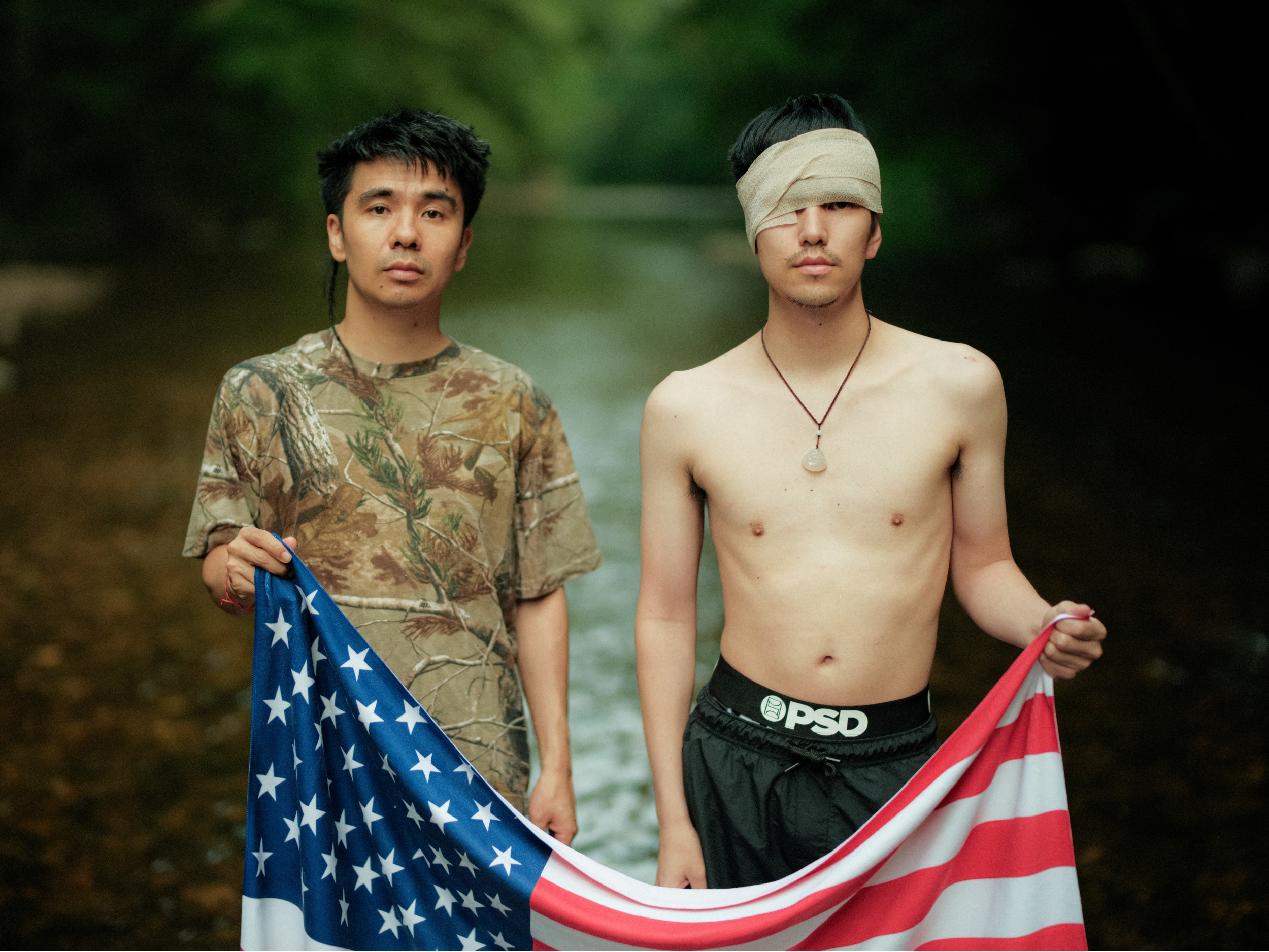
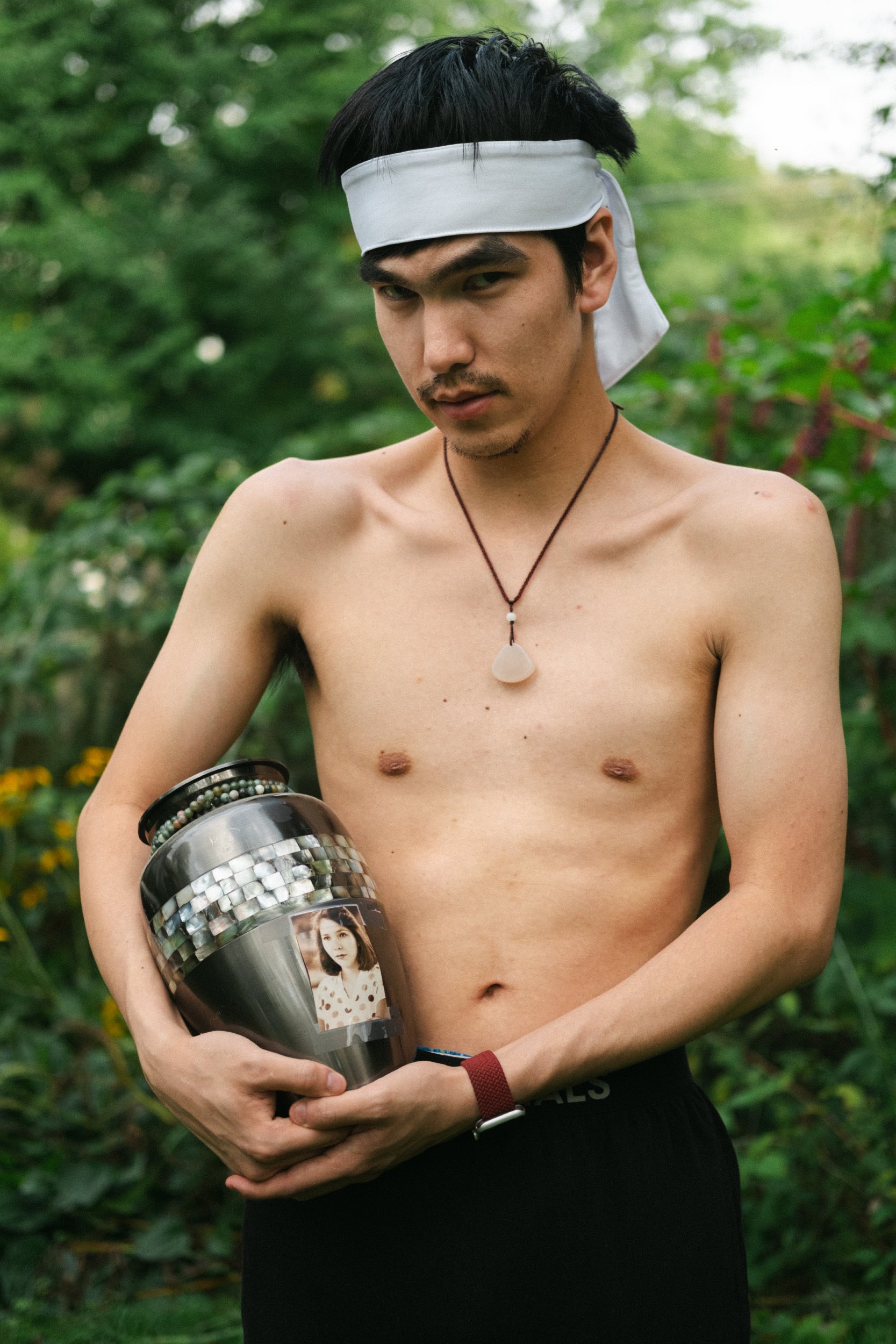
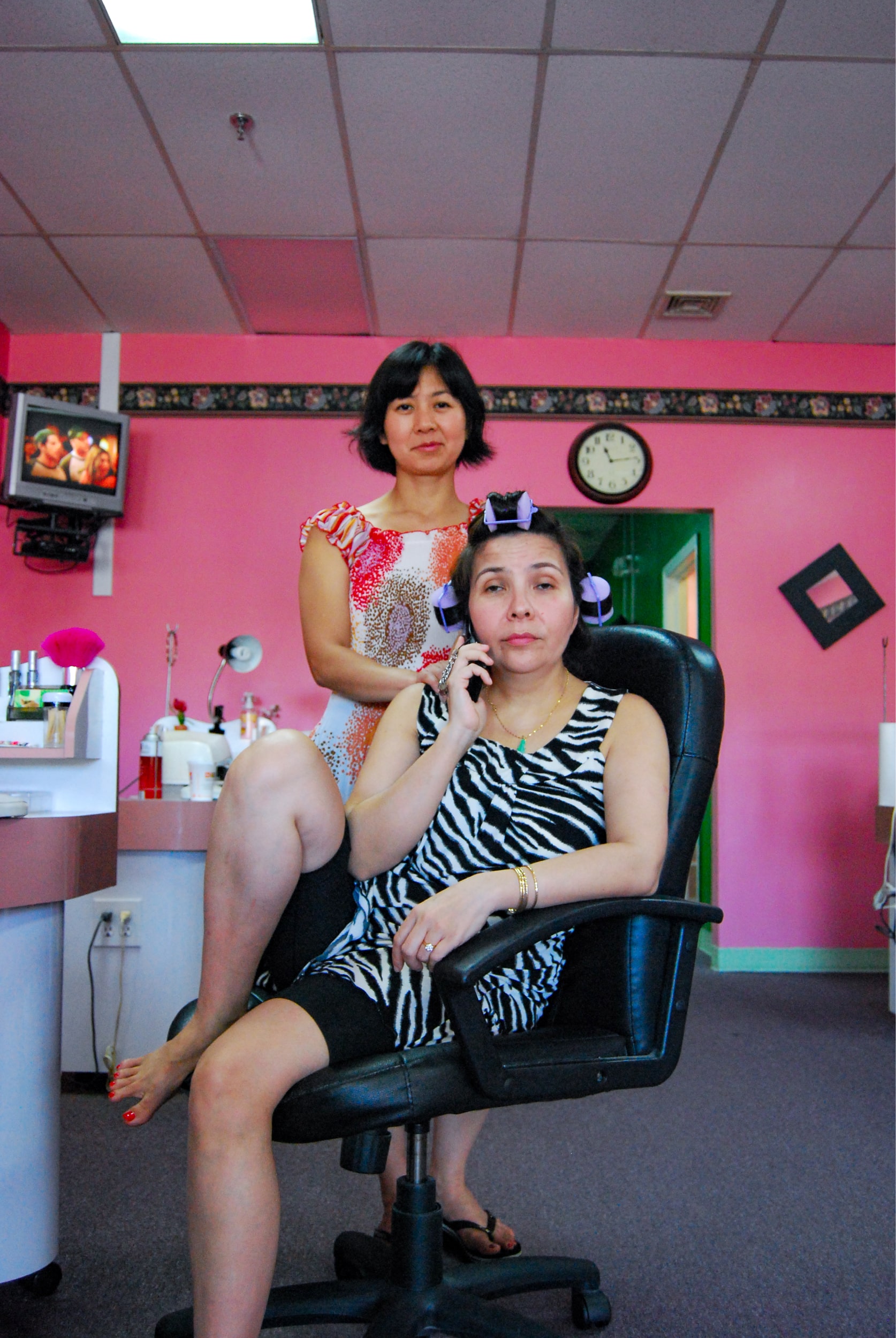
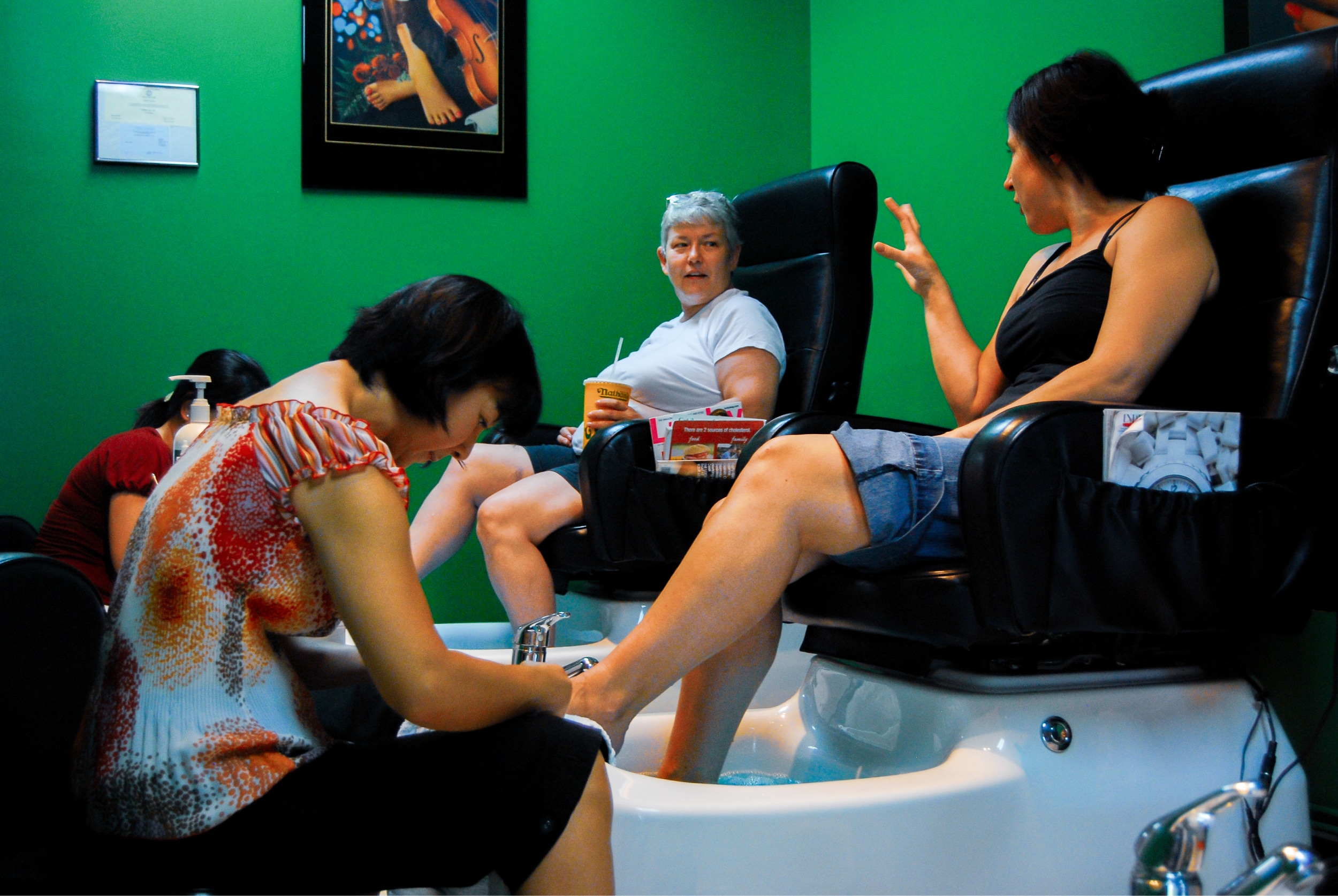
Along the gallery walls, we move between the present and the past. Black and white photographs suggest the present, while the bursts of color, echoing the fluorescent and pink and green walls of the salon, resurface from memory. “The past comes back as an interruption of the present. That’s why the color images enter the black-and-white work; they insist on themselves. They’re smaller, not as loud, but they’re sharper,” says Vuong.
Vuong’s lens focuses on moments of liveliness, music, gossip, and intimacy, as Vuong stated. “They’re not just working,” he says, “They’re living. You can live in a place of work as well as work there.”
For Vuong, photography allows what writing cannot. “The camera accepts everything in the frame, whereas the pen narrows things down,” says Vuong, “Writing is hierarchical in many ways. With photography, there’s composition, but everything in the frame is taken in.” Quotes from his own brother, Nicky, also linger above the images, capturing the emotion behind each image in their quiet stillness: “I want to see my mom in my dreams again,” and “If I have a daughter, I am going to name her Rose.”
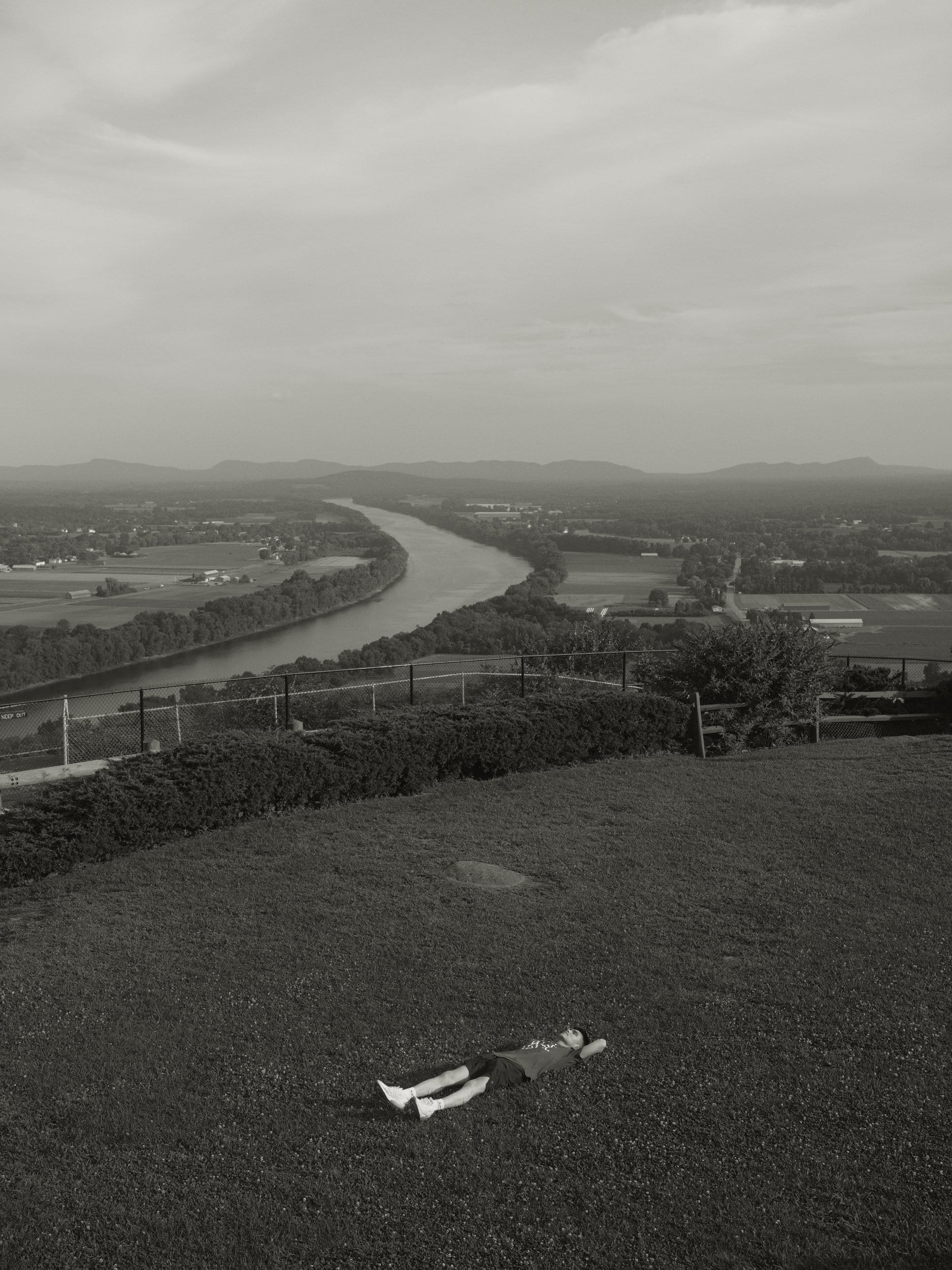
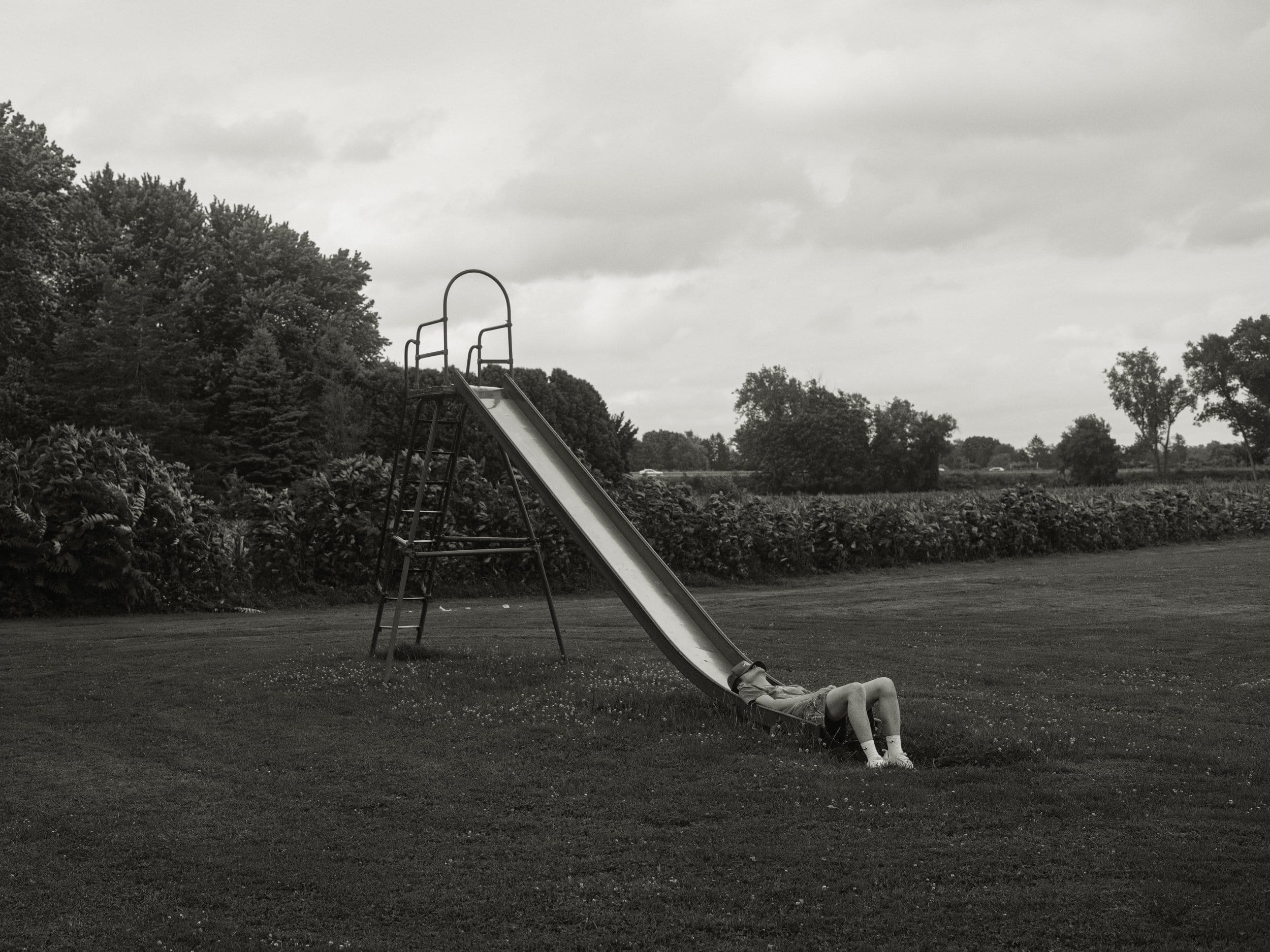
For Voung, his message to people is the following: “I hope they see a part of their own lives. I hope they see the strangeness of being human,” he says, “I hope the images act as a spark into their own interiority.”
Invisible labor made visible
Qiana Mestrich, recipient of the CPW 2025 Saltzman Prize for emerging photographer, presents her collage and photomontages, “Do Not Fold, Spindle, or Mutilate.” The title comes from a warning printed on old computer punch cards, a relic of automated information storage, which also appears in her work.
The first images that sparked this work came from her mother, who emigrated from Panama in the 1960s and worked in a New York City office. “The archive itself sort of started with the discovery of photographs of my mother,” Mestrich says. “They were taken by a co-worker of hers…I really wanted to highlight the contributions of these women who were in administrative roles.”
Her ongoing series, “The Reinforcements,” which began in 2023, is part of a larger digital archive documenting women of color in office spaces from the post-Civil Rights era onward. Each collage pulses with fragments of office life, cutouts of women from magazines, folders, punch card paper, and images of fax machines, telephones, and other everyday items found in workplaces.
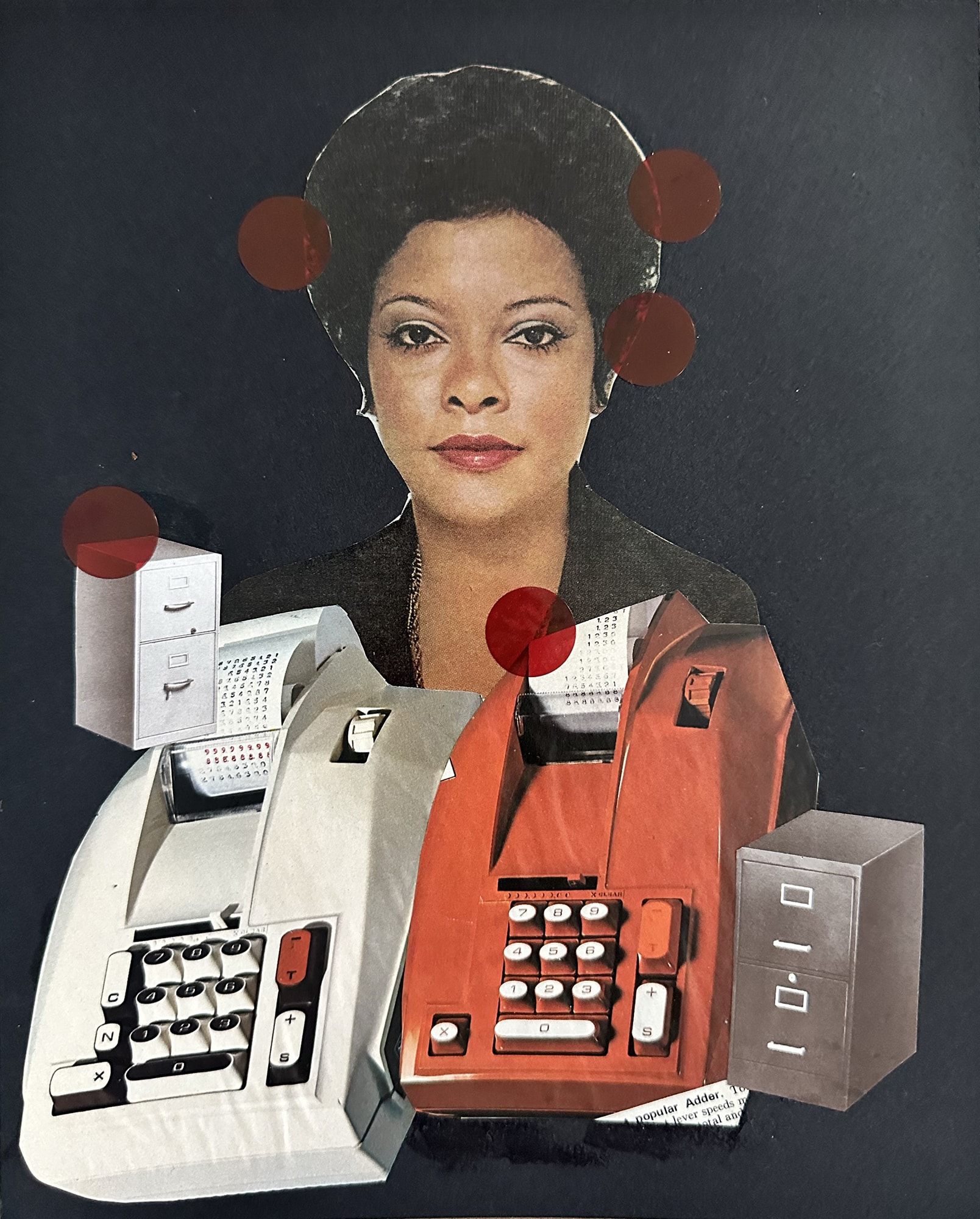
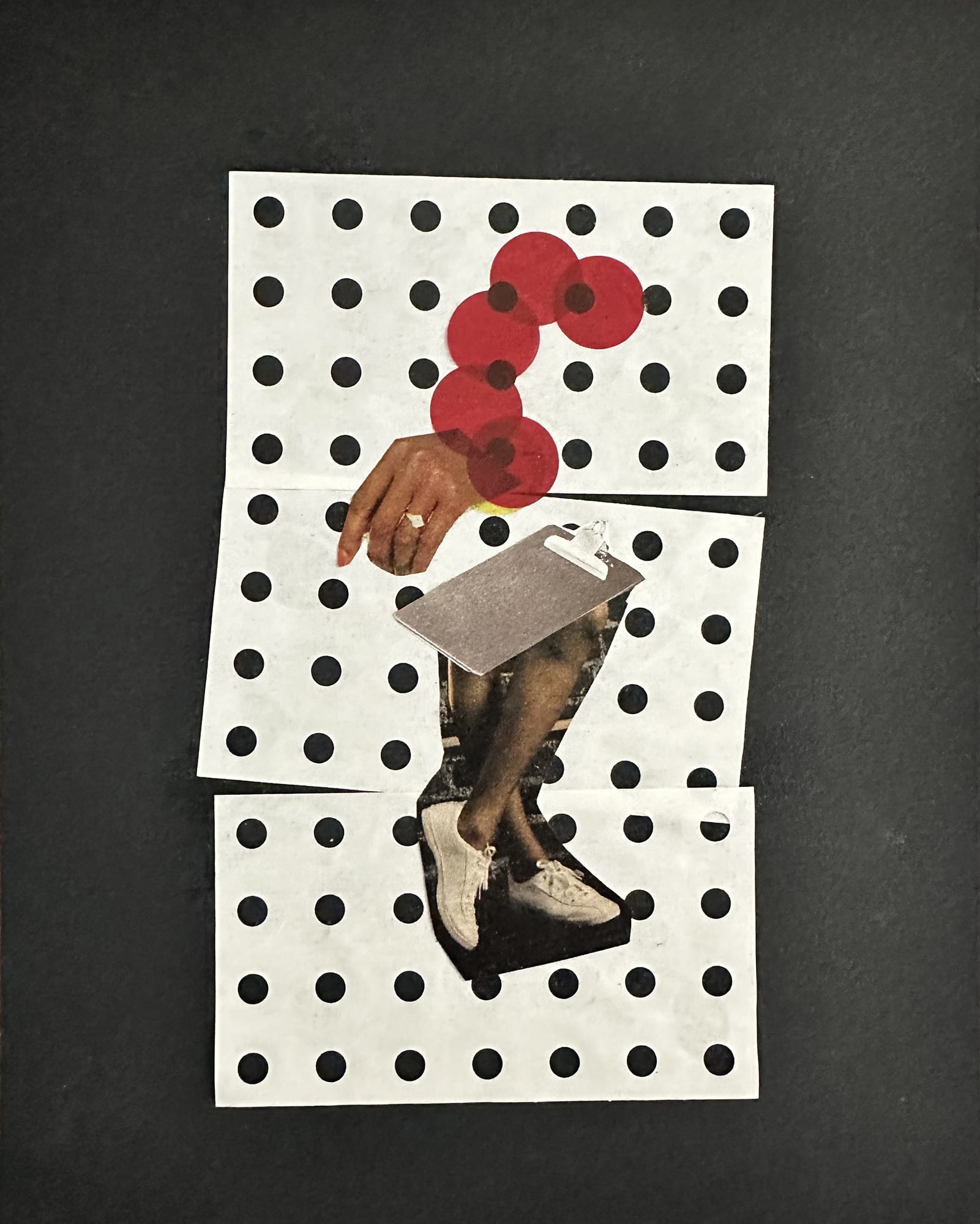
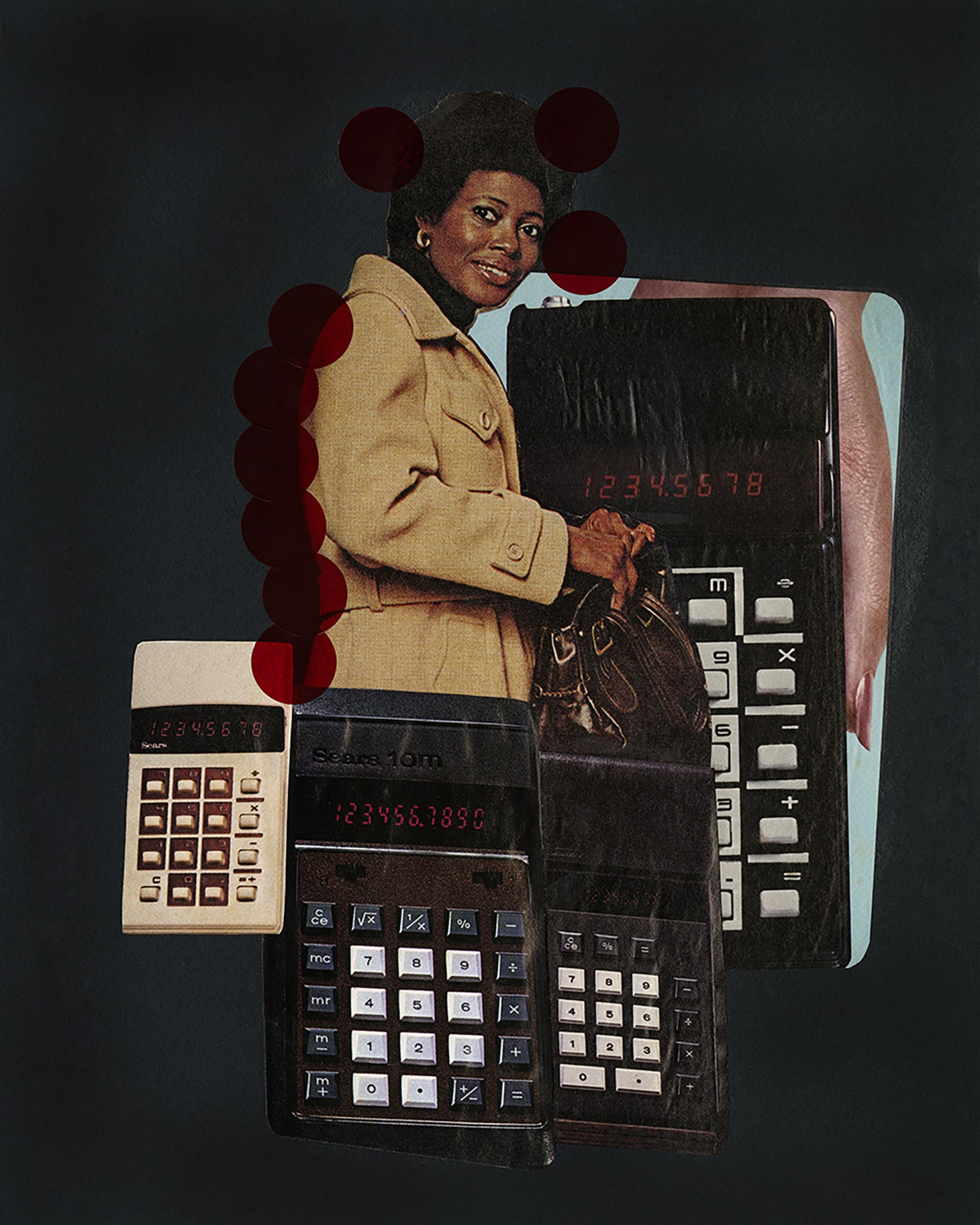
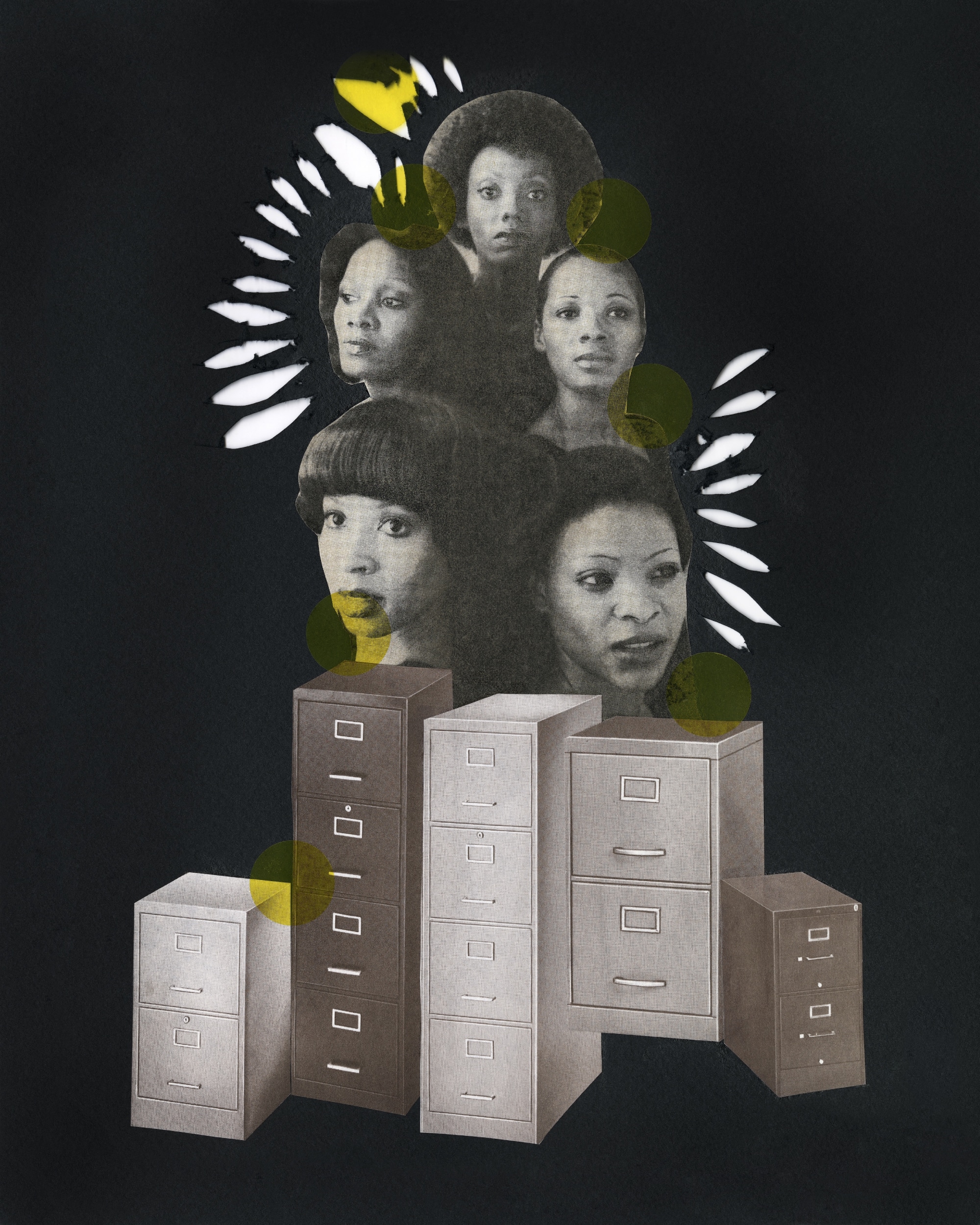
At the heart of the room lies a table with photographs, the origin of the exhibition, carefully arranged photos from Mestrich’s mother’s personal archive, grounding the work of memory and experience. “I want to…highlight the contributions of these women that were really, a lot of them were in administrative roles,” says Mestrich, “but doesn’t mean that, because they weren’t CEOs and executives doesn’t mean that they didn’t have a hand in the building of corporate America, as we know it.”
Celebrating Nona Faustine’s work
In the grand room at CPW, the first-ever retrospective of Nona Faustine (1969-2025) brings her life’s work together for the first time. Titled “What My Mother Gave Me,” the exhibition brings forth three projects, some widely known, others long overlooked.
The earliest project, “Young Mothers” (1992-94), began while she was an undergraduate in New York City. She followed seven women she befriended in her neighborhood at the time, creating intimate portraits that showcase them becoming mothers for the first time, along with the difficulties and the realities they faced at such a young age without the support they hoped for. “You pick up the pieces and become a woman.” Faustine wrote in her 1994 BFA thesis at The School of Visual Arts.
In “Mitochondria” (2008-2016), she photographs and honors three generations of Black women in Faustine’s family through intimate photographs that explore motherhood and family bonds.
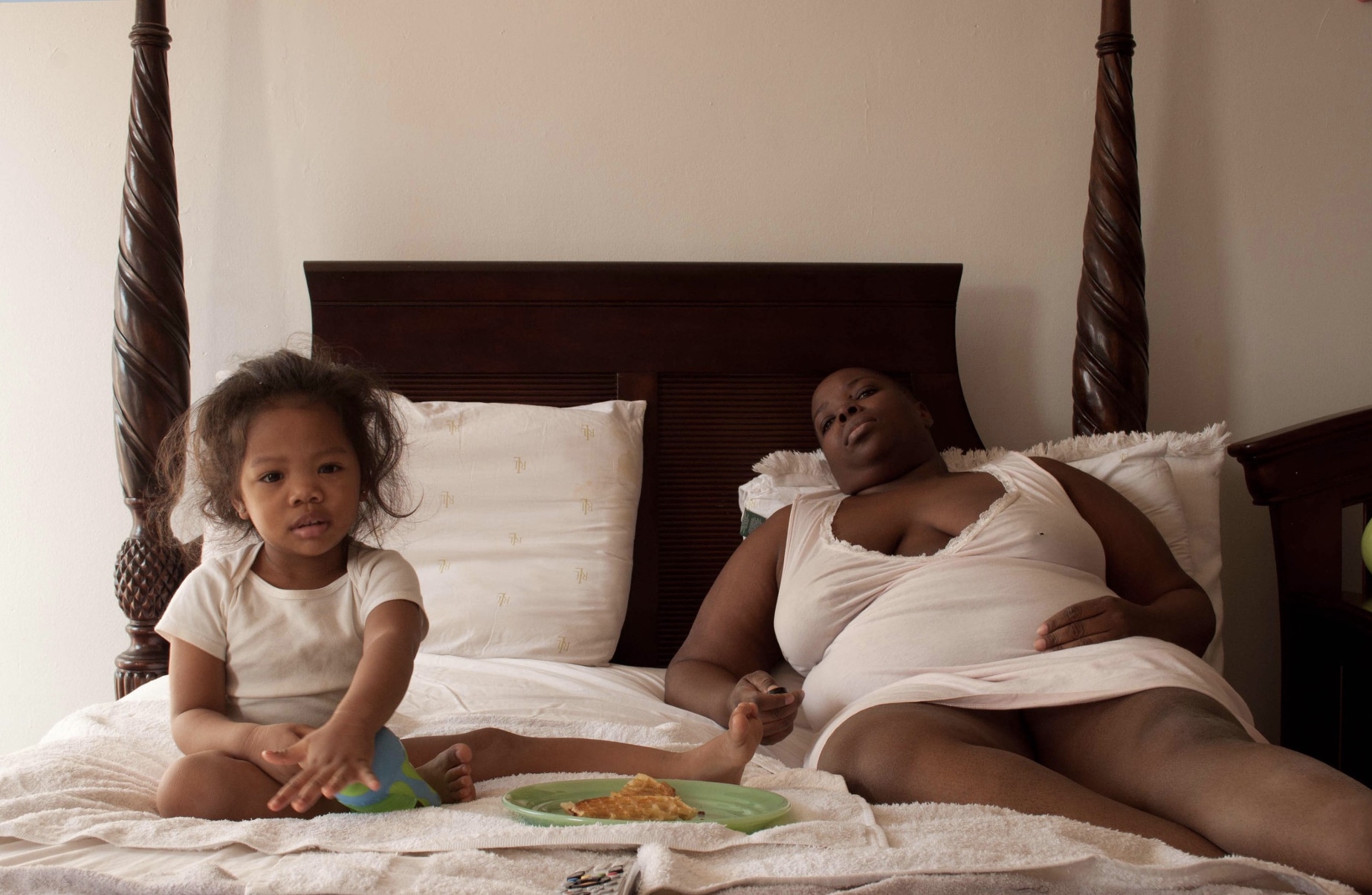
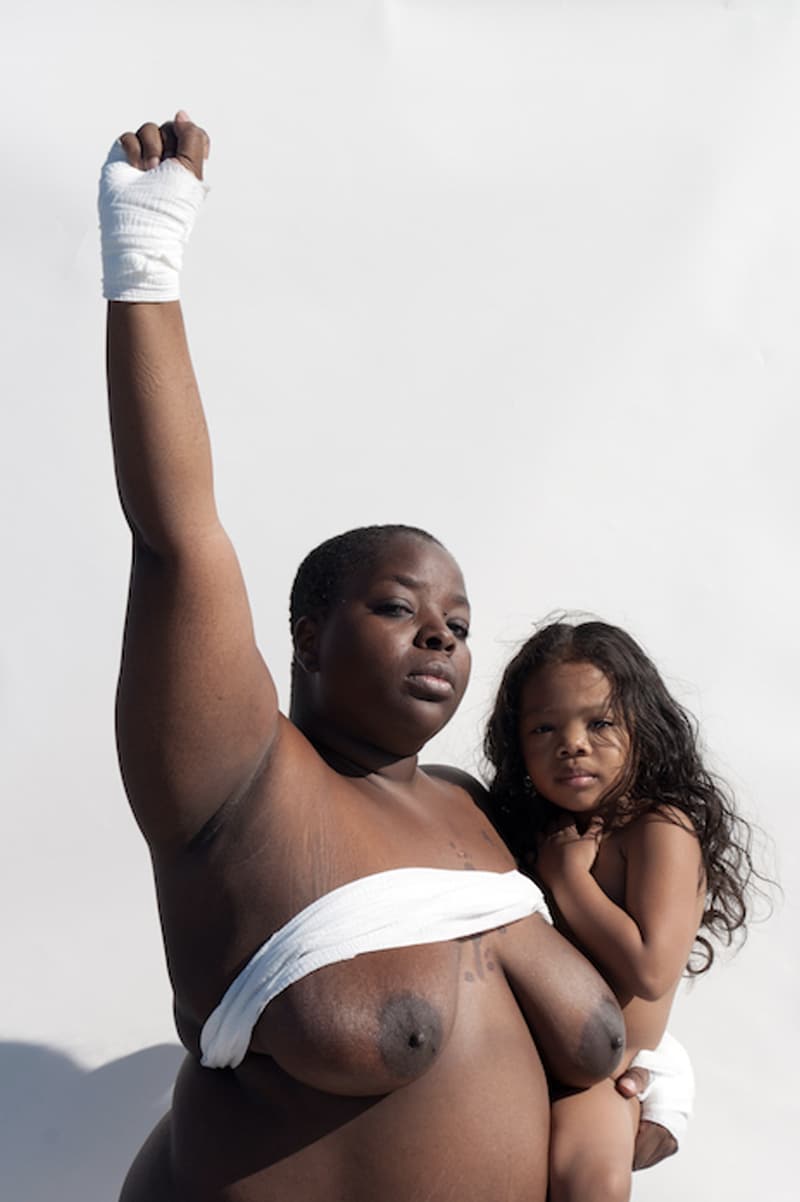
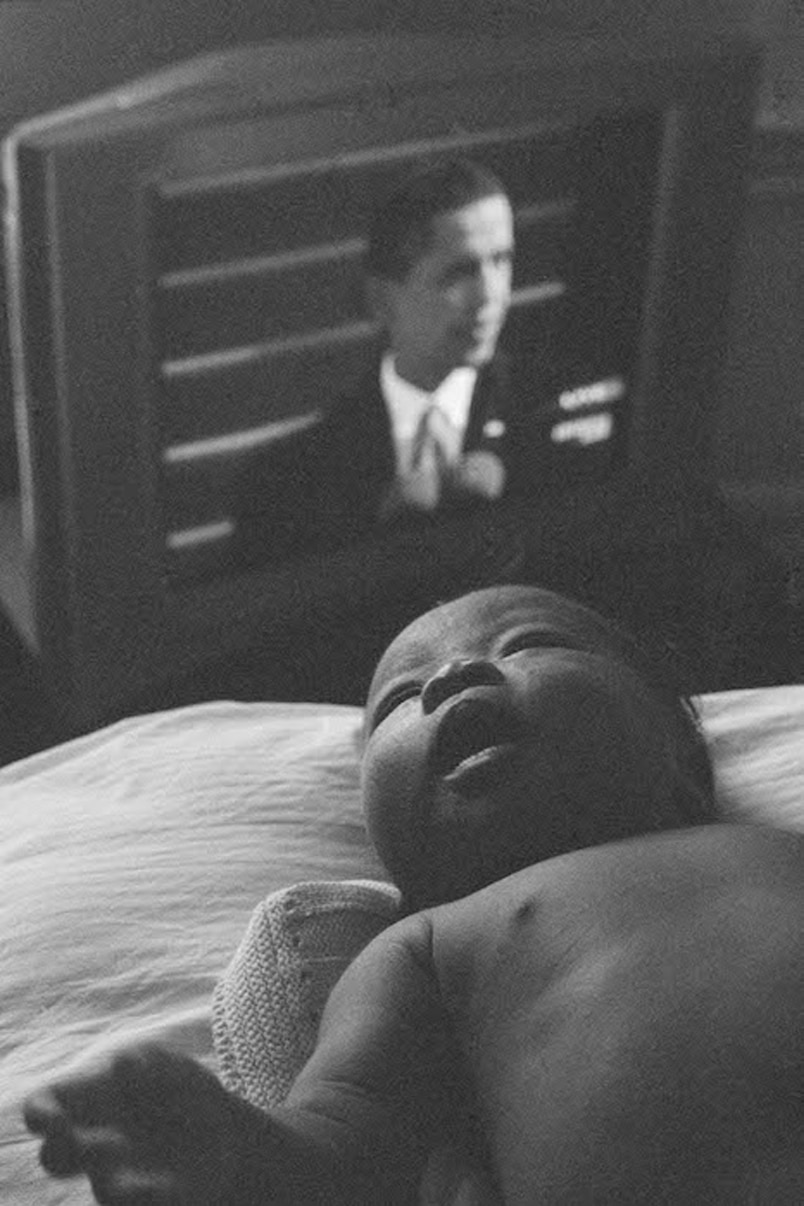

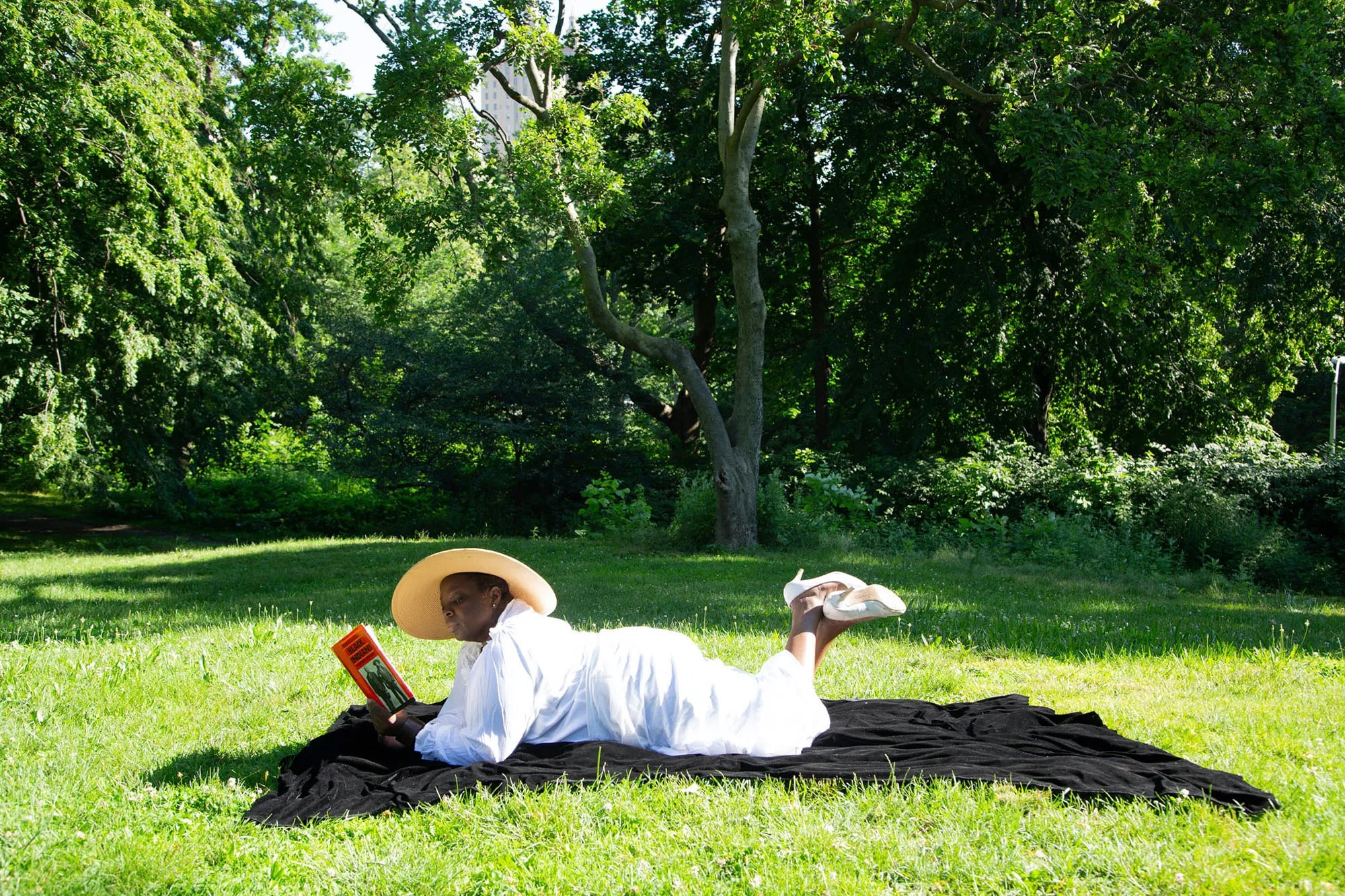
Encircling these works is “White Shoes” (2012-2021), Faustine’s most recognized photo series. Here, she stands nude in sites across New York City marked by slavery, auction blocks, burial grounds, and former homes of abolitionists. Placing her body into histories that have long tried to erase it.
Her sister, Channon Anita, worked closely with these shoots. Today, that bond endures, as Channon continues to carry Nona’s work forward, ensuring her work continues to be seen. “It’s a kind of validation for me and also my mom and my dad, who always told her she was really great and to keep going,” says Channon Anita. “I want people to come away with understanding that she was really great at this from the very beginning.”
Life in the shadows of illness
Finally, in the community gallery, photographs of Jiantong Lu, winner of the CPW 2025 Portfolio Review Prize, present “Nowhere Land,” a project that confronts chronic tick-borne illness and the systemic failures of the U.S. medical system.
Rooted in Lu’s own experience with neurological Lyme disease, the work moves beyond autobiography to document an often invisible community. After her diagnosis, Lu felt an urgency to act. “Raising awareness of chronic Lyme disease was the most urgent intention when I started this project,” she says.
As both patient and documentarian, she brings an insider’s perspective: “Being both a patient and an artist, I understand Lyme patients’ lives not only through the illness itself, but through the medical, social, emotional, and financial realities that shape their everyday lives.” Nowhere Land combines intimate photographs of patients in their homes with medical records, personal journals, text messages, and audio statements.
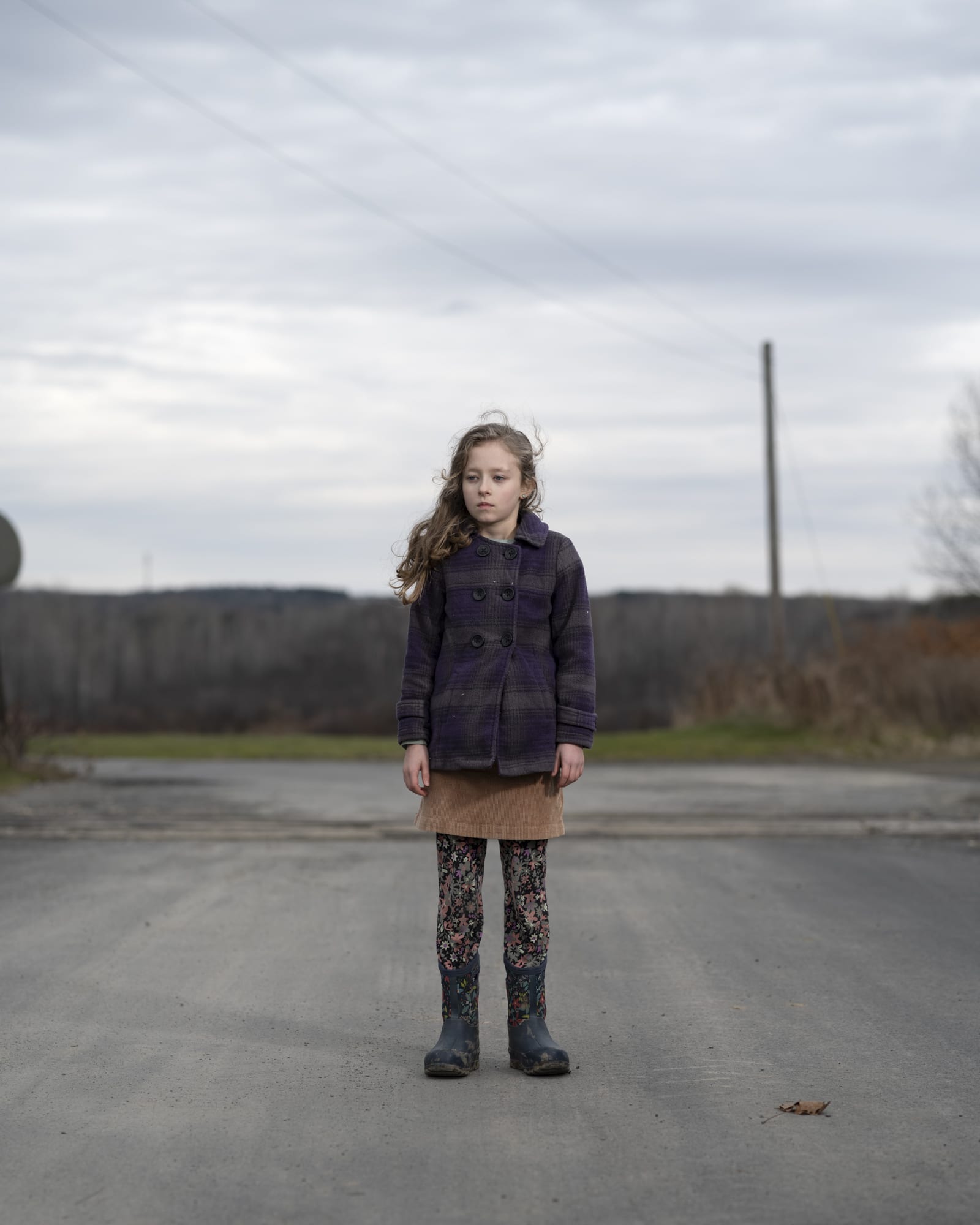
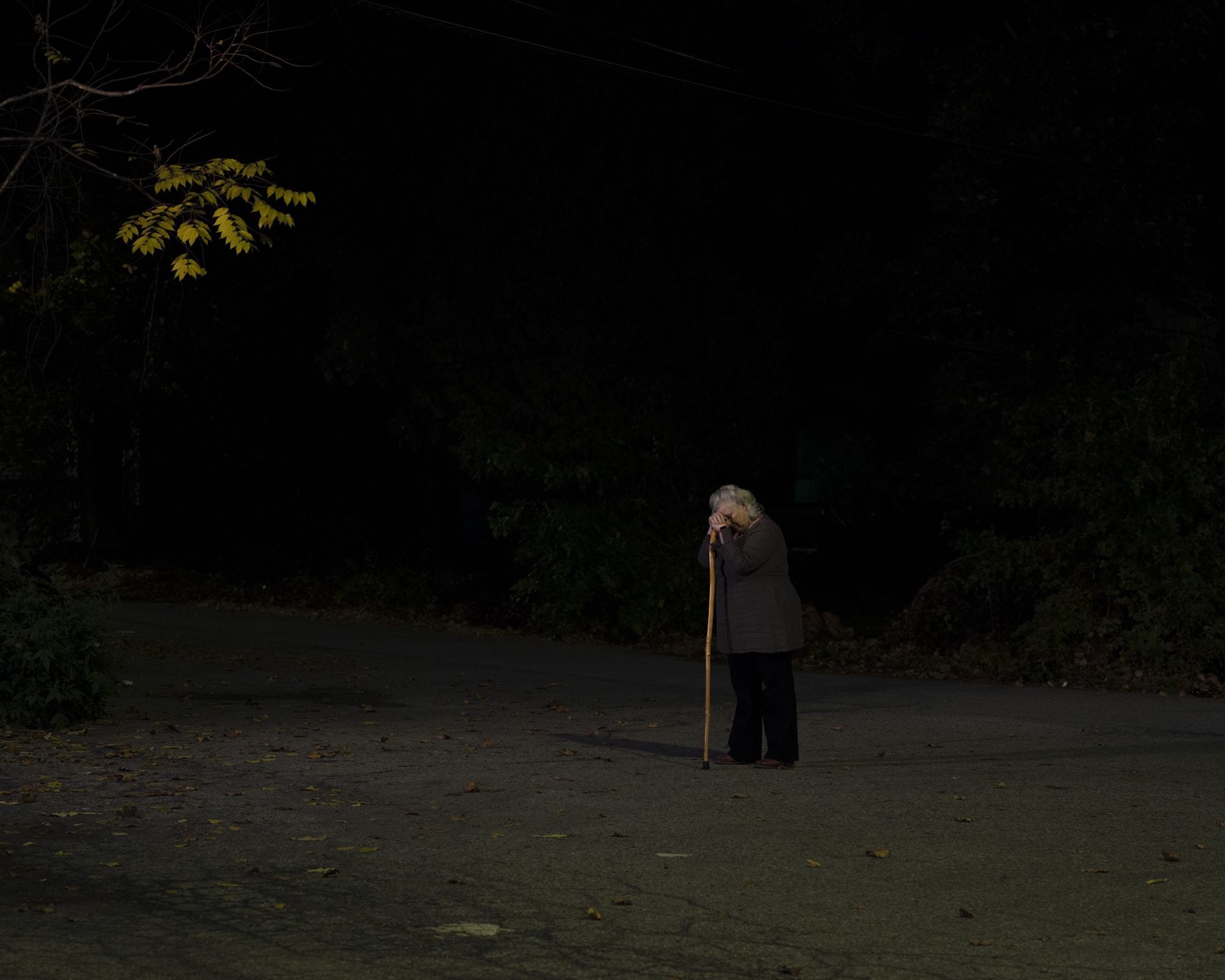
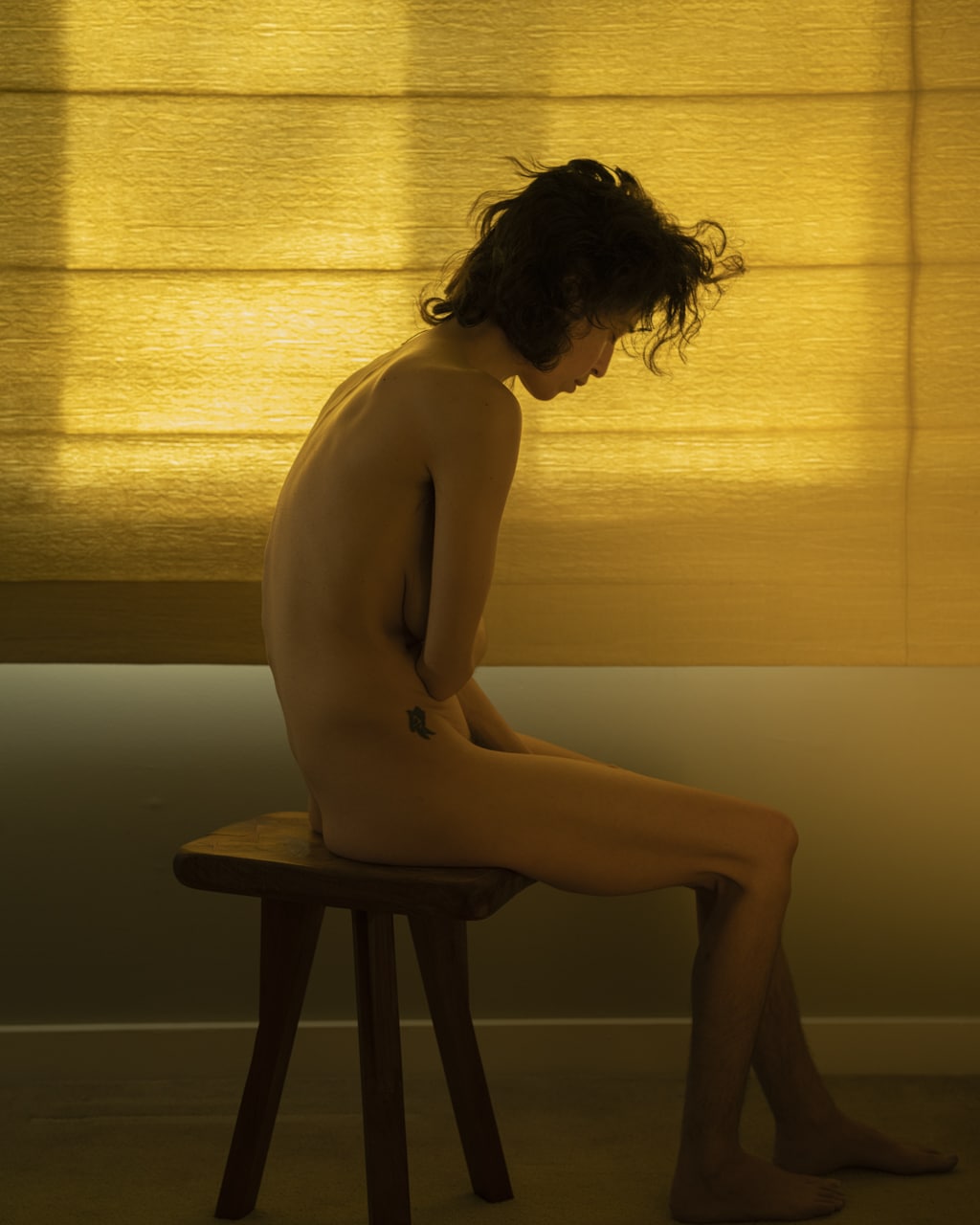
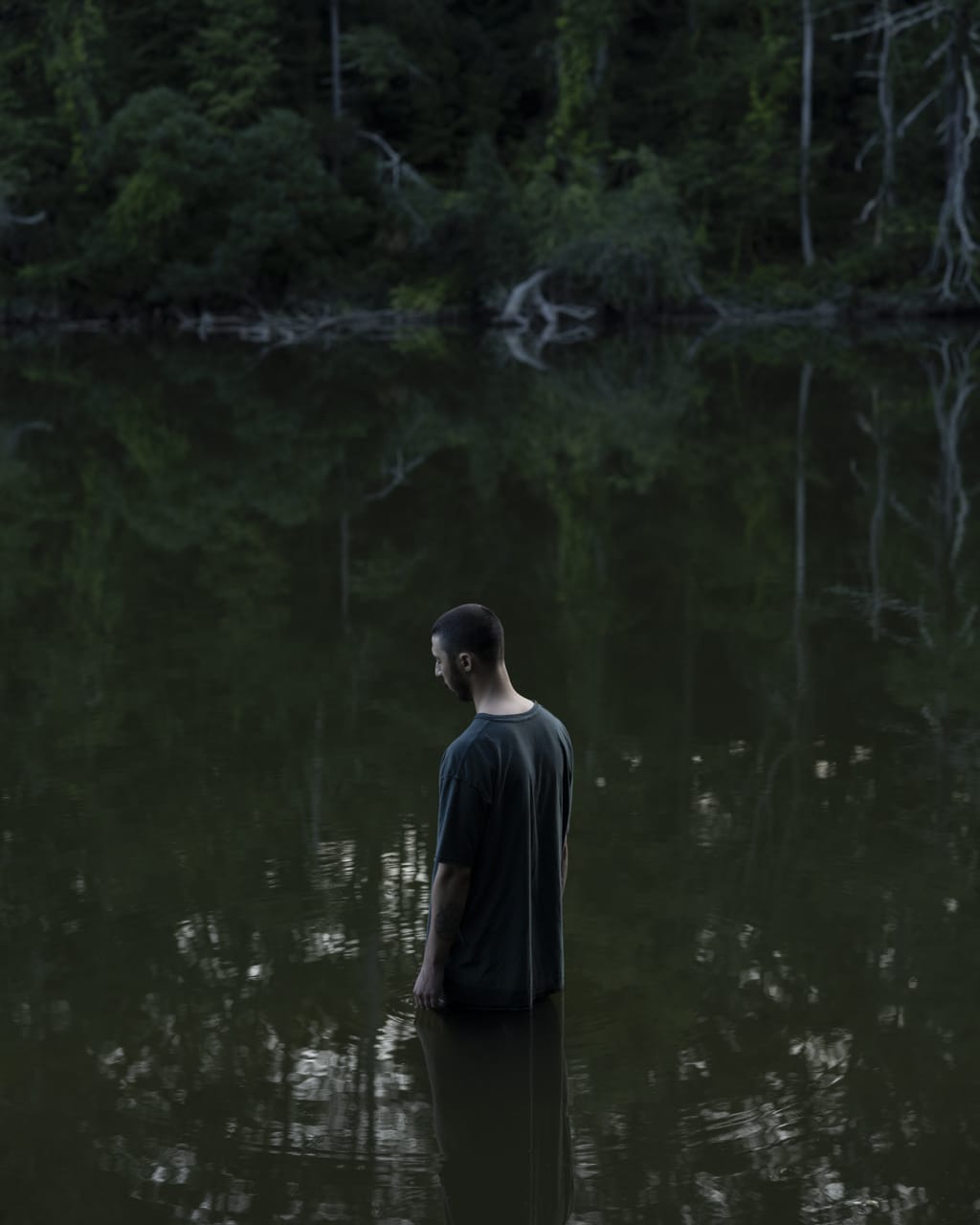
Lu describes these materials as “essential to conveying patients’ lives in a more systemic way.” Rather than a single story, Lu presents an accumulation that reflects daily life with chronic illness. “I am not observing them from the outside, but as someone who is also one of them.” says Lu.
As the Winter-Spring season continues at the Center of Photography at Woodstock, the exhibitions explore lives shaped by work, illness, and memory, showing how personal stories connect to larger histories.
More information on the Center of Photography at Woodstock is available here.