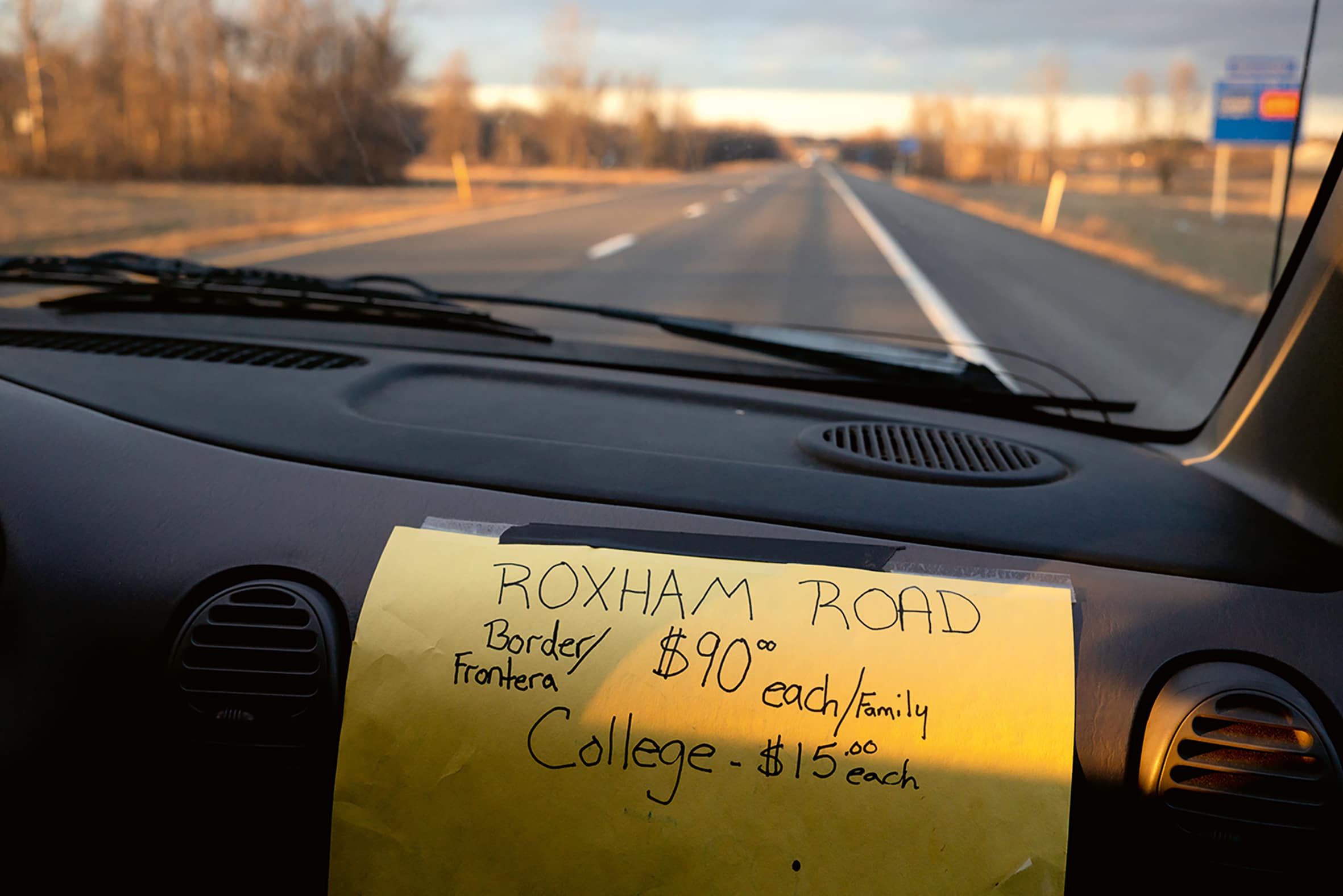
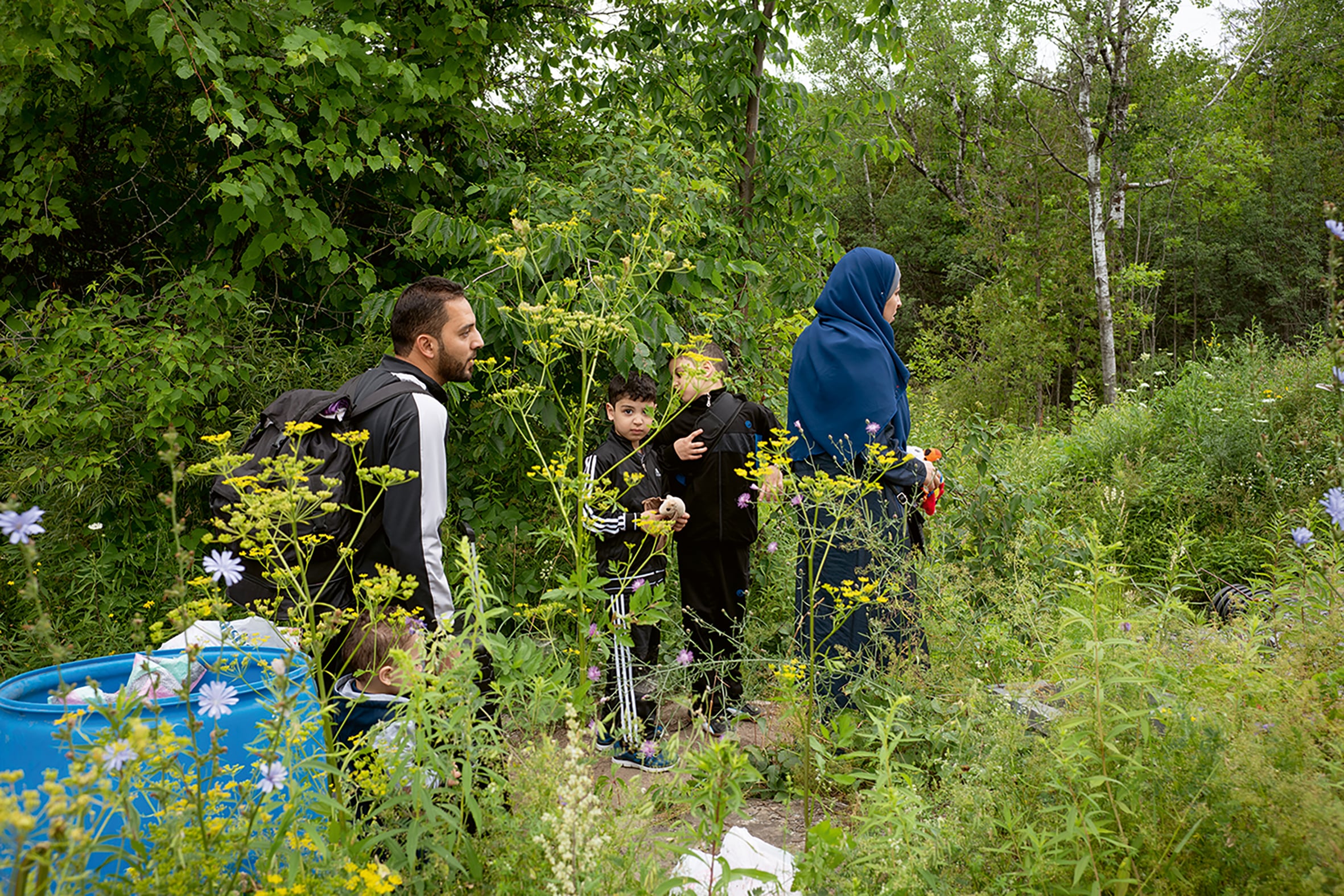
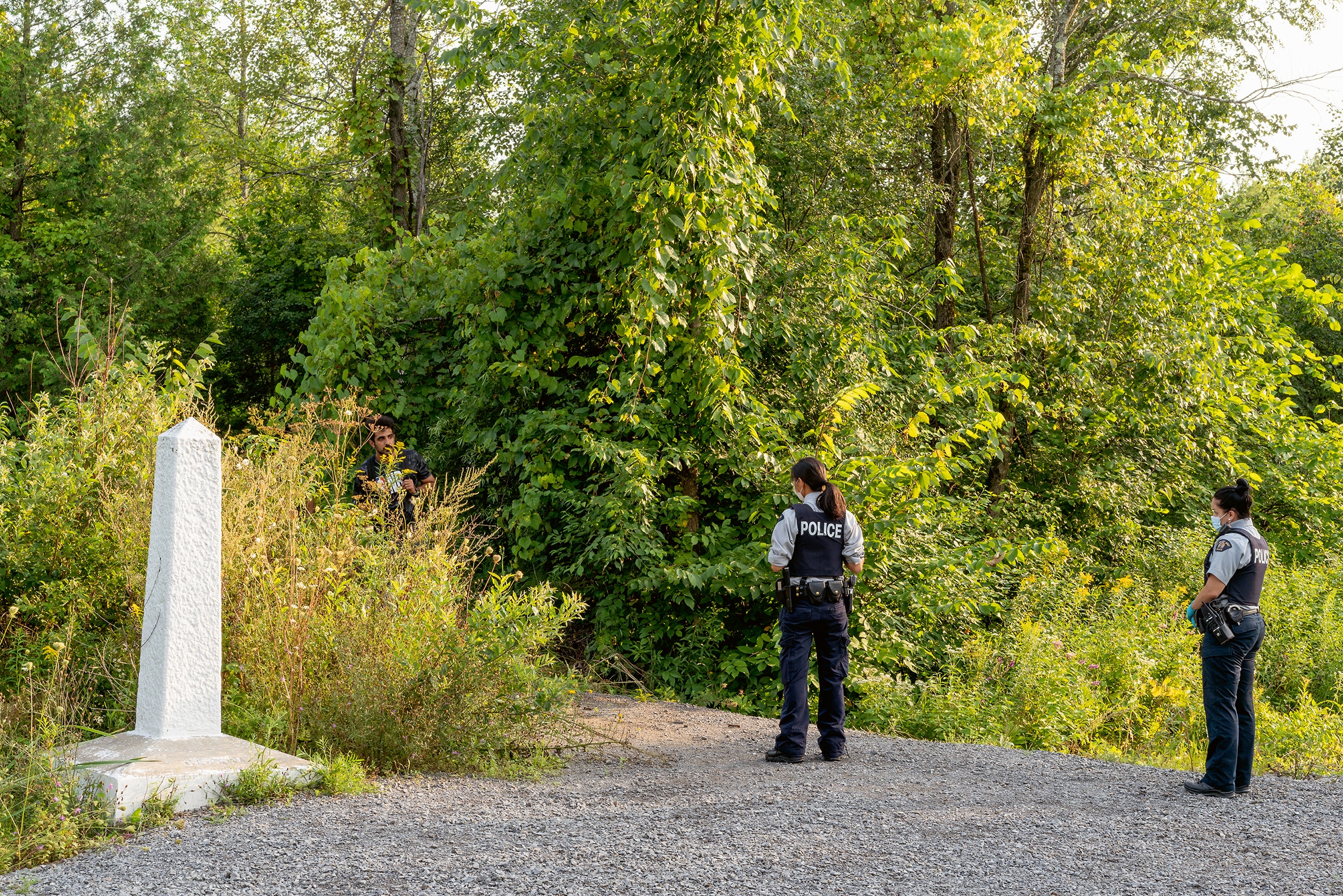
Connecting Champlain, New York State, to Hemmingford, Quebec, Roxham Road was one of the most heavily trafficked irregular crossing points in North America. From 2017 to 2023, thousands of people from Haiti, the Democratic Republic of the Congo, Venezuela and Afghanistan converged there to file asylum claims in Canada, as the Safe Third Country Agreement, a bilateral treaty between Canada and the United States, barred them from doing so at official ports of entry.
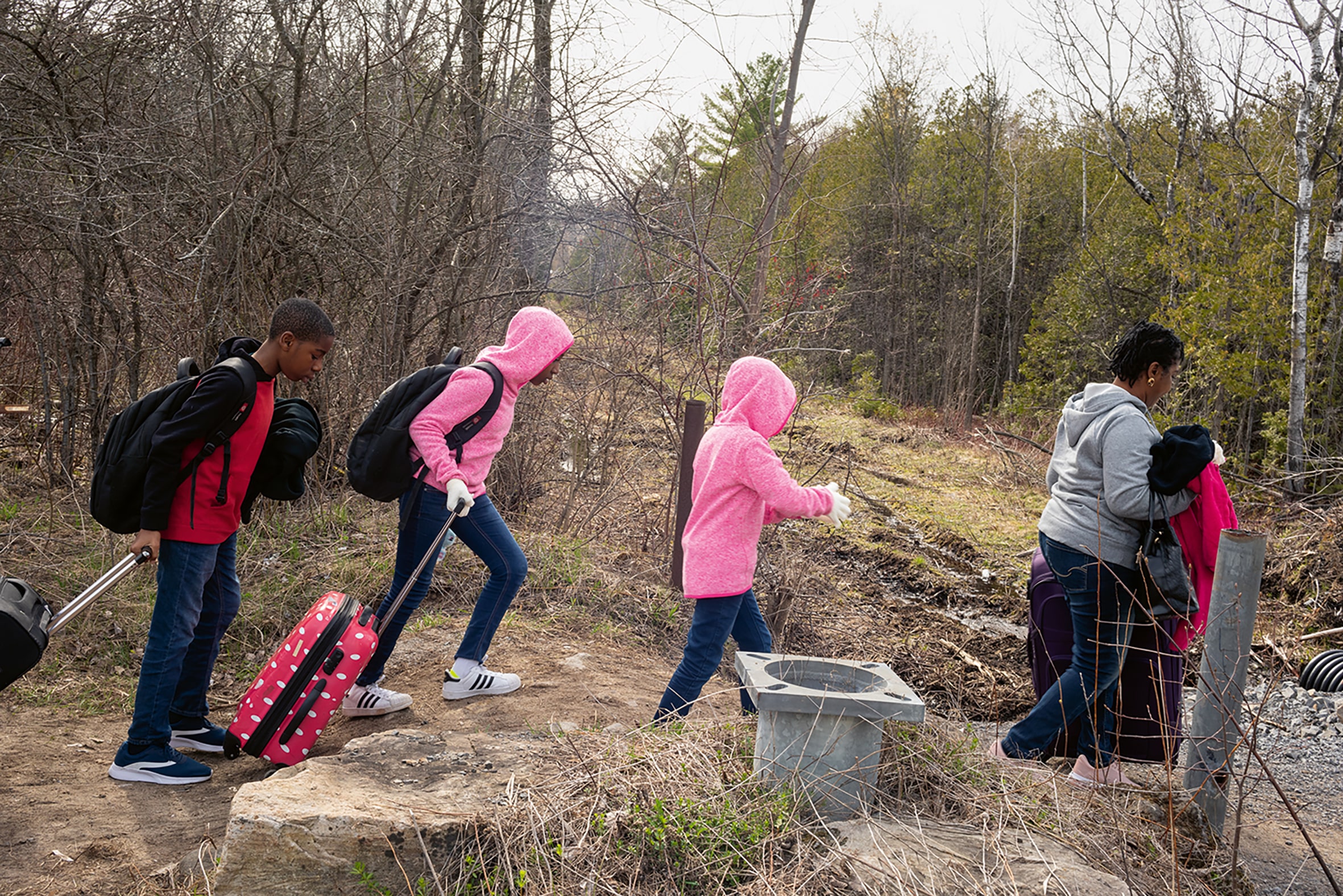
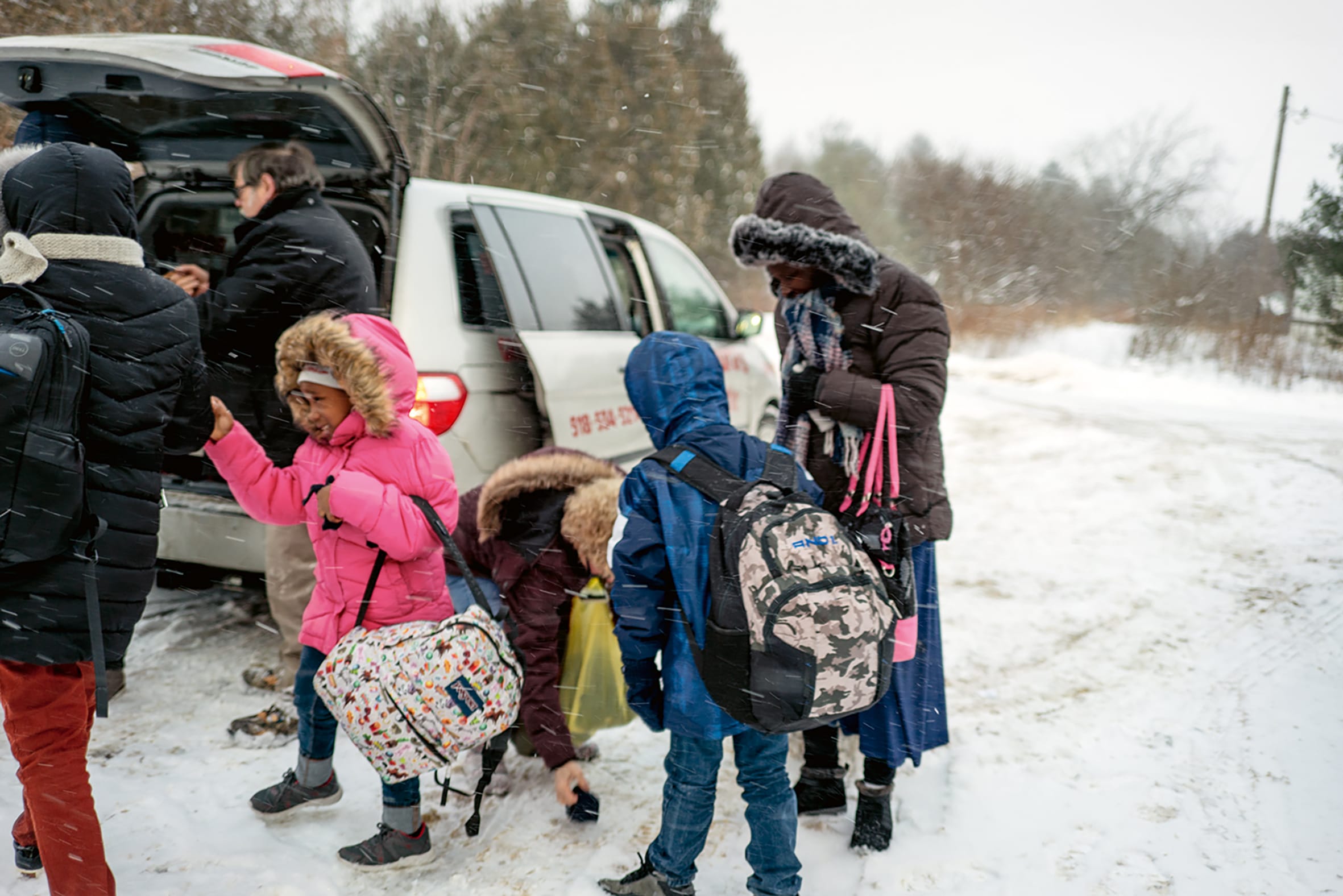
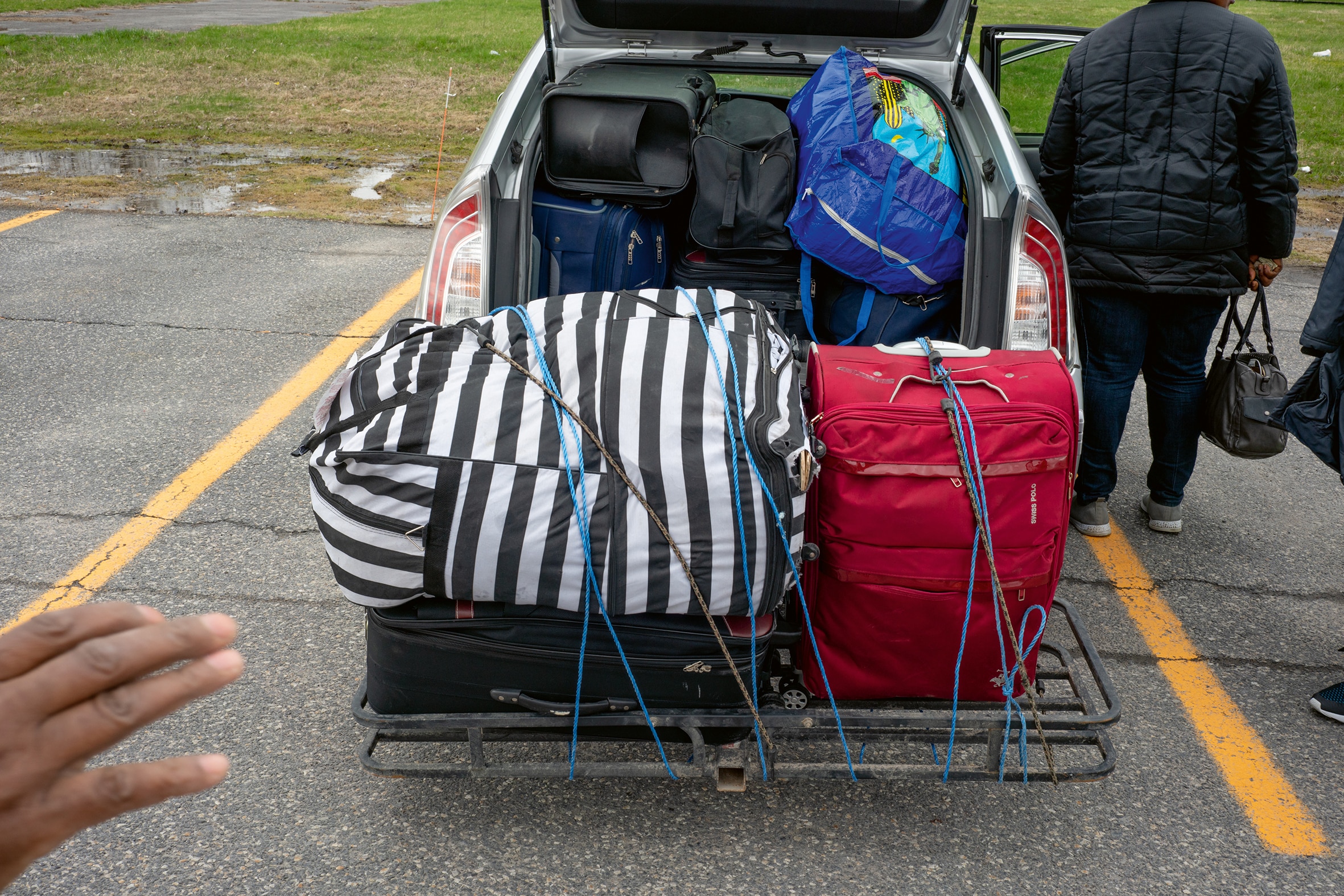
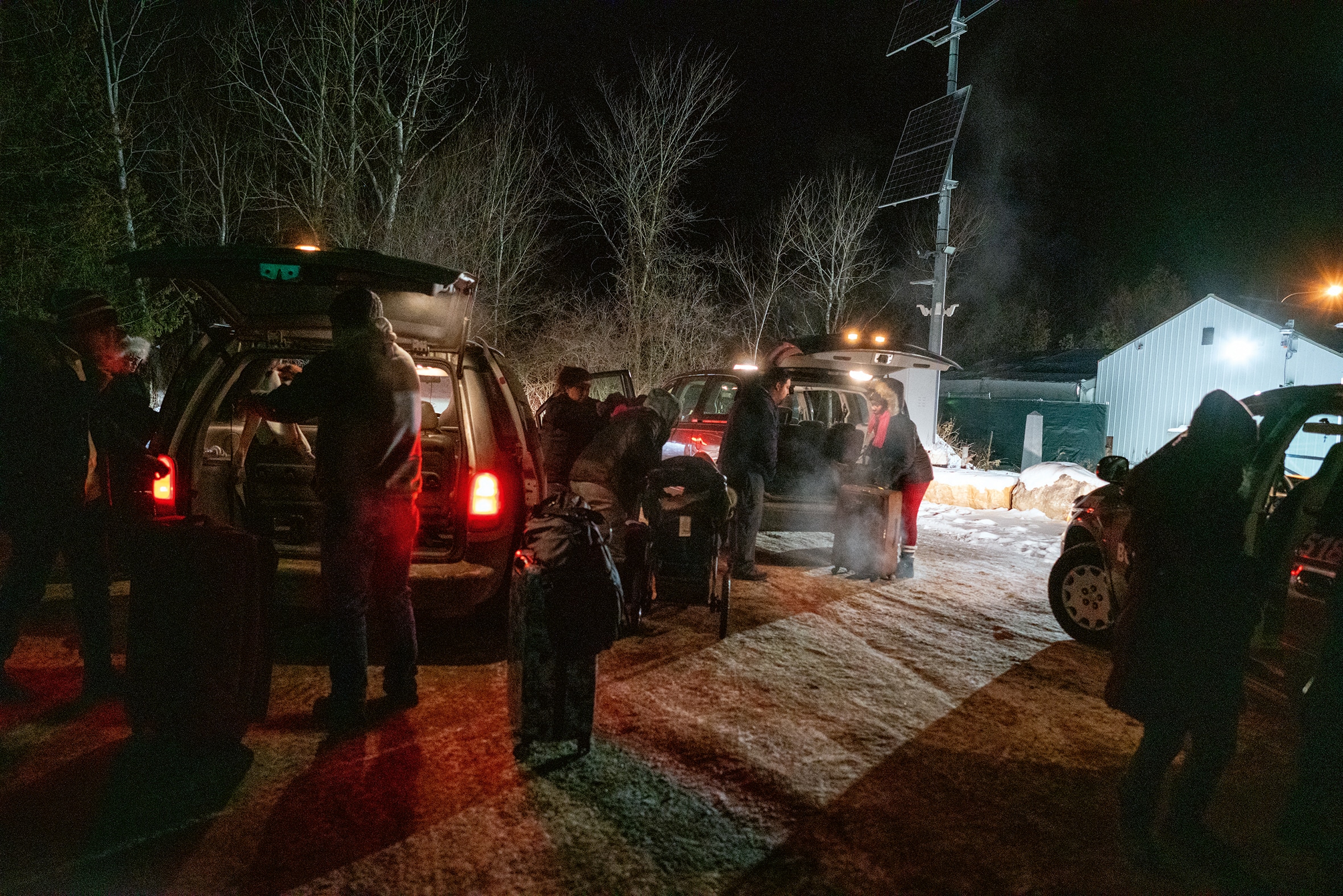
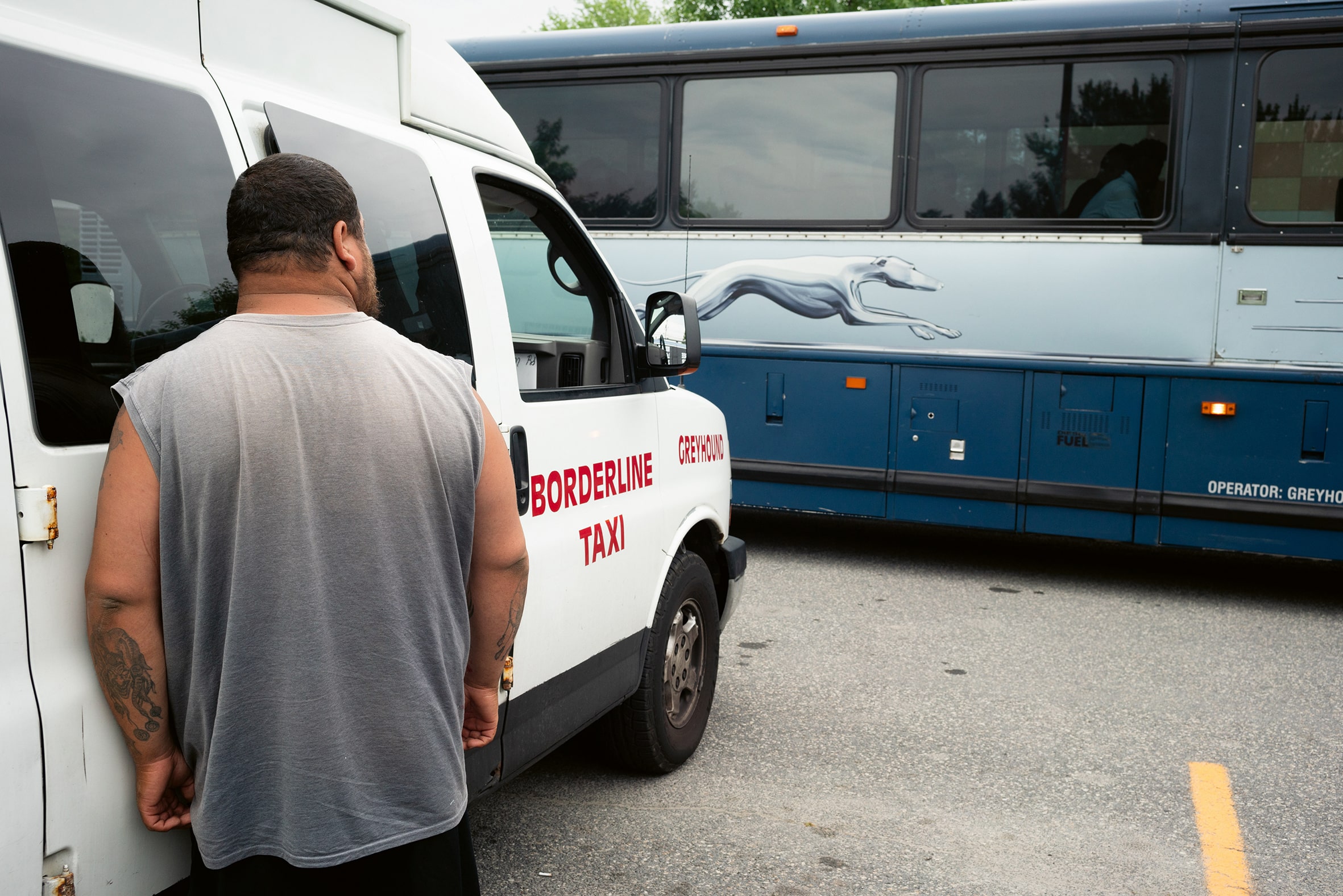
Documentary photographer Ruth Kaplan first went there in December 2018. What she found that Sunday, in the fading winter light, held her for five years. Two Senegalese men wrapped in scarves, stunned by the cold, escorted by Tommy, a cab driver from Plattsburgh who helped carry their bags. A family whose child stood no taller than their suitcase. Two young women sharing three gloves. “Over the next few years, I watched the scene unfold over and over, but it never felt normal,” she writes. Each crossing carried with it the muffled reverberations of war, violence and impossible choices.
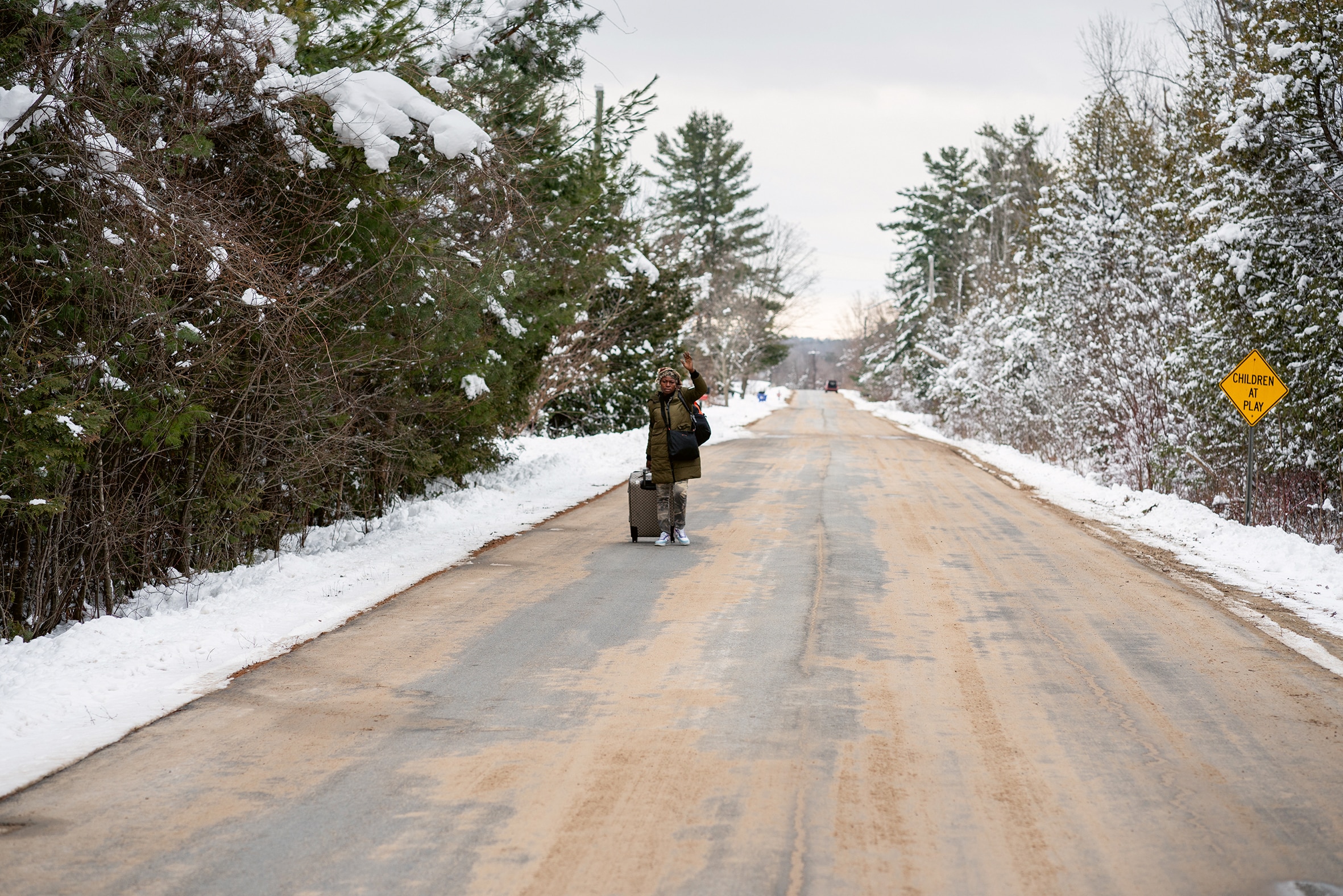
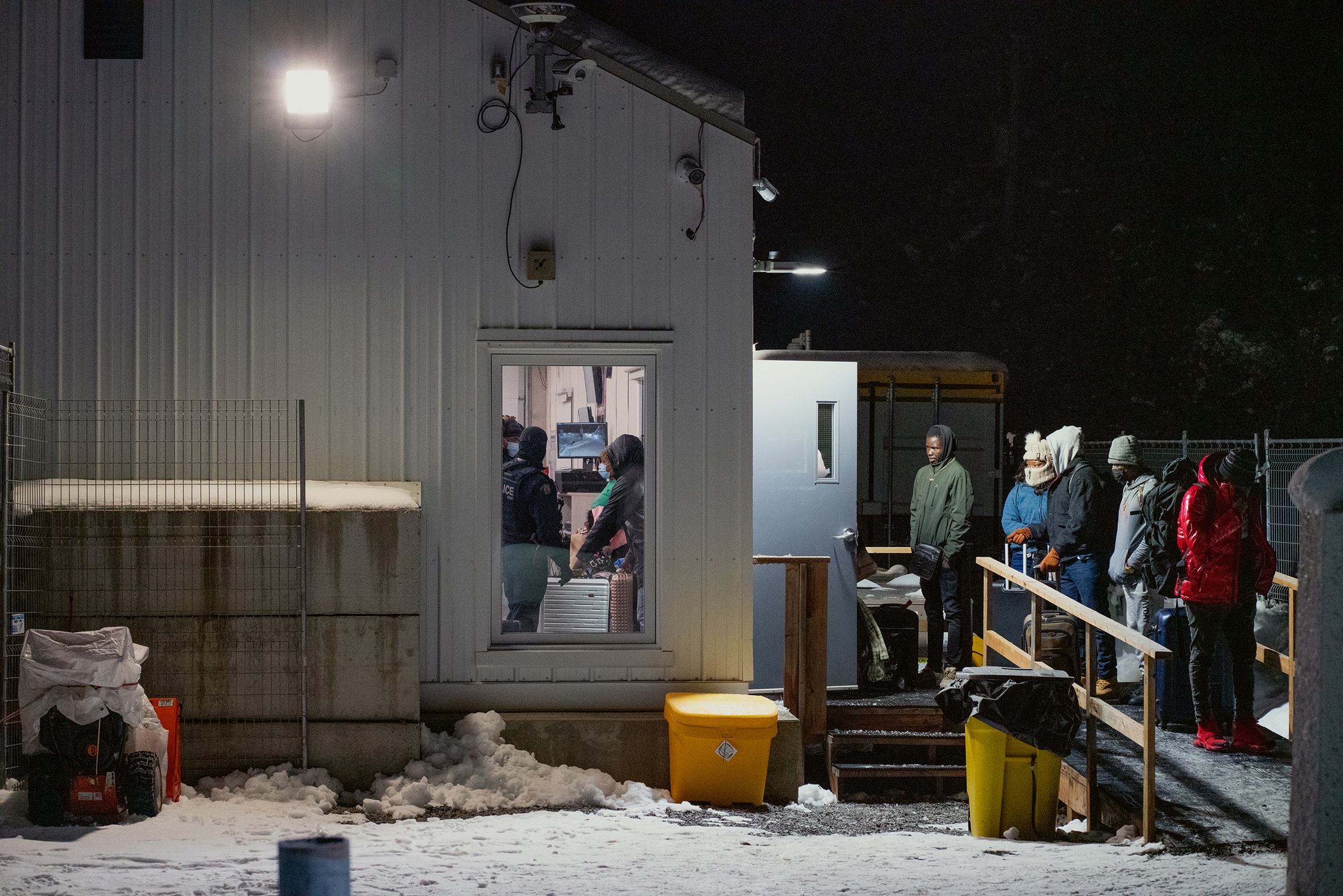
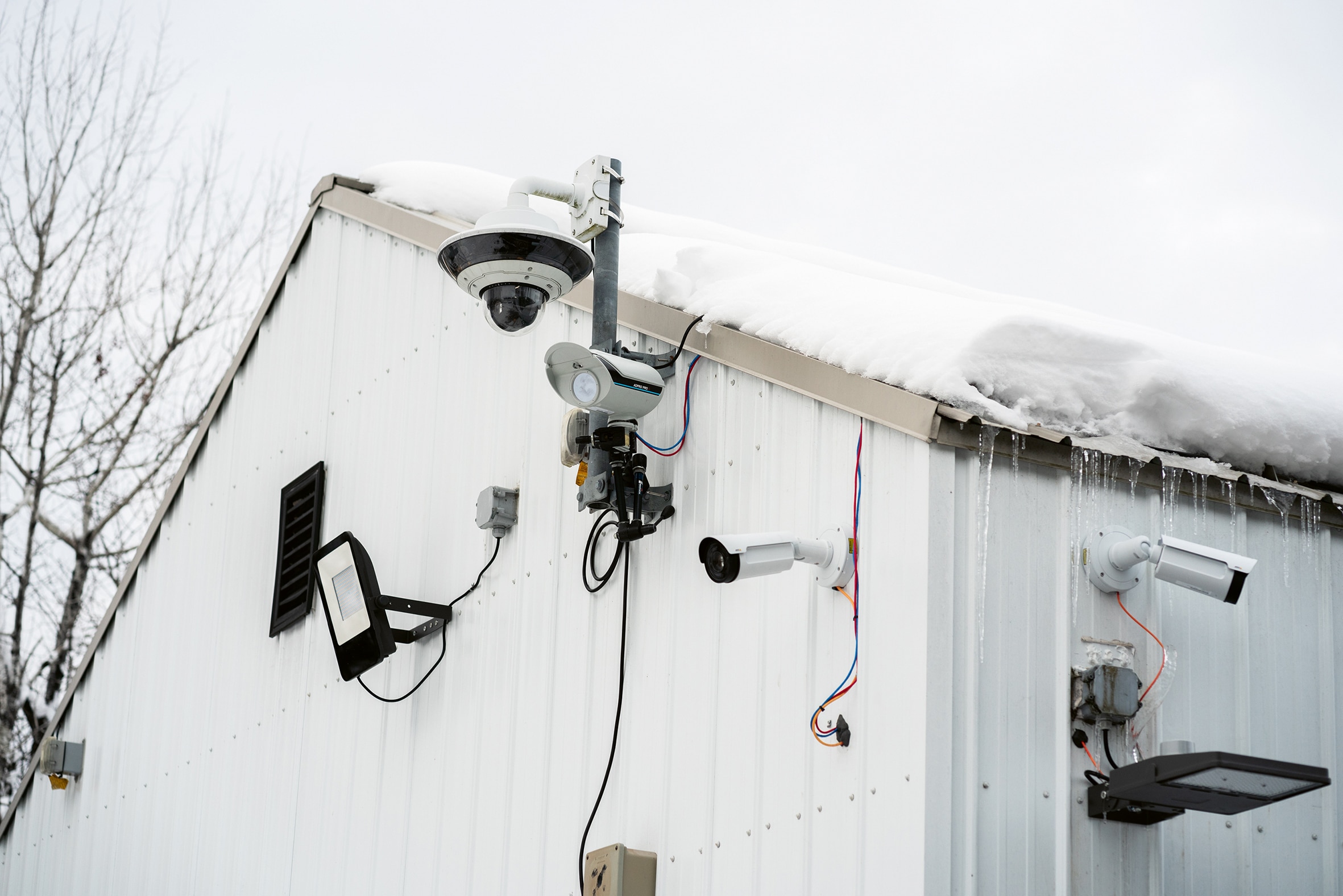
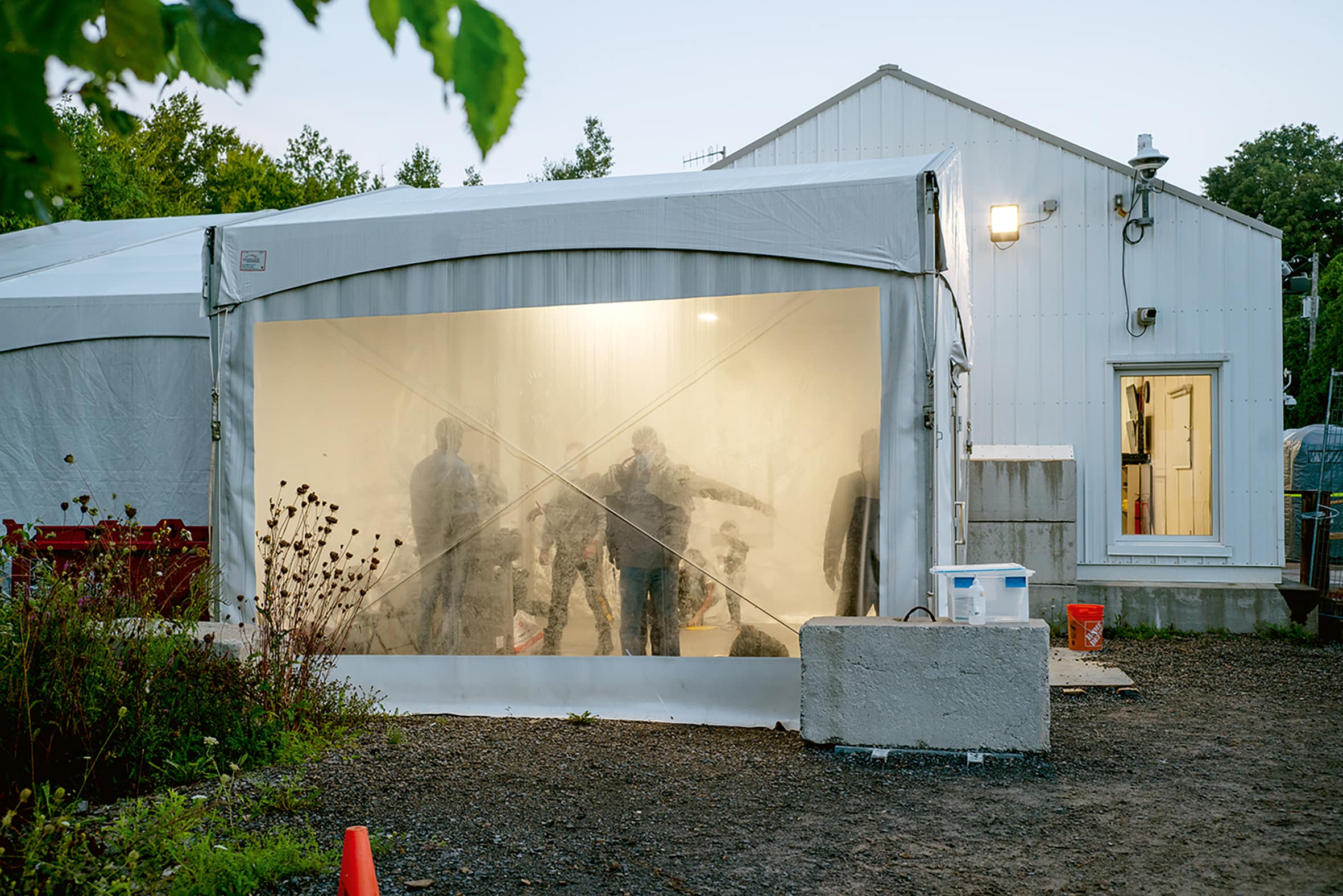
In one photograph from the book, a solitary figure walks down a snow-covered path lined with fir trees, heading toward the Canadian crossing point. The vast white landscape swallows the figure, reduced to a fragile vertical line. The image distills the loneliness of exile — a body in transit between two countries, between two fates. In another image, taken at night, asylum seekers stand in line outside the corrugated metal Canadian processing building. Security cameras, fluorescent lights, luggage piled in the snow: the bureaucracy of reception laid bare in its administrative rawness.
Ruth Kaplan, whose elders fled Eastern Europe and the Holocaust to settle in Canada, recognizes in these journeys an intimate familiarity. “Casual movement between borders is a privilege not available to everyone. Crossing is irrevocable once the step is taken,” she notes. This biographical thread runs through her gaze. It lends each image a gravity that belongs neither to reportage nor to activism, but to a form of watchful, empathetic attention.
Afghan writer Habib Zahori, now living in Canada, contributes a harrowing account of his own clandestine crossing — not at Roxham Road, but along a different route, by bicycle, through the snow, with no GPS. “I was not just a body moving from point A to point B — I was an ocean on the move, an ocean of contradictory feelings,” he recalls. His testimony, strikingly literary in its density, expands the reach of the book beyond documentary.
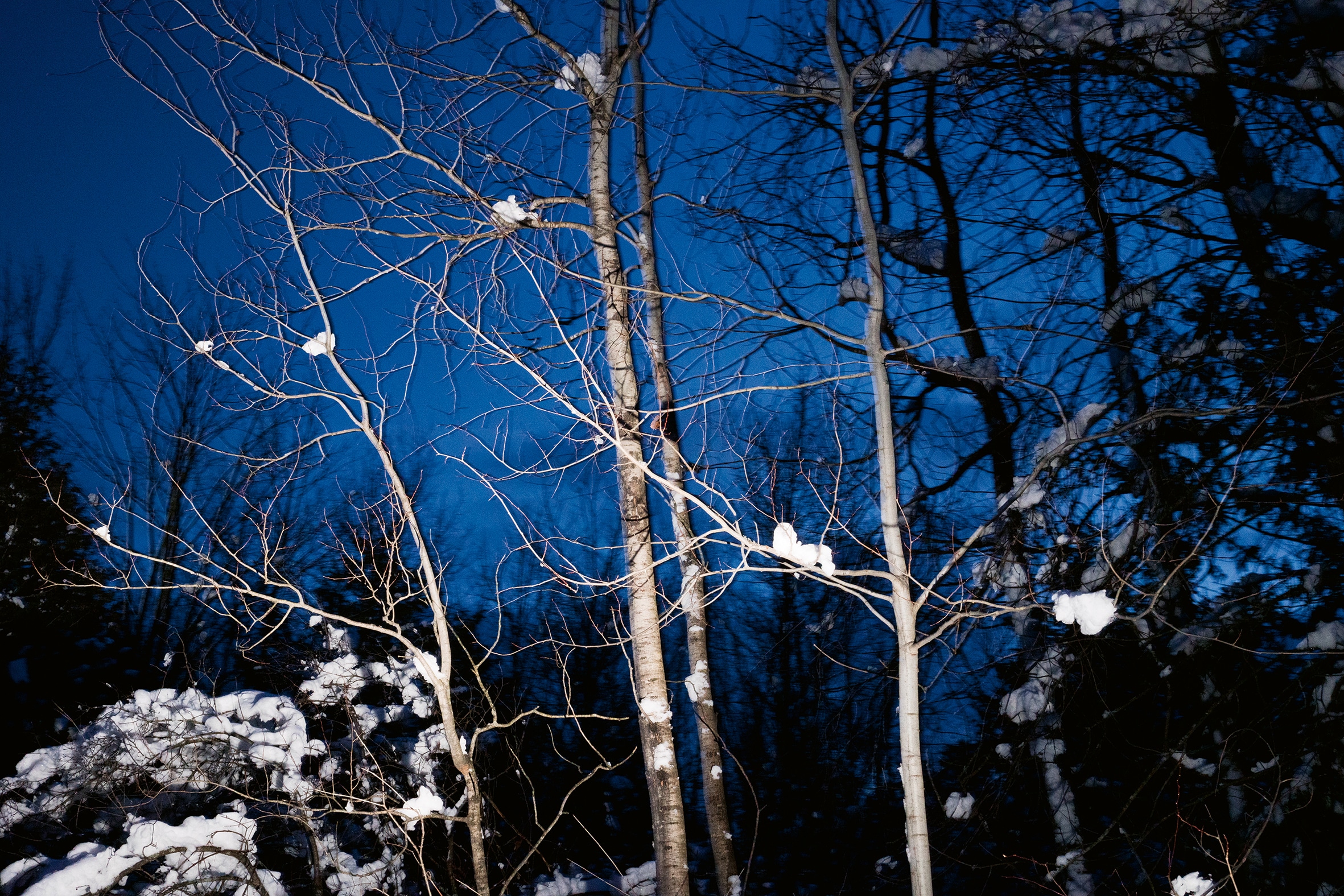
The northern landscape becomes a character in its own right. Dense green canopy in summer, crimson skies in autumn, fields buried under snow in winter — light and seasons endlessly reshape the same scene. During the Covid-19 pandemic, when international borders closed, Ruth Kaplan kept photographing on the Canadian side, turning more toward this lush ecosystem, recording ambient sounds, birdsong, silences. “I focused more on the landscape — a lush ecosystem — appreciating the meditative quality of the time spent,” she says.
In March 2023, Canada and the United States amended the Safe Third Country Agreement, extending its scope to the entire land border. The crossing at Roxham Road became impossible. The Canadian processing building was dismantled. The problem, however, did not vanish: asylum seekers, denied this narrow passage, now take longer, more dangerous, more invisible routes. Kaplan has been back to the site. It bears no trace of what took place there.
Crossing is neither a plea nor an elegy. It is a visual testimony that restores to asylum seekers what political debate so often strips away: a face, a story, an unbroken dignity.