Yasumasa Morimura, Cindy Sherman's Japanese Doppelgänger
Yasumasa Morimura and Charles Atlas flip the mechanics of voyeurism in a joint exhibition at New York’s Luhring Augustine gallery, where the observed body seizes back power from the eye that scrutinizes it.
By Guénola Pellen. Photos by Yasumasa Morimura and Charles Atlas.
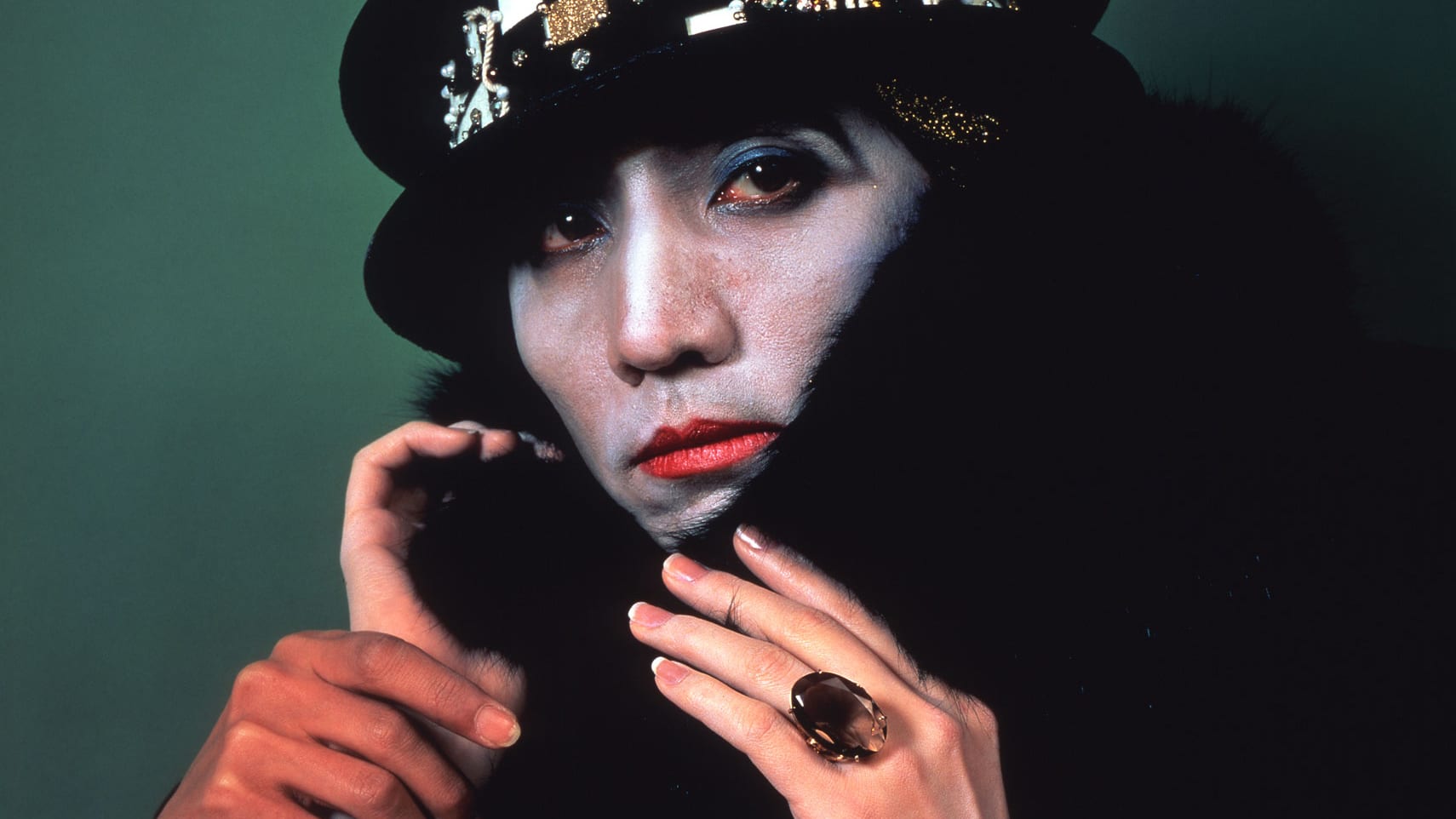
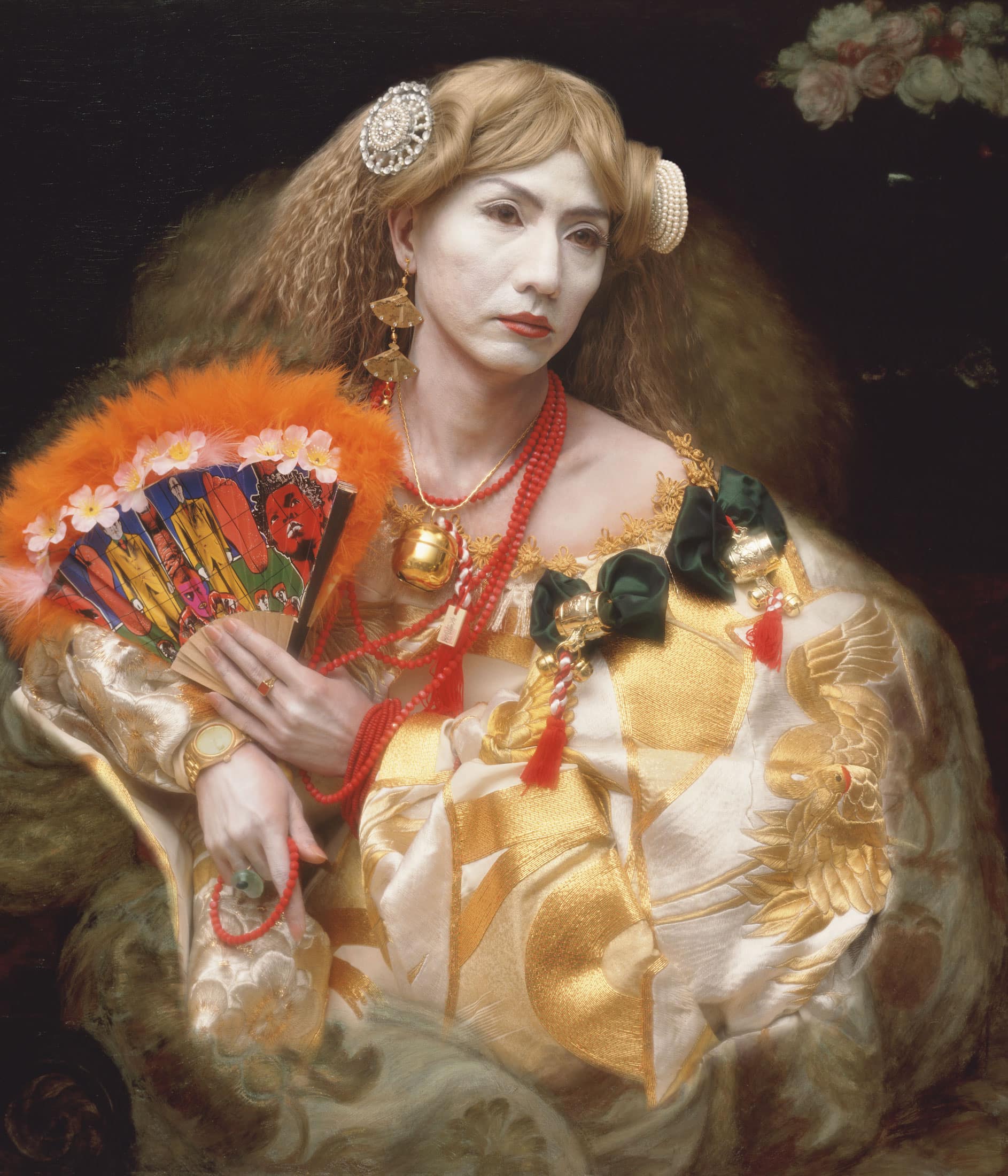
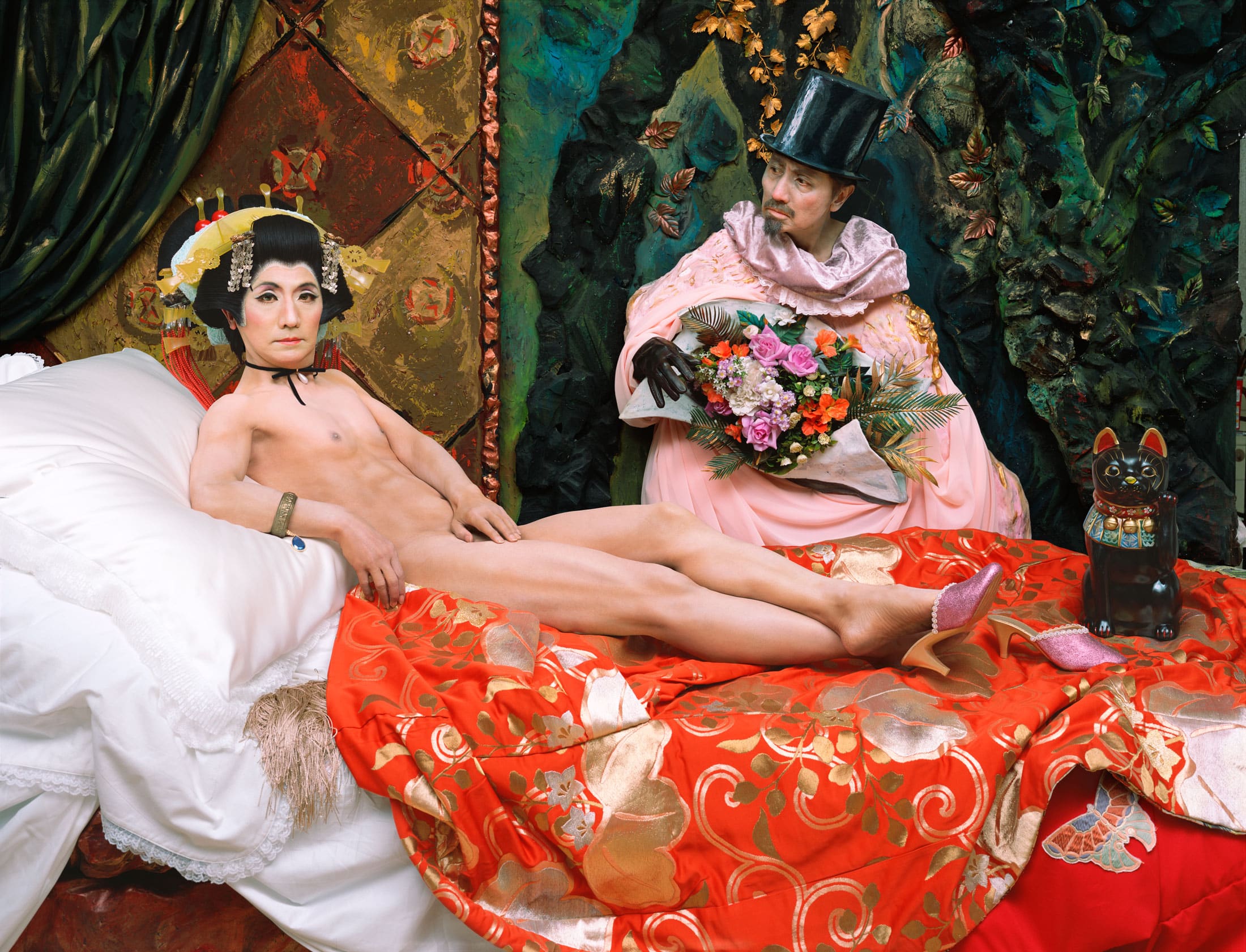
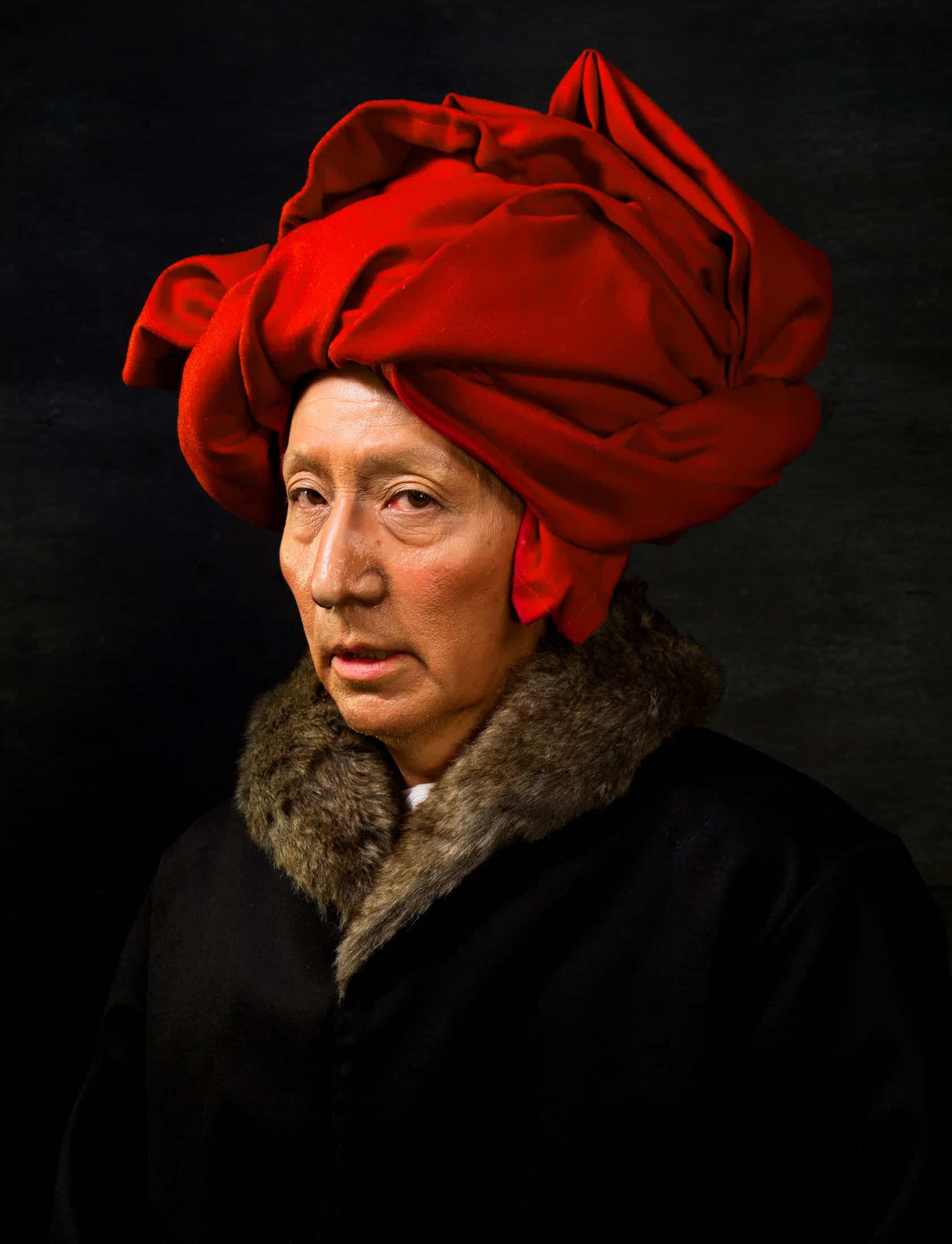
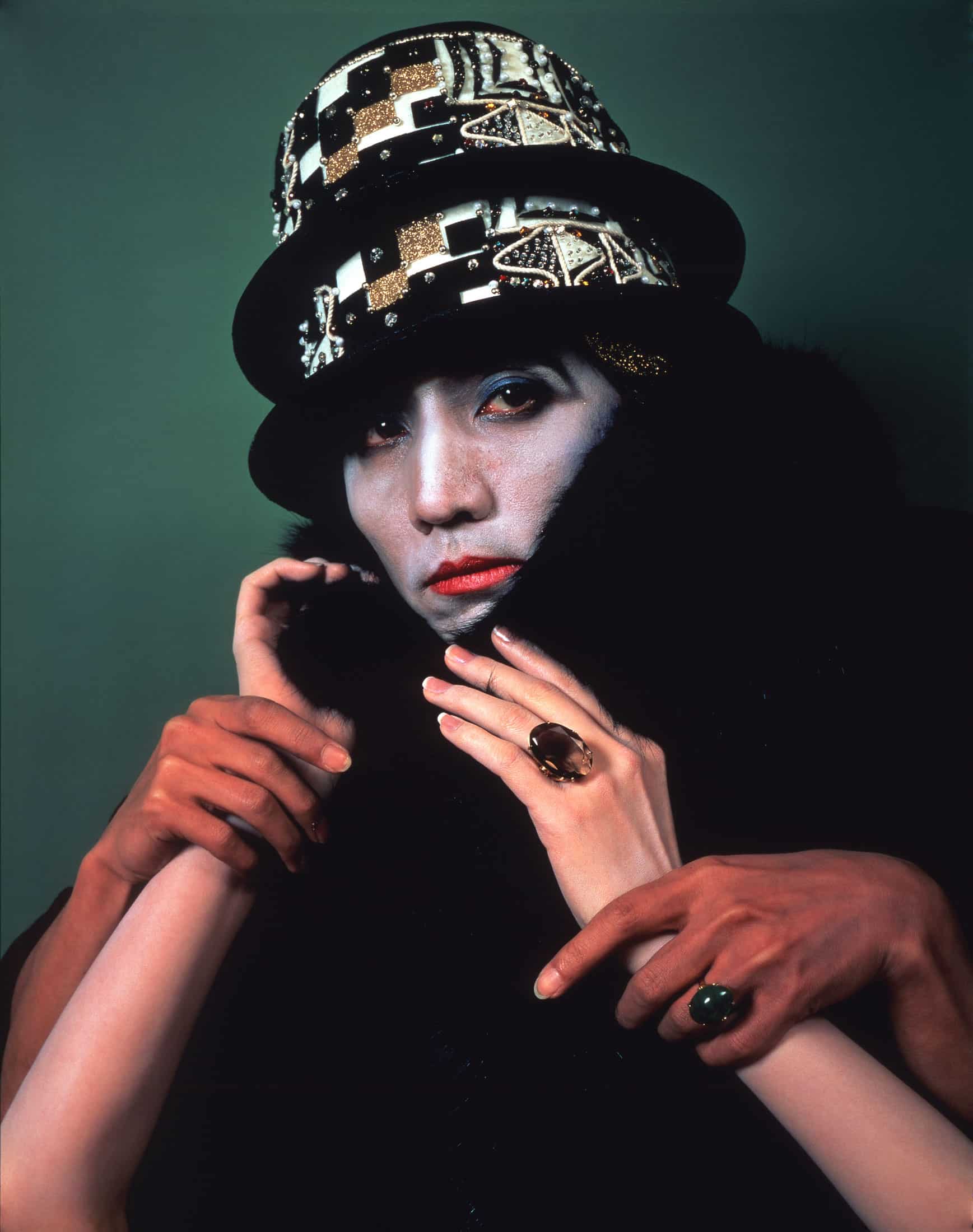
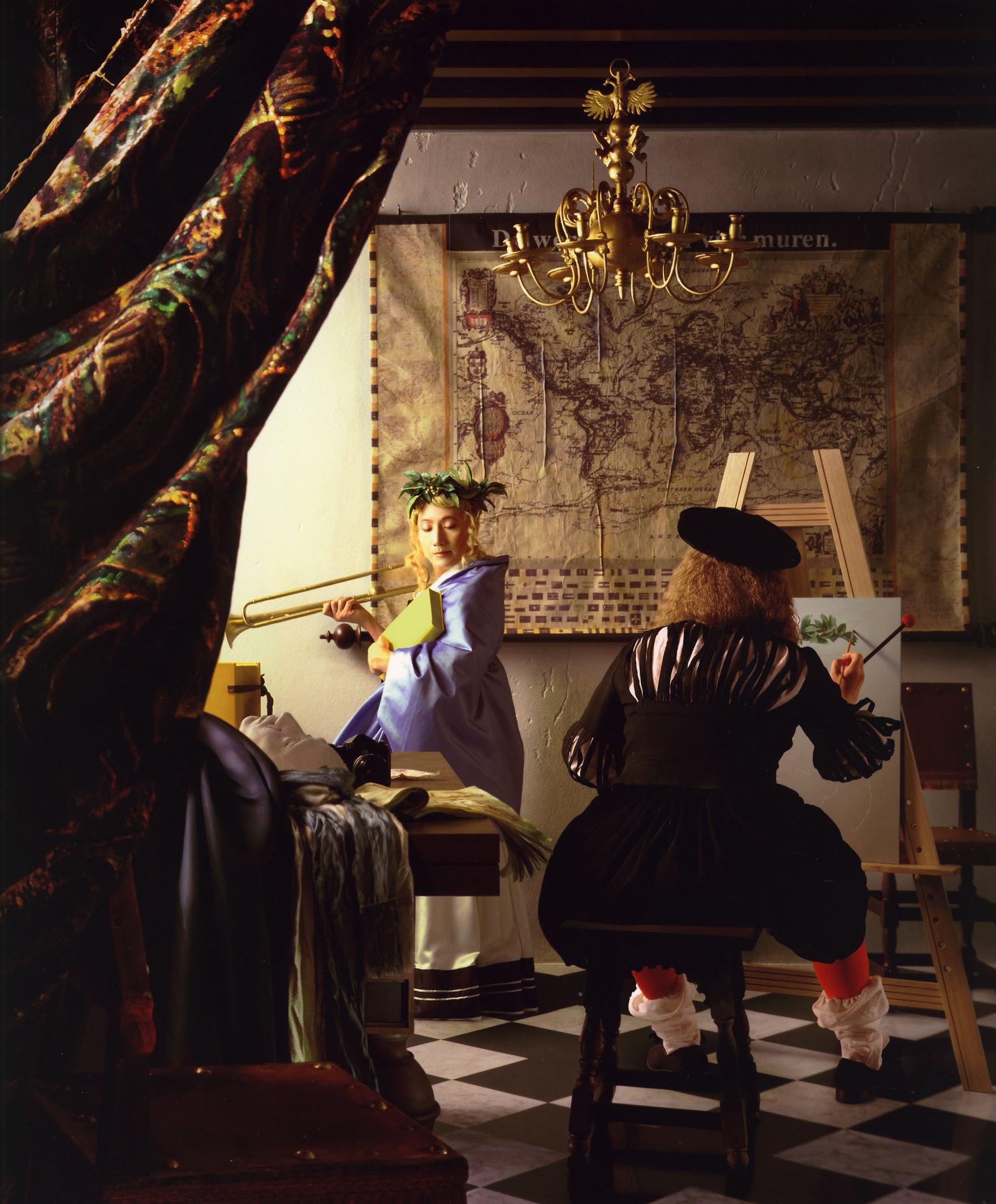
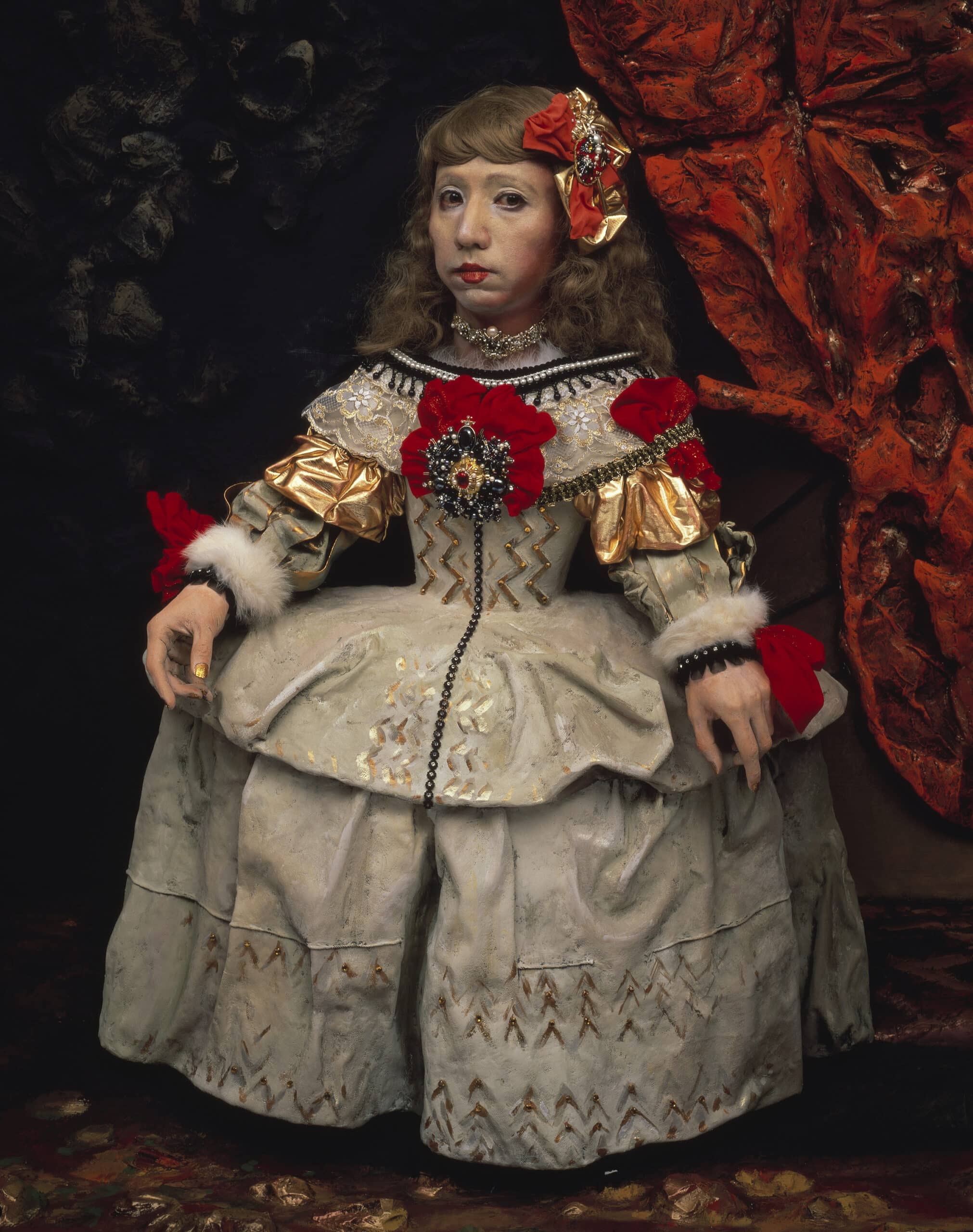
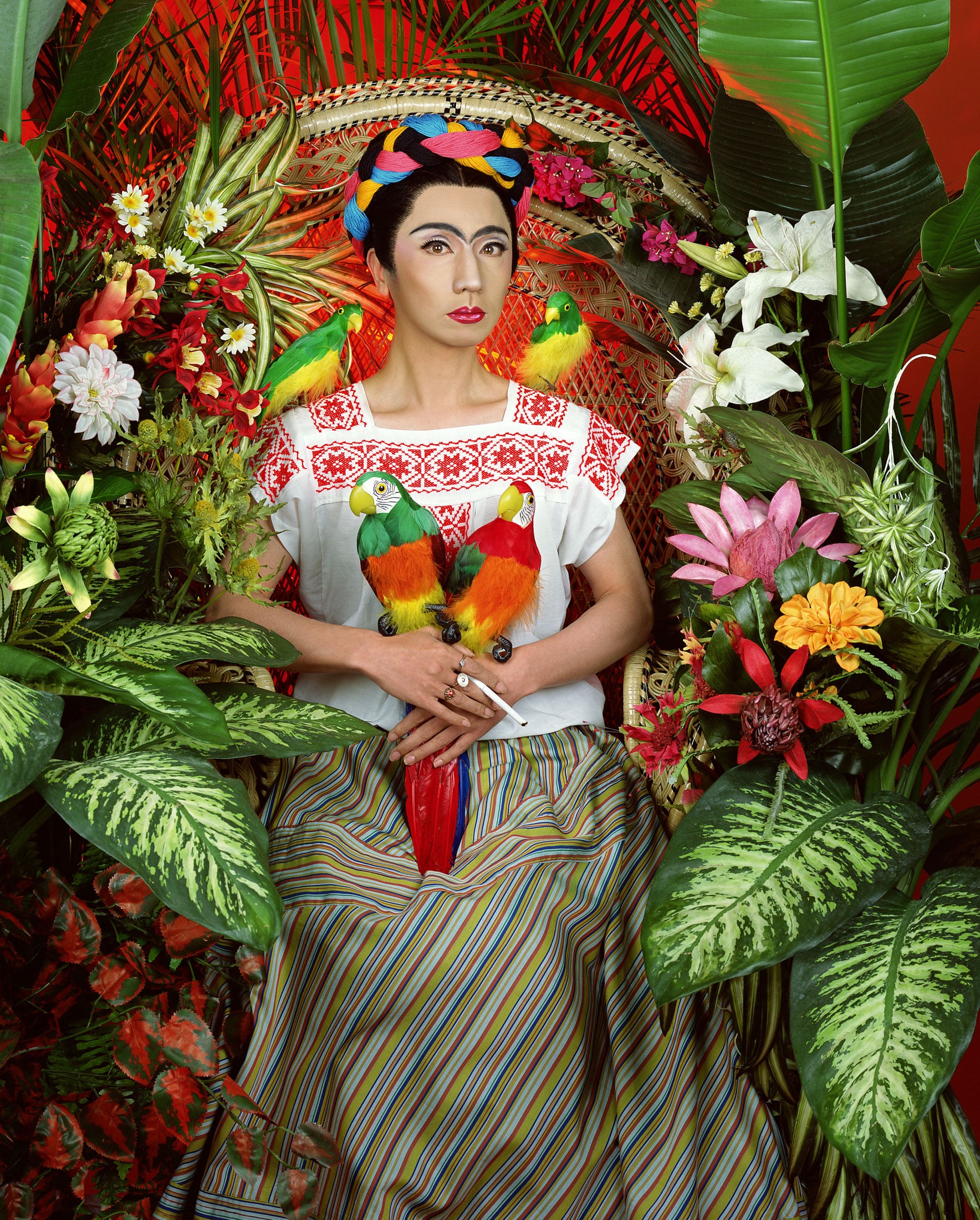
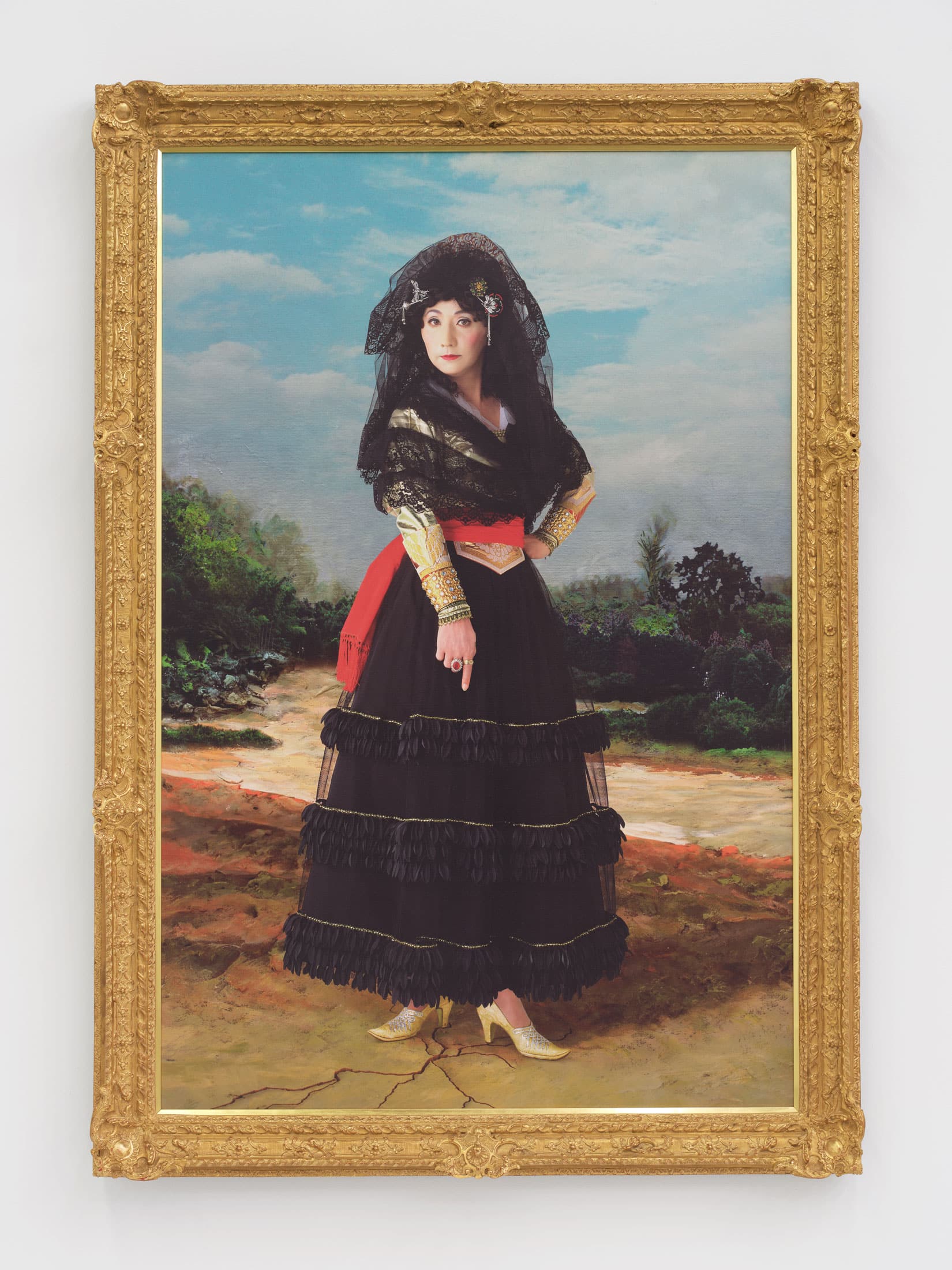
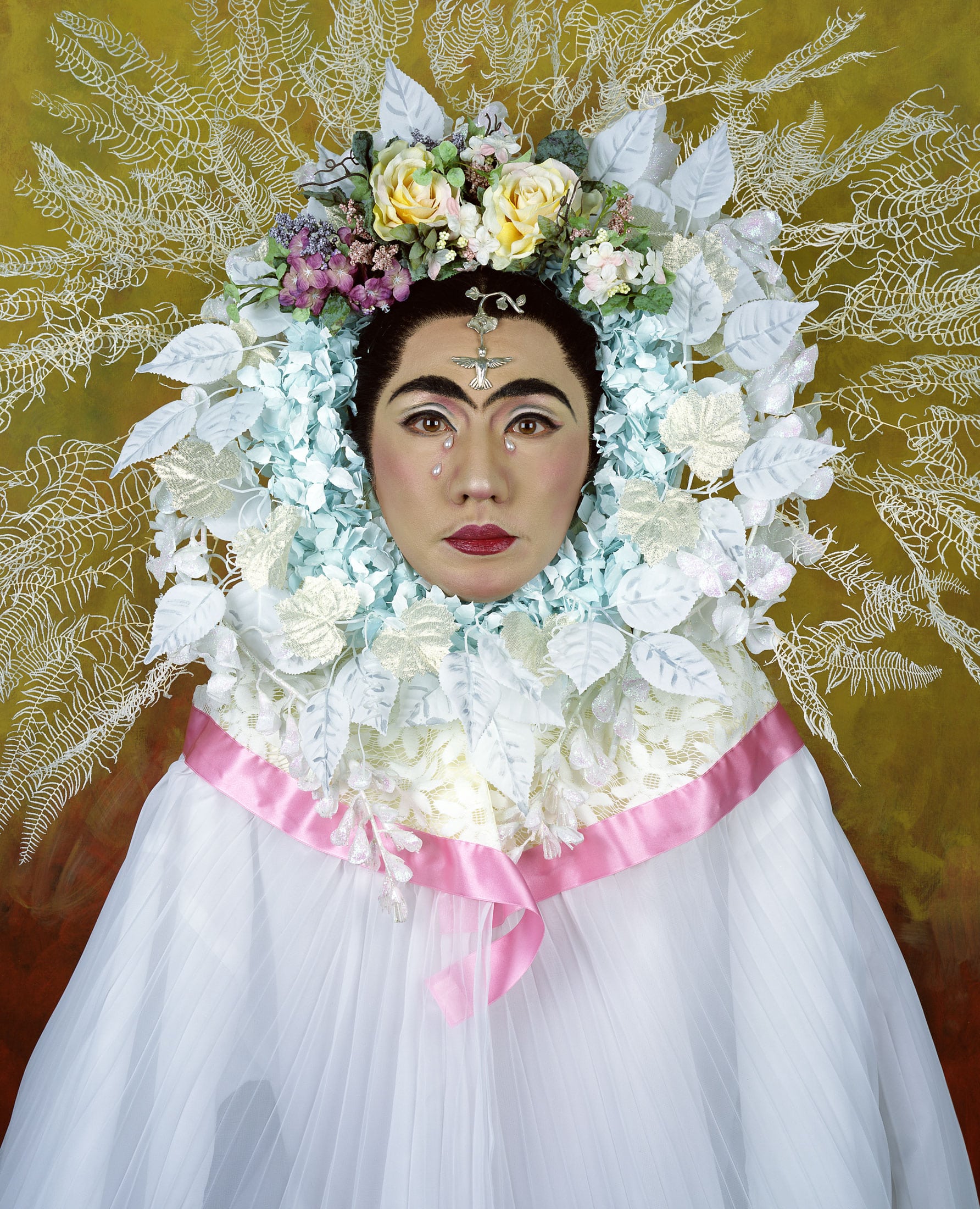
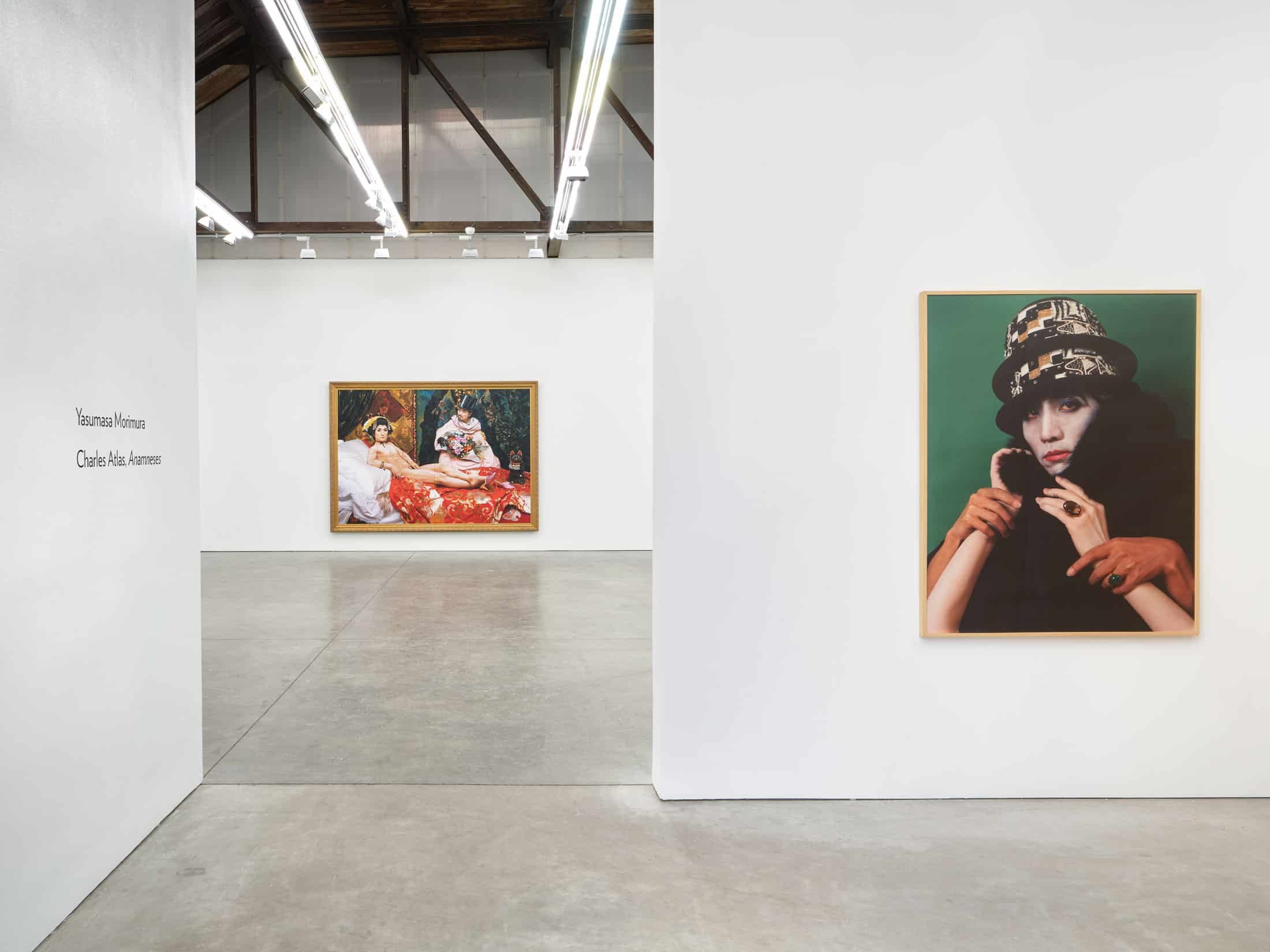
He infiltrates Western masterpieces like a double agent. Through his physical transformations, Yasumasa Morimura restages Manet, Velázquez, Vermeer and Frida Kahlo, always casting himself in the central role of the painted figure. His body becomes the stage for a jubilant act of substitution, matched by a staggering meticulousness in the recreation of period sets and costumes, in a vein reminiscent of Cindy Sherman.
The enigmatic artist, who grants no interviews and never makes public appearances, yet never seeks perfect illusion. The discrepancy is deliberate, defiant, almost swaggering: his tableaux borrow from drag its knowing wink. The kitsch, underscored by heavy-handed makeup and tragi-comic poses, teeters between the sublime and the grotesque.
Doublonnage (Marcel) (1988), which opens the exhibition, crystallizes this strategy of layered identity: Morimura restages Man Ray’s portrait of Rrose Sélavy, stacking masks upon masks, his own, Duchamp’s, that of geisha makeup,in a dizzying cascade of duplications that abolishes any notion of an original.
From Daughter of Art History (Princess A) in 1990 to Une Moderne Olympia in 2018, Yasumasa Morimura reveals a body of work that has spent four decades turning the male gaze inside out like a glove: the spectacle now stares back at whoever thought they were doing the watching.
What strikes most across the photographic tableaux is the glossy varnish Yasumasa Morimura applies to his prints, mimicking the brushwork of the very painter he vampirizes.
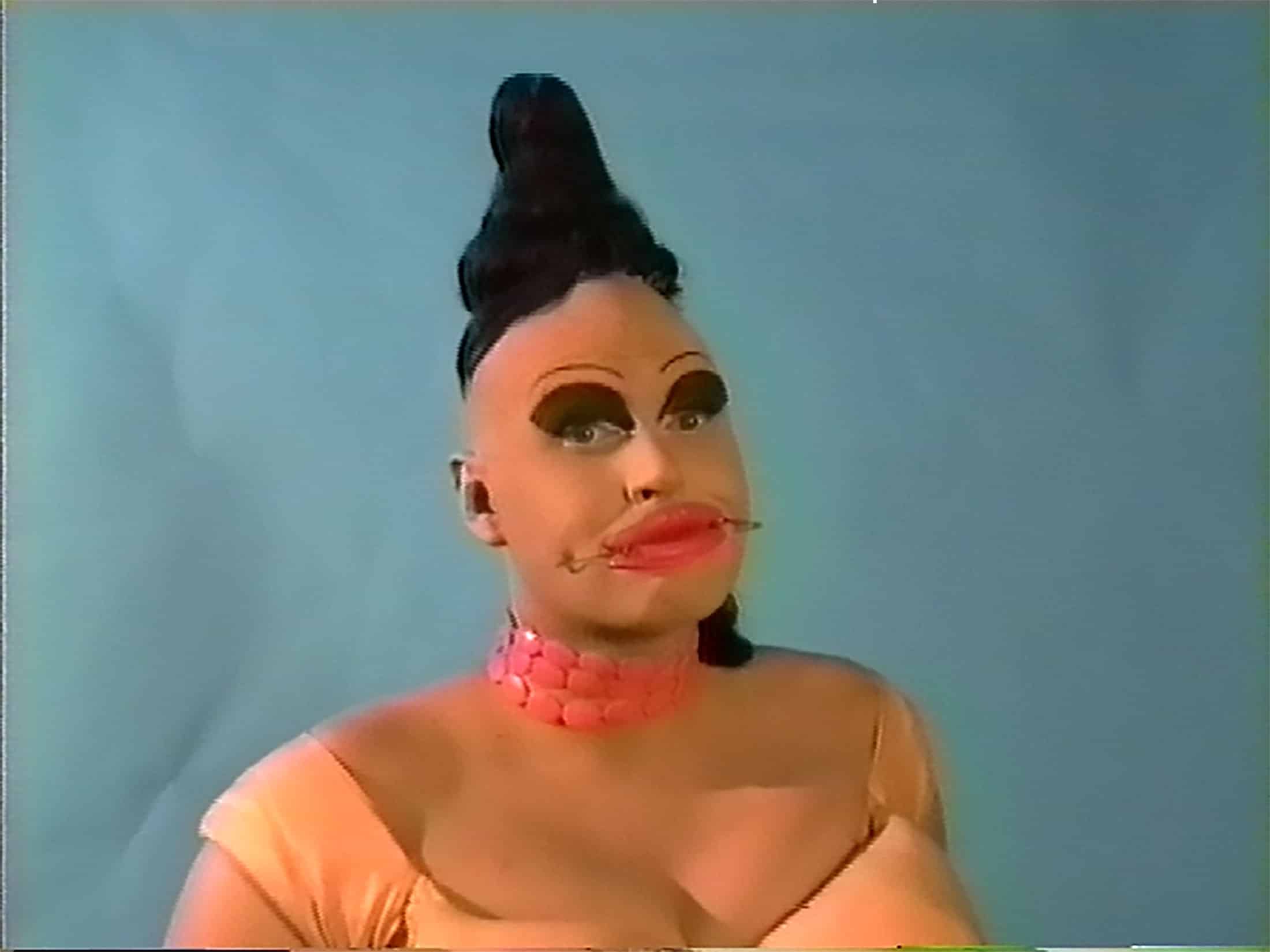
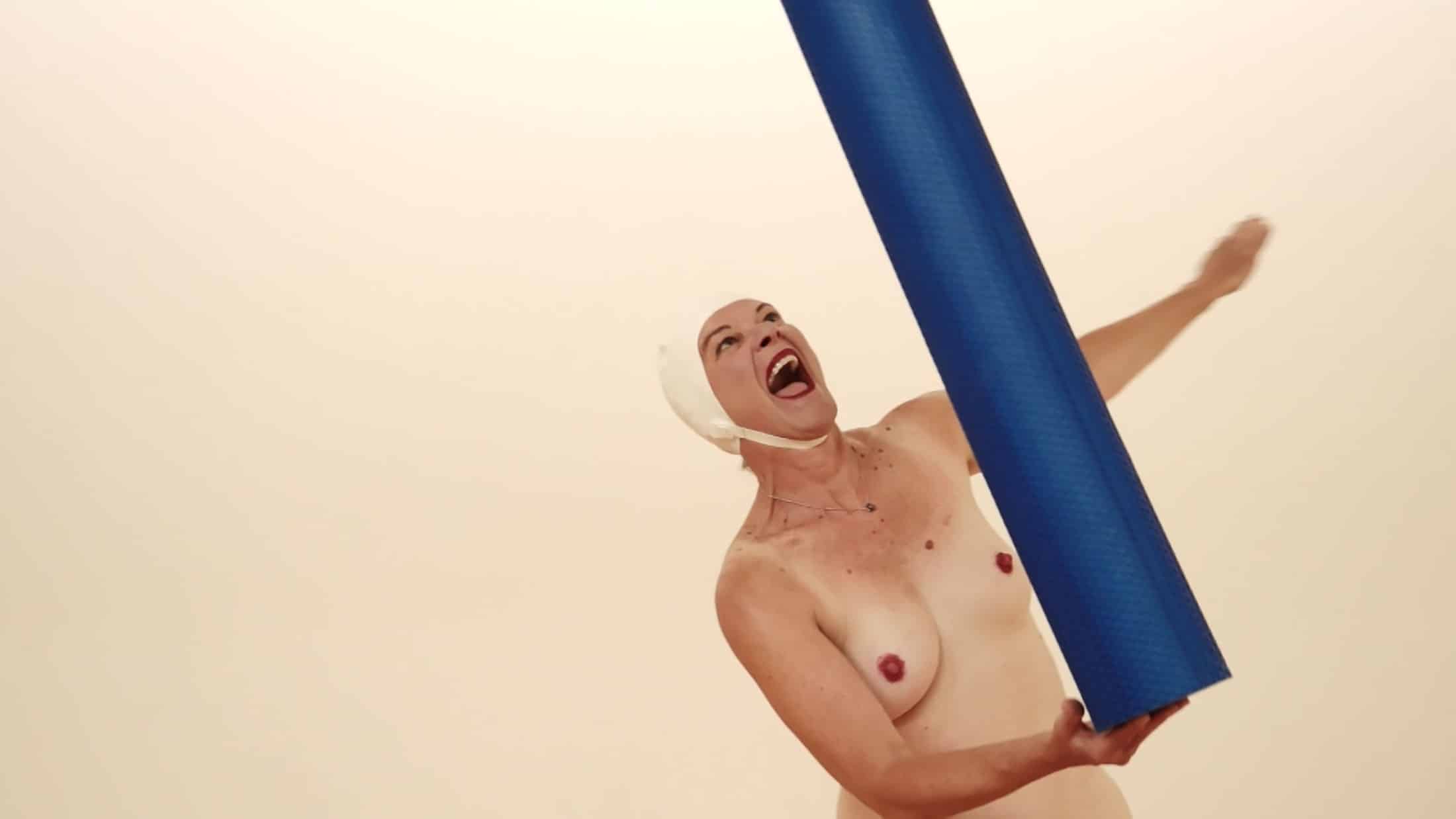
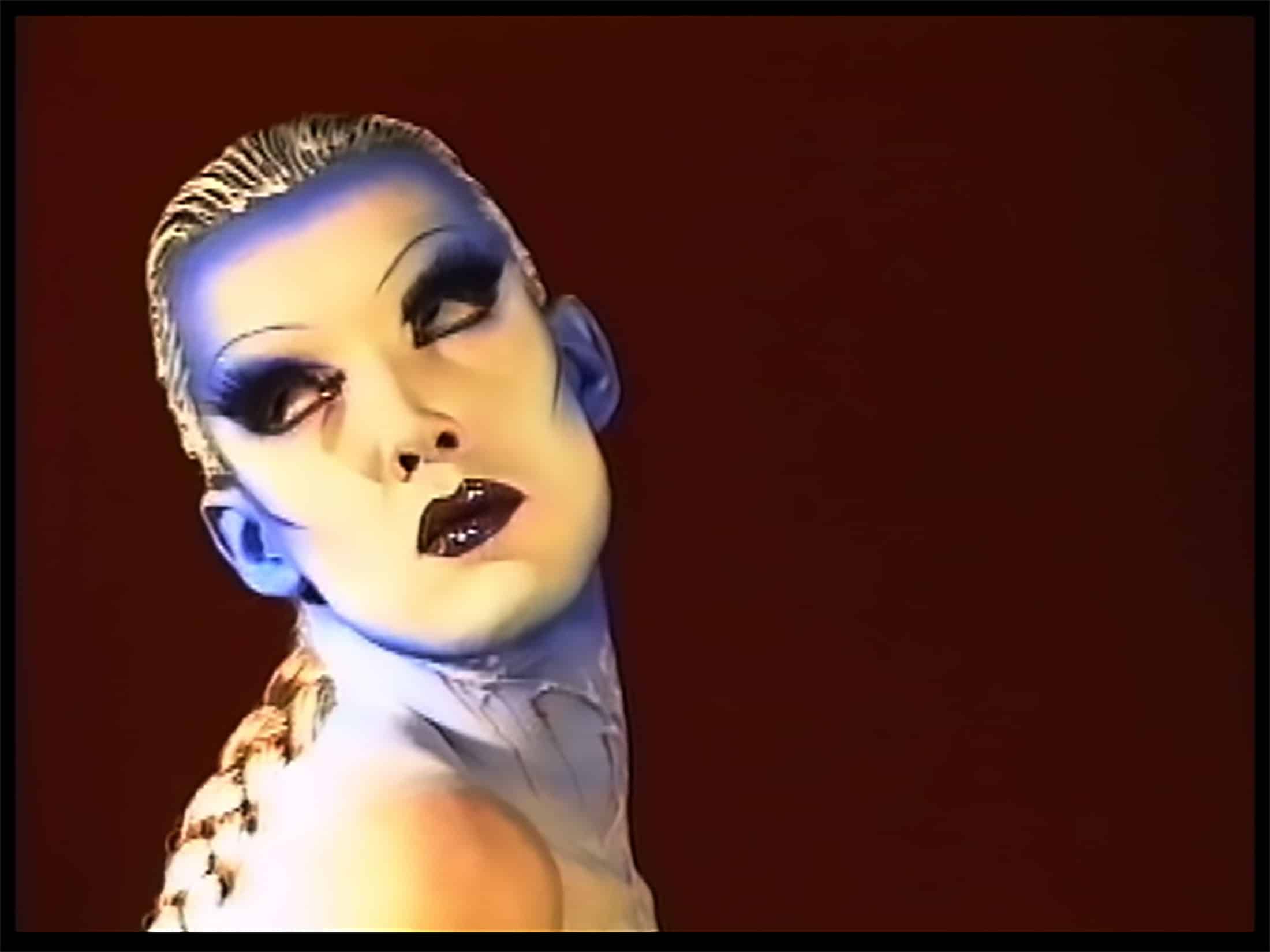
In the second gallery, Charles Atlas unfolds a thirty-minute anthology of eight filmed portraits—Leigh Bowery, Hapi Phace, Kabuki Starshine—captured in the 1980s and 1990s, then re-edited in 2026. The stroboscopic editing shatters the one-directional gaze into a myriad of perspectives.
Against Bowery’s incandescent burlesque, Atlas sets the hypnotic slowness of Kabuki Starshine, painted in cobalt and acid yellow, whose every gesture the camera follows with contemplative tenderness. Two antagonistic cinematic registers that together celebrate the same joyful, unruly mutability.