
Every image by Malick Sidibé is a celebration. His horizon? The hip, carefree youth in bell-bottoms, the beach-goers, the twist, rock and funk devotees. Marked by a strabismus that only sharpened the singularity of his gaze, this genius of framing and light immortalized the hope of a country in the throes of political and cultural emancipation, revelling in its newfound freedom on the banks of the Niger, in the nightclubs of Bamako and at “Studio Malick.”
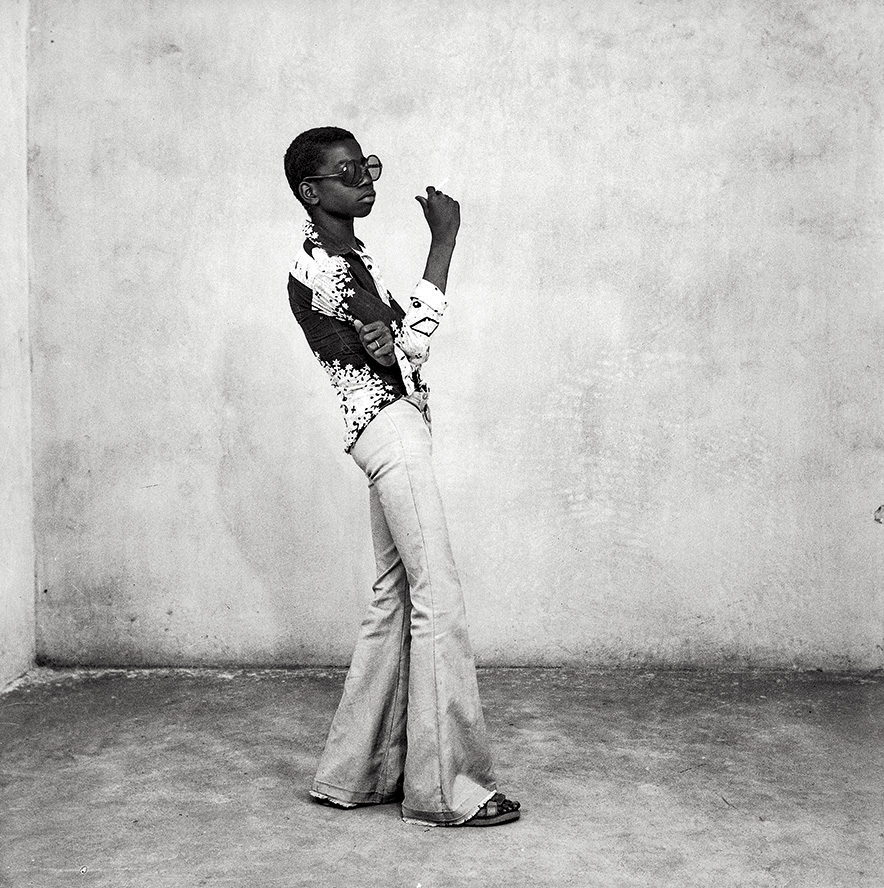
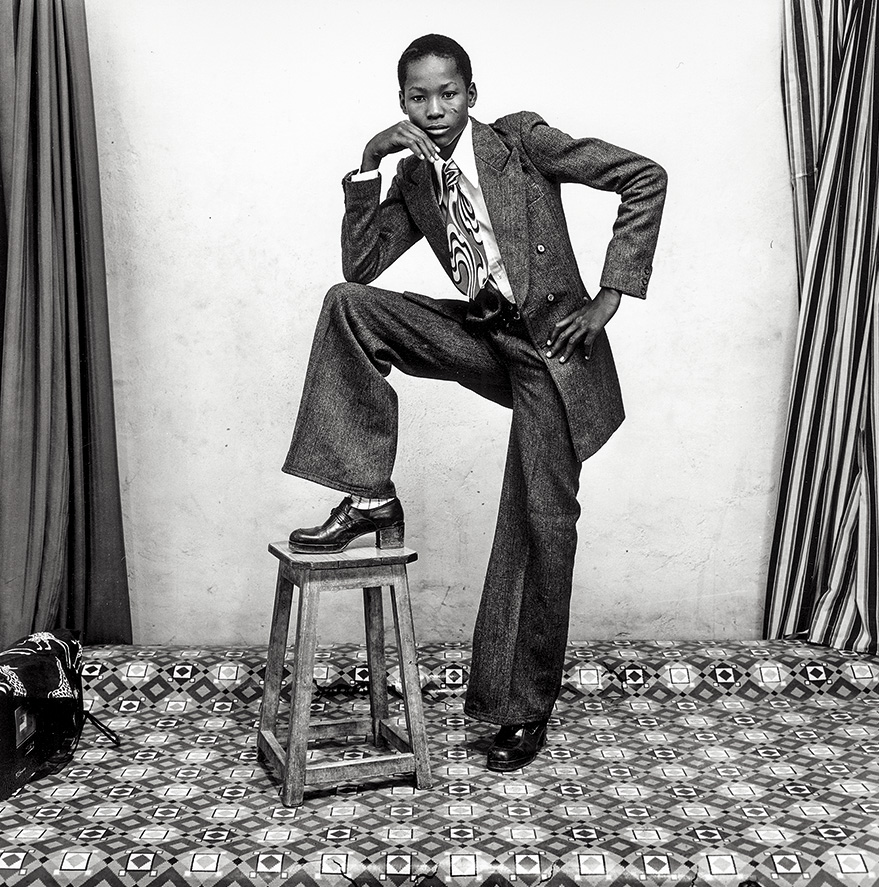
The son of a Fulani farmer, Malick Sidibé was born in 1935 in Soloba, a village in southern Mali, some 200 miles from Bamako. Trained in drawing and then jewellery-making, he came to photography through Gérard Guillat, known to all as “Gégé la Pellicule.” In the early 1960s, Sidibé opened his studio in Bagadadji. What unfolded there was no mere portrait trade but the invention of a visual language, tender and direct, in which every subject became sovereign.
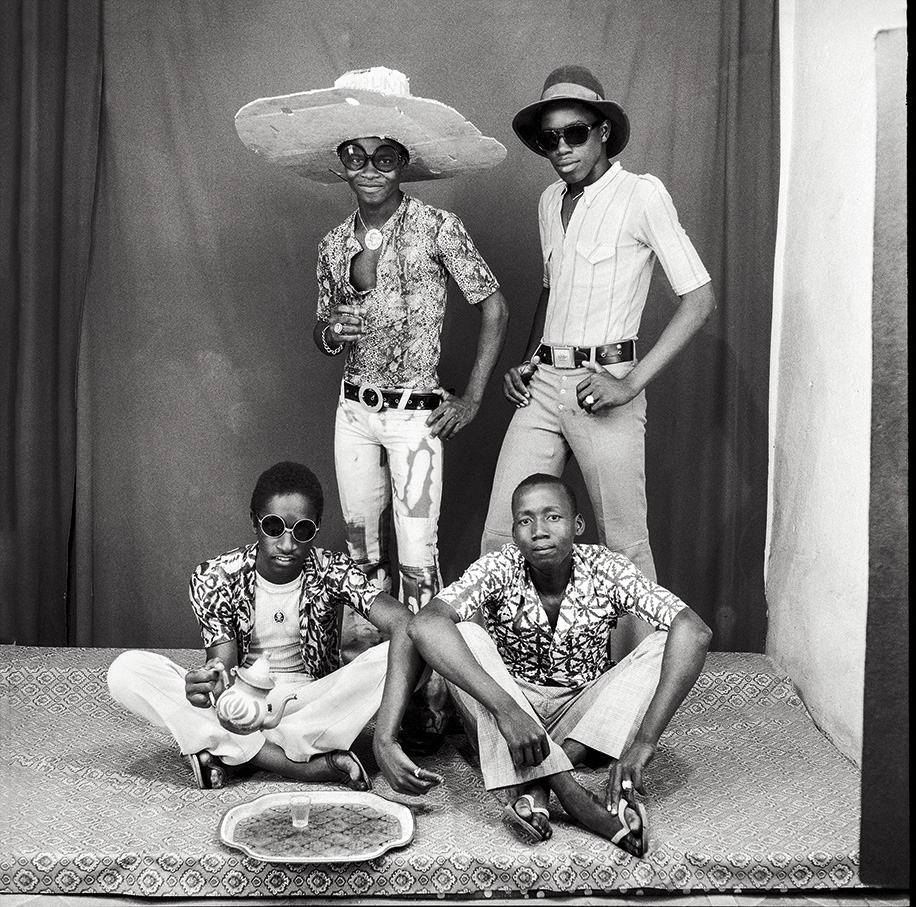
The five young men in floral shirts and wide-brimmed hats in Friends of the Spaniards (1968) are captured in a masterful arrangement of nonchalance and splendour. They display that quiet self-assurance bestowed only by the certainty of being young and free. The staging borrows from the vocabulary of record sleeves. Sidibé captures the essence of a generation.
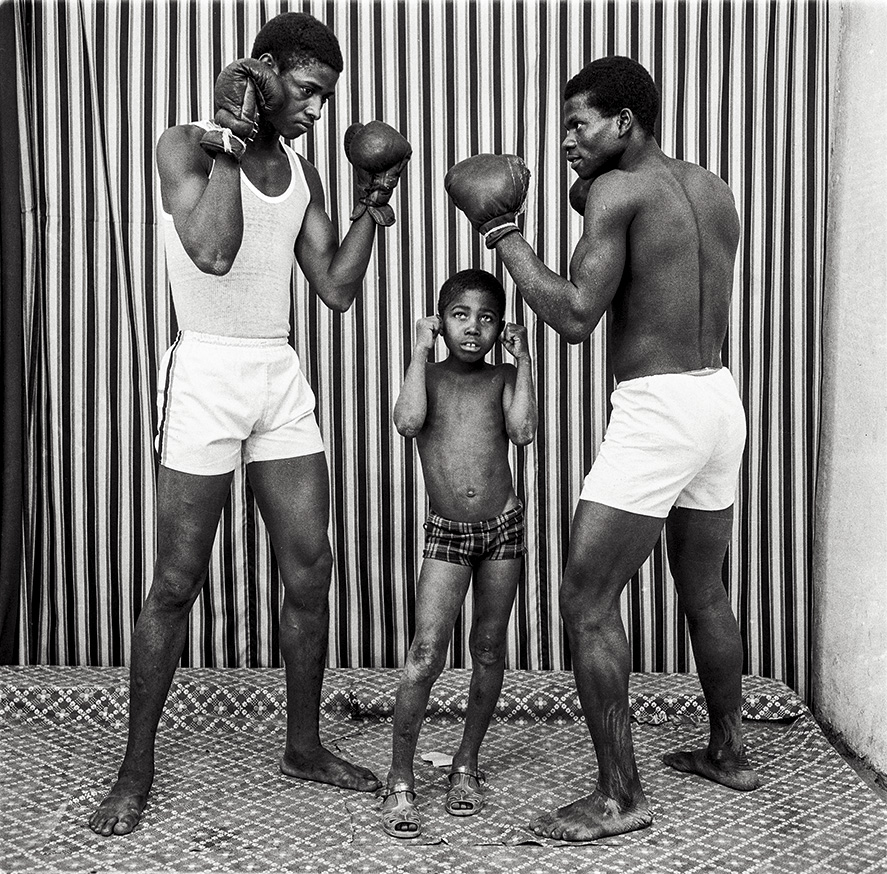
An Unprecedented Archive of Africa
André Magnin, exhibition curator, recalls discovering the photographer’s archives: “Malick’s negatives were stored in yellow and red Kodak cardboard boxes. Each one contained a month’s worth of shots.” The staggering abundance — “hundreds of boxes, two hundred, three hundred thousand negatives, perhaps more” — speaks to the scale of an endeavour that constitutes one of the largest visual archives of West Africa.
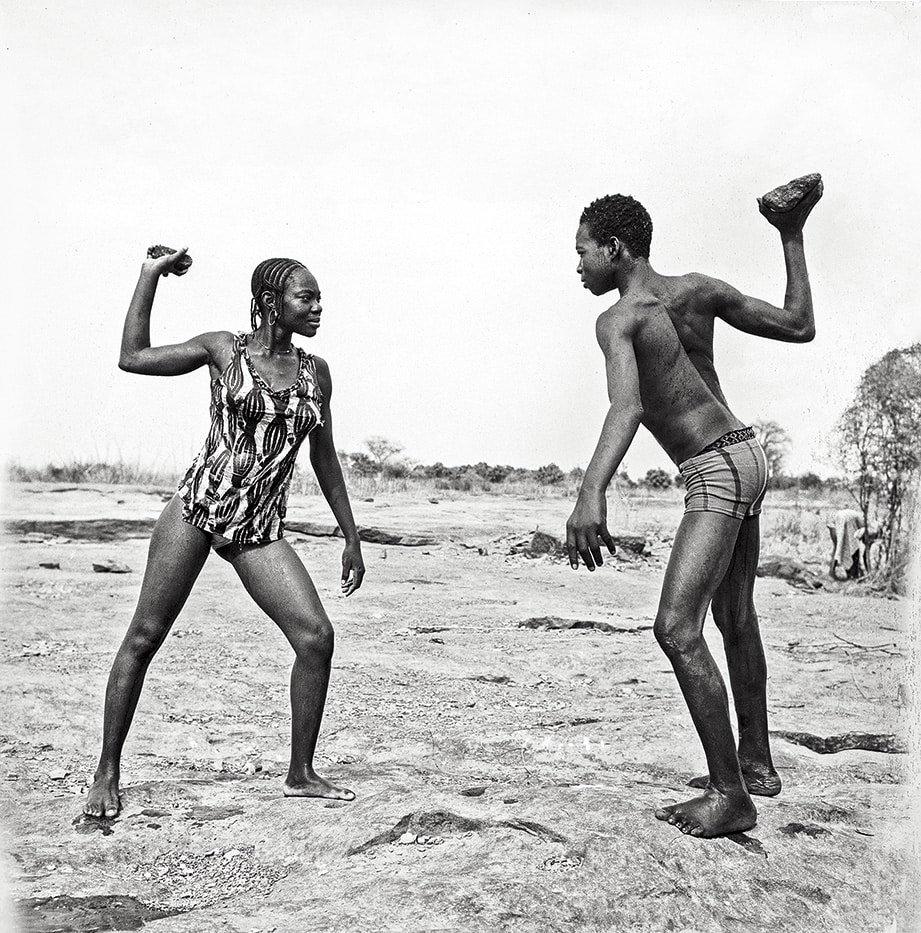
Muscles taut, fists raised in the open air, a boy and a girl face off in Friends Fighting with Stones (1976) as if in a choreography of joyful wrestling. The low horizon, the vast sky, the bare earth lend the scene an almost epic dimension, yet a smile breaks through, and one understands that this fight is above all a ritual of friendship. Malick Sidibé excels at capturing that fragile threshold where the virile gesture melts into tenderness.
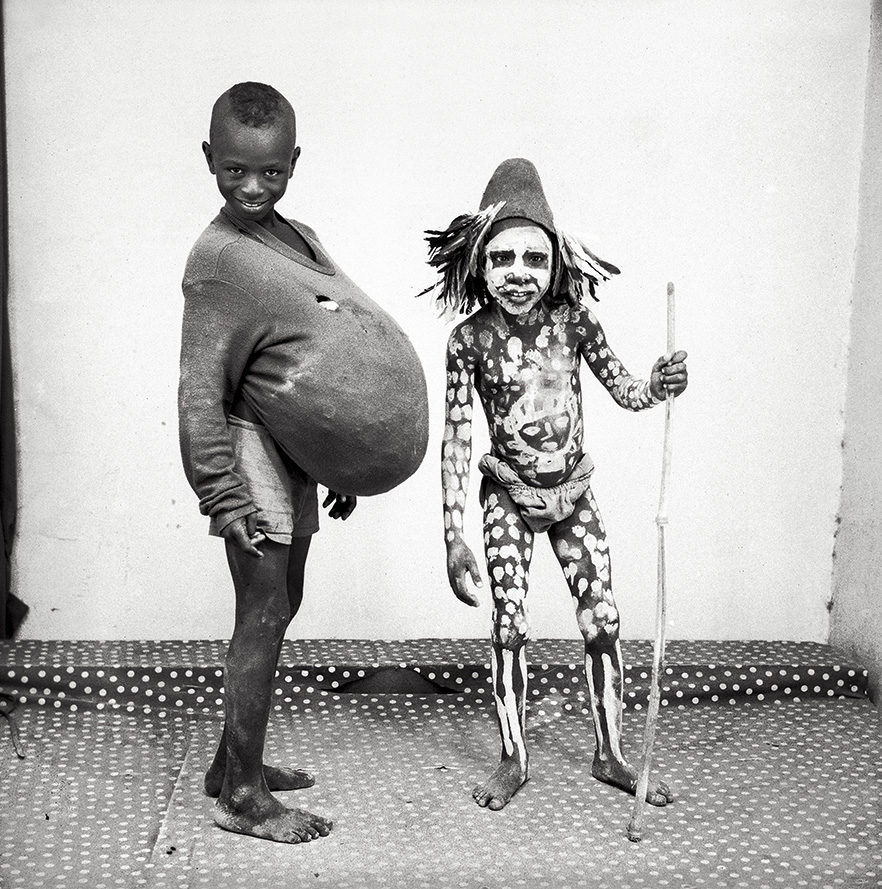
Photographer Françoise Huguier locates the work in its very fragility: “None of it was meant to last, let alone to be shown outside Mali. These photos were not intended for History; yet they have become one of its most precious archives.” The beauty of this work springs precisely from its absence of calculation, from that primal gratuitousness which is the very nature of celebration.
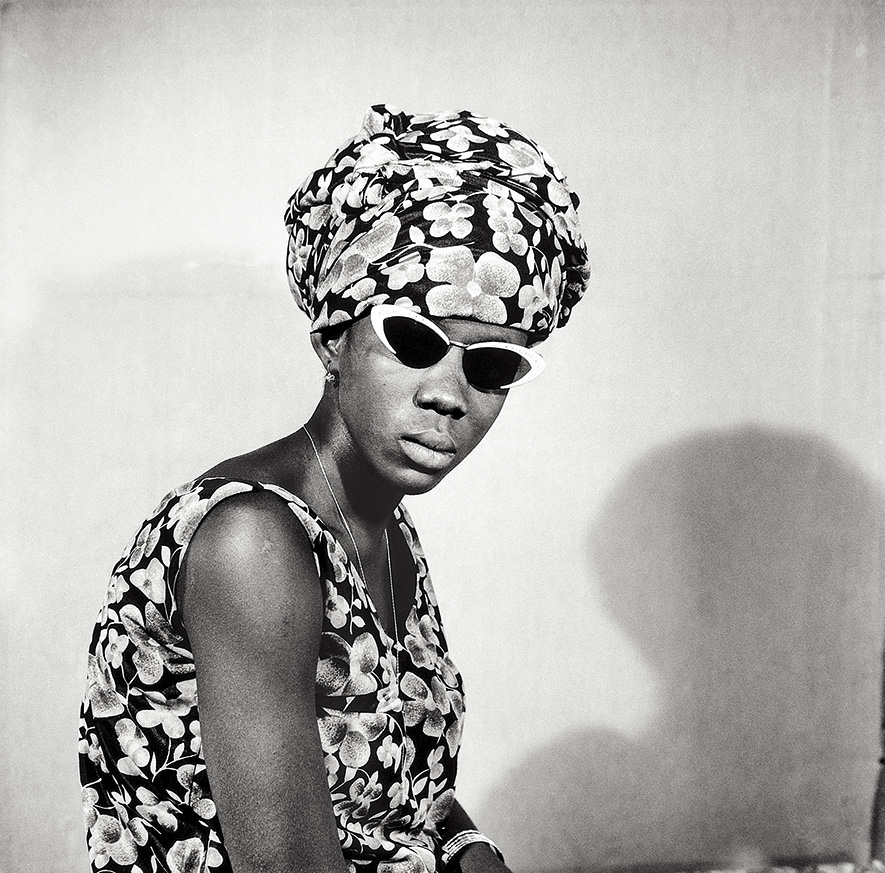
A floral turban, dark glasses borrowed from the photographer — as the title humorously underscores — Miss Kadiatou Touré Wearing My Sunglasses (1969) offers the portrait of a young woman whose shadow cast on the wall traces a ghostly double.
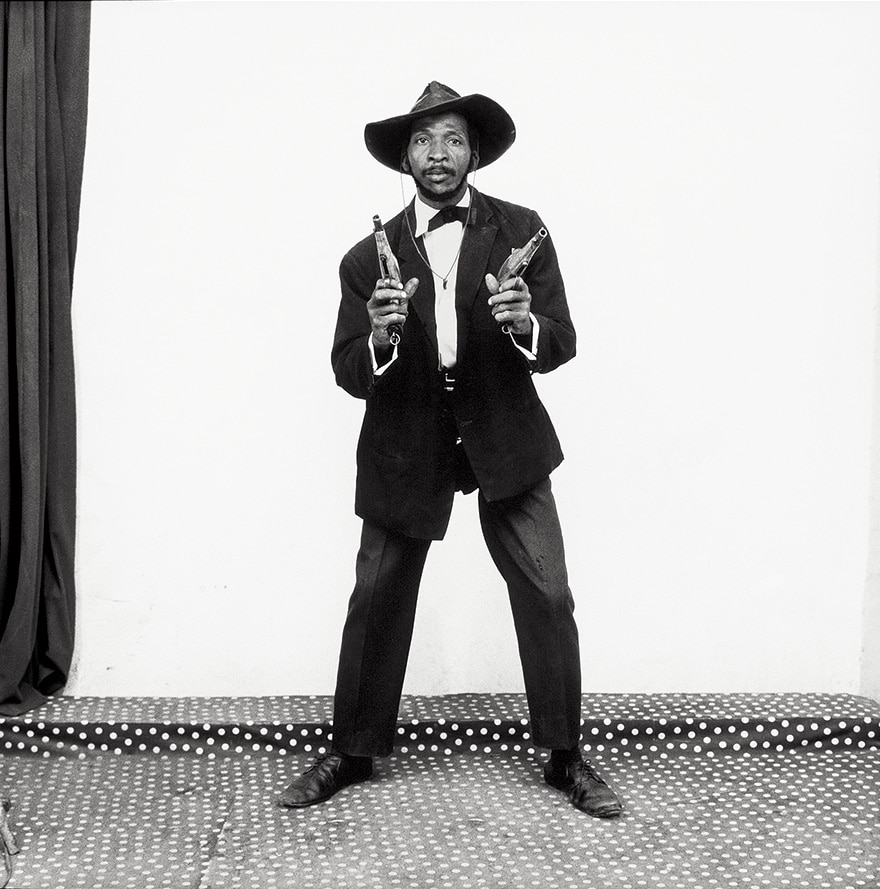
Altogether different is the flamboyance of Django Shoots First (1971): a man in a dark suit and cowboy hat, striking a gunslinger pose borrowed from Italian cinema. The appropriation is exhilarating: the point is not to imitate, but to reinvent oneself through the detour of fiction.
Writer Manthia Diawara recalls the political context of these seemingly carefree images: “In Bamako, curfews were imposed, and young people caught wearing a miniskirt, a fitted shirt, bell-bottoms or an Afro hairstyle were sent to re-education camps.” Sidibé’s photographs document a silent resistance — that of bodies refusing to be dictated to, dancing to James Brown or the Beatles in defiance of prohibition.
Elegance As a Political Act
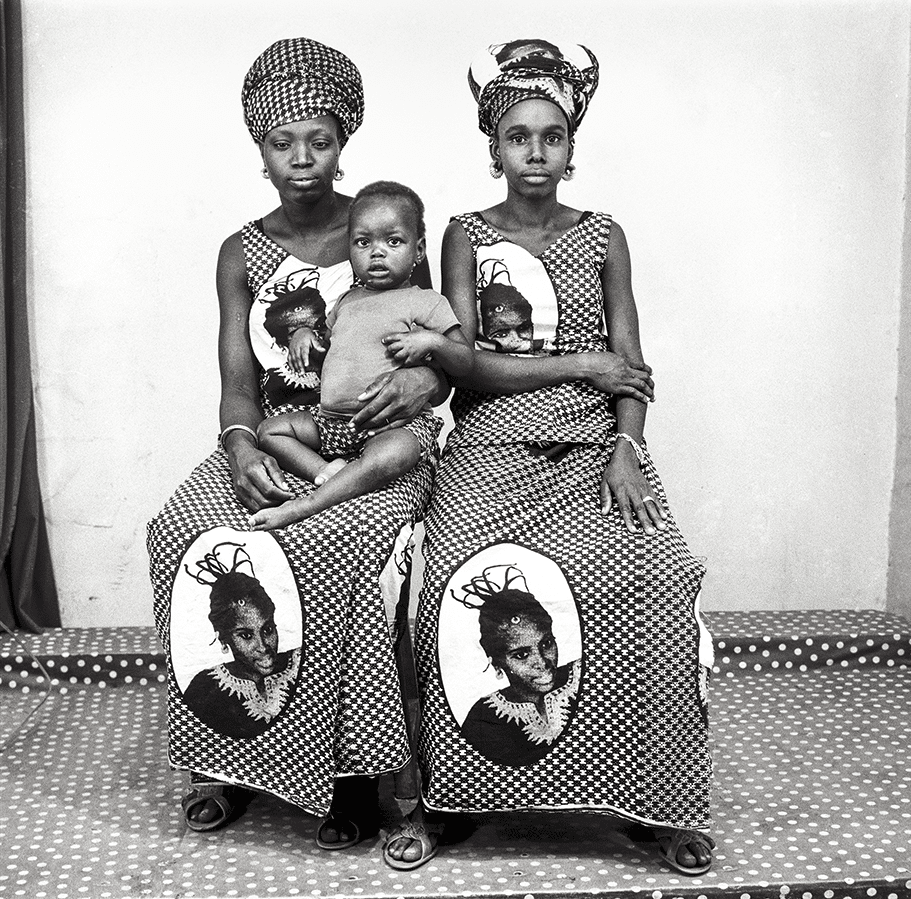
Two women seated side by side, dressed in matching pagnes adorned with photographic medallions, a child nestled between them: The Two Co-Wives (1972) unfolds a composition of soothing, almost hieratic symmetry; and yet, in the slight tilt of their heads, something passes that escapes all conventional posing.
Senegalese photographer Omar Victor Diop captures the singularity of this body of work with striking clarity: “In a portrait by Malick Sidibé, the gaze is always loving, trusting.” Then this sentence, which could serve as an epitaph: “Every image is a postcard sent to the future, an affirmation of self, a testament of love for life.”
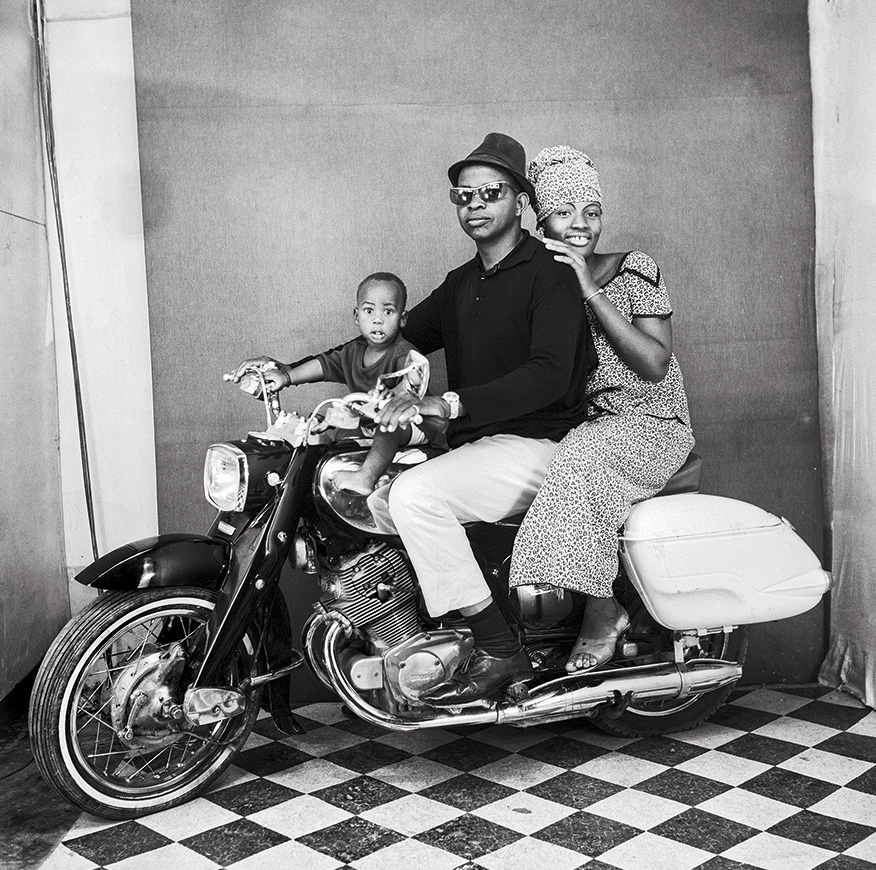
© Malick Sidibé / Studio Malick Sidibé
Curator Laura Serani evokes the man behind the work: “Right up until the final years, in front of Studio Malick in Bagadadji, in the dust and noise of the street, there was always a small circle gathered around tea.” Until his death in 2016, at the age of 80, the photographer “listened, dispensed his quips and lit up the gathering with his smile.”
Awarded the Golden Lion at the Venice Biennale in 2007, Malick Sidibé never left Bamako. All proceeds from this tribute album go to Reporters sans frontières: to offer images brimming with joy in troubled times, and to fund the freedom of those who tell the world’s stories — what finer gift could there be?
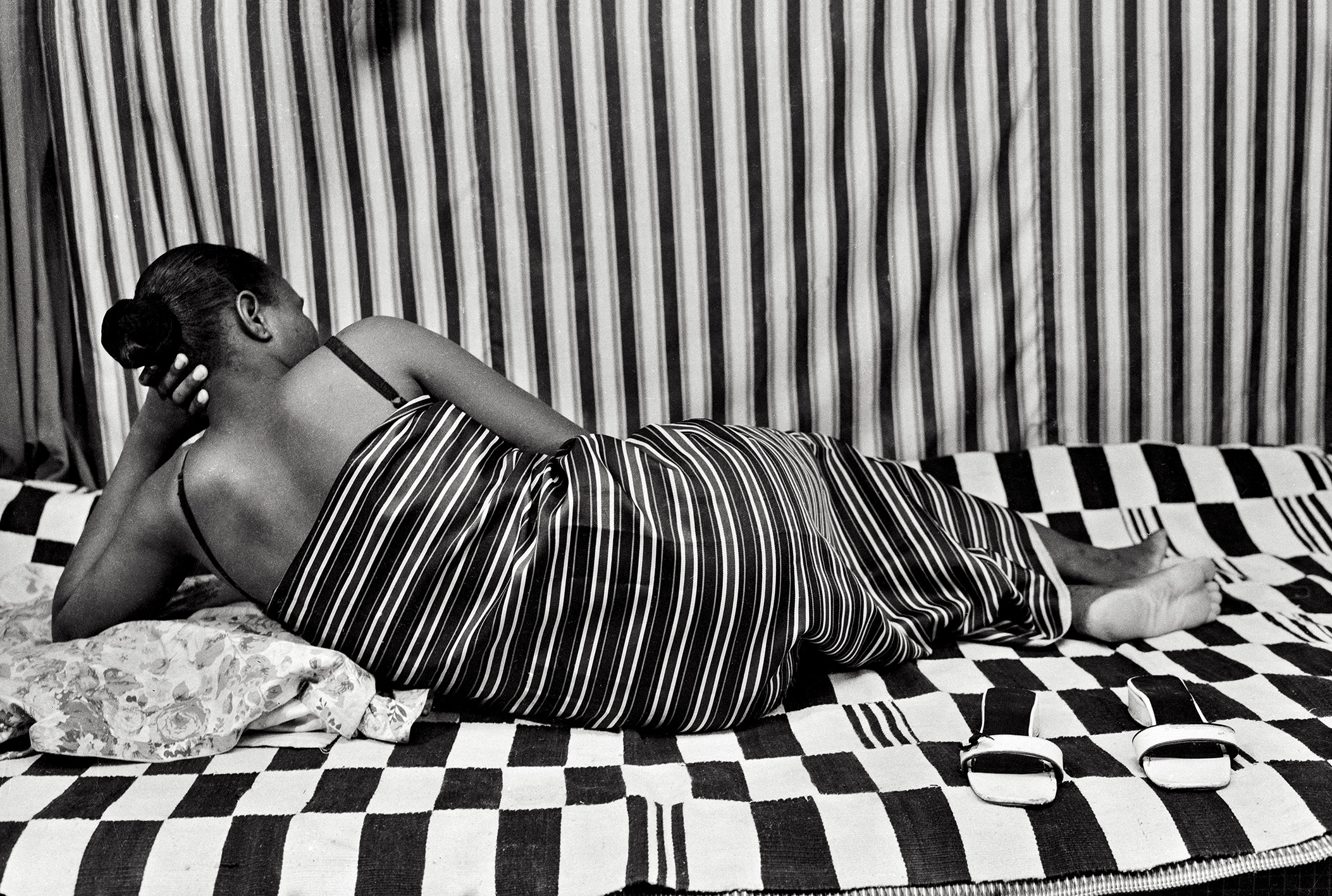
The new Reporters sans frontières album, 100 photos de Malick Sidibé pour la liberté de la presse, is available for €12.50.