
Executives in chinos, drag queens, Muslims in djellabas and sneakers, Chinese anti-establishment rockers, football fans, geeks, mohawked punks, grandmothers in stiff raincoats, modern dads with baby carriers, hot girls in leggings, artisans or bobos in workwear jackets, sad boys listening to ambient music, or City girls in stilettos. Which tribe do you think you belong to?
Where August Sander classified Weimar-era German society into seven solemn categories, where Hal Fischer decoded the sartorial semiotics of San Francisco’s gay Castro district in 1977, Ari Versluis and Ellie Uyttenbroek have invented a device that is infinitely broader. You thought you were irreplaceable, and then you discover 12 stylistic doppelgängers lined up on the same grid, in the same pose, against the same gray backdrop.
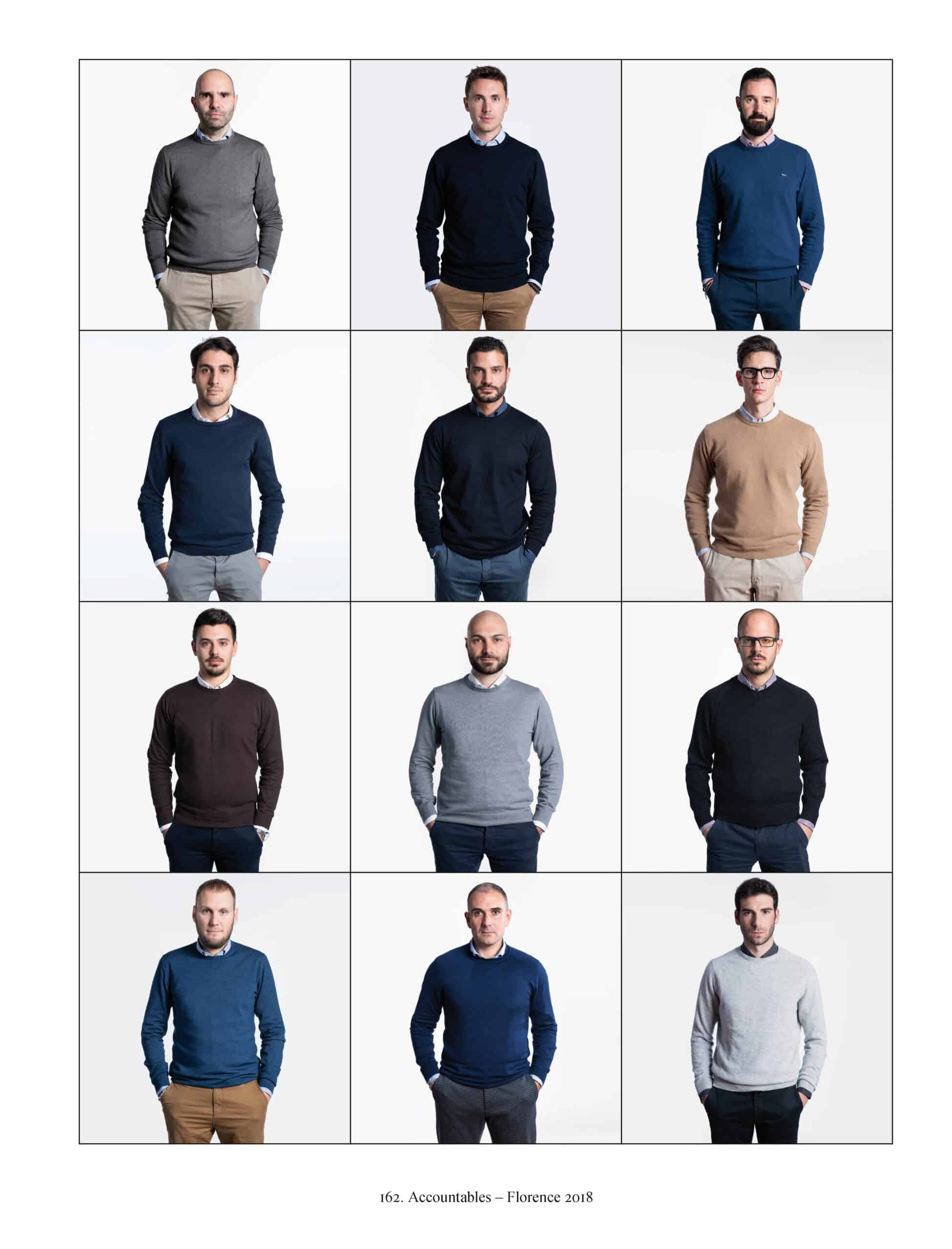
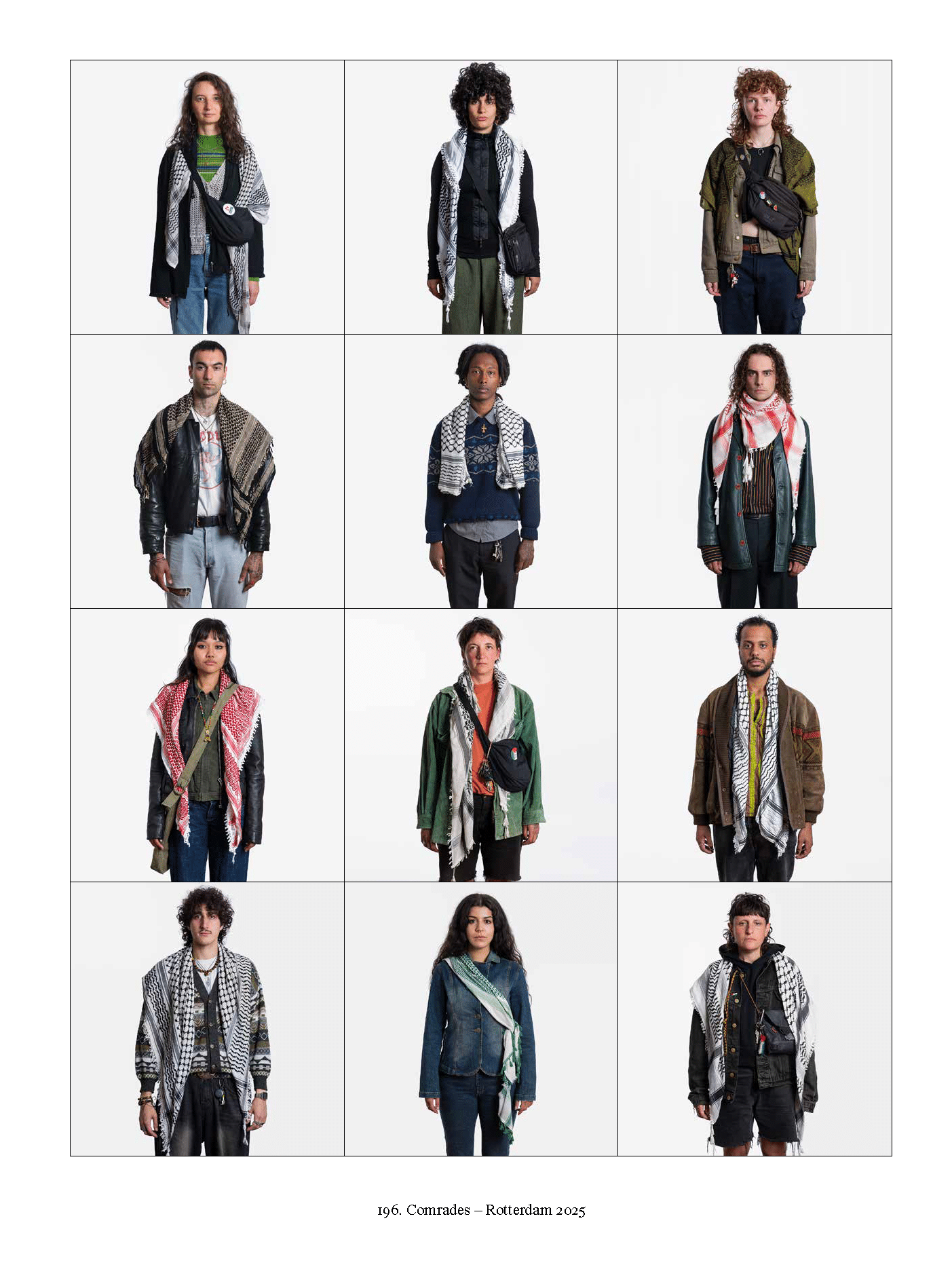
Since 1994 and their photographs of Rotterdam’s gabber raves in fluorescent Italian tracksuits, “addicts to hardcore, 180 bpm in ecstasy,” the Dutch duo has been tracking this human comedy with the precision of an entomologist and the eye of a sidewalk ethnologist. The protocol has never changed: twelve individuals spotted on the street, an identical pose, a neutral backdrop, an incisive title. Thirty years and 201 series later, the “They,” those “radiant non-binary butterflies imparting a breath of fresh gender air” in “heteronormative-society land,” bring the work full circle.
Between these two categories that nothing predisposed to cross paths, hundreds of other archetypes strike a pose. Take the “Accountables,” those “associates in customer relations with hands chillaxing in chino pockets, rocking that business-casual attitude,” the perfect identikit portrait of a middle manager elevated to the rank of mythological figure, whose pants say “I’m relaxed” and whose virile posture says “I’m in control.”
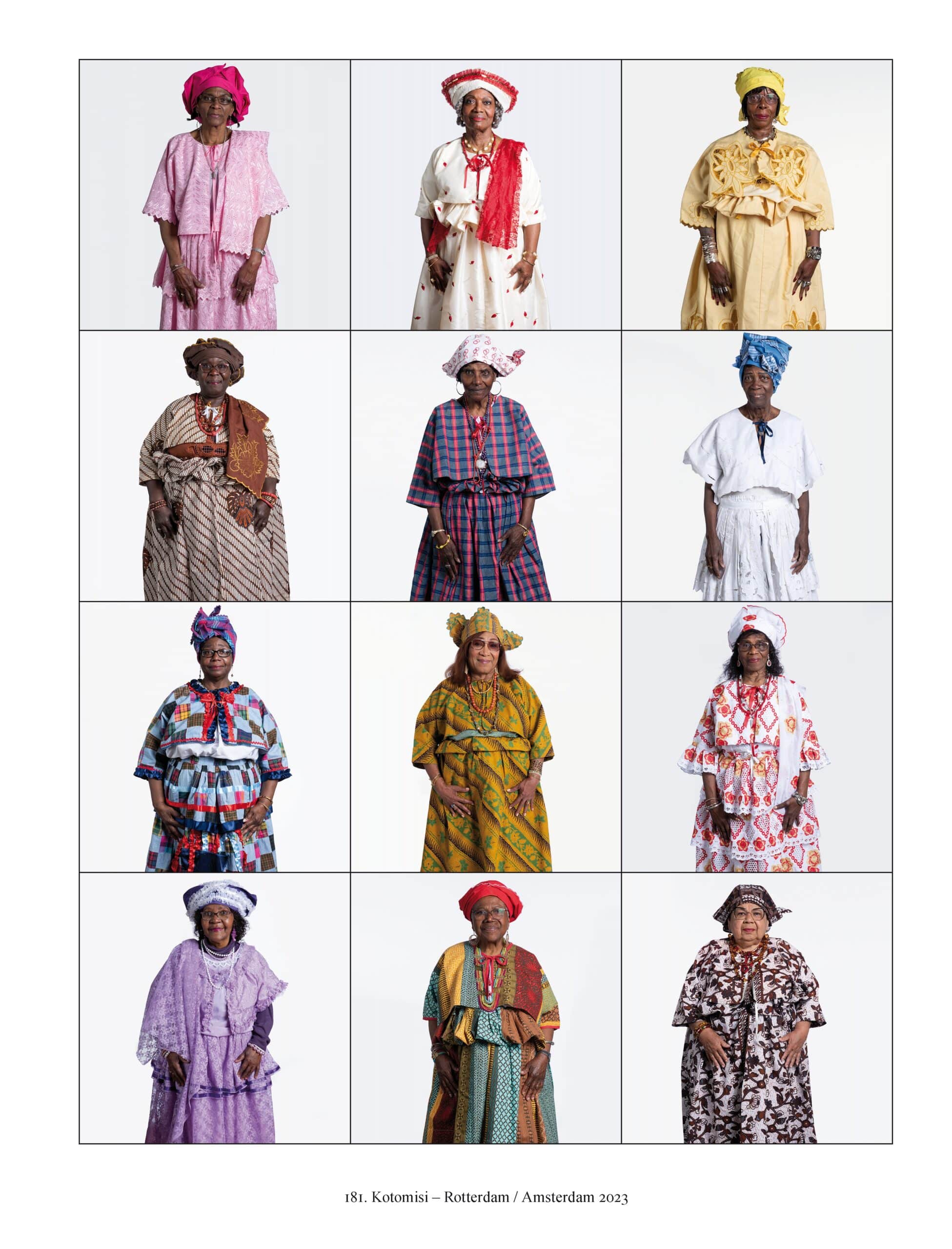
For the “Kotomisi,” matriarchal and majestic in their “special-occasion koto attire to celebrate heritage, freedom, independence, community, faith and remembrance,” the wardrobe is first and foremost an act of memory, each fabric charged with a history of Surinamese resistance. At the opposite end of the spectrum, there are the “Deftones Heaven, “hyper-hyper cloud-bombing micro-celebrity millennials, hitchhiking on the cult status of their alt-metal idols from Sacramento.”
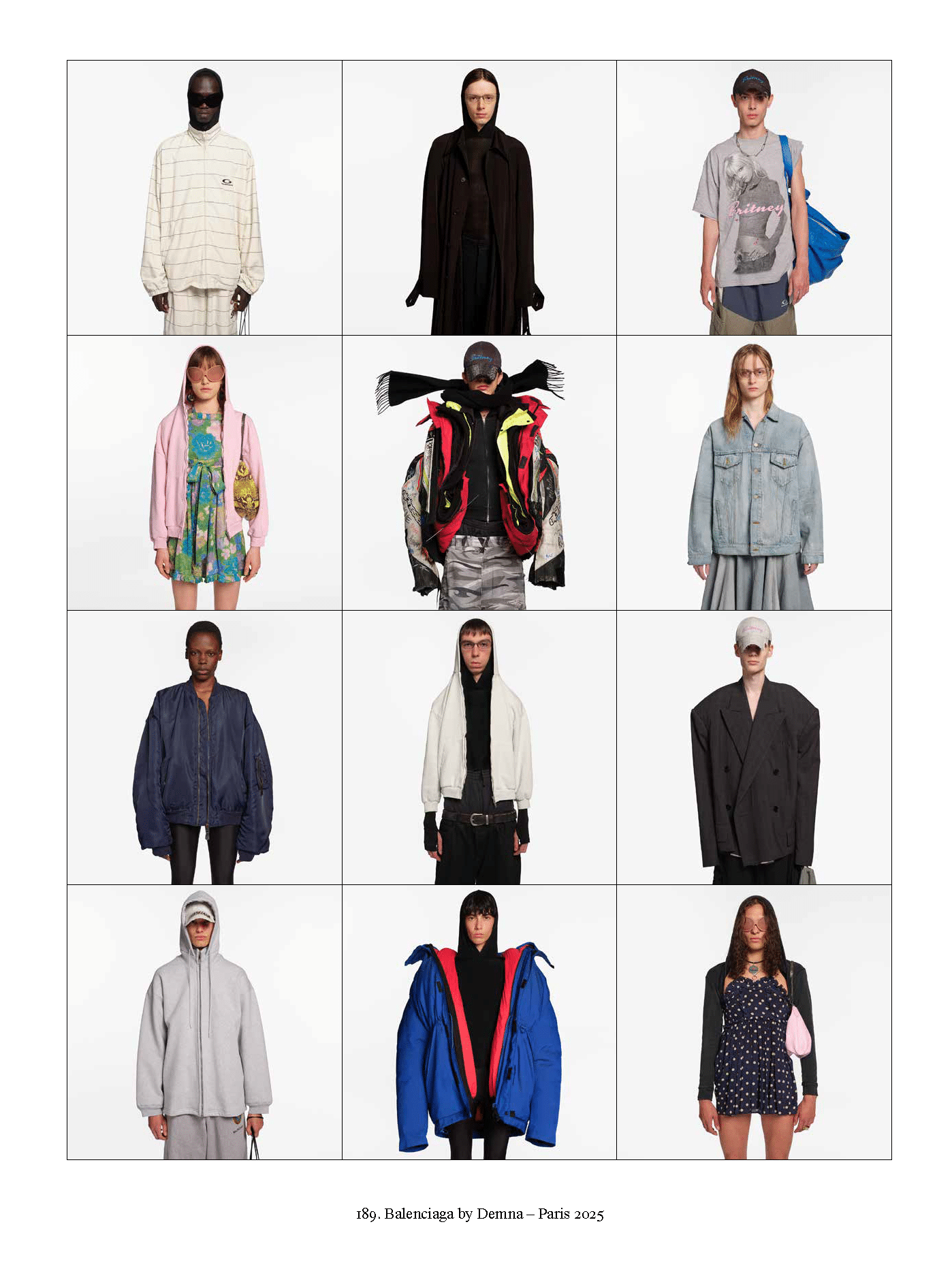
The three series devoted to Balenciaga by Demna, the house’s creative director from 2015 to 2025, crystallize the moment when haute couture absorbs the anthropological apparatus and recognizes itself in it. Demna confides in the book: “I’ve always examined the similitude in the way certain groups dress (…) Exactitudes put it in order for me.” The designer named his final collection after the project, fusing pieces from 35 seasons with garments from his own wardrobe, creating his own “Balenciaga archetypes.”
That luxury fashion accepts being classified on equal footing with the Ghoullies, “gothic-erotic witches wandering with non-macho gruftie loverboys,” or with the Mohawks summed up in three definitive words, “Punk never dies!,” speaks volumes about the equalizing power of the sartorial grid. The djellaba vies with the Dior suit.
The “Comrades” wear political urgency around their necks: “2025: the world is on fire. Starving babies, humanitarian crises, genocide, ethnic cleansing, dead planet, no future, drone bombings.” For this generation, as anguished as it is outraged by the state of the world, the keffiyeh has become a “unifying symbol of humanity.” The “Première Ligne” series offers the perfect hedonistic countershot: “Exposed waistbands signal body confidence and availability. Ibiza here we come!”
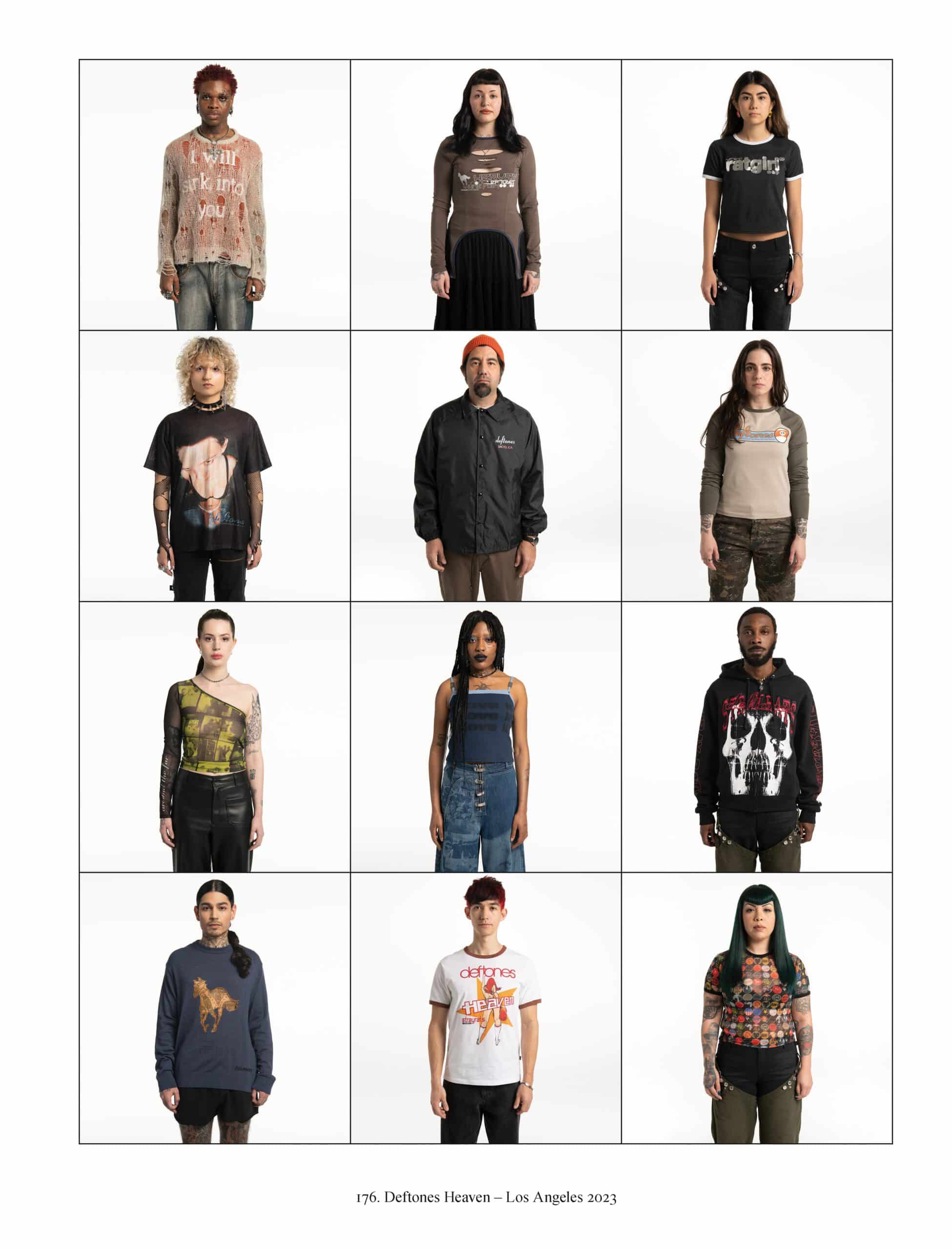
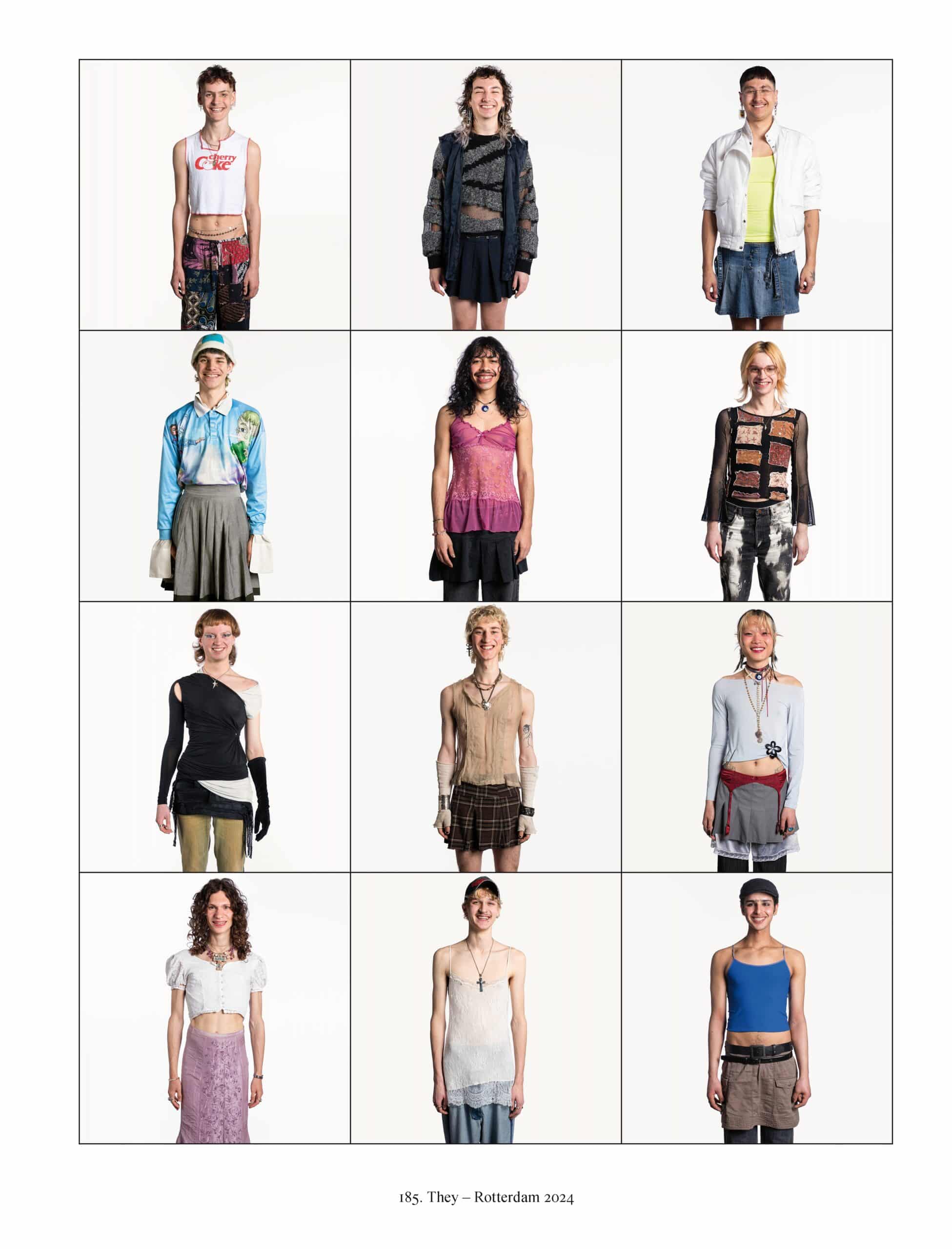
The final edition, an encyclopedic 440-page volume compiling over 2,000 portraits enriched with interviews that give the object a novelistic depth: we learn that Dylan Schiff, a gabber from the very first hour, is still dancing at 49, “always up front left by the stage.” Lidewij Edelkoort, oracle of trends, describes her clothing system as “a simple logic: a remarkable coat over nearly anonymous pieces”.
Designer Pieter Vos, who created the book’s graphic identity, remembers being “a bit annoyed” to discover himself as an archetype. “As if I’d been caught. Bastards,” he adds with a laugh. That is the hard truth of the book: we dream ourselves original, convinced we dress for ourselves, only to realize we dress for our tribe. Just like everyone else.
The final edition of Exactitudes by Ari Versluis & Ellie Uyttenbroek is published by nai010 and on sale for €65.