An arch broken through beneath the Pont-Neuf, workers in the cellars of a 19th-century building, and somewhere in that construction site, photography waiting. The Château d’Eau in Toulouse — a former pumping station on the Garonne, transformed into a gallery in 1974 by Jean Dieuzaide, the first of its kind in France — reopened its doors on November 22, 2025, after a year of renovation work and eighteen months of closure. For Jean-Luc Moudenc, mayor of Toulouse, the occasion called for a reminder of what this place means in the French cultural landscape: “The reopening of the renovated and expanded Château d’Eau strengthens the bond between Toulouse and Photography.”
The project was carried out by the Cousy Architectures agency at a cost of 4.2 million euros. Exhibition space enlarged by 15%, the basement made accessible for the first time via an outdoor elevator, a new entrance through the garden pavilion, an open-air gallery in the park — a set of changes that Magali Blénet, the institution’s director, sums up plainly: “The idea was to help visitors better understand the site and to offer a smoother, clearer route through it, with spaces treated consistently.” A museographic coherence that the institution — expanded in successive stages between 1974 and the late 1980s — had never quite achieved.
To inaugurate these renewed spaces, the Château d’Eau invited Sophie Zénon. The choice was not obvious — which is precisely what makes it right. Zénon is not a photographer of surfaces. Trained in contemporary history, art history, and ethnology, with a specialization in shamanism in northern Asia, she has built since the late 1990s a hybrid body of work in which photography is never alone: photograms, bark rubbings, porcelain skulls, artist’s books, reactivated archives — an entire arsenal of gestures and materials in the service of a single obsession. The passage of time. Memory. The dead. “I am a photographer, but I am also a historian and ethnologist by training,” she says. “My specialty is behavior in the face of death.” An admission that barely surprises, once you know the work.
“L’humus du monde” — the title is borrowed from the writer Paola Pigani — unfolds across the three spaces of the Château d’Eau according to a circular logic, echoing the building’s circular architecture. To set the tone, Zénon offers an image: “Imagine you are in a forest. A summer day, a huge storm. You walk, the smells rise around you. You breathe in the leaves, the earth, the mushrooms, all that humus rising from the ground.” That is the sensation the exhibition sets out to reproduce — an accumulation of strata, of history, of soft decomposition and vital ferment. “For me, the circle is a fantastic metaphor for the idea of the cycle of life and death,” she adds. This particular physiognomy of the building — a spiral path across two levels, a gallery tucked beneath the Pont-Neuf — inspired Zénon to build a scenography in which the series speak to one another without ever closing in on themselves.
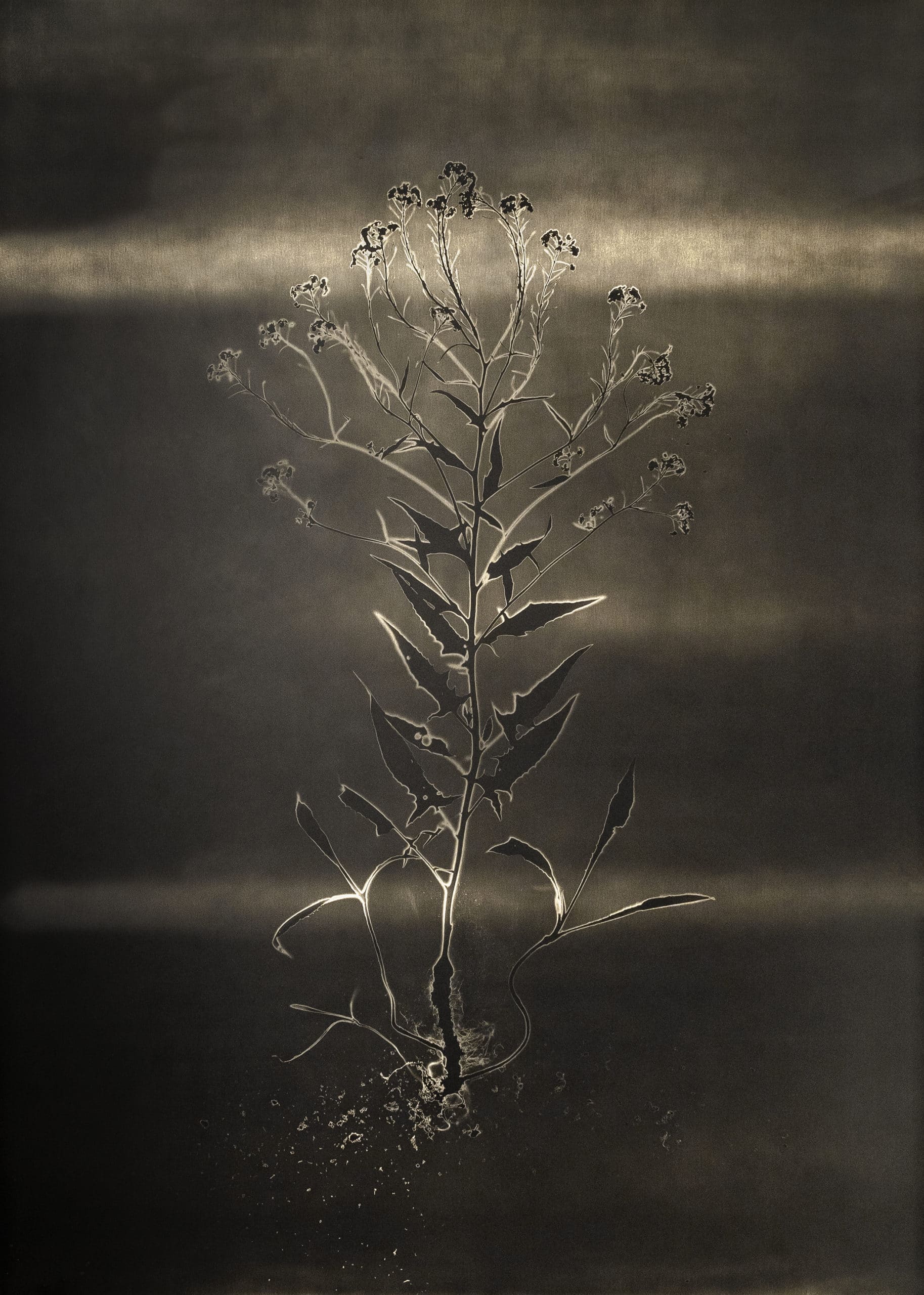
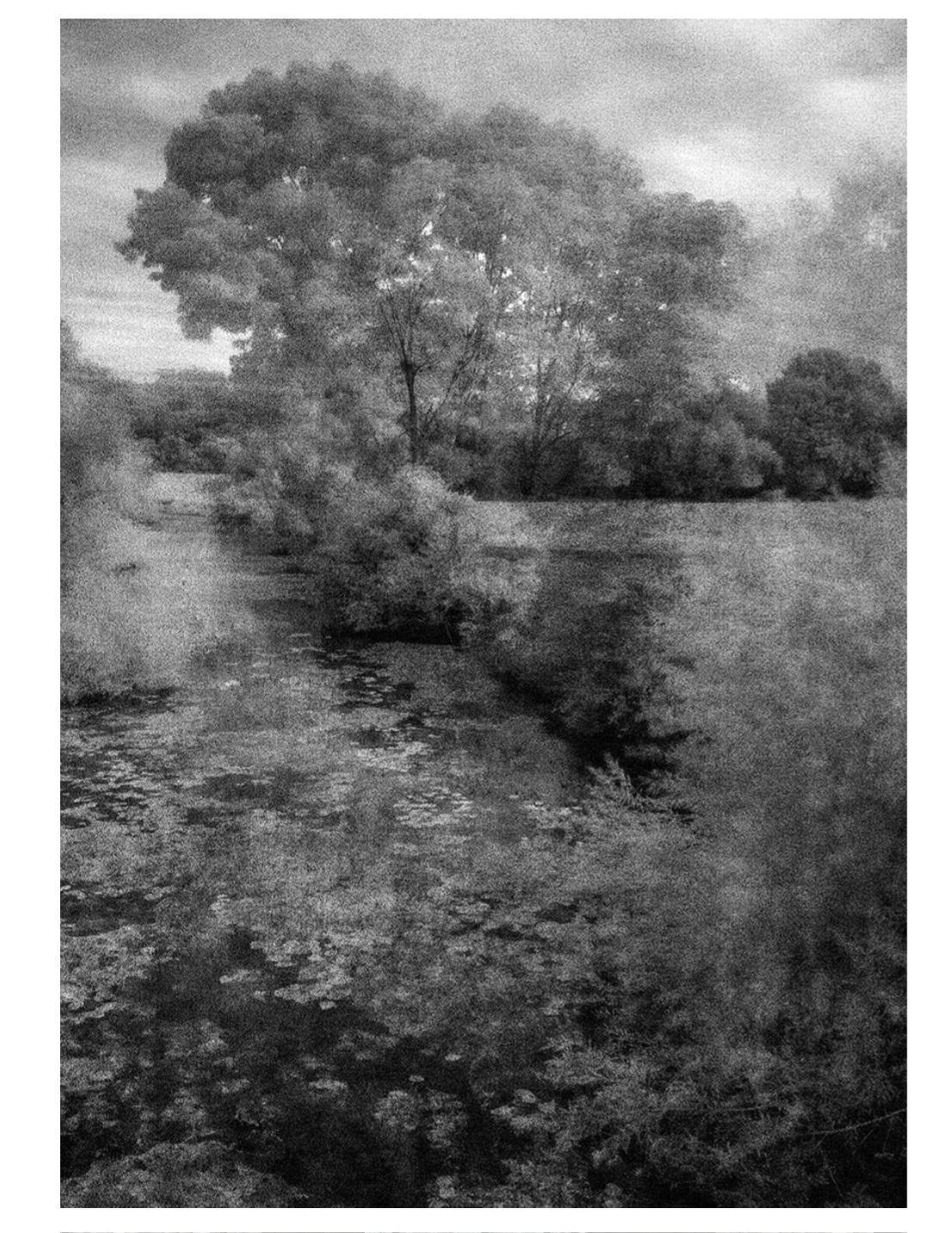
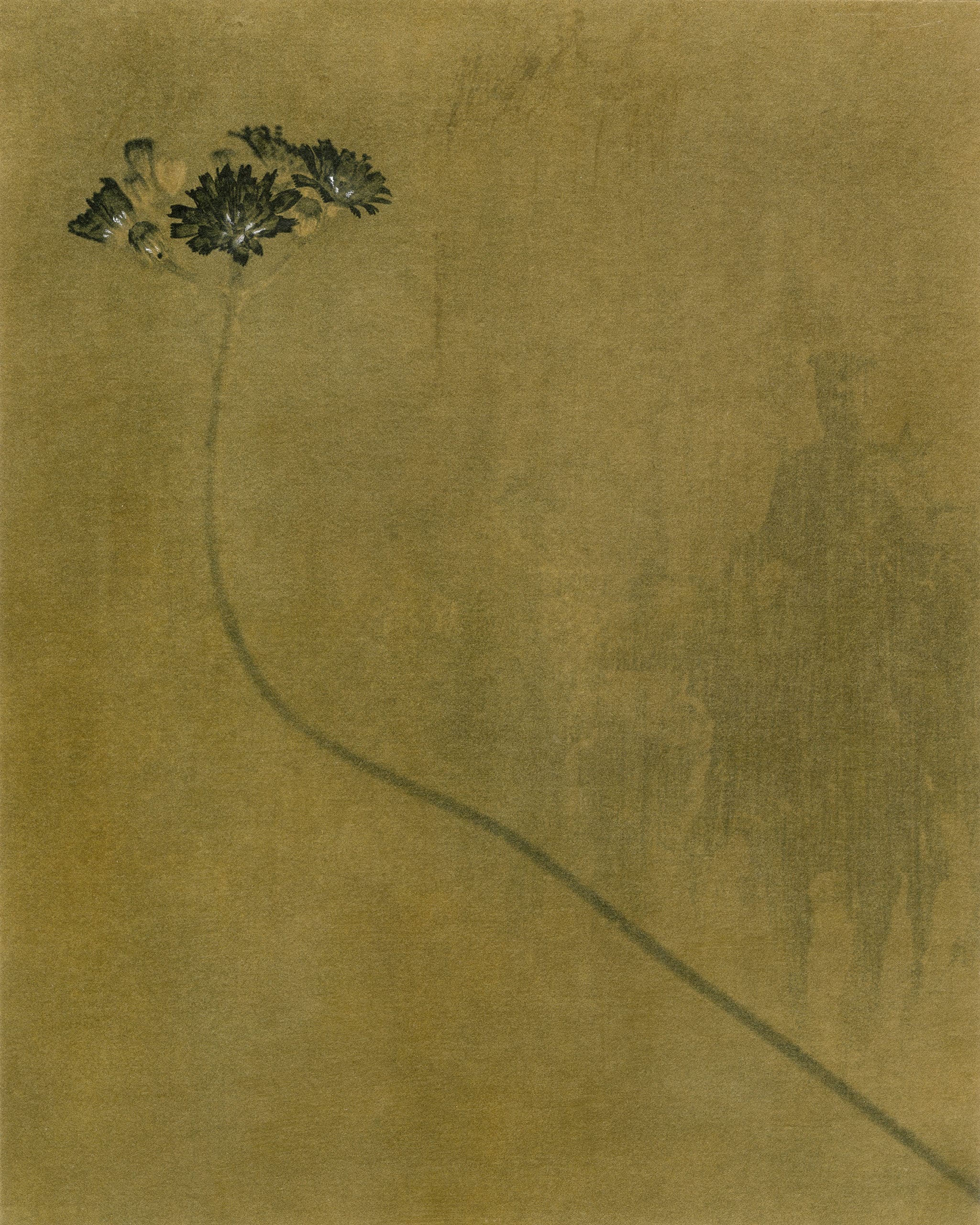
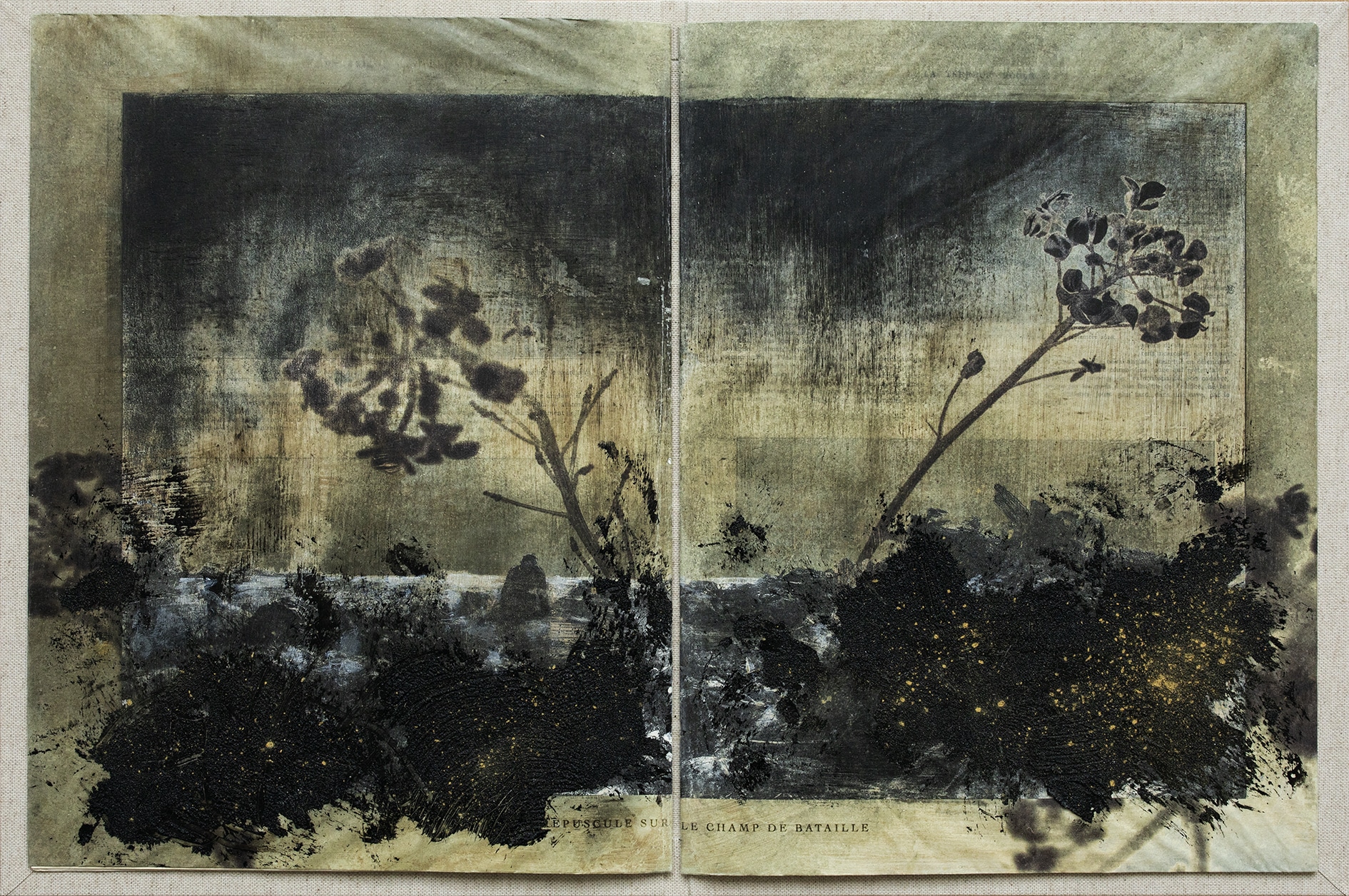
On the ground floor of the Tower, “Rémanences” (Remnants, since 2013) questions the memory of war landscapes through the lens of plant life. The “plantes obsidionales” — non-native species carried in soldiers’ uniforms, germinated along front lines — become large-format photograms on silver gelatin paper: spectral imprints of a history that refuses to disappear. Bark rubbings from oak trees scarred during the First World War complete the ensemble, transformed into paper sculptures as fragile as memory itself. In the basement, “In Case We Die” (2008–2011) extends the tradition of post-mortem photography from the 19th century. Four embroidered porcelain skulls — cast from MRI scans of the artist’s own skull — form the new body of work created specifically for this exhibition. The second gallery, finally, hosts “Arborescences” (2010–2017), dedicated to Zénon’s family history, to Italian immigration in France during the interwar years, and to the childhood of her father Alexandre in the Vosges.
What strikes you in the hang is the dialogue Zénon creates with other works — 17 paintings, sculptures, and videos borrowed from Toulouse’s museums. 17th-century Dutch vanitas pieces sit alongside a video by Glenda León; Egyptian Ka statues from the 11th dynasty answer photographs by Dieter Appelt. “These are not other people’s works brought in to look good,” she says. “They are people who have always accompanied me.” A way of reminding us that an artist, whatever their era, always works from what their predecessors have produced — digesting, transforming, returning it in their own way. As for the exhibition itself, Zénon refuses to call it a retrospective: “Retrospective doesn’t suit me at all. I feel like I already have one foot in the grave. I prefer to talk about a life journey.”
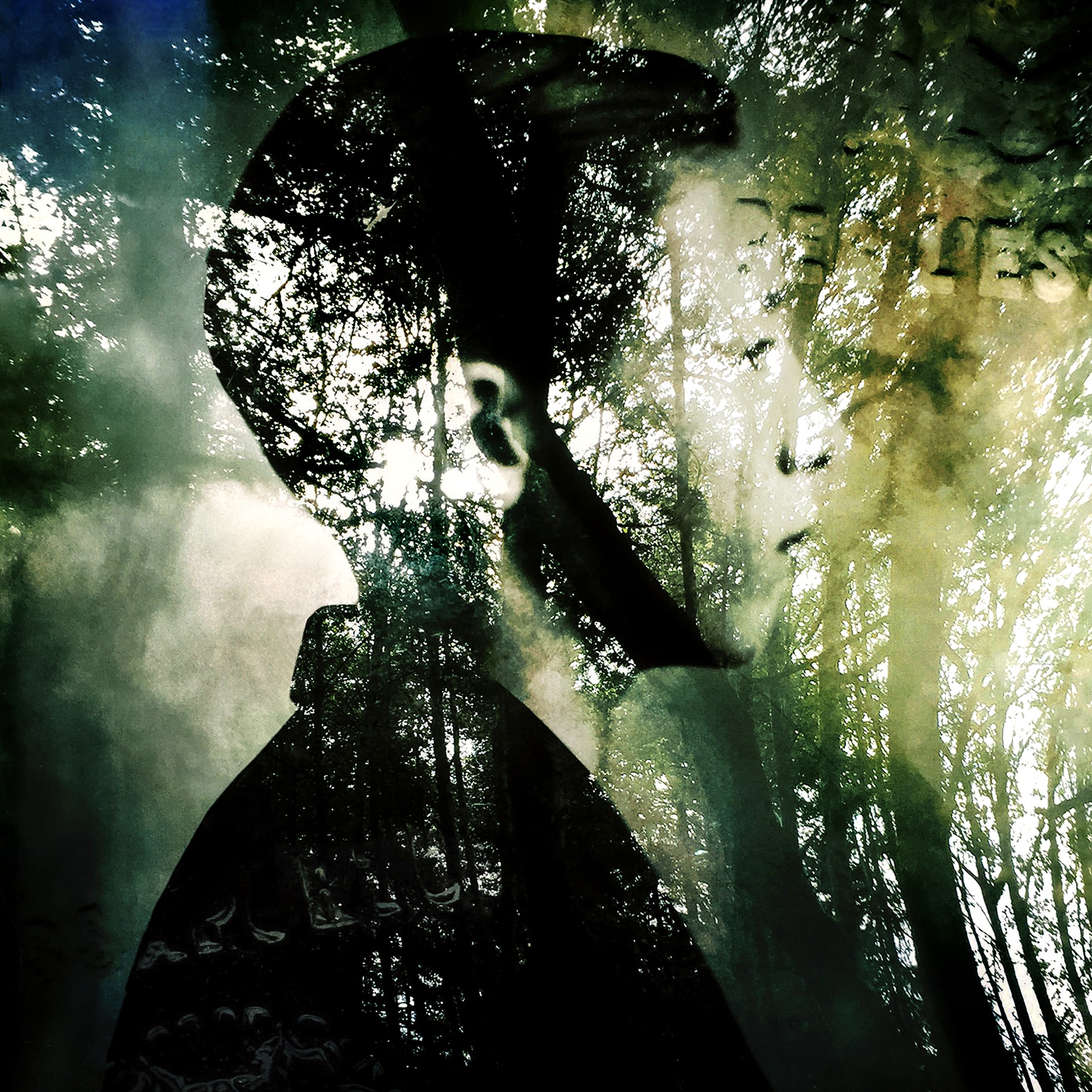
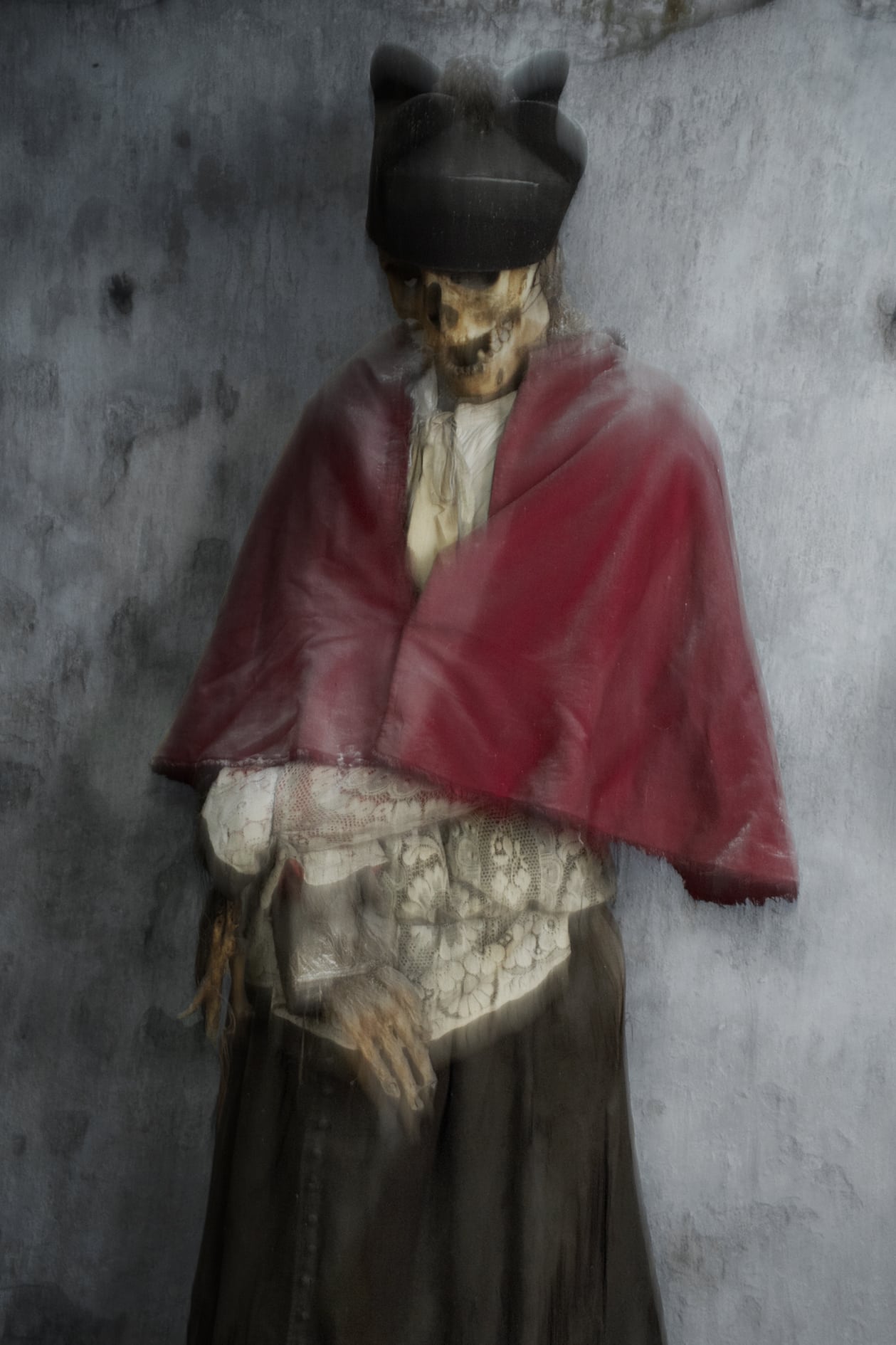
Magali Blénet had sensed something. “I felt that Sophie approaches spaces as an experience, genuinely. And that is precisely what interested me — I thought she would truly be able to give body to this place.” Hard to argue. “L’humus du monde” is an exhibition you breathe — imaginarily — as much as you see: woodland air, soft decomposition, vital ferment. An eternal recommencement, as the artist says. A new beginning, too, for a renovated Château d’Eau that becomes again what it always was at its origin: a source.
“L’humus du monde,” by Sophie Zénon, is on view through March 22, 2026, at the Château d’Eau, Toulouse.