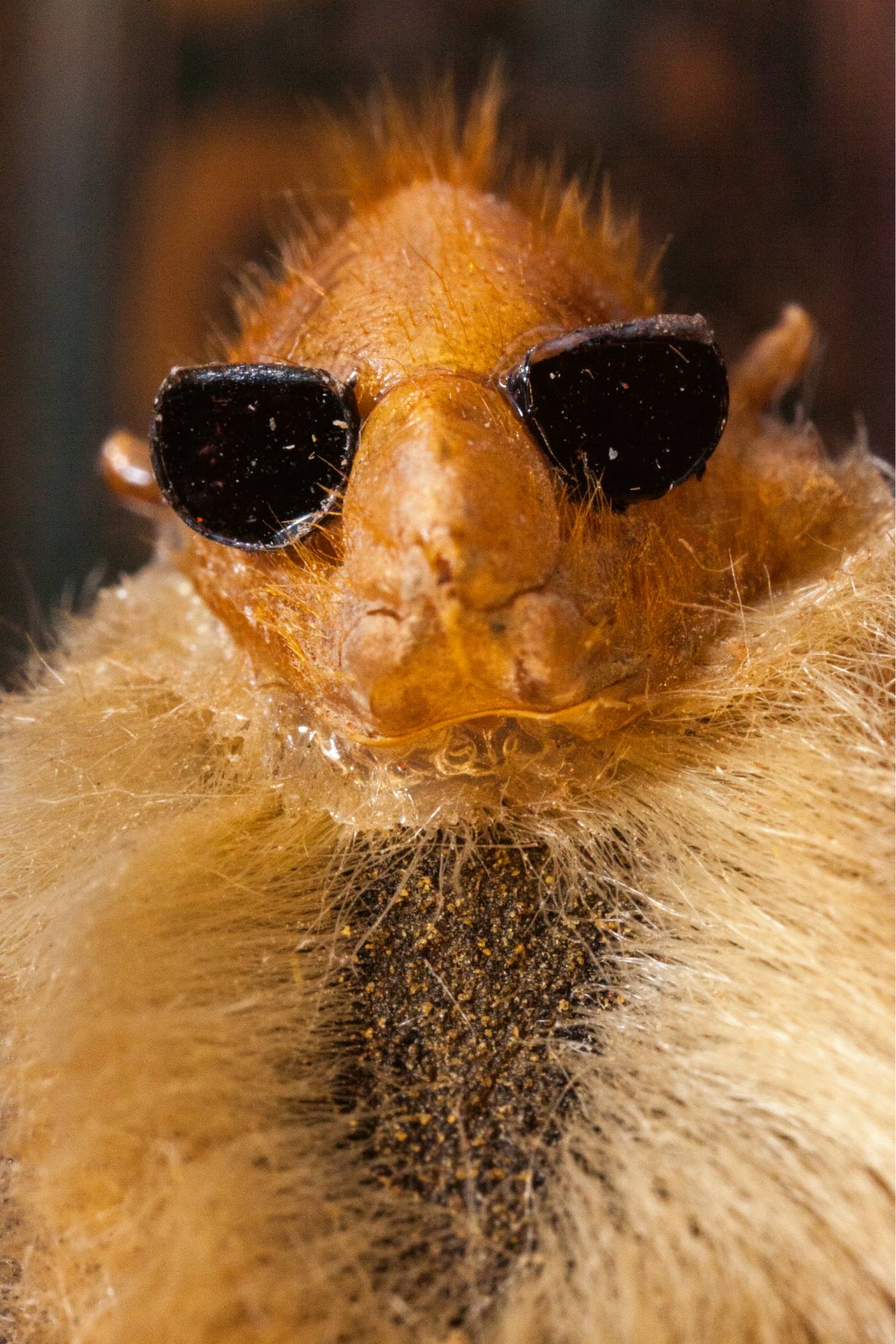
It begins with an apothecary apprentice humiliated by his boss. One evening, by candlelight, the young man is cleaning cicada moults when he notices that the pointed head of the exoskeleton reminds him of his tyrant’s sharp nose. Driven by vengeful spite, he assembles a small grotesque figure — a fuzzy magnolia bud for the torso, articulated shells for the limbs — to amuse his colleagues.
The year is somewhere between 1820 and 1850, in a traditional medicine shop on Xuānwǔménwài, just outside Beijing. The “hairy monkey” has just been born from a tiny act of rebellion. Nearly two centuries later, this Lilliputian art has lost none of its bite. Listed in 2009 as part of Beijing’s intangible cultural heritage, it nonetheless remains remarkably obscure: most Beijingers themselves have never heard of it.
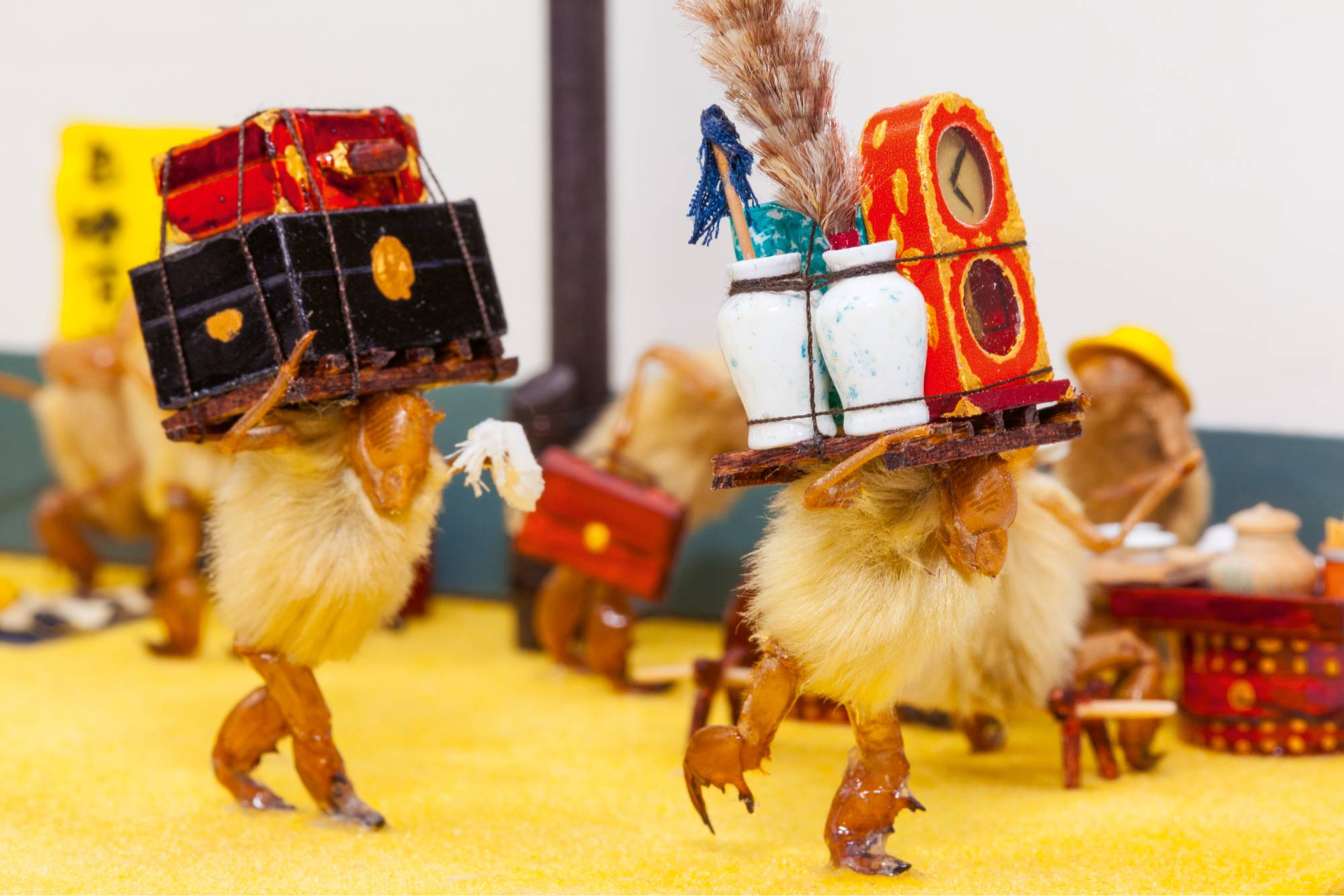
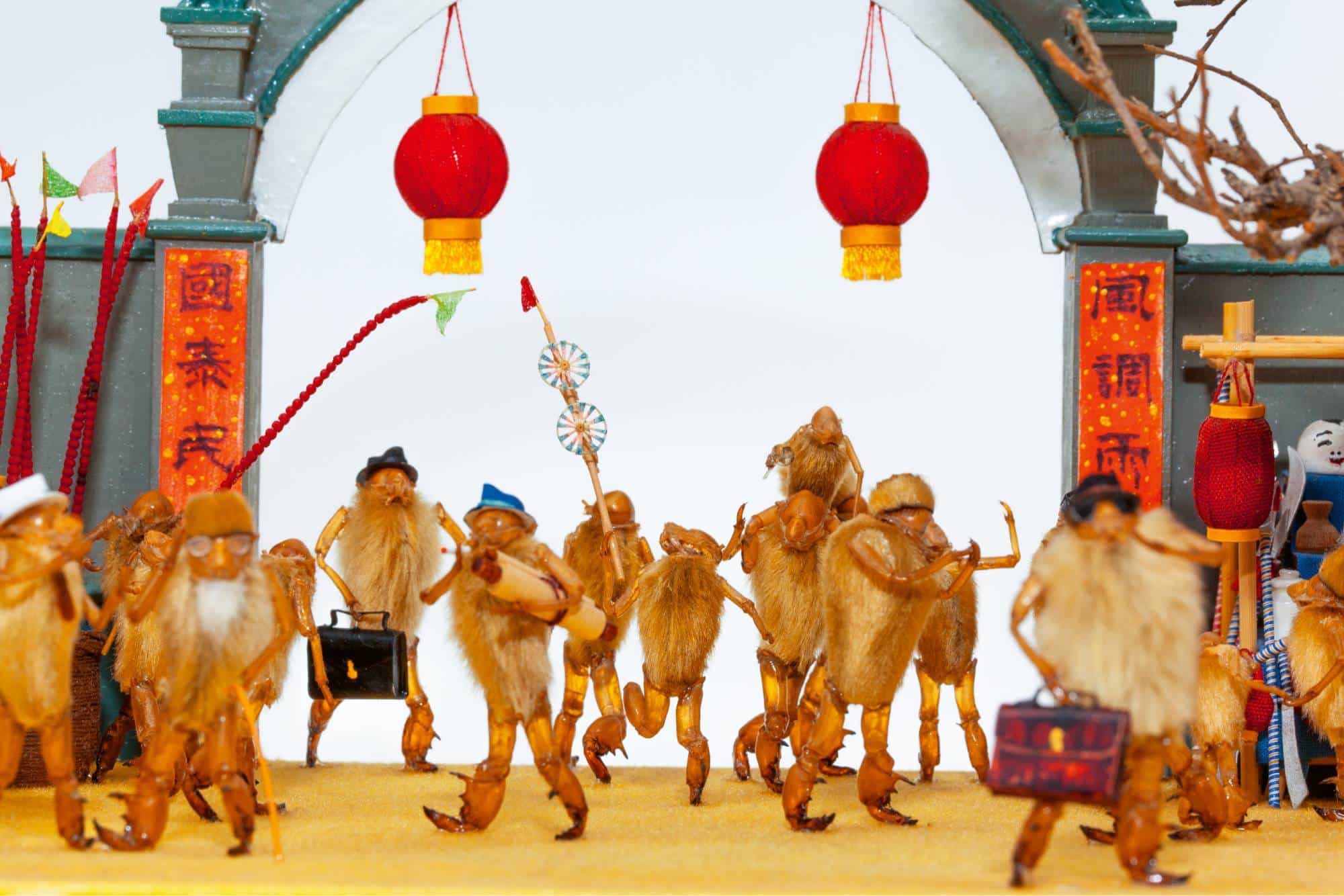
This paradox is what struck Simon Wald-Lasowski, a French photographer and visual artist based in Amsterdam, who stumbled upon these anthropomorphic figurines at a Lunar New Year market in China. “I had a visceral reaction of wonder upon seeing these bizarre creatures, which I found charming due to their size and intricate details, yet also slightly repulsive in their alien-like, slimy appearance,” he writes.
A satirist at heart, he was then on an artistic residency at the Institute for Provocation in Beijing. When he asked the residency team about the figurines he had glimpsed, no one knew what he was talking about. It took a folk art enthusiast to finally put a name to these elusive creatures: máohóu, literally “hairy monkey.”
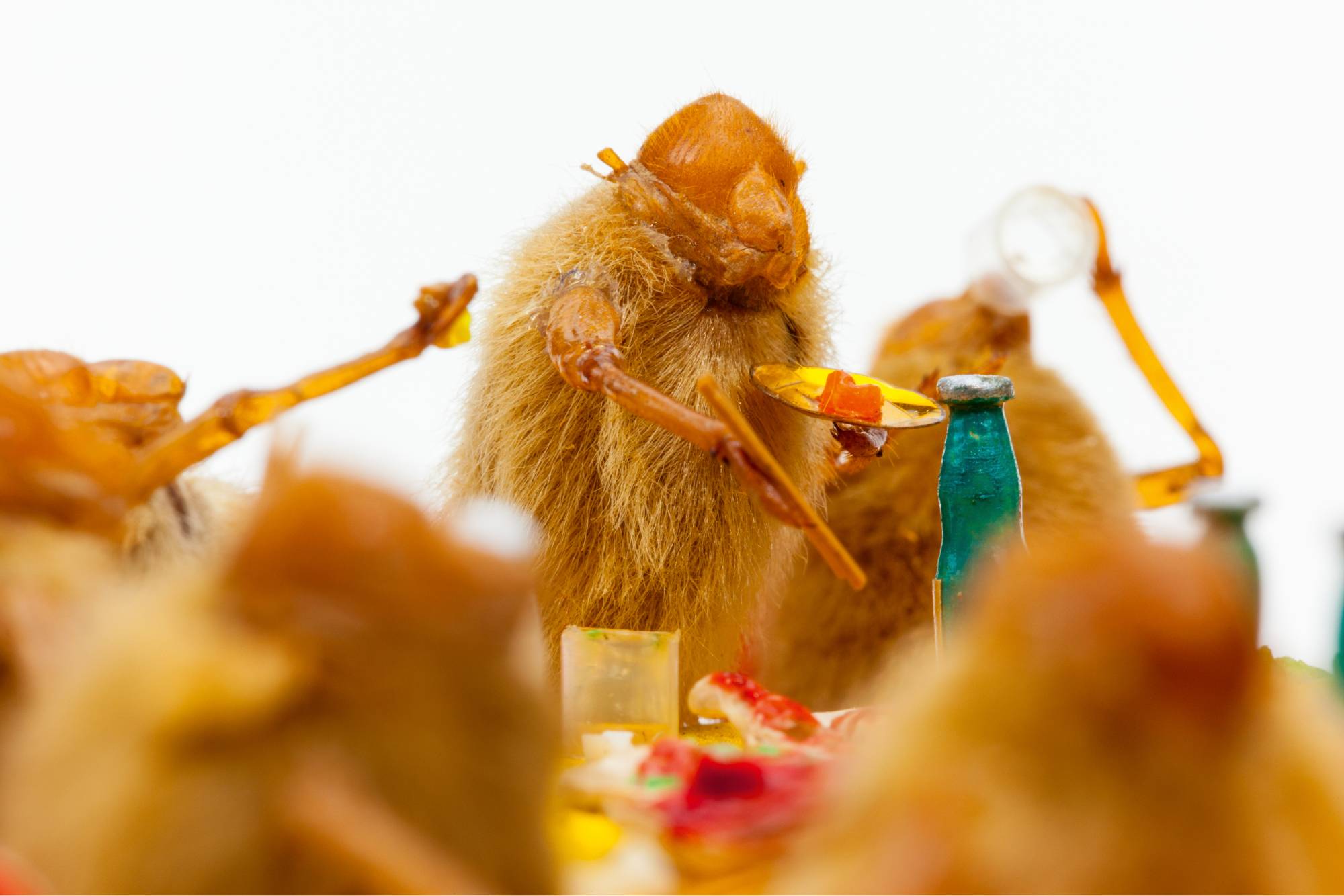
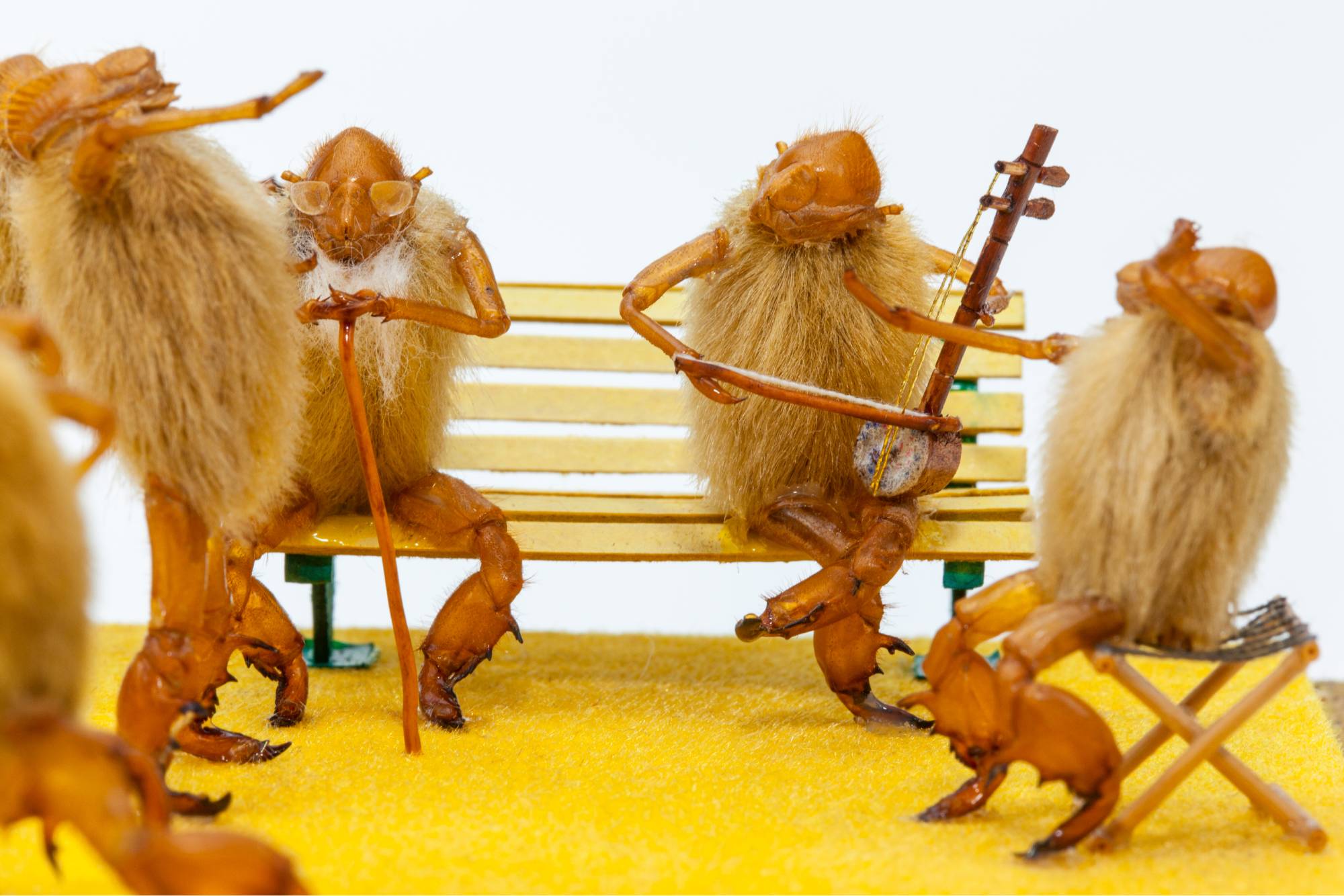
What followed was the decisive encounter with Master Qiū Yíshēng, one of the few artisans still practising the craft while steering it toward contemporary satire. Upon entering his studio-apartment, the photographer felt an immediate kinship. “He had placed a nautilus shell next to an F16 model plane, a Scottish highland nutcracker next to a furry camel souvenir, an African statue next to a Lenin matryoshka doll and a bobble-head footballer!”
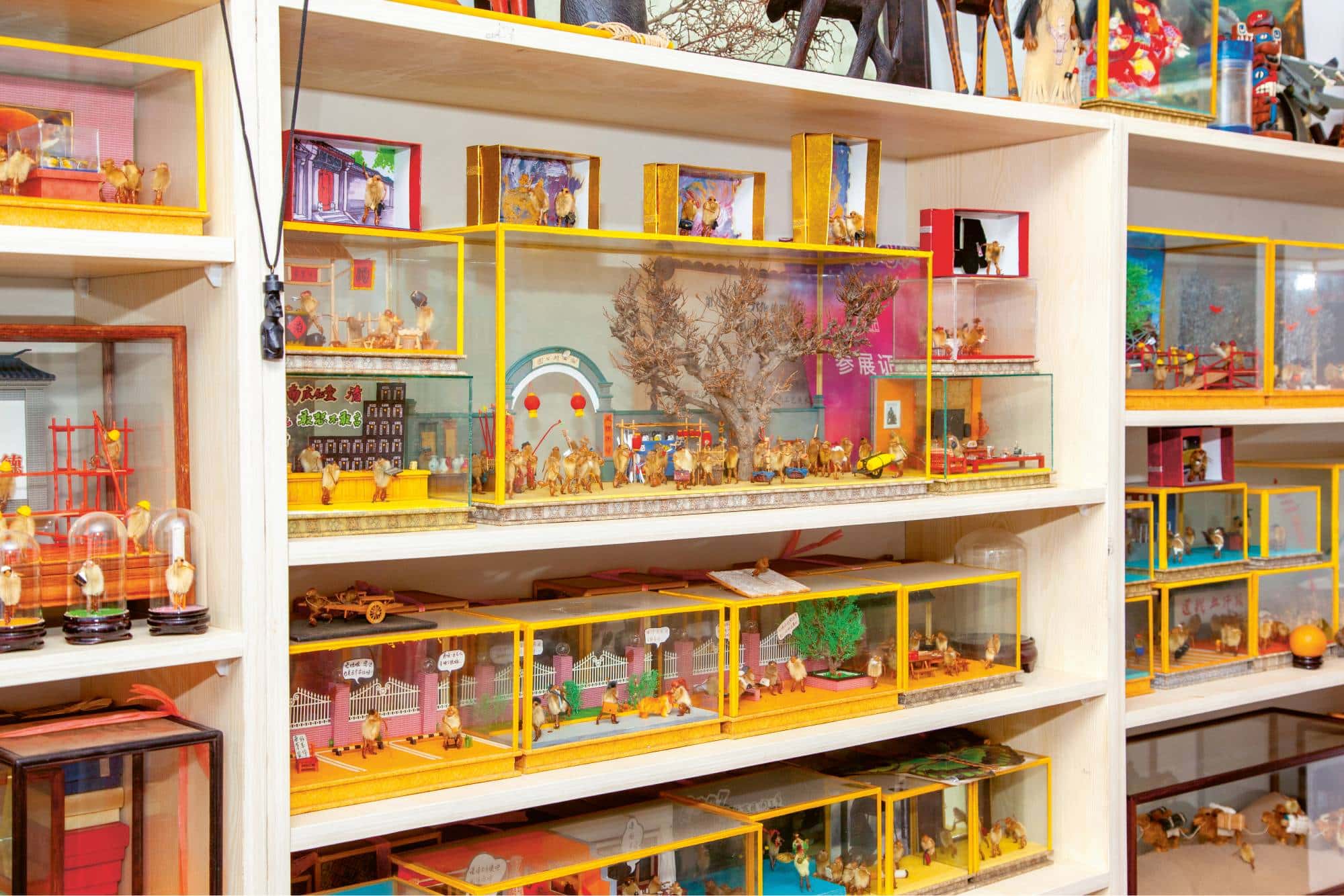
Over two weeks, in a makeshift studio set up in Qiū’s living room, he would photograph some seventy dioramas in macro. These miniature figures — barely four centimetres tall — depict Old Beijing street vendors, Pantagruelian feasts, a monkey in a suit and tie scrutinising its reflection in a mirror, another extinguishing a cigarette butt in a manner that decency forbids us to describe.
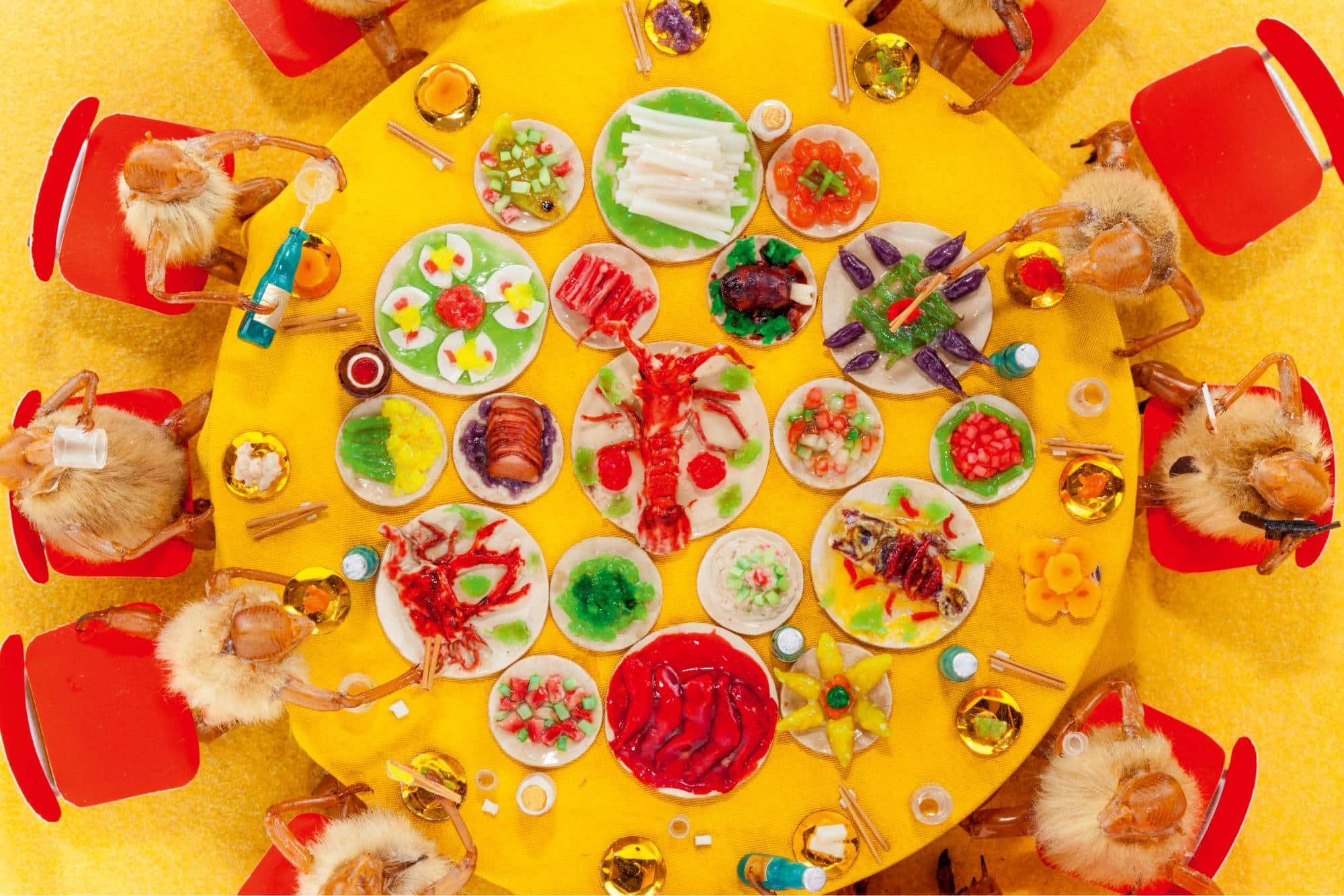
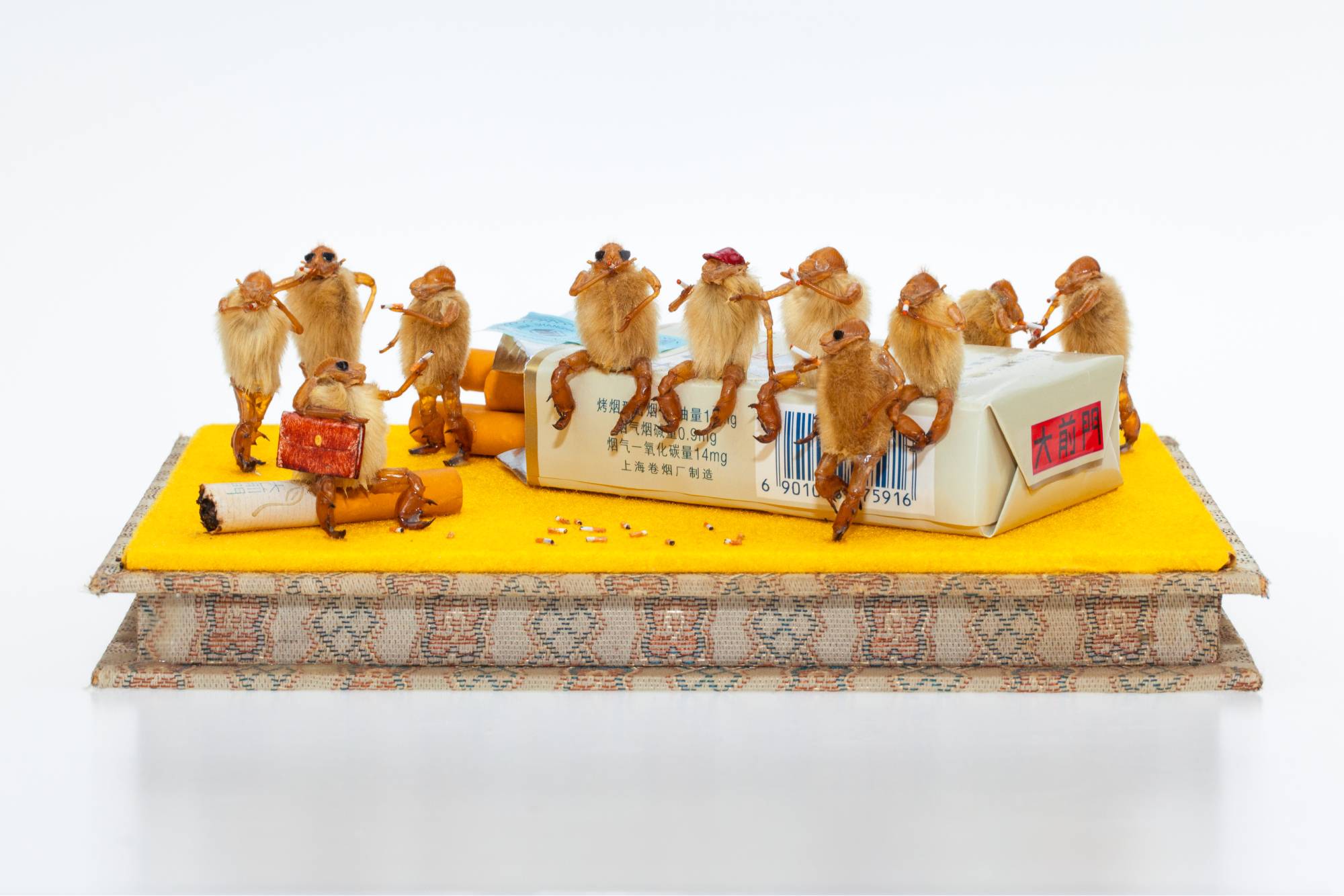
Wald-Lasowski observes that some figures have “a gentle, cheeky energy, while others ooze shady, sleazy vibes.” What makes these creatures repulsive, he explains, is not their insect nature: “They are hyper-masculine, vile characters with money and power who seem repulsive due to their superior attitude and toxic behaviours, rather than their ‘insect-ness’.”
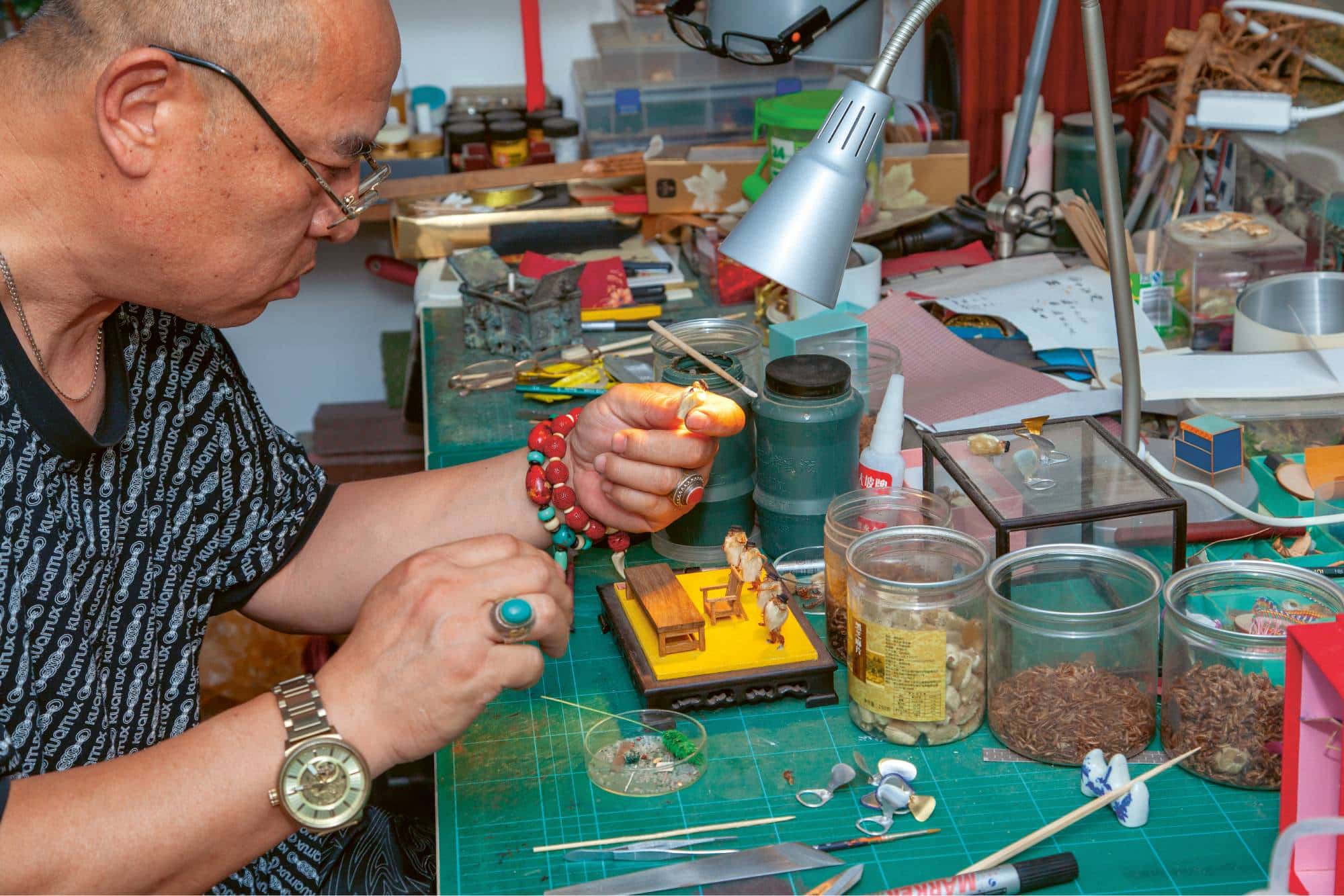
Far from the cliché of the Zen-inclined Chinese craftsman, his host works to the sound of Mariah Carey and contemporary rap. For Qiū Yíshēng is no nostalgist. A disciple of the legendary Cáo Yíjiǎn, he inherited from his master the imperative to make the monkey speak. “One should absorb heritage and connect it to contemporary society; if you stick to old styles, it’s just a replica of a replica.”
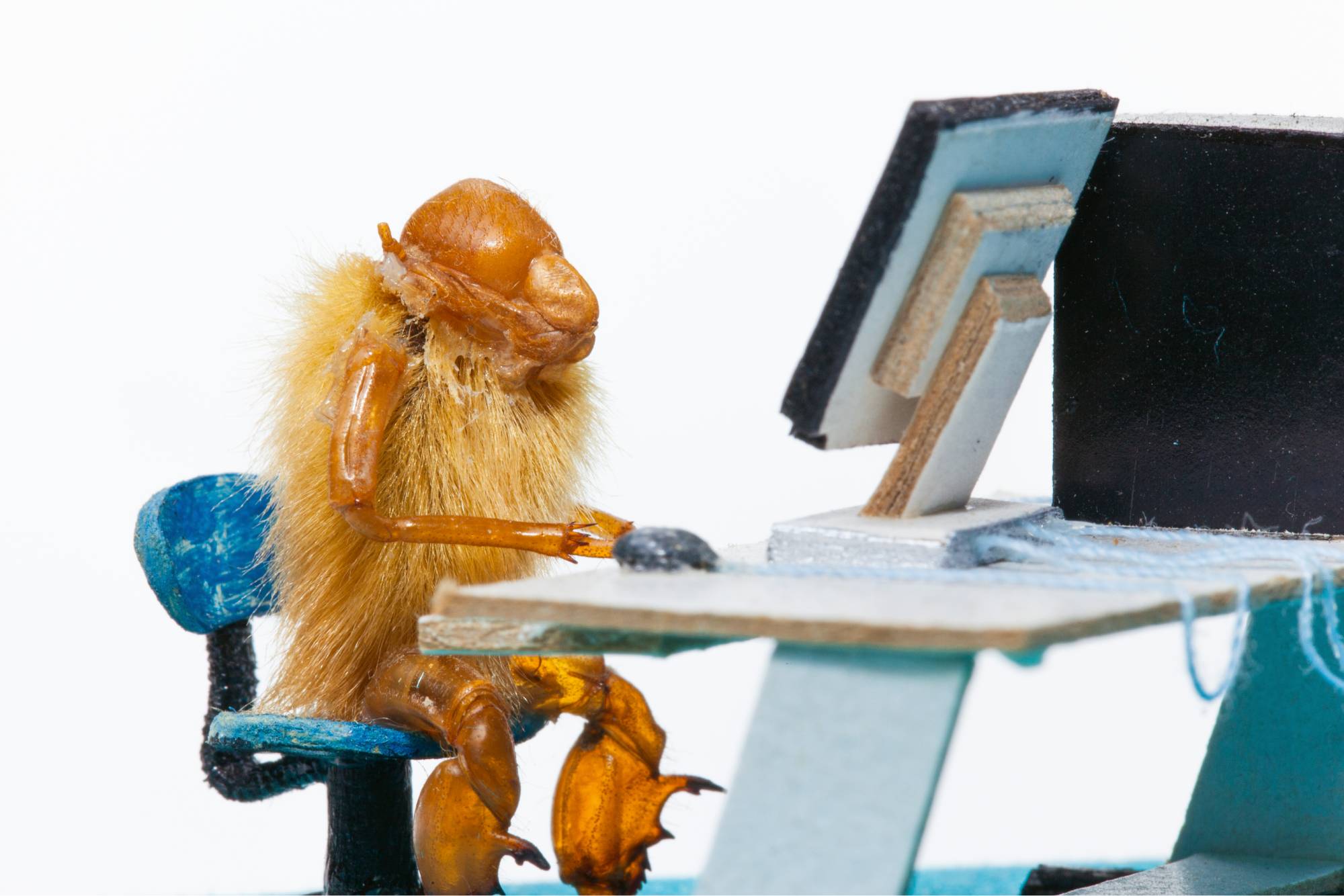
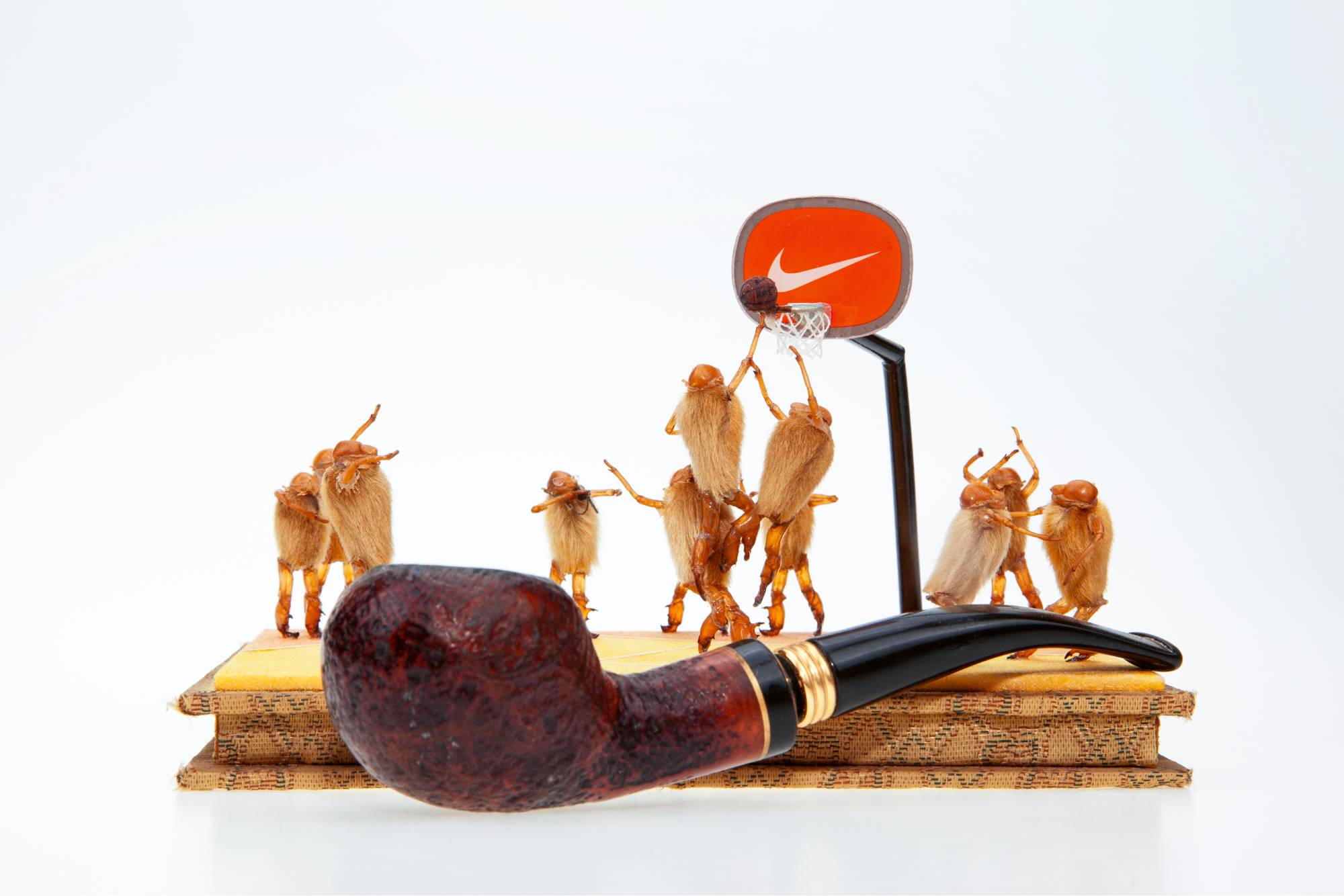
His dioramas, firmly rooted in their time, tackle overconsumption, corruption and even gentrification. Of his piece Monkey Looking in the Mirror, he explains: “It becomes satire. It mocks the surface of respectability hiding inner hollowness. No matter how they look at themselves, the reflection shows only darkness.”
The materials have barely changed since the art’s beginnings: cicada exoskeletons, used in traditional pharmacopoeia for their anticonvulsant properties, and yùlán magnolia buds, prescribed for nasal congestion. Once bound together with Bletilla orchid glue, now replaced by synthetic adhesive. Knife, scissors, brushes, tweezers: the toolkit has remained one of monastic humility.
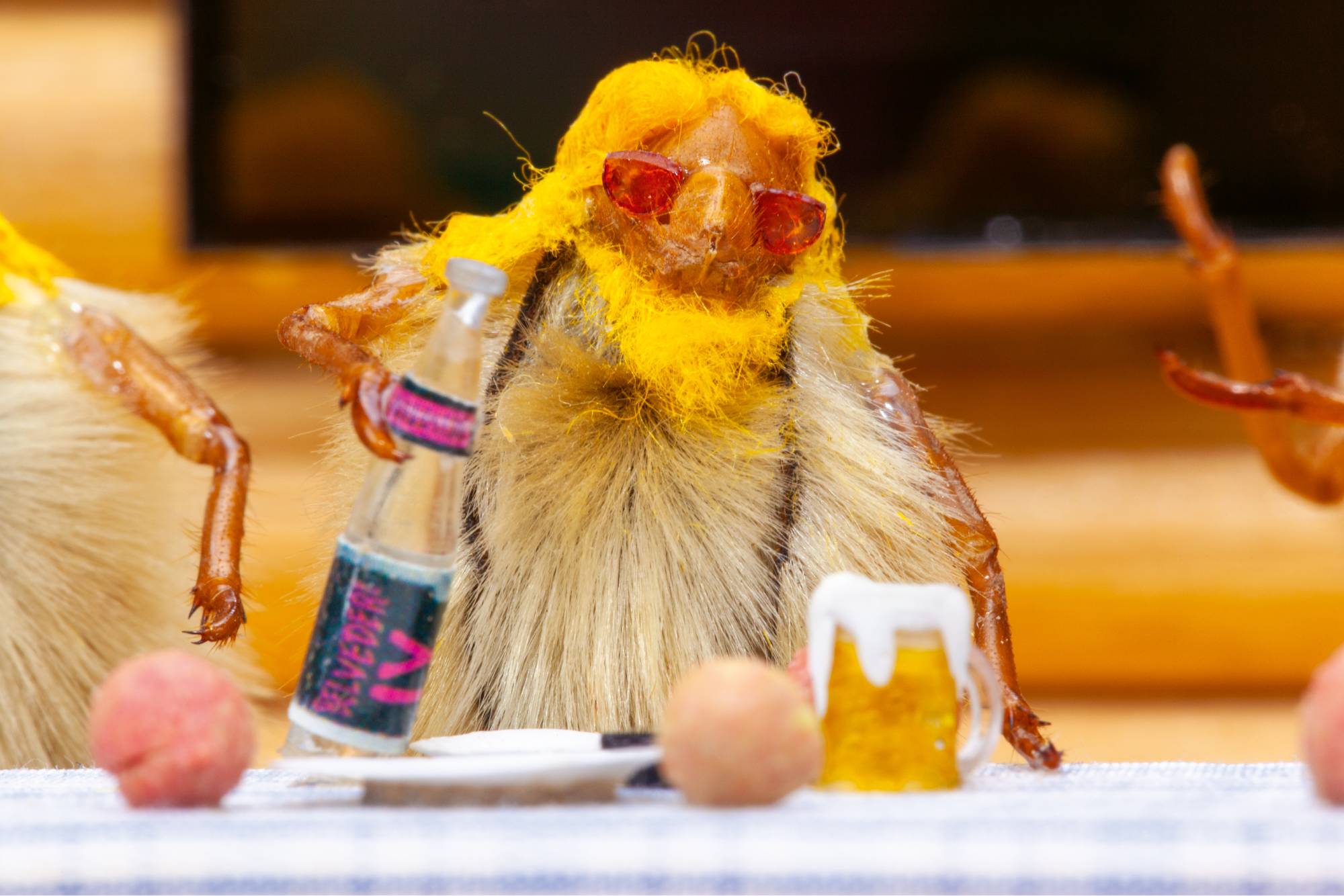
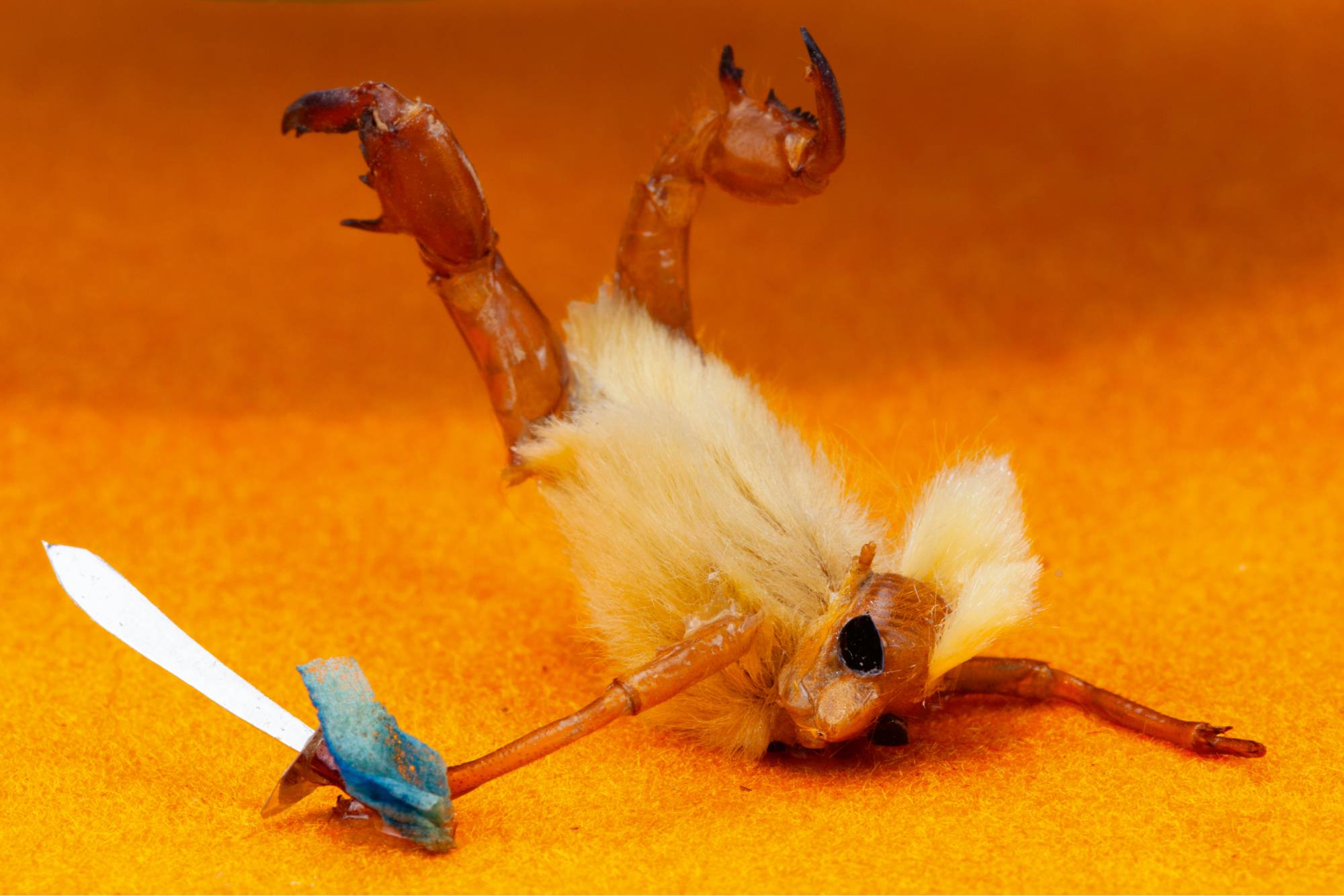
The sophistication lies in the expressiveness of the bodies. Without eyes, without painted faces, each figurine relies entirely on the angle of a limb, the arch of a torso, to radiate joy, arrogance or drunkenness. As Qiū puts it: “To grasp the essence of the work, you have to put yourself in the scene. The closer we approach the máohóu, the better we can interact with them. Then we can feel their happiness and sorrows.”
In his macro photographs, Wald-Lasowski accomplishes precisely this: he abolishes the distance between viewer and diorama, plunging us into the midst of these teeming little scenes and restoring an illusion of movement to what are, by nature, frozen tableaux. Here and there, he allows himself playful interventions — a cherry placed on a ping-pong table, an AA battery appearing at an antiques market — creating vertiginous short-circuits of scale that nod to Jonathan Swift as much as to Jean Baudrillard.
The result is a 304-page book-object, the first publication ever devoted to máohóu outside China, equal parts cabinet of curiosities, ethnographic treatise and manifesto for minor art forms. It includes three texts, among which an interview with master Qiu and an essay by Augustina Cai, as well as a facsimile of the scrapbook of press clippings that Qiū had compiled for his master.
Turning to his Dutch visitor, Qiū once suggested that he could, if he wished, start a máohóu tradition in Europe. For the tradition, he explained, “is not just a commentary on Chinese society, but ultimately a meditation on the human condition.” It has been a long time since an art so meticulous carried an ambition so vast.
The Art of the Hairy Monkey by Simon Wald-Lasowski is published by Roma Publications and available for €35.