
In the field of art, female aging remains a blind spot. Ahndraya Parlato seizes on the figure of the vampire—immortal, reflectionless, impossible to photograph—to cast light on a condition our era would rather keep in shadow. D—for Dracula, or Diary—the phantom addressee to whom the narrator writes, embodies the impossibility of watching oneself grow old. “I made the character intentionally ambiguous,” she tells Blind. “The reader isn’t meant to know whether the woman is writing to a real vampire, imagining one, or simply writing to herself—or even whether she herself is the vampire.”
TIME TO KILL is in some ways a continuation of Who Is Changed and Who Is Dead (2021), her acclaimed previous book, also published by MACK, haunted by maternal eclipse. “When I was working on WICWID, one thing I kept returning to was how motherhood often becomes a defining characteristic through which women are understood—frequently eclipsing other aspects of their personality, interests, sexuality, and identity.” From the disappearance of mothers to that of women who age, the thread is taut: “Reflecting on this idea of erasure led me to consider other forms of cultural erasure that occur throughout a woman’s life, one of which is aging.”

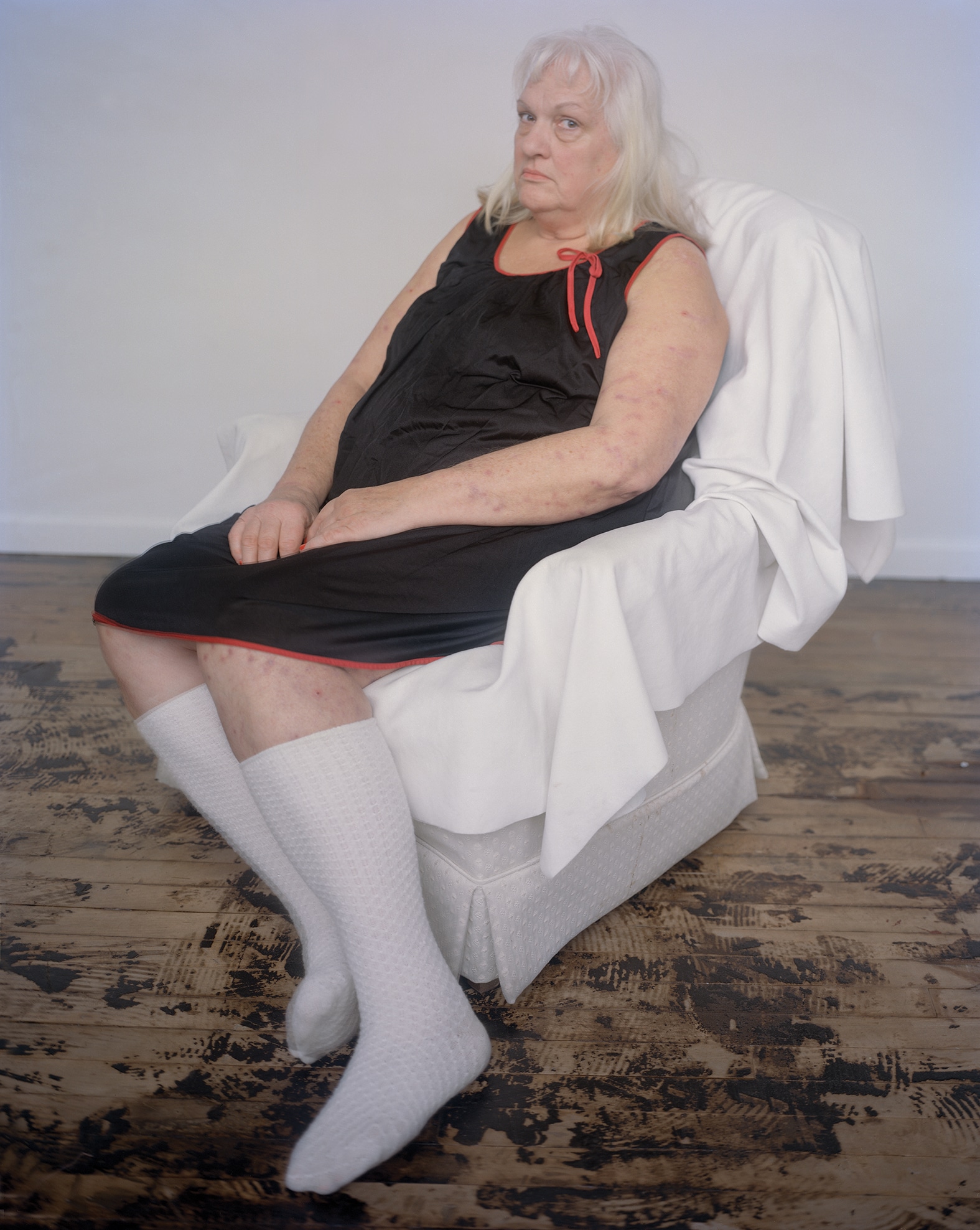
The asymmetry is fierce. At forty, men are promised infinite growth. For women, “the cultural cueing often feels more like, ‘enjoy it while you can, because it will all be gone soon.’” As if aging, for a woman, were less a transformation than a subtraction. The portraits in TIME TO KILL freeze bodies in states of imbalance. In Deborah Sitting, a mature woman in a black dress rests her hands on her knees, her gaze searching. Gina Backbend captures a body arched to its extreme, become pure tension. Harper on the Floor shows a woman in red on the bare floor, looking nonchalant.
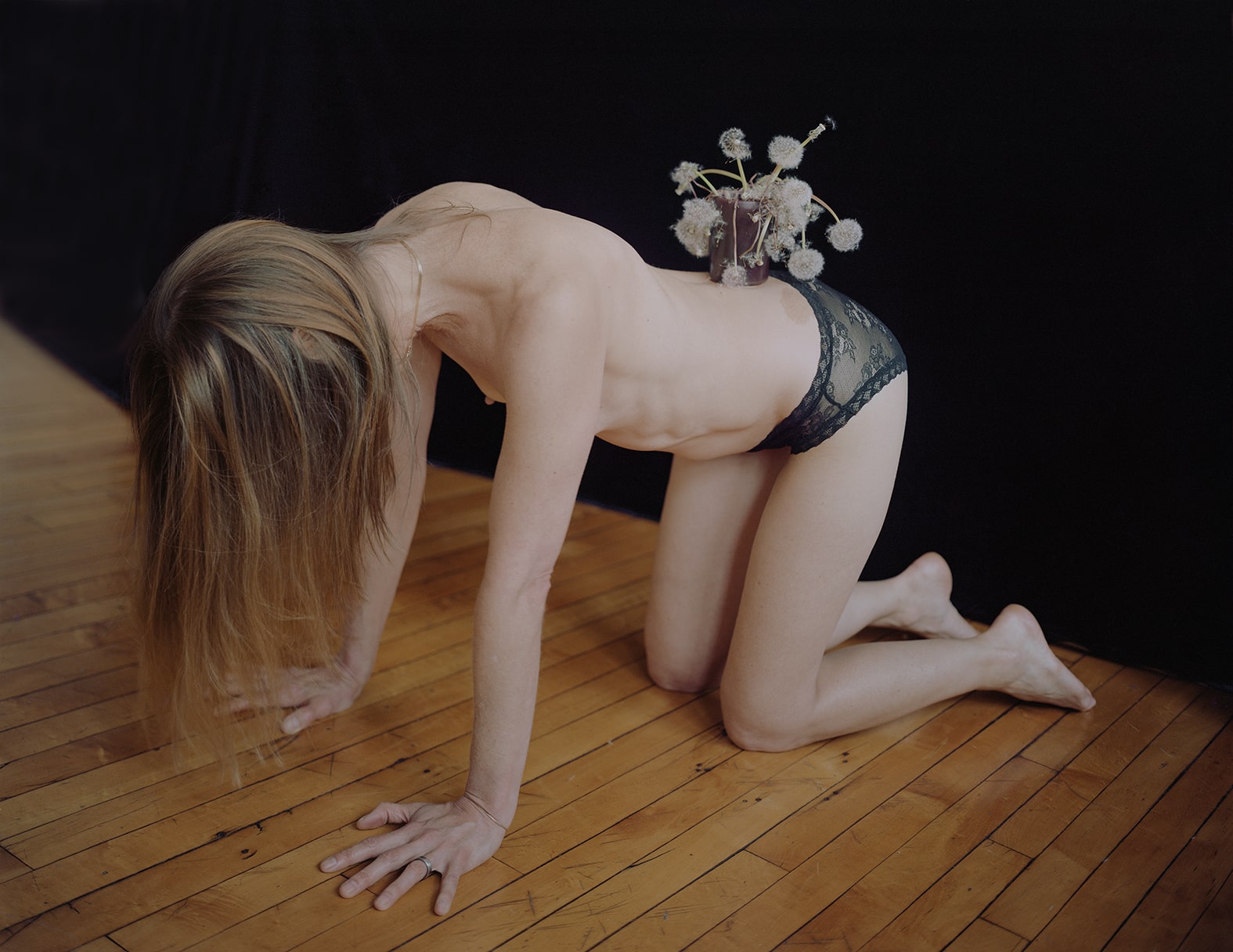
“For the women sitting at tables and in chairs, I want them to feel as though they’re in an in-between state—a metaphor for being in a transitional phase, waiting to see what might come next for oneself,” the photographer explains. Other images explore “the possible awkwardness and destabilization that can accompany aging—especially the experience of seeing yourself in new and unfamiliar ways that may feel both recognizable and strange.” The women on all fours embody domestic labor, “work that is culturally relegated to being less important than, for example, making money, even though it is the foundation upon which all other labor depends. Without it, everything else would collapse.”

Deadly Beauty
Behind every face she photographs, Ahndraya Parlato is searching for her own. “I am always, in some way, photographing myself—imagining the different possible routes toward a future self that might exist for me,” she offers. She is at once Colleen, with her white hair and pensive gaze; and Leslie, blonde and slightly defying, shoulder bared before the lens: so many possible doubles, so many projected futures.
Many of her subjects speak of “loving middle age because they finally stopped caring what other people thought of them.” Something happens between childhood and middle age—a temporal short-circuit in which the little girl and the older woman recognize each other: “This made me curious about what happens to a woman between childhood and middle age—how that confidence and comfort can be culturally stripped away, and how one’s middle-aged self might share a kind of kinship with one’s childhood self.”
The book maps a trap. “The screens that partially obscure are meant to speak to the sense of ‘finger-trap-ness’ I associate with culture and aging—for instance, the way a woman is judged both for not trying to remain youthful and for trying too hard.” Spaces that appear vast but are in fact claustrophobic, “like a net or a web.” The book opens and closes on curtains—everything between them is a performance.
The Brush, the Knife, and the Coffin
One image cuts through: As Long as You Will Want To and its torrential light of supernatural whiteness flooding through a window. “I think of it as being about death,” Ahndraya Parlato continues, “because I was thinking about the possibility that, for some, death might feel less like a tragedy and more like a reprieve.” Death also surfaces in the book’s sequencing. Gina Backbend precedes the cliffs of Some Strange Music. A portrait of the artist on the floor sits beside So Much in So Little—“which I think of as myself crawling into a coffin,” she lets slip.
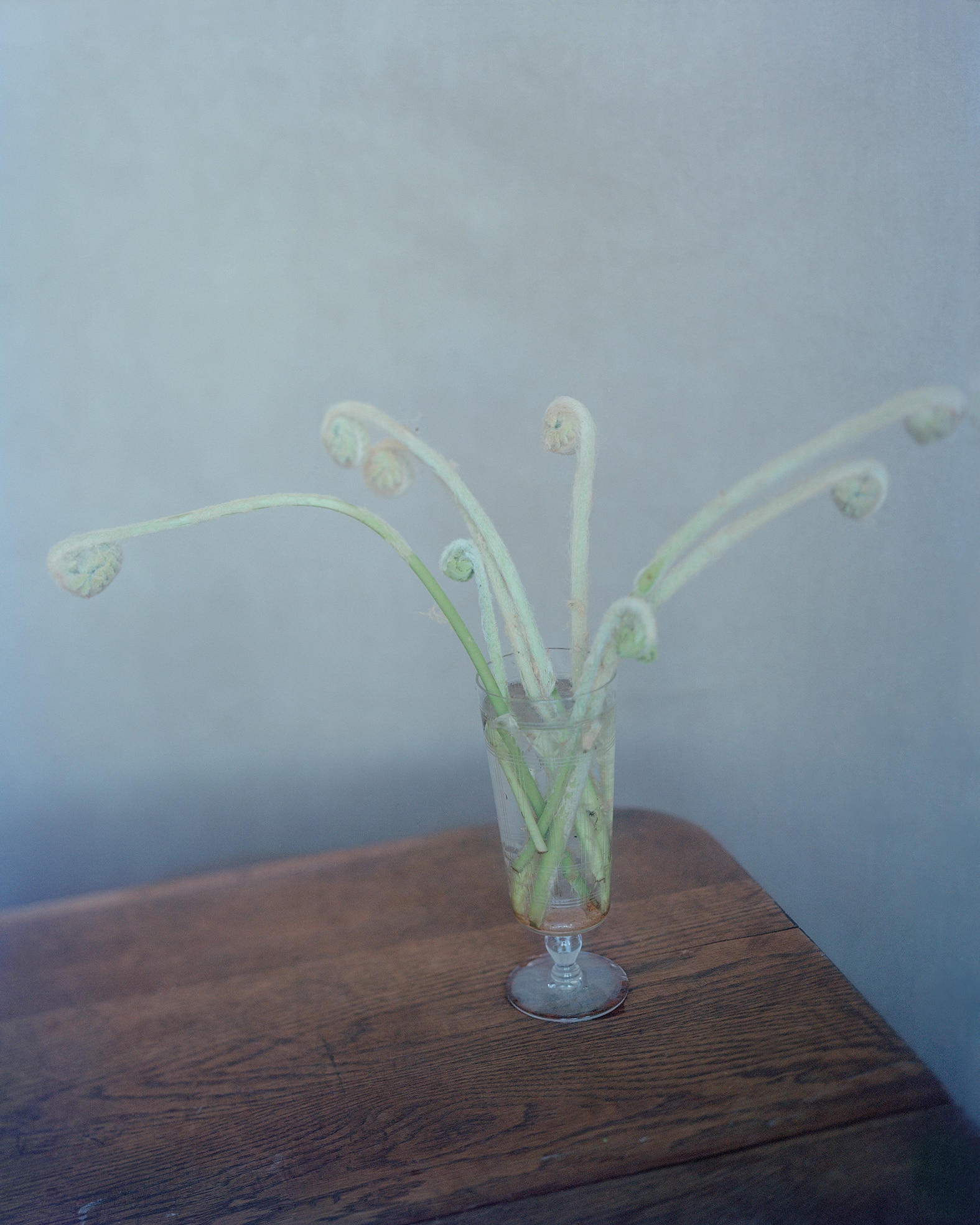
The still lifes carry the funereal thread. In I Ain’t No Goddam Son of a Bitch, delicate foliage rests in a glass vase—botanical gentleness against a punk title borrowed from the Misfits. Quiet Down sets glacial stalactites against blood-red rock, a mineral cold in which everything seems frozen. True Love drives a knife into a tablecloth. Against this gravity, a gesture both absurd and punk: Ahndraya Parlato has stopped brushing her teeth, a symbol of her “desire for a life with less domesticity.” Political act or intimate sabotage?
“I’m not sure it operates as an act of resistance,” she qualifies. Yet the gesture betrays something: “The impulse does expose the degree to which women are culturally conditioned to internalize self-denial—to prioritize others so thoroughly that even the idea of withholding care becomes self-directed.” An act that “saves almost no time and requires virtually no labor”: symbolic to the bone.
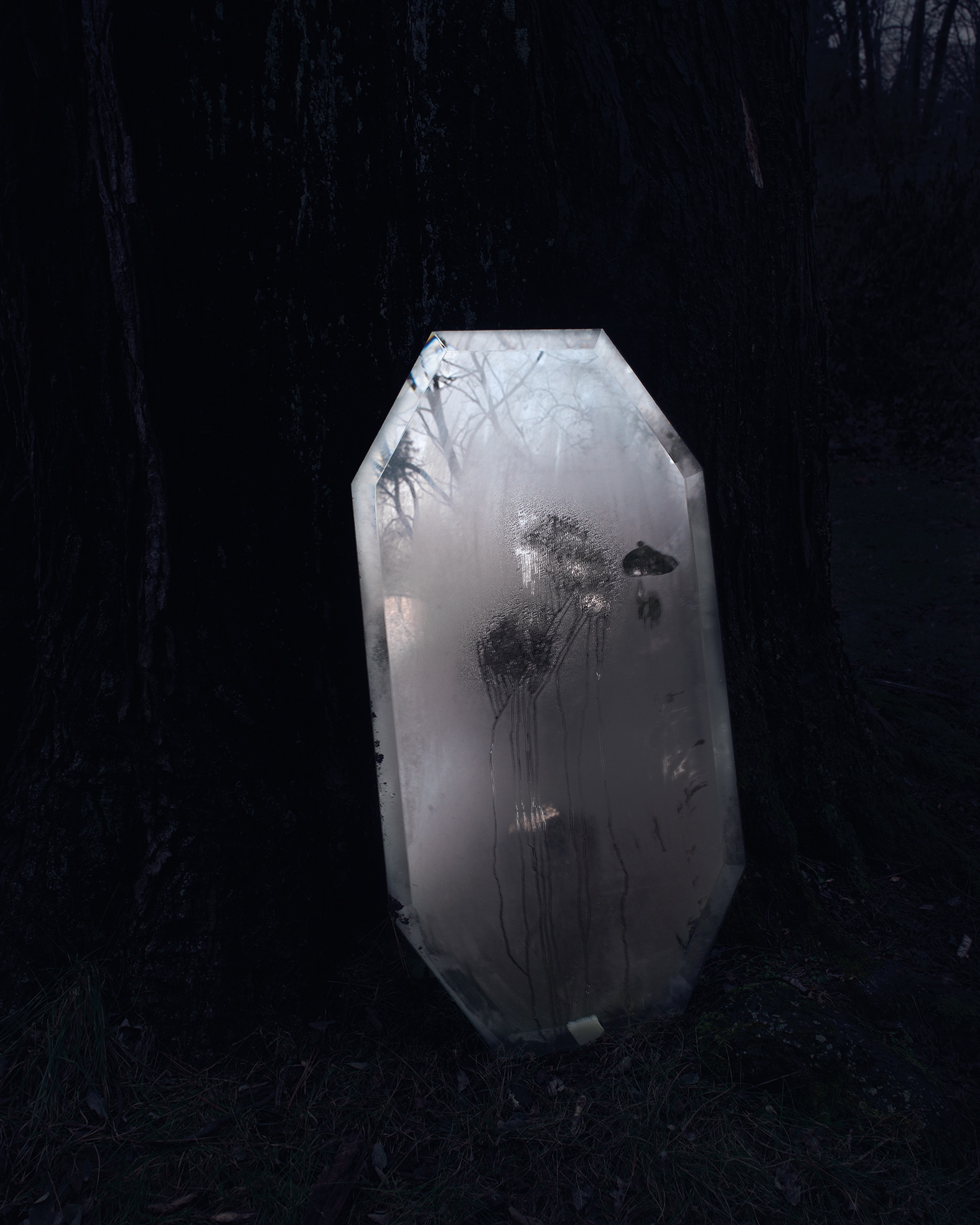
“I have always used photography to render invisible things visible,” Parlato says. Hence the mirrors in the book, because “it’s never truly possible to see oneself objectively.” The reflectionless vampire embodies this impossibility: “The ability to see—and recognize—oneself may be a defining characteristic of being human.” “I’m often asked whether my work has helped me ‘heal,’ and my answer is usually: only insofar as it helps me understand why I am the way I am—or to bring myself into visibility, to myself.” Photography, then, as revelation—never redemption.
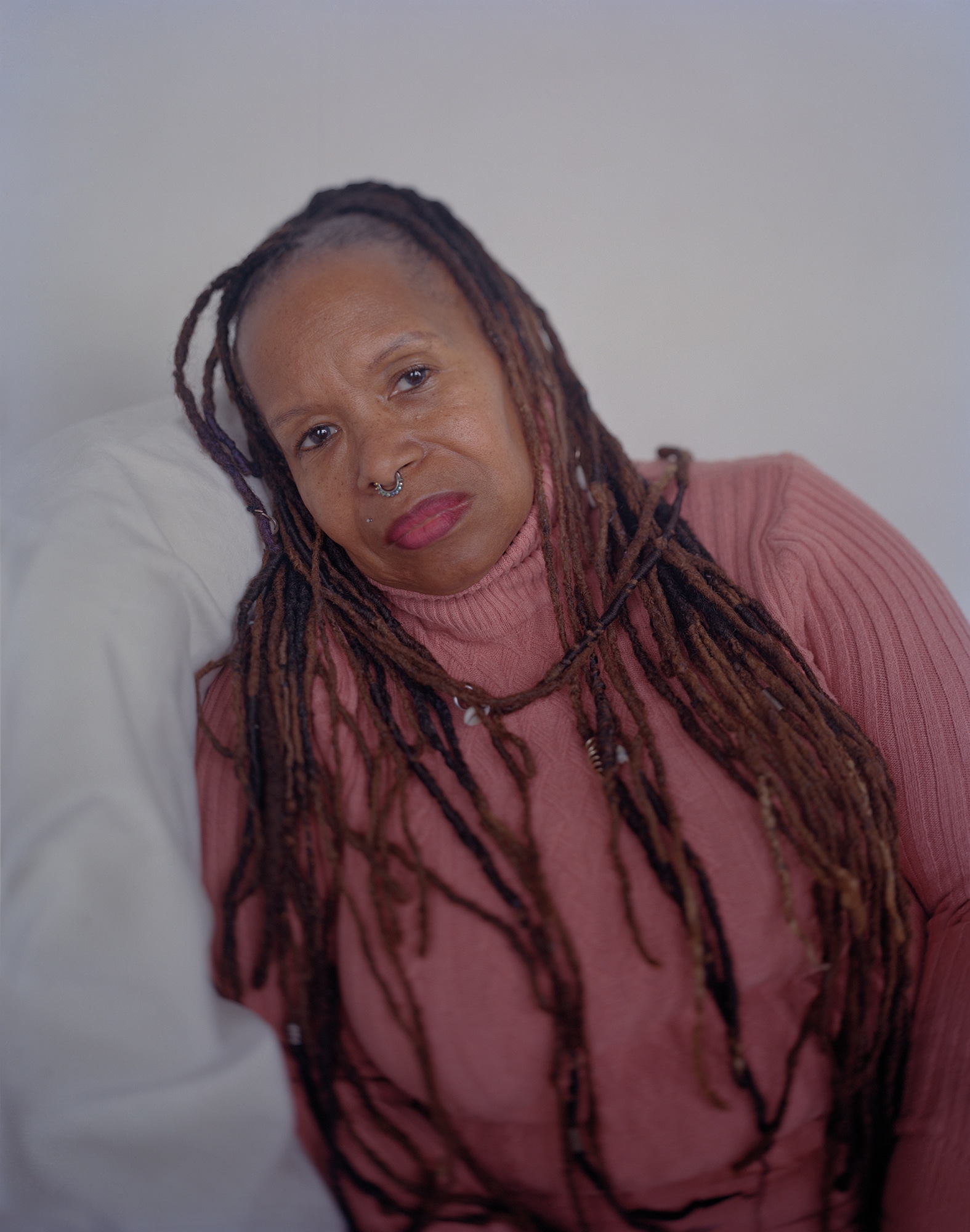
TIME TO KILL rejects consolation as much as obliteration. But it imposes, image after image, the women we would rather not watch grow old. In Zelma, a Black woman with red-painted lips holds the camera’s gaze with quiet assurance. Mimi, tattoo plainly visible, stares into the lens with serene gravity. These faces refuse to fade. If photography cannot repair, Ahndraya Parlato wagers on its power to restore visibility to those we had ceased to reflect. The riposte of the vampire women.

TIME TO KILL(2026) by Ahndraya Parlato is published by MACK and is available at the price of $60.