Published to accompany the exhibition at the Maison Européenne de la Photographie, Edward Weston: Becoming Modern (Morel Books) traces, through more than one hundred vintage prints from the Wilson Centre for Photography in London, the fertile tipping point at which American photography crossed into modernity.
Most photographers know how to capture light. Edward Weston used it to sculpt. Born in 1886 in Illinois, settled in California from 1906, this “adventurer on a voyage of discovery” traversed the century as a solitary surveyor, far from the New York circles of influence, forging his visual language on the margins.
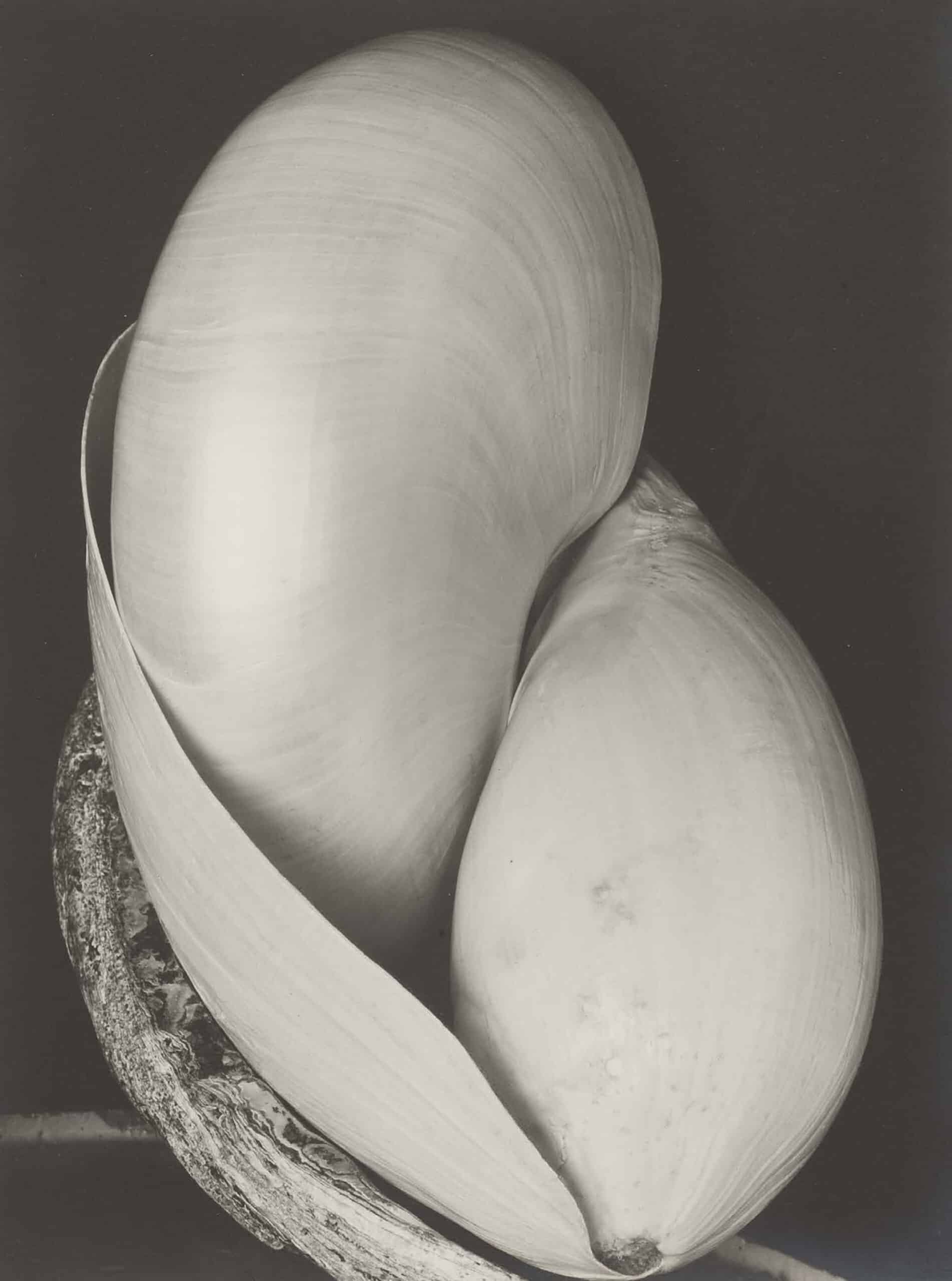
When Edward Weston photographs two pearlescent shells, nestled against each other, one could almost mistake them for two bodies entwined. The still life feels nearly organic, almost carnal. Light flows across them with a silken softness, revealing the finest striations, the most delicate nacre. The artist photographs the thing itself with surgical precision, as he wrote in April 1930: “To see the Thing Itself is essential: the quintessence revealed direct without the fog of impressionism.”
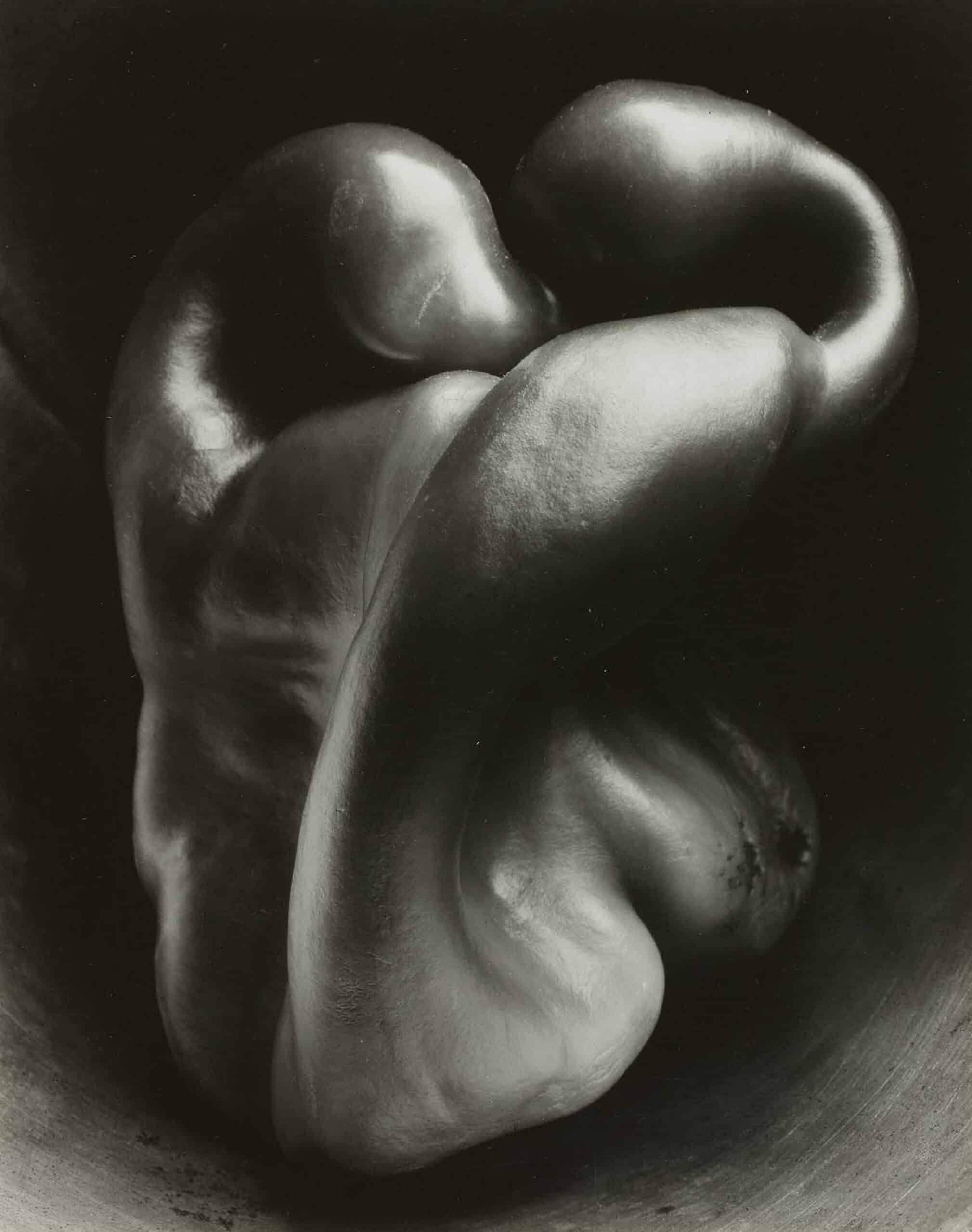
Look at this pepper. Its skin gleams like bronze, its folds twist with the tension of a torso at rest, its creases suggest now a clenched fist, now an arched hip. This humble market vegetable, plunged into an ebony darkness, has become a sculpture of jet. After this vision, you will never look at a pepper the same way again… Edward Weston was fully aware of it: “I went on with peppers, my wonder and vision increasing.”
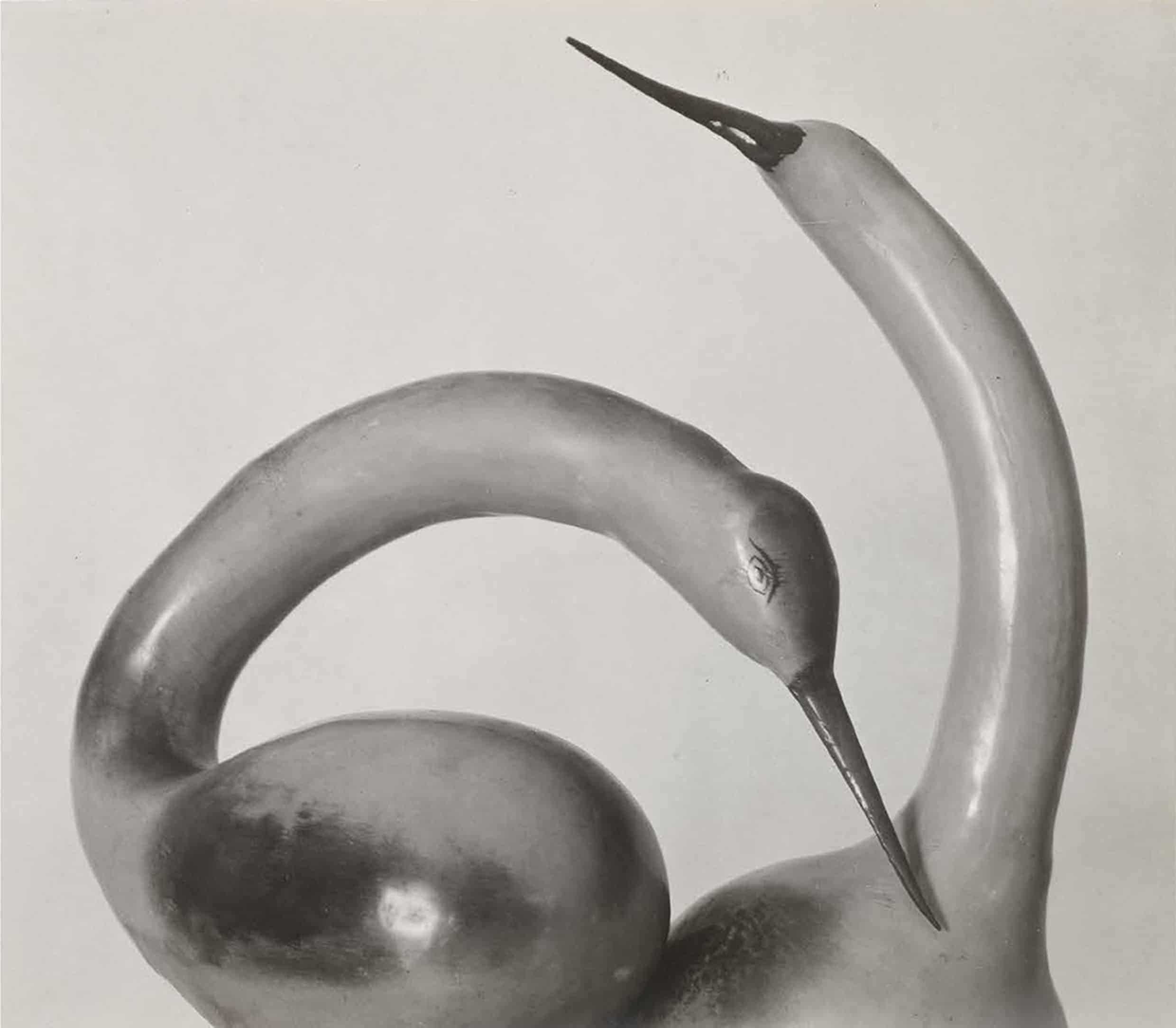
The same alchemy is at work everywhere. Two swan-shaped gourds shot from below against a milky background, intertwine their sinuous necks like two mythological birds frozen in a silent ballet: the vegetal achieves the grace of the animal. For Weston sought neither effect nor provocation, but “a way of seeing”, applied indifferently to the shell and to the human body.
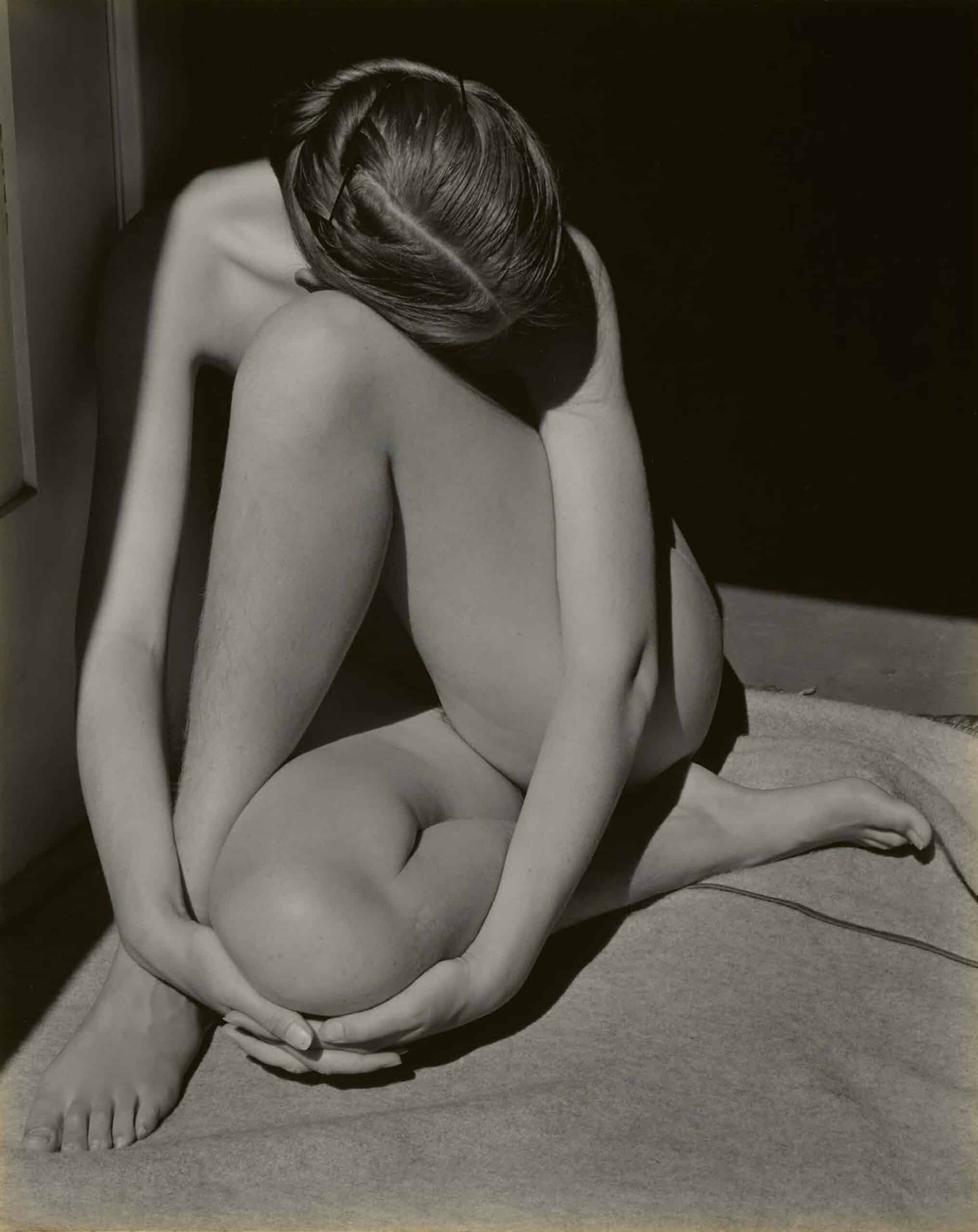
His Nude in Doorway from 1936 bears witness: a woman folded in upon herself, head bowed, arms knotted around her knees, becomes an architecture of shadow and flesh—an assemblage of curves so rigorous it verges on abstraction. The body ceases to be a subject and becomes pure form.
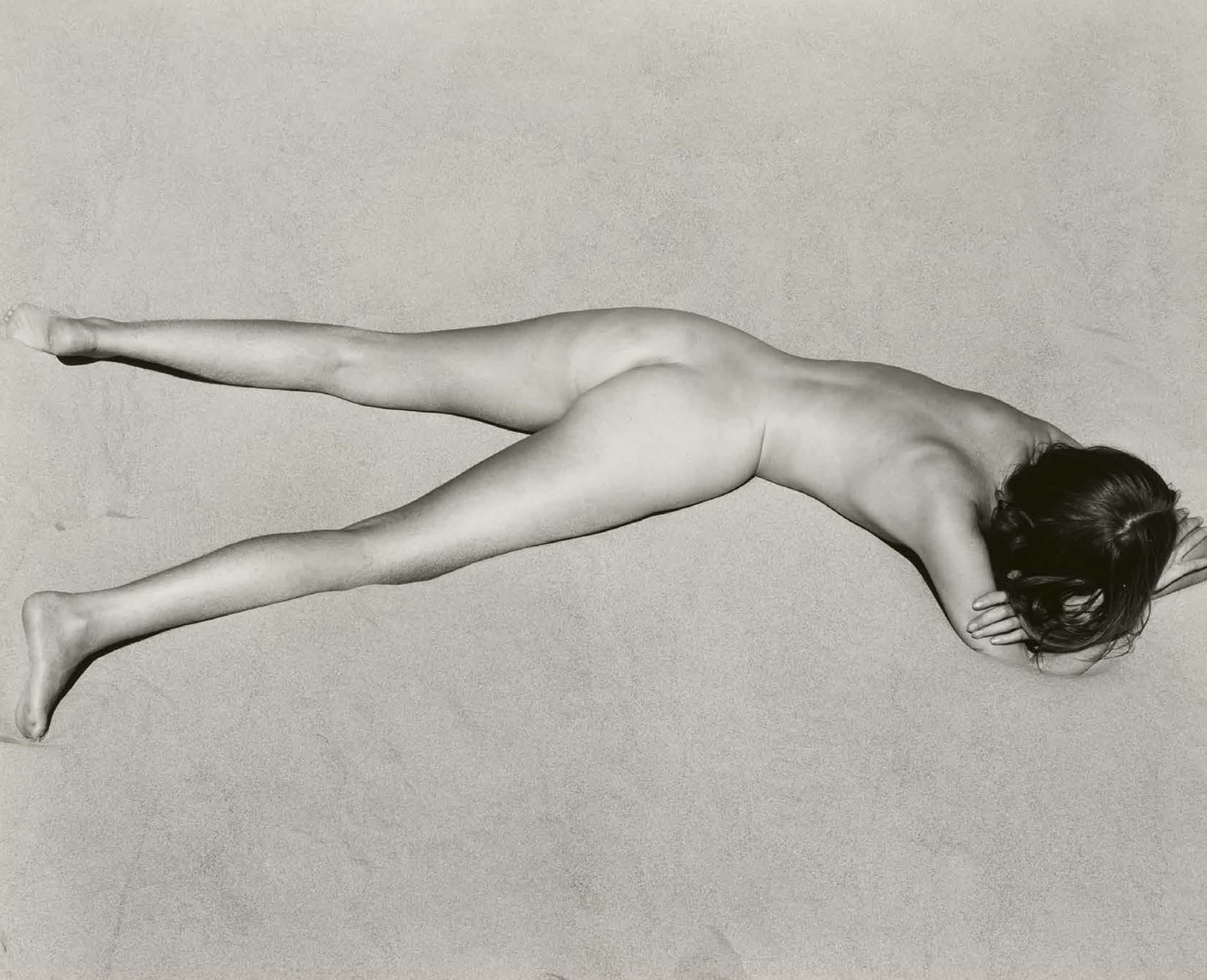
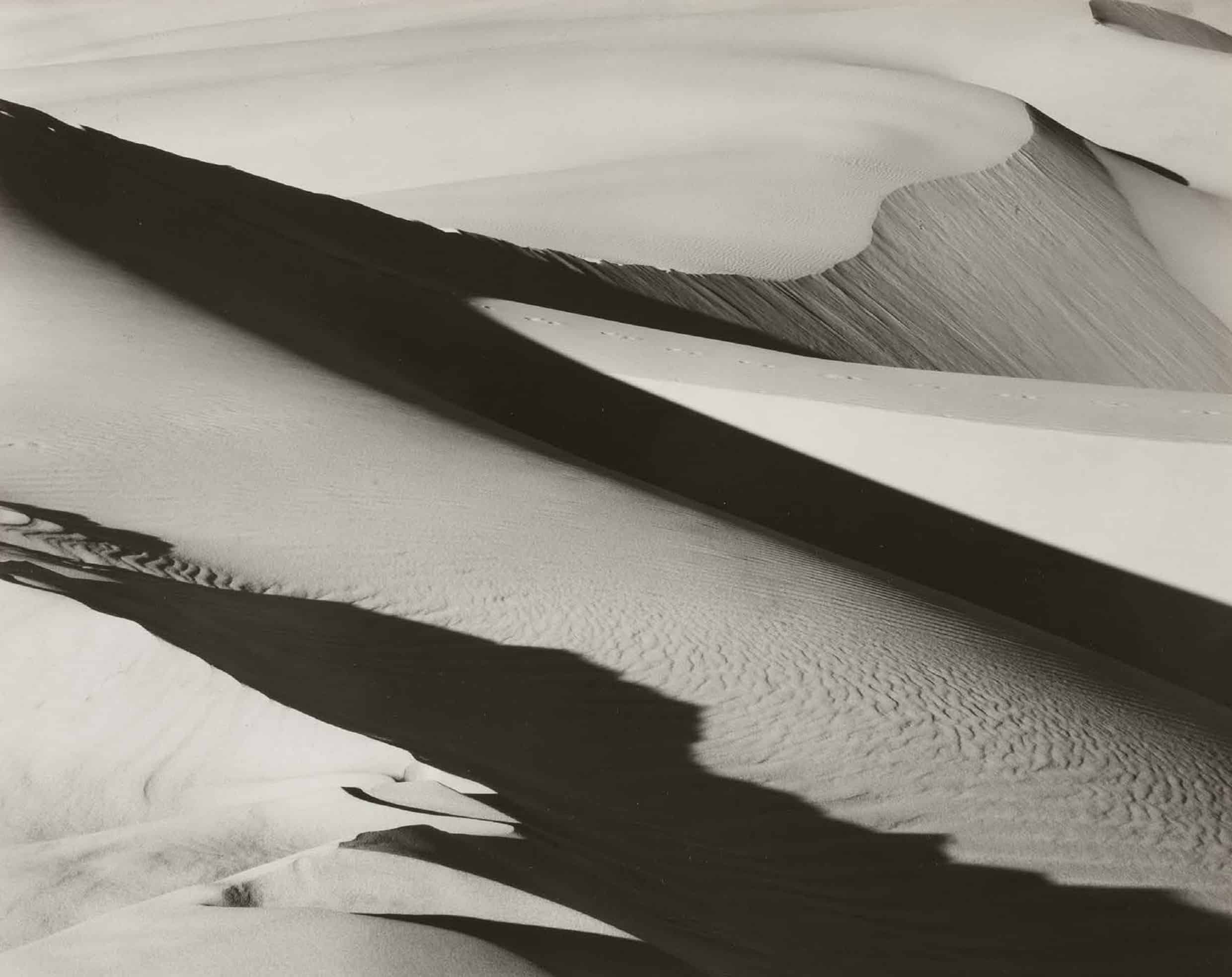
The Oceano dunes, photographed from above, reveal this same obsession brought to incandescence: their ridges of shadow slice the blinding light like blades of obsidian; sand becomes drawing, relief becomes music. It was in these late landscapes—Death Valley, Big Sur, Point Lobos—that, in Edward Weston’s own words, “the heavens and earth became one.”
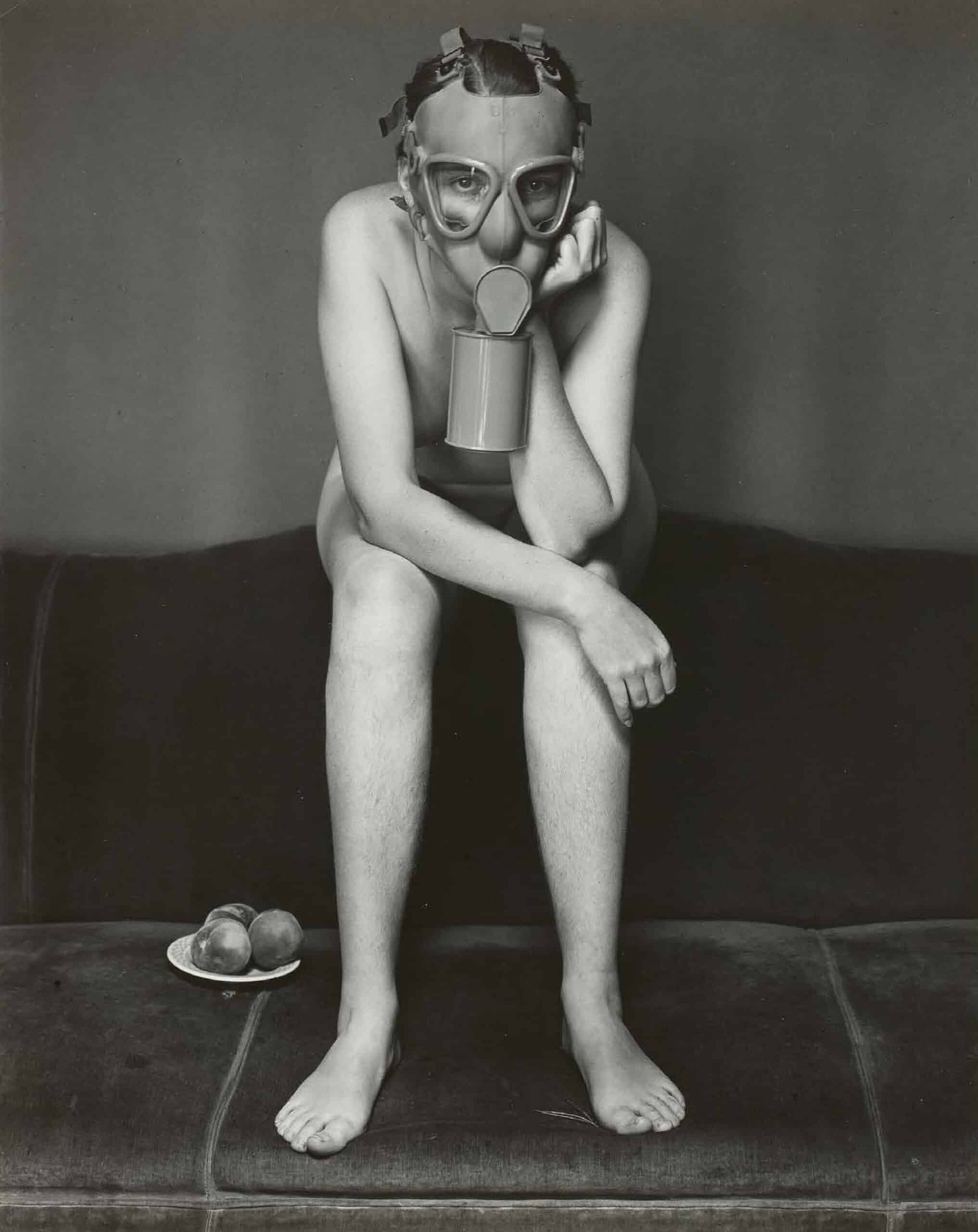
And then, humour appears where one least expected it. In Charis in Gas Mask (1942), a naked woman wearing a gas mask stares into the lens from a dark sofa, a plate of fruit at her side—an oblique reference to the war, biting and tender at once. Edward Weston inscribed another late image: “Nutty people in a nutty house as seen by a nutty photographer.”
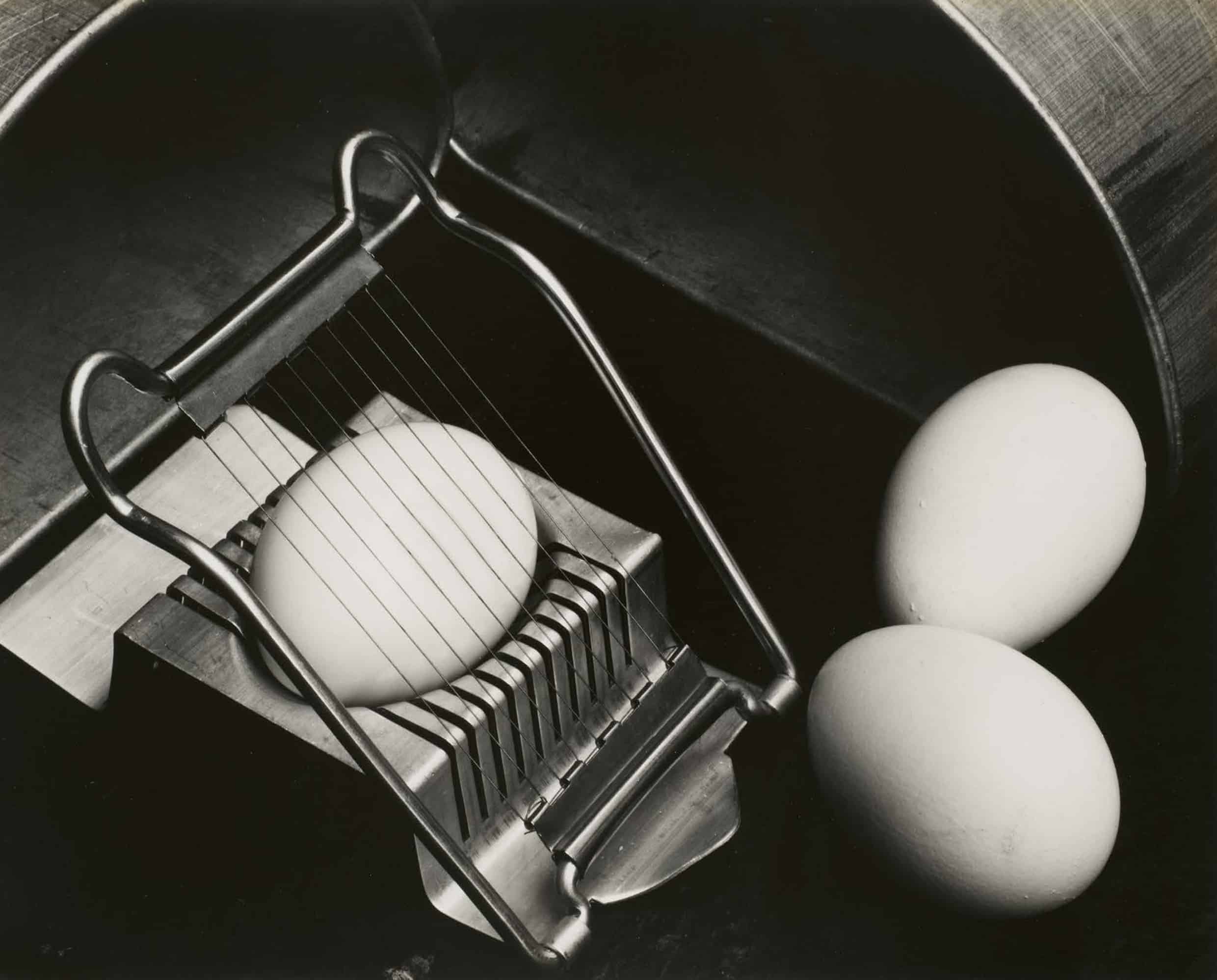
Eggs and Slicer (1930), featured on the cover of the book, depicts as its name suggests three eggs and a metal slicer whose steel wires trace a miniature harp, all nestled within the curve of a dark vessel. The humblest of everyday objects, elevated by sheer precision of framing and mastery of light.
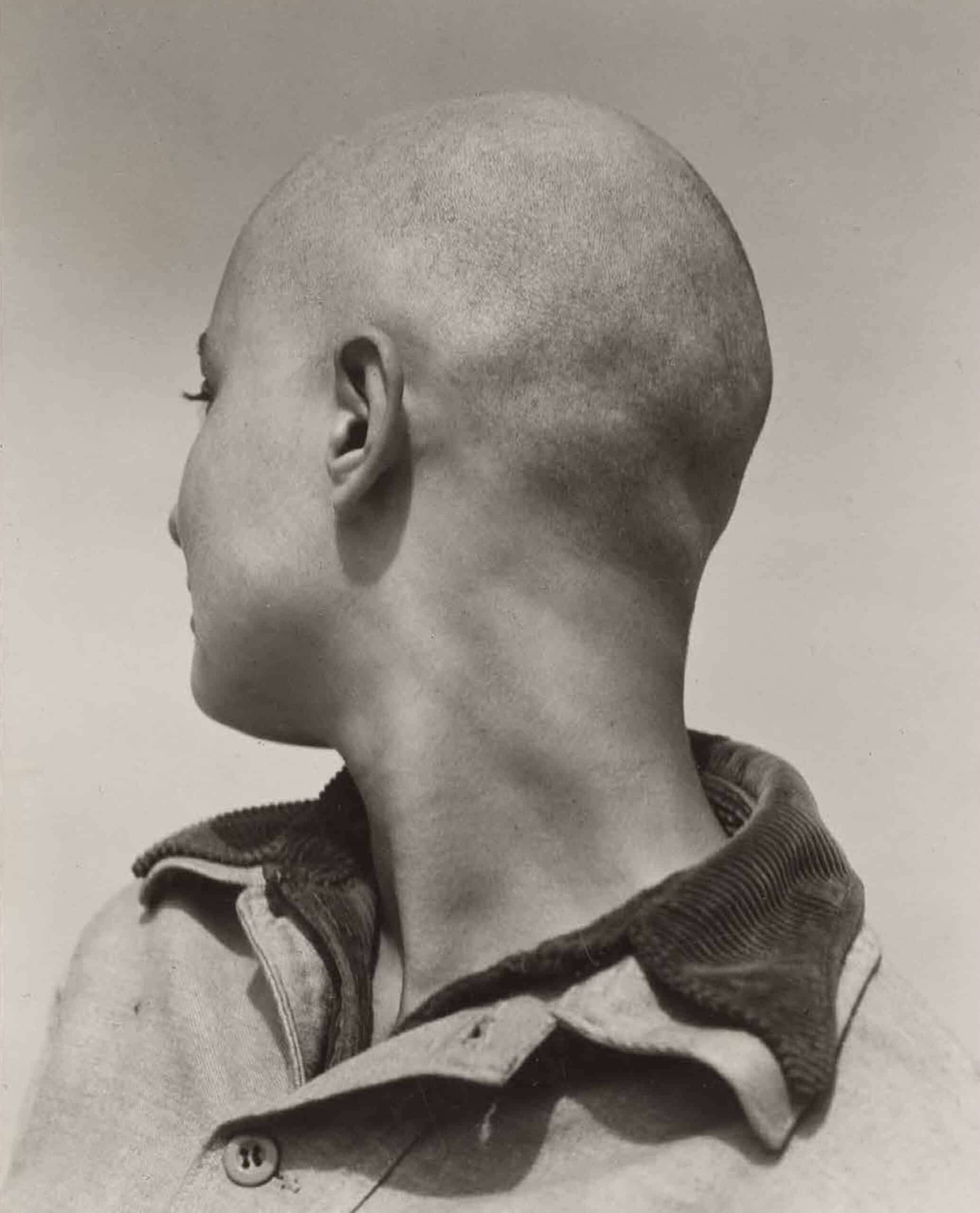
In the startling modernity of a woman’s face—that of Elinore Stone, captured in profile, her head shaved, her nape exposed, her jacket collar turned up—every detail is chiselled with the sharpness of an engraving. The skin itself becomes landscape. The portrait joins the pepper, the shell, and the egg in a single family of transfigured forms. “To photograph a rock, have it look like a rock, but be more than a rock,” the artist declared. Alfred Stieglitz, as early as 1922, had sensed this singular quality: “I like the way you attack each picture as a fresh problem.” Each picture, indeed. Each pepper, each dune, each face. Down to the very last.