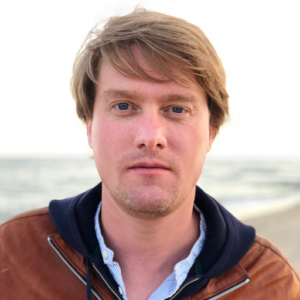
At the Cité internationale des arts, an artist-in-residence building complex which accommodates artists of all specialities and nationalities in Paris, Sylvie Bonnot found a new anchor point to extend her photographic research in the Amazon. Invited as part of the Elles & Cité program, she transformed her studio into a true “capsule,” a space of rigor and experimentation. It is where The Kingdom of Mosquitoes took shape, a long-term project that interrogates colonial memory, migration, and our relationship to the living world.
Through her travels in French Guiana and Suriname, the artist met Hmong and Bushinengue communities, heirs to histories of displacement and resistance. Her images, transposed using her singular “moulting” process—the separation and transfer of the gelatin skin of prints—become fragments of landscapes, bodies, and narratives. “With grace and intensity, her images weave a porous fabric of the questions that work their way through the conscience and the flesh of the inhabitants of these lands, at once distant and intimately entangled with their common destiny with France,” writes photographer Alain Willaume, who accompanied her during the residency.


For Bénédicte Alliot, director of the Cité internationale des arts, this approach perfectly embodies the spirit of the program: “The idea is to offer artists a rare space-time, both protected and open, which allows them to shift their practices and experiment with new forms.” She also emphasizes the artist’s ability to turn doubt into a creative engine: “What strikes me about Sylvie Bonnot is the way she dares to put herself at risk so that her work can evolve. The Cité is not a place of comfort; it is a place of research.”
From this intense period emerged the series Soulèvements, the first crystallization of The Kingdom of Mosquitoes, presented in June 2025 during her Open Studio. It will soon also be shown at Paris Photo, then in Hanoi and French Guiana. Between landscapes and portraits, archives and contemporary gestures, Sylvie Bonnot opens a narrative that is both intimate and collective, in which the fairness of our gaze upon the Amazon and those who inhabit it is at stake.
In the following interview, the artist invites us to discover the many facets of The Kingdom of Mosquitoes.
You describe your studio at the Cité internationale des arts as a “capsule.” What do you mean by that?
I experienced the residency as a huge ocean liner, with more than 260 studios. Inside my own, I had the feeling of being in a space-time capsule. I knew I had to complete the series before the end of the residency, because the particular conditions imposed both a constraint and a shift in my production.
How did the project The Kingdom of Mosquitoes begin?
The starting point was a residency in the Amazon region of French Guiana, organized with AMAZ and the Station Culturelle in Martinique. I wanted to cross my research for the Cité des arts with this fieldwork. I discovered a landscape marked by migrations and by history. The Hmong, for example, were settled by the French government in 1977 after the Vietnam War. Their agricultural expertise responded to President Giscard d’Estaing’s “Plan Vert” for food self-sufficiency. This historical and political stratification of the territory became central to my work.
Why did you want to focus on these communities?
Because they are made invisible. Children in French Guiana are taught that Vercingetorix is their ancestor, but in mainland France, people are completely unaware that their history is tied to ours. These communities—whether the Hmong from Asia or the Bushinengue refugees from Suriname in the 1980s—transformed the forest and integrated into it. This relationship to memory and identity seemed essential to me.
You also worked with CNES (the French national space agency) and space archives. What link do you see between space and French Guiana?
I’ve been collaborating with the Space Observatory of CNES for over ten years. I worked on stratospheric balloons for Nuit Blanche in 2017, and then on the archives of Baikonur. For me, space is an utopia: geographies that don’t yet exist but that we seek out. When I arrived in French Guiana to work on space-related subjects, I wanted to broaden my gaze and explore the forest and its communities. This shift from the dream of space to the reality of the Amazon imposed itself naturally.storique et politique du territoire est devenue centrale dans mon travail.


Your process, titled the “moulting,” is very particular. Could you explain it?
I invented this process twelve years ago. I separate the “skin” of the image, the gelatin layer, and transpose it onto a new support. It could be paper, a wall, aluminum. What I’m looking for is to make the image organic, fragile, changing. The moulting has become my photographic language, a way of summoning my own physical commitment into the image.
Why apply the moulting to this project?
Because it expresses transformation and fragility, like those of the Amazonian territory. The prints become fragments of forest, of cultures, of memory. The moulting translates the tension between tired bodies and exhausted land, between agriculture and the forest. It also embodies a relationship to skin, which echoes the project’s title.
Why did you choose the title The Kingdom of Mosquitoes?
Upon arriving in French Guiana, you immediately become desirable to mosquitoes. Their bite is a physical reminder of our “exotic” presence in this territory. That discomfort speaks to our fragile, questioned place in this environment. The title evokes this relationship to skin, to the living, and to the trial of the tropical climate.
Your images oscillate between documentary and artistic creation. How would you define them?
I don’t know if they are documentary photographs. They have both a sense of universality and a certain muteness. They exist in an in-between. What I try to summon through the moulting is an existential dimension of the image: what is our relationship to the living, and what is our relationship to its representation?
Sometimes the viewer can touch your works. Why did you make this choice?
Some pieces, like Murmures, I invite people to touch. The fragile material reveals its strength upon contact. For me, this creates a different experience of photography, an osmosis between the process and what the image conveys. It’s a pedagogy: through touch, one can better grasp the fairness of the image than through a technical explanation.


You often insist on the “accuracy” of images more than their beauty. What do you mean by that?
For me, there must always be fairness between the restitution I propose and the lived experience of the subjects. If it isn’t fair, it doesn’t work. I always imagine the person concerned standing next to me, looking at the image. Beauty comes afterward. What matters first is justice and dignity.
How will the project unfold over time?
It’s a long-term project, based on five residencies, extending until 2028. I’ve had support from the Cité internationale, the ECPAD, the Station Culturelle in Martinique, and more recently from the Académie des beaux-arts. This support enabled me to participate in the Biennale Photographique of French Guiana, soon in Hanoi, and to announce a solo show at Paris Photo.
What impact do you hope The Kingdom of Mosquitoes will have?
To make visible people and communities who are not. It’s a reflection on landscape but also a way to remind us that their history is linked to ours. I hope that the public—visitors, readers, spectators—can enter the project at different levels, but always with this guiding thread: to make visible, and to make justice.
More information on Sylvie Bonnot and The Kingdom of Mosquitoes here. More information on the Cité internationale des arts here.