
In 1993, Catherine Opie asked her friend Judie Bamber to cut into her back with a scalpel. The design is one a five-year-old might draw with their eyes closed: a house, a smoking chimney, a sun behind a cloud, two stick figures in skirts holding hands. Every line is a furrow of fresh blood. The photographer sat with her back to the camera, against a dark green damask cloth, and pressed the shutter.
Now 64, Catherine Opie is inaugurating her first major museum exhibition in the United Kingdom. Born in the vastness of the Corn Belt, in Ohio, she moved to California at 13, studied photography in San Francisco then at CalArts, taught at UCLA for 22 years, lived through the AIDS crisis on the front lines, was active in ACT UP and Queer Nation, raised a son, divorced, and never stopped photographing.
Self-Portrait/Cutting became, against her will, her most famous image. And her most misunderstood. That bloody drawing was never a provocation—it was a plea: the desire for a queer family in a world that wanted no such thing. “It was a longing for domesticity in relationship to a very homophobic world,” the artist explains. “An unattainable ideal.”
“Taking photographs is all I’ve ever wanted to do. It’s how I think,” she says simply. The exhibition opens, fittingly, with the portrait of a child in dark glasses. The 1970 self-portrait, taken with a Kodak Instamatic received for her ninth birthday, shows young Catherine striking a strongman pose outside a suburban house. She had just discovered Lewis Hine’s photograph of a girl working in a cotton mill in South Carolina.
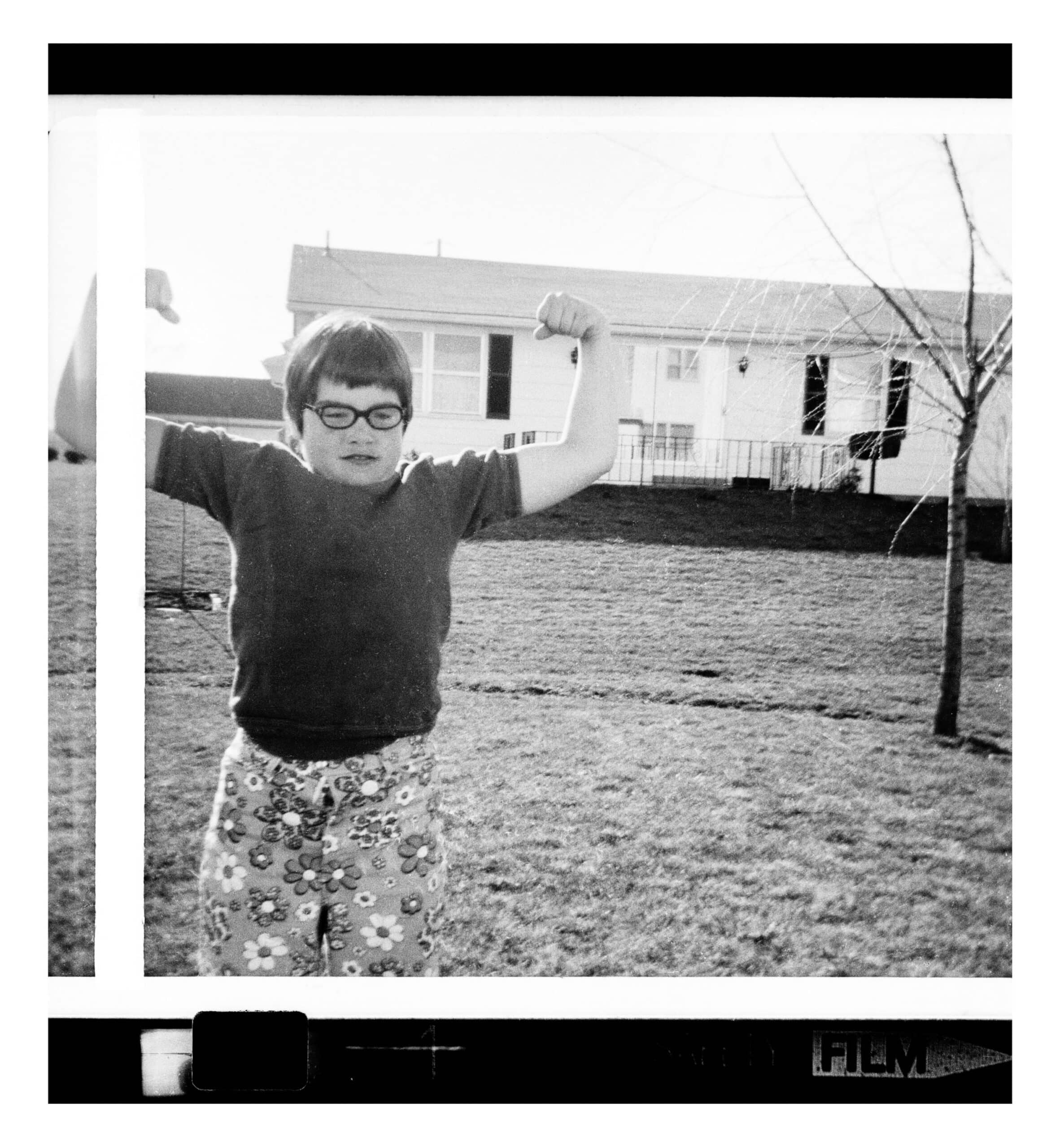
She decided, then and there, that photography would be her life. “I would make photographs of every speed limit sign in the neighbourhood, every fire hydrant. I would photograph my cat. My Barbie dolls. My friends at the country club playing in the water and swimming,” she recalls. That mixture of manic determination and tender curiosity has never left her.
Queer as Folk
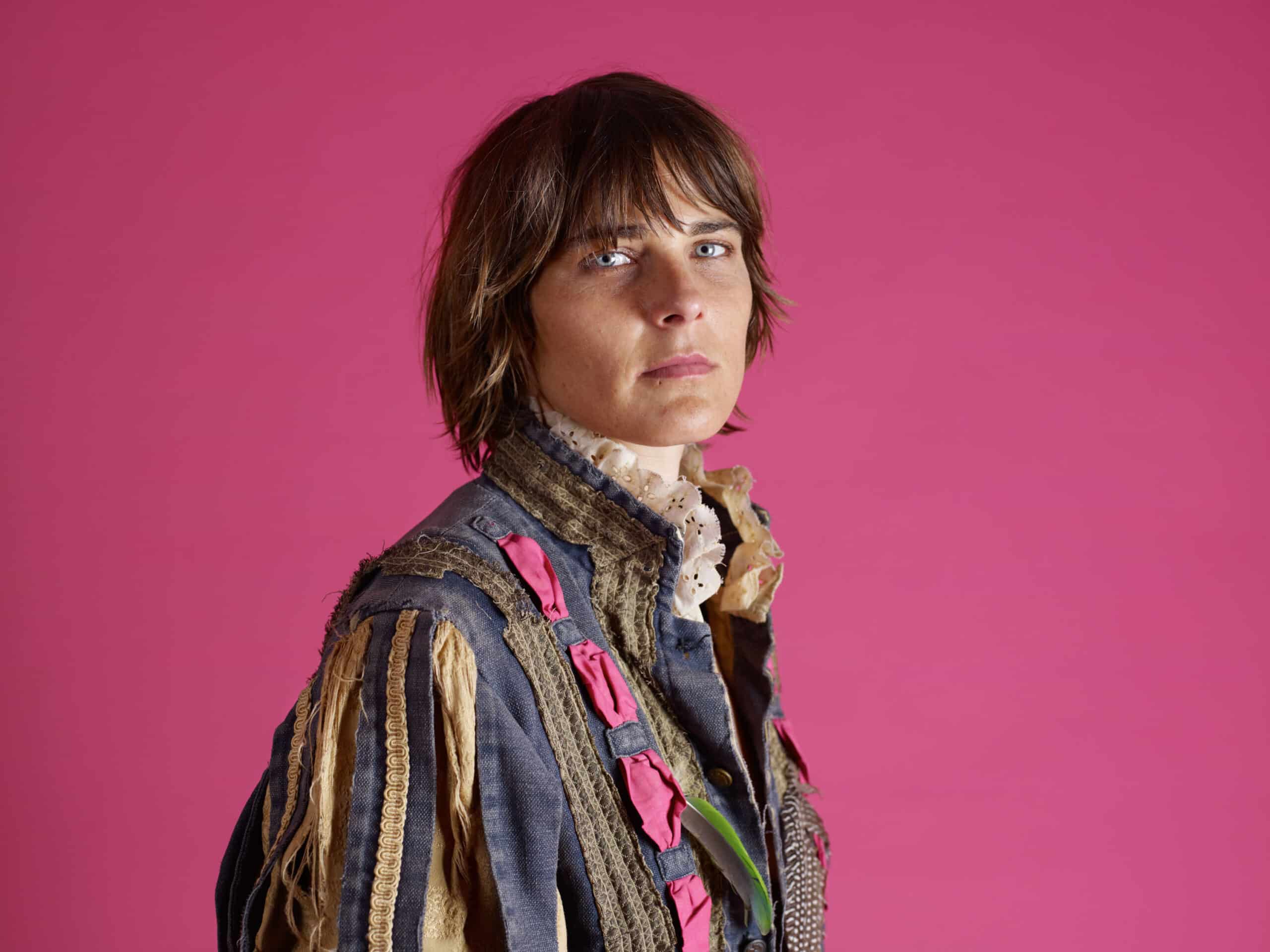
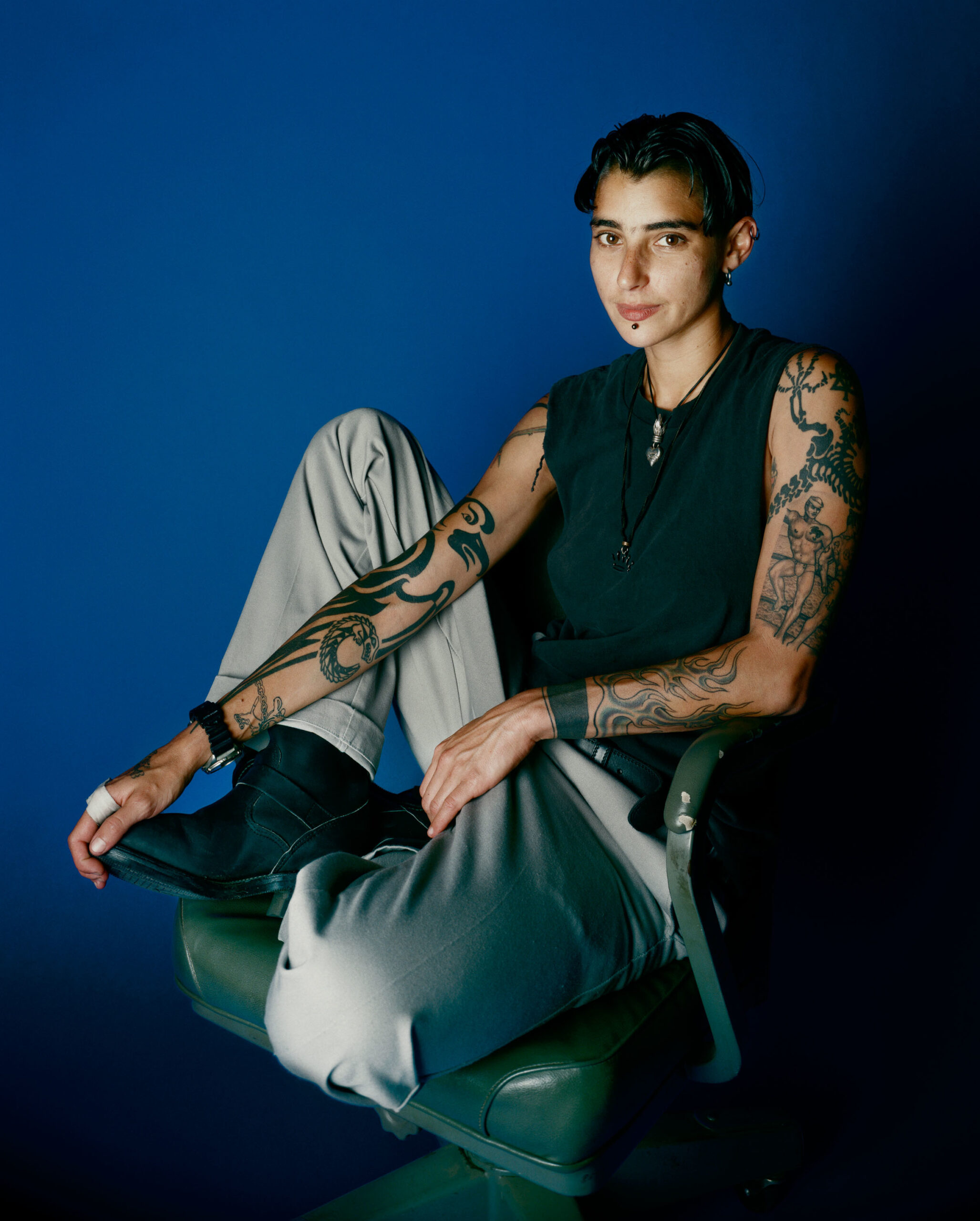
Twenty years later, in Los Angeles, she discovered what she calls her “logical family”—her chosen kin. In 1991, she gathered thirteen lesbian friends and asked them to dress up as their masculine alter egos. Cheap stick-on moustaches glued to their chins, drawn-on sideburns, nicknames engraved on brass nameplates: Papa Bear, Pig Pen, Wolfe, Chief. She posed them against a violent egg-yolk yellow background, the glue holding the fake moustaches deliberately visible.
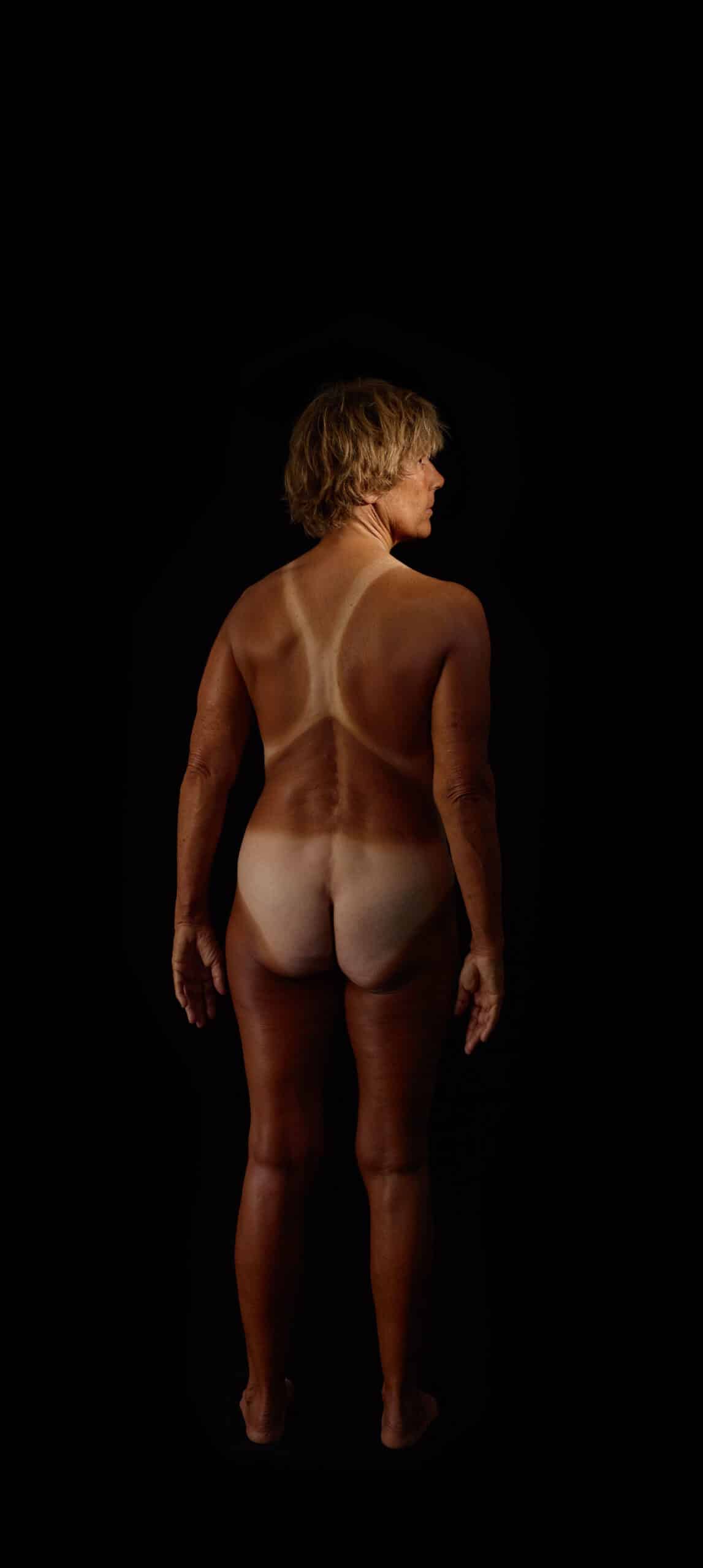
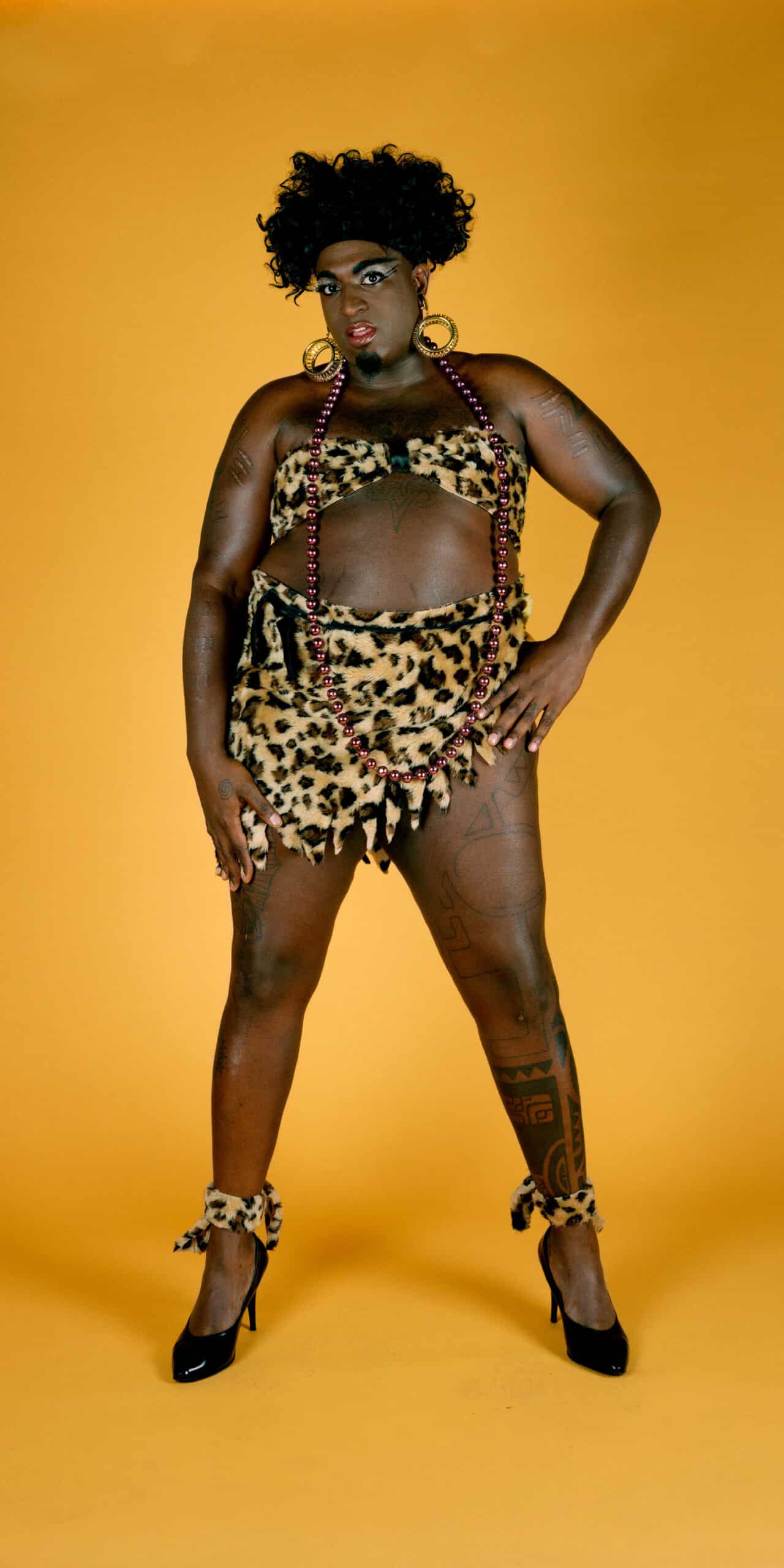
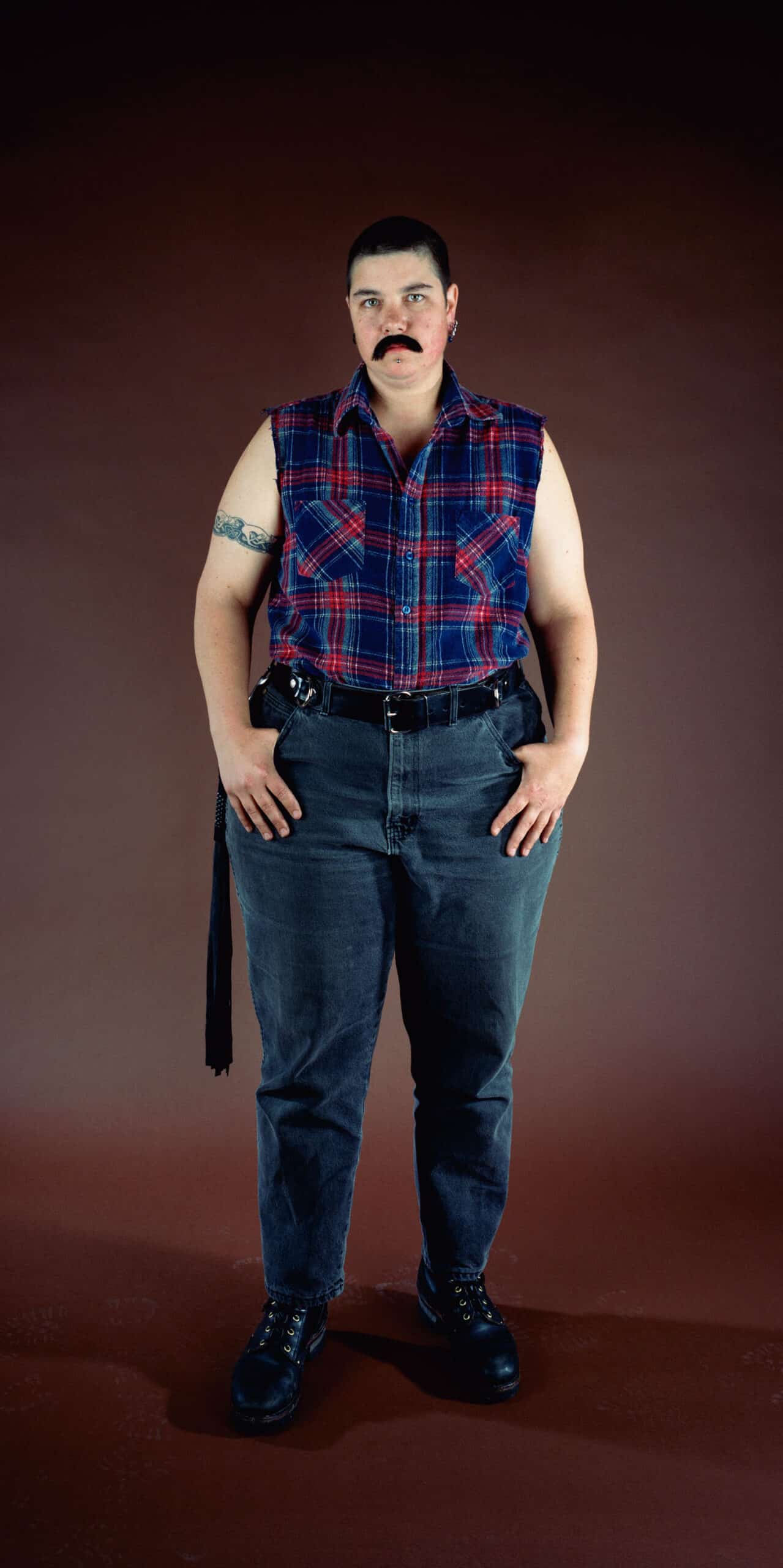
“In “Being and Having”, I was trying to reframe the idea of portraiture,” she explains. “They’re awkward portraits. That bright-yellow background was a weird choice of colour for skin tone, where it wouldn’t match but it allowed it to pop.” The series is a joyful manifesto on the performativity of gender, made at the height of the AIDS epidemic. “I decided that I was gonna make my own Royal Family in the ’90s, beginning to make these very formal portraits on the coloured backgrounds,” she adds.
The photographer had found her formal weapon: colour. Where documentary photography claimed the truth of black and white, she chose saturated backdrops borrowed from Hans Holbein the Younger—royal blue, cardinal red, emerald green, deep purple—and posed her friends with the solemnity of a court painter. “There was an equality to his paintings—they weren’t demigod portraits; they were just incredibly detailed and real,” she says of Holbein.
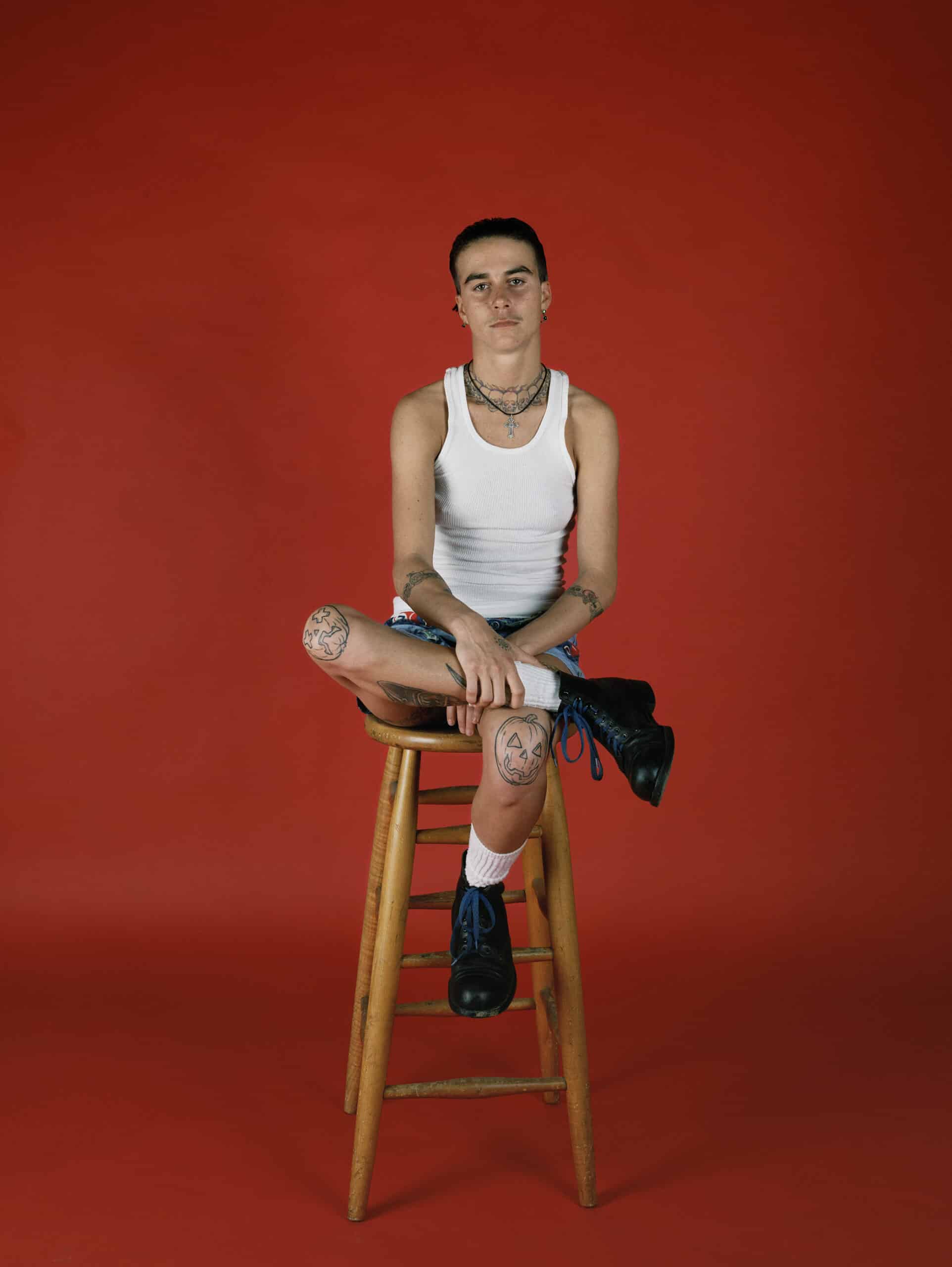
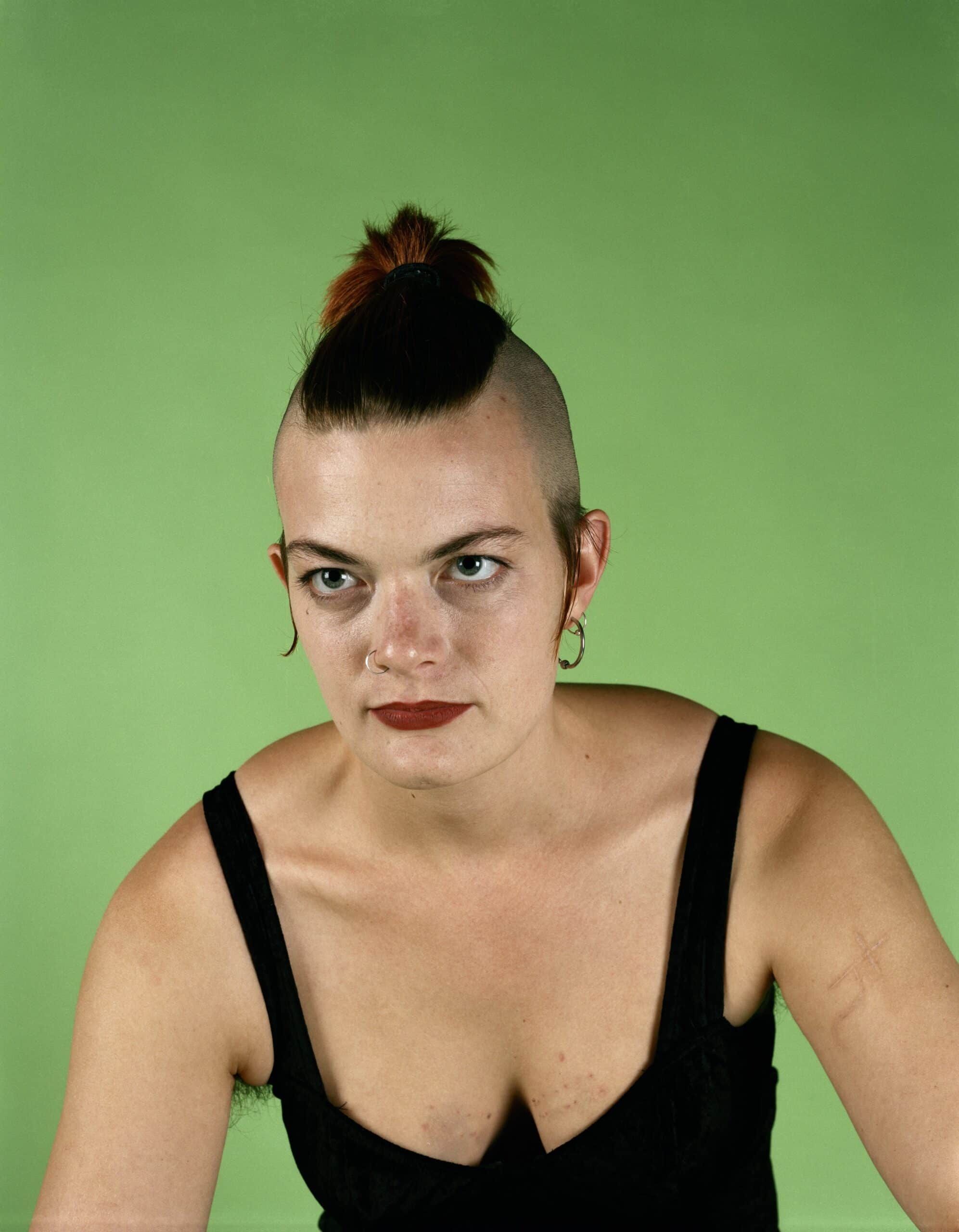
“When I saw that, I realised that I wanted to mirror his work with members of my own community.” Pig Pen (1993) perches on a wooden stool against a Venetian red, in a white tank top, tattooed arms crossed over her knees, boots laced up, her gaze of princely intensity. Mike and Sky (1993), the first couple among her friends to begin hormonal transition, stand shoulder to shoulder against a cobalt blue.
Chloe (1993), half-shaved head and flaming mohawk, stares at the lens against a celadon green, red lips and sideways glance, in a mingled sense of defiance and vulnerability. “I had to seduce the viewer in a different way,” she sums up. Then the register shifts. In 1998, Catherine Opie drove 9,000 miles across the United States to photograph lesbian couples in their homes.
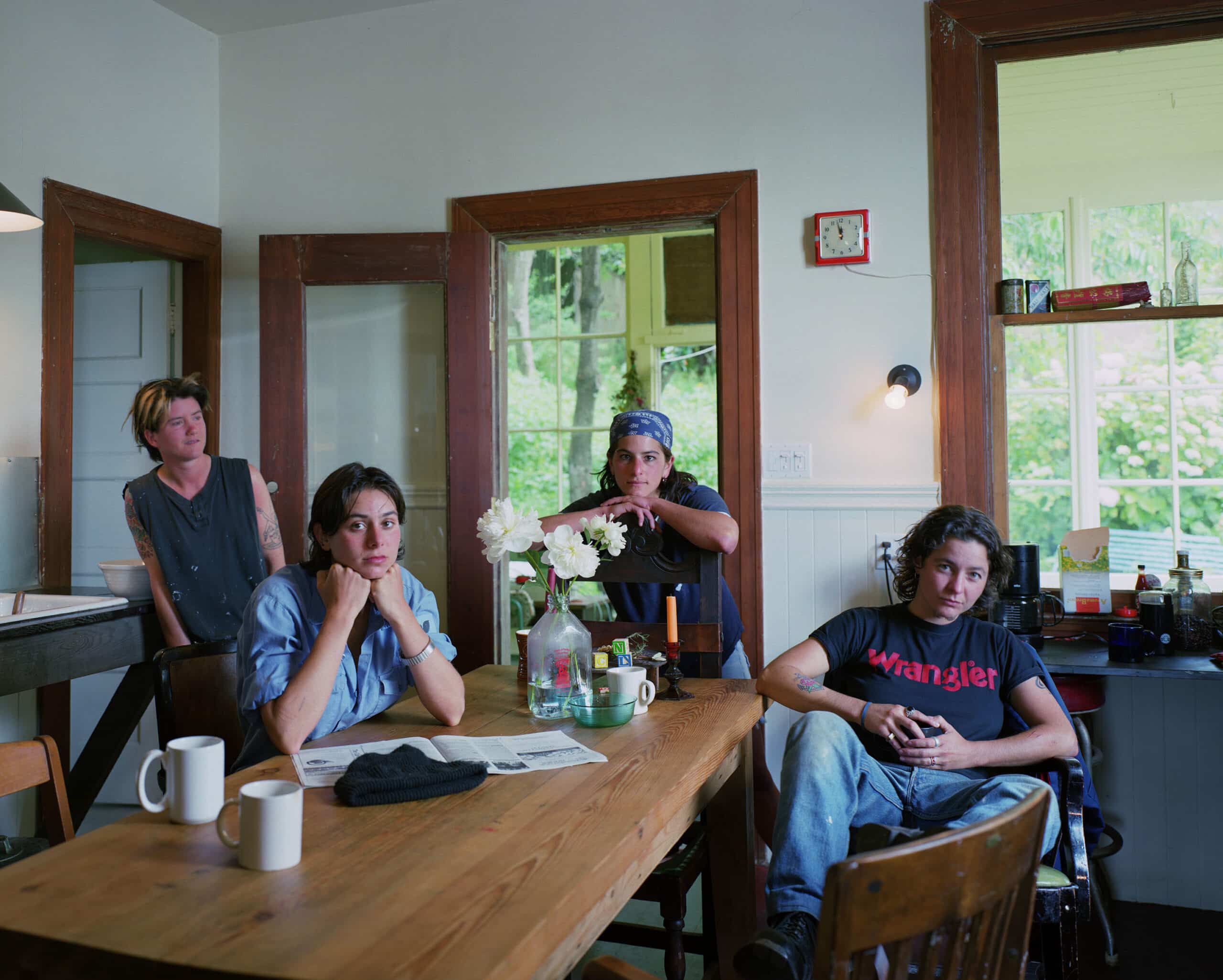
The series “Domestic” responded to a glaring absence: that of queer families in the 1991 MoMA exhibition “Pleasures and Terrors of Domestic Comfort”. “Everybody creates a home in some way,” Catherine Opie states. In Flipper, Tanya, Chloe, & Harriet (1995), four women pose in a kitchen, seated around white mugs, framed by thick wooden doorframes, in an almost Flemish composition.
Eleven years after Self-Portrait/Cutting came Self-Portrait/Nursing (2004): Catherine Opie, short-haired, tattooed skin, the whitened scars of her earlier performances still legible on her torso, breastfeeding Oliver against a red and gold brocade. The pose is that of a Renaissance Madonna and Child, but the body holding the infant carries the memory of every incision.
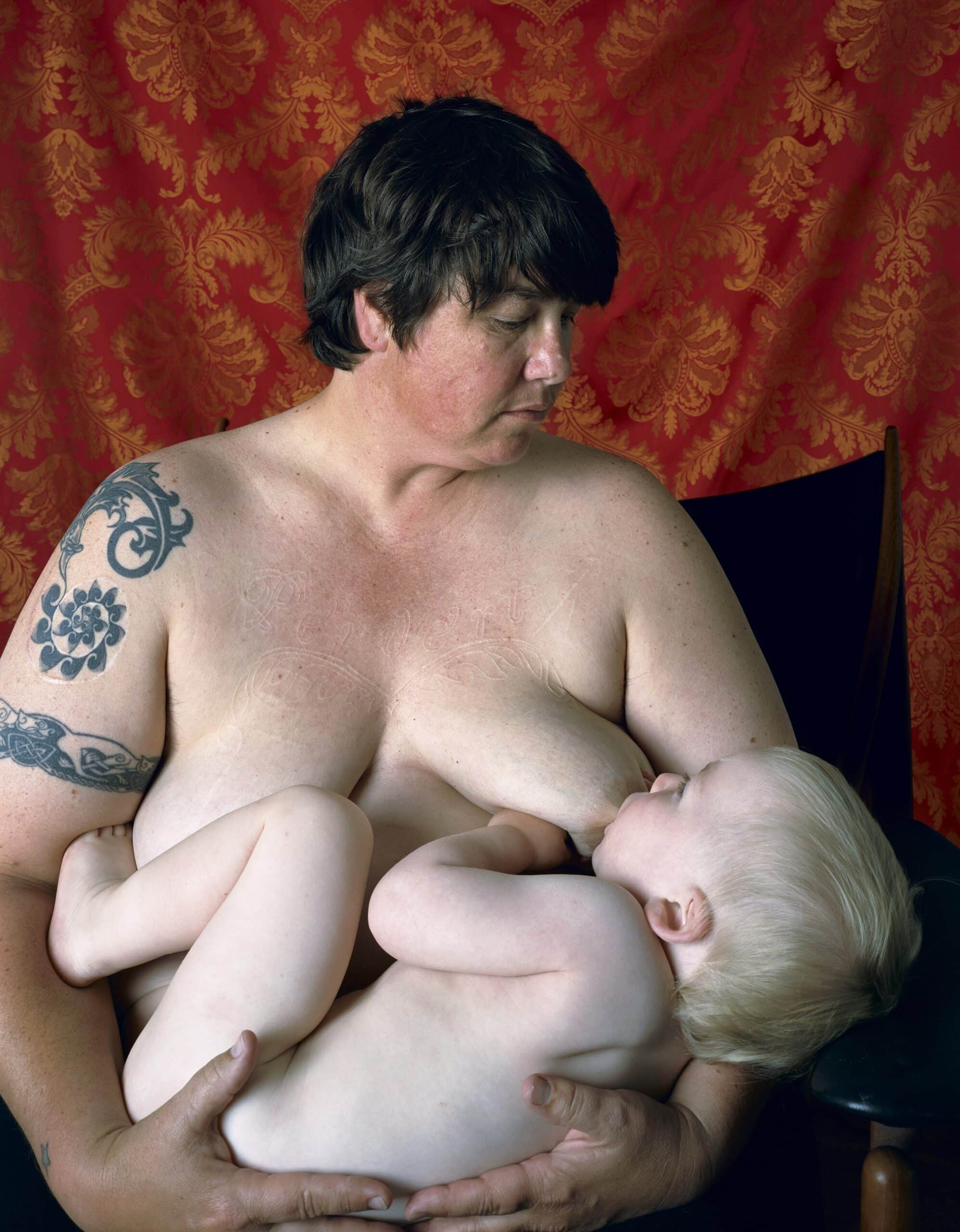
“Pervert was a direct response to the gay and lesbian community beginning to create this rhetoric of being normal. And that really bothered me, because what did that make everybody else?” Catherine Opie confides. With Nursing, she disowns nothing: the faint white scar of the word “Pervert” remains visible beneath the infant. Oliver, indeed… Opie’s son runs through the catalogue like a golden thread.
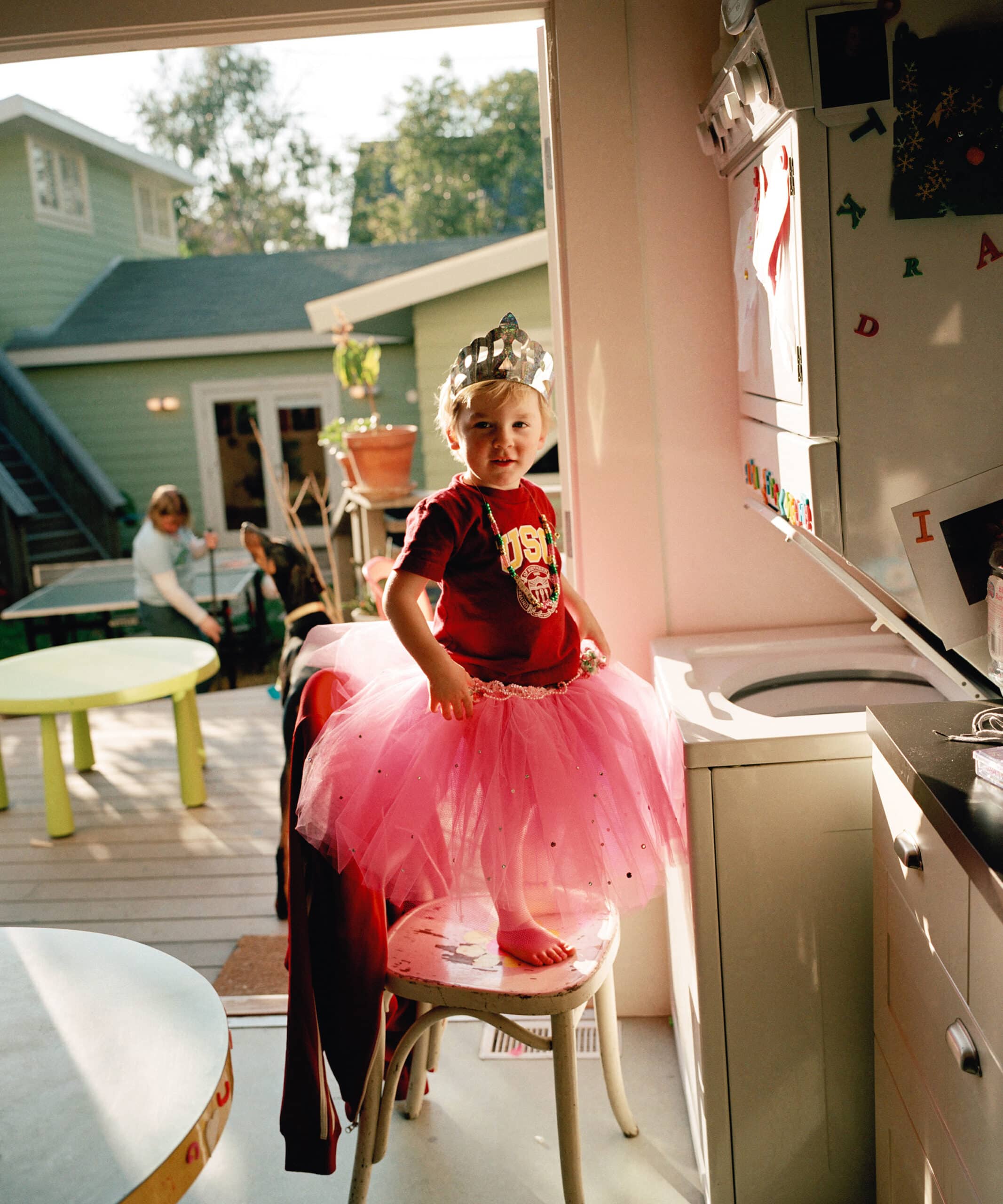
In Oliver in a Tutu (2004), he appears as a blond toddler, a cardboard crown on his head and a diaphanous pink tutu over a USC t-shirt, perched on a stool in the kitchen flooded with Californian sun. “Out of my butchness, I had wanted him to be a boy-boy,” Catherine Opie confides. “And with my son, here I was grappling with wanting him to toss a football with me in the back yard because that’s what I had always dreamed of—and he just wanted to play My Littlest Pets with the doll house. He was not a masculine boy. He was the pink-tutu boy. And now he’s come out and he’s still the pink-tutu boy.”
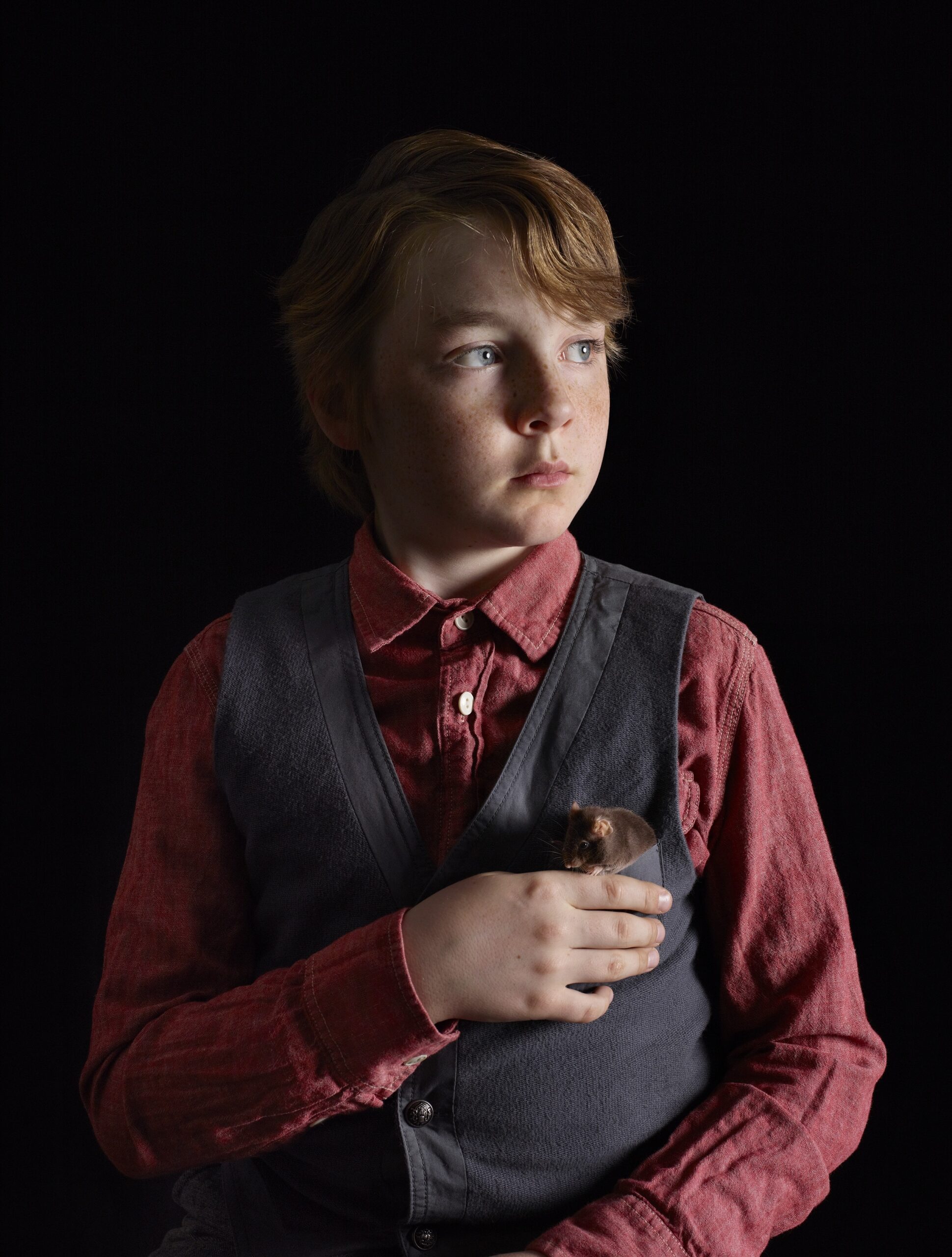
The journey widens further. The high school football players photographed between 2007 and 2009—Abdul, gentle-eyed in his red Raiders jersey, Dusty with his clear eyes under dark curls in the Notre Dame Football jersey, Stephen, chest puffed under a Superman t-shirt cropped above the navel, triumphant and fragile on the grass of Hawaii. “I fell in love with the lighting and the idea of the field as a stage of Americana,” Catherine Opie describes.
“I was really moved by them. And I realized this was an extension of American landscape.” Like those Malibu surfers emerging from the water, with the horizon line strung like a wire between them and infinity. The portrait of Pope Francis, tiny in his Vatican window, surrounded by what she calls “the constructed architecture of power.”
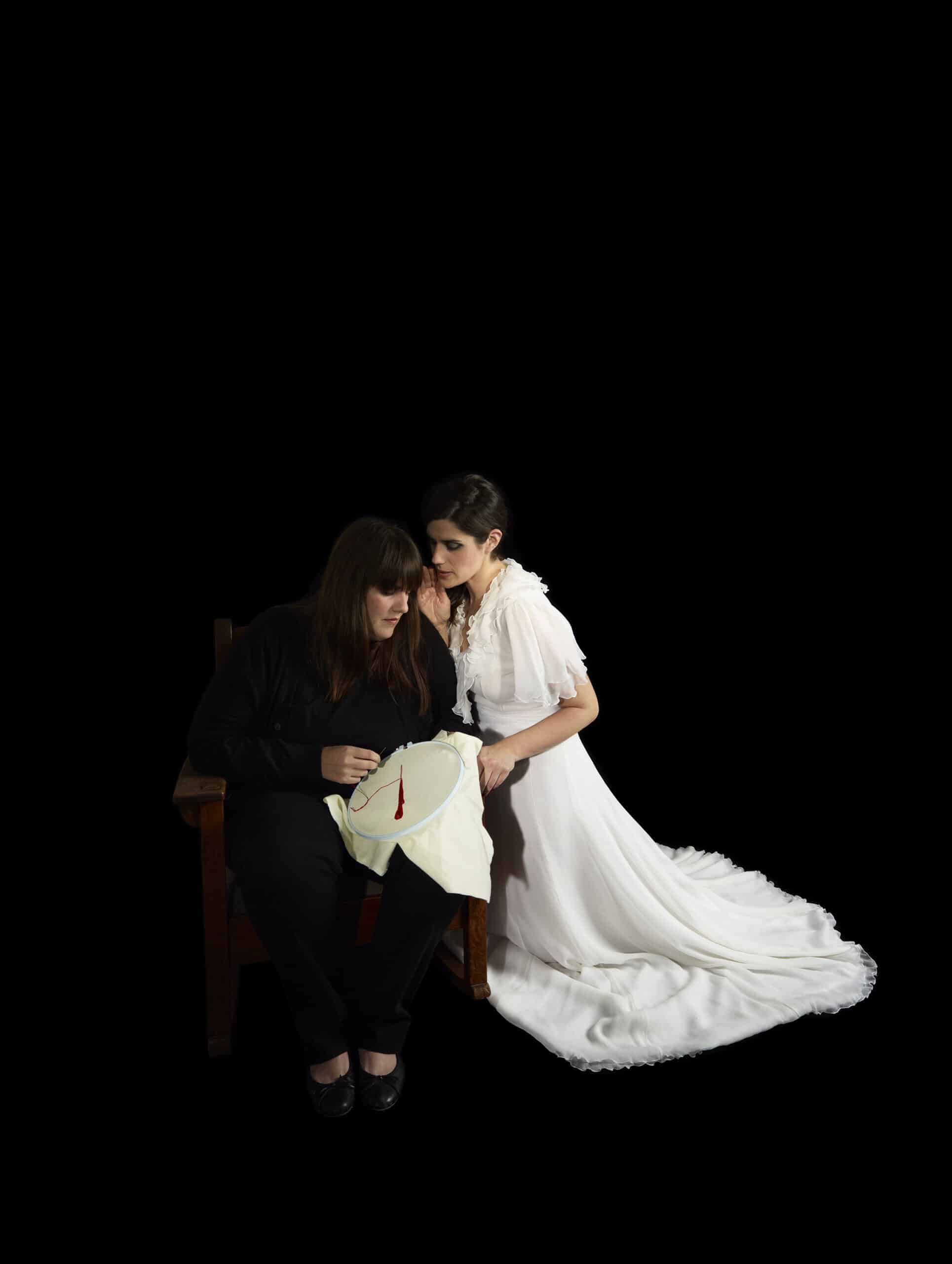

Catherine Opie documents everything. As with her photographs of university walls covered in handwritten messages after the fraternity rapes. “It’s really interesting to try to put myself in these places where I don’t really belong… because I am trying, ultimately, to find a notion of common ground.”
The exhibition, conceived with architect Katy Barkan as a series of slightly off-axis rooms within the gallery, sets Opie’s portraits in dialogue with the Holbeins, the Tissots, the Gwen Johns of the permanent collection. Her photographs of Gillian Wearing, Isaac Julien, David Hockney slip between the 19th-century oils, and you could almost miss them.
That is precisely the point. “Without representation, there is no visibility,” Catherine Opie repeats. “The meaning and context of what architecture does with humanity and portraiture has always been the thesis of the work for me. It’s between the built environment and the built body and identity.”
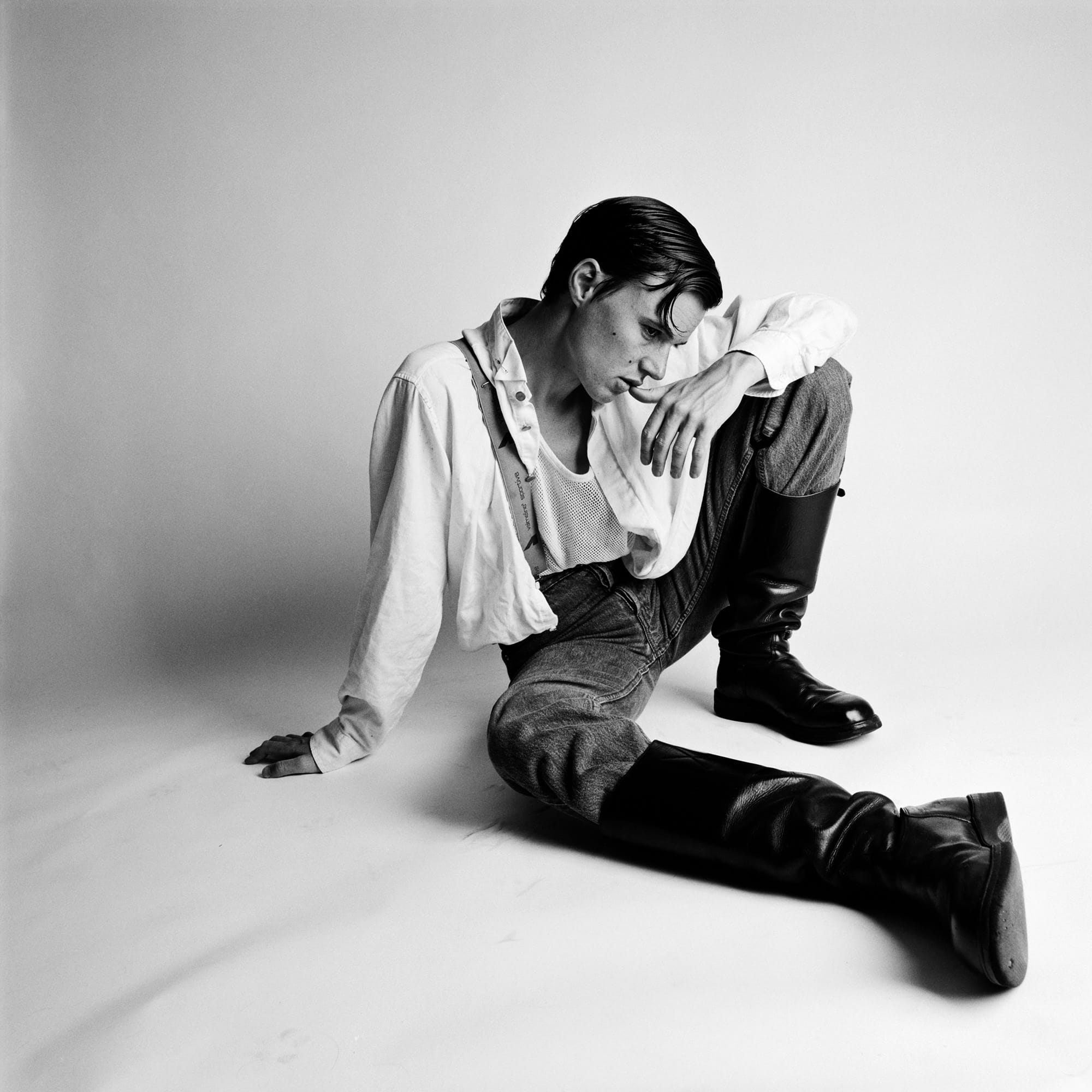
Don’t expect her to self-censor. “As soon as the Vatican puts trigger warnings on its work, I’ll put trigger warnings on mine.” But let us trust that this wish is more than idle hope: “If you can walk away having a little better understanding about being human, that’s what I care about the most.”
The exhibition “Catherine Opie: To Be Seen” is on view at the National Portrait Gallery, London, until 31 May 2026. It will then travel to the National Galleries of Scotland at the Royal Scottish Academy building, Edinburgh, from 8 August to 1 November 2026.
The catalogue Catherine Opie: To Be Seen, published by NPG Publications, is available at £40.