
The story reads like an English social novel. In a back street between Kennington and Brixton, in south London, Rastafarians, anti-capitalist activists, environmentalists, travellers and artists occupied and rebuilt two rows of Victorian terraced houses that had been left for ruin, and lived there together for thirty-five yea
Originally built in the 19th century for the servants of Buckingham Palace, St Agnes Place, with its red doors and stone gargoyles, was purchased in the 1960s by Lambeth Council as part of a plan to extend the adjoining Kennington Park. The plan never materialised. The buildings were boarded up and left derelict.
From 1969, two groups moved in: Rastafarians seeking to anchor their community culturally, soon joined by activists fighting the housing crisis. Together, they turned a dead-end street into a living utopia, run by a housing cooperative, open to the homeless and to passing artists alike. A world unto itself, with its social centre, its music workshops, its art studios and its pirate radio station, Rasta FM.

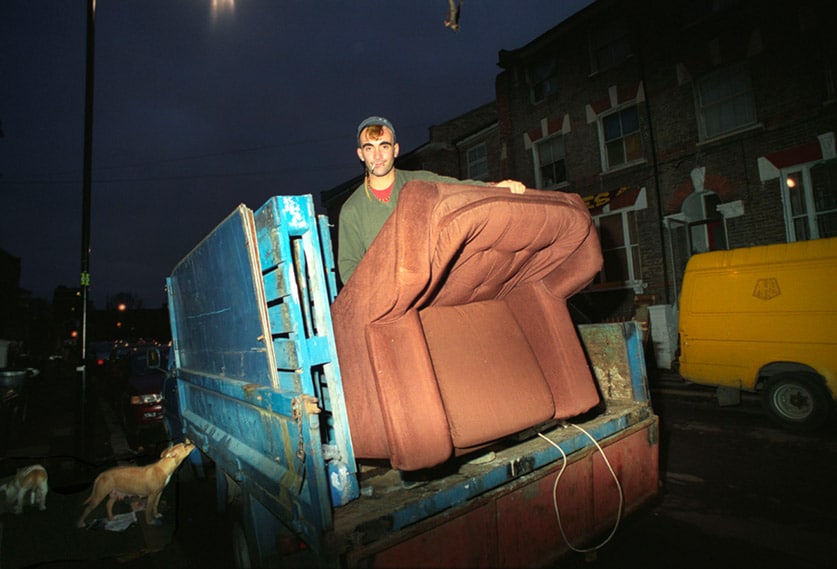
It is to this fragile utopia that Janine Wiedel decides to devote herself, as the threats of demolition close in. American-born and based in Britain, she has dedicated her career to groups struggling to survive on the edges of mainstream society. Since the 1970s, Nikon in hand and 35mm film, she has documented heavy industry in the West Midlands (Vulcan’s Forge, 1980), the women of the Greenham Common anti-nuclear peace camp (Life at the Fence), and Ireland’s Traveller community (Irish Tinkers)
Each time, the same approach: settling into a community the rest of the world prefers to ignore, staying as long as it takes, bringing back images and voices. “My approach to photography is perhaps more in the traditional way the word ‘documentary’ was used,” she tells Blind. “I always spend time trying to understand the subject, the community. At St Agnes I was interested in the individual lives of the residents and how they happened to have come to the street. When photographing people I feel it’s important to have a connection beyond the surface.”
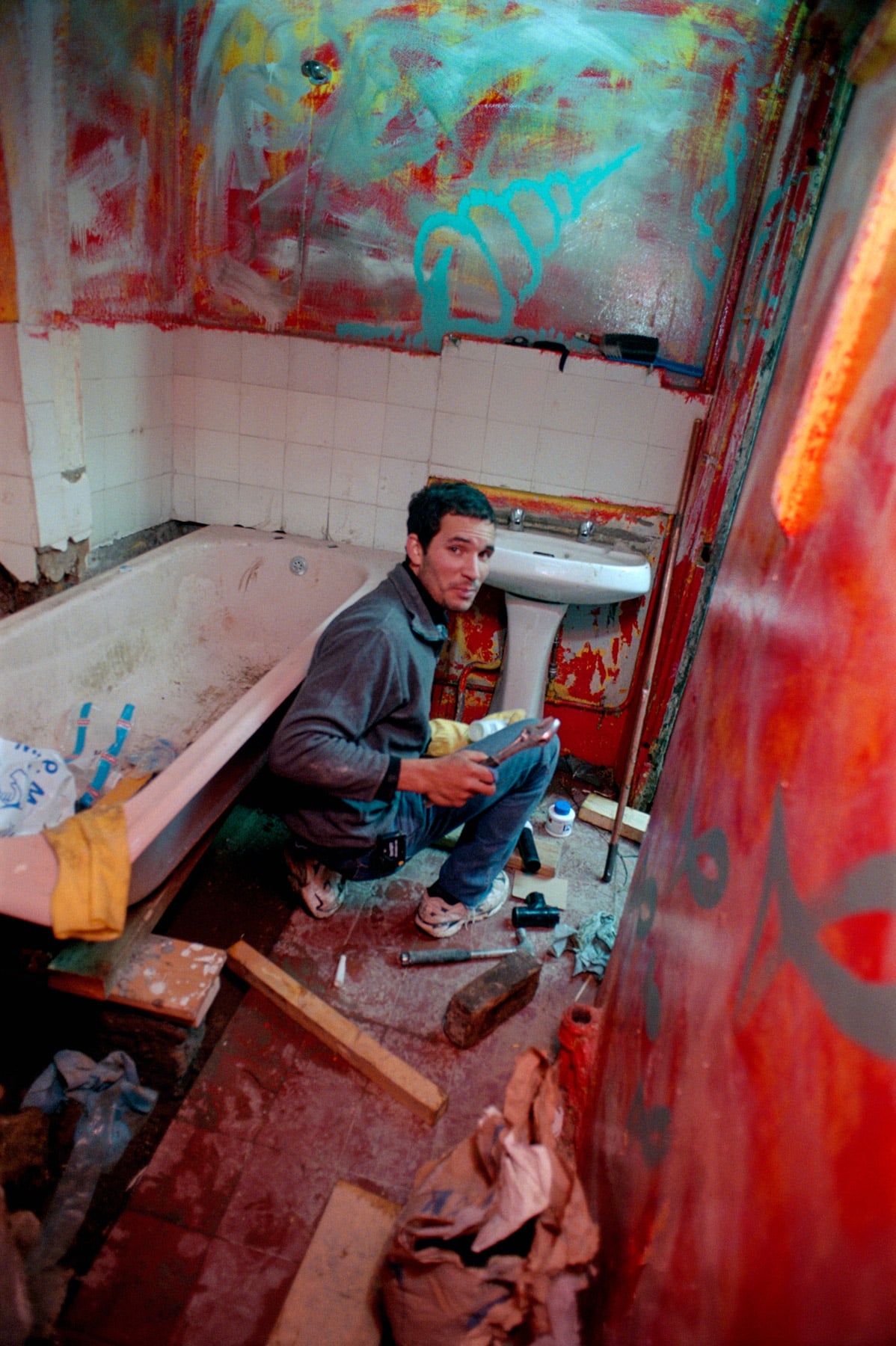
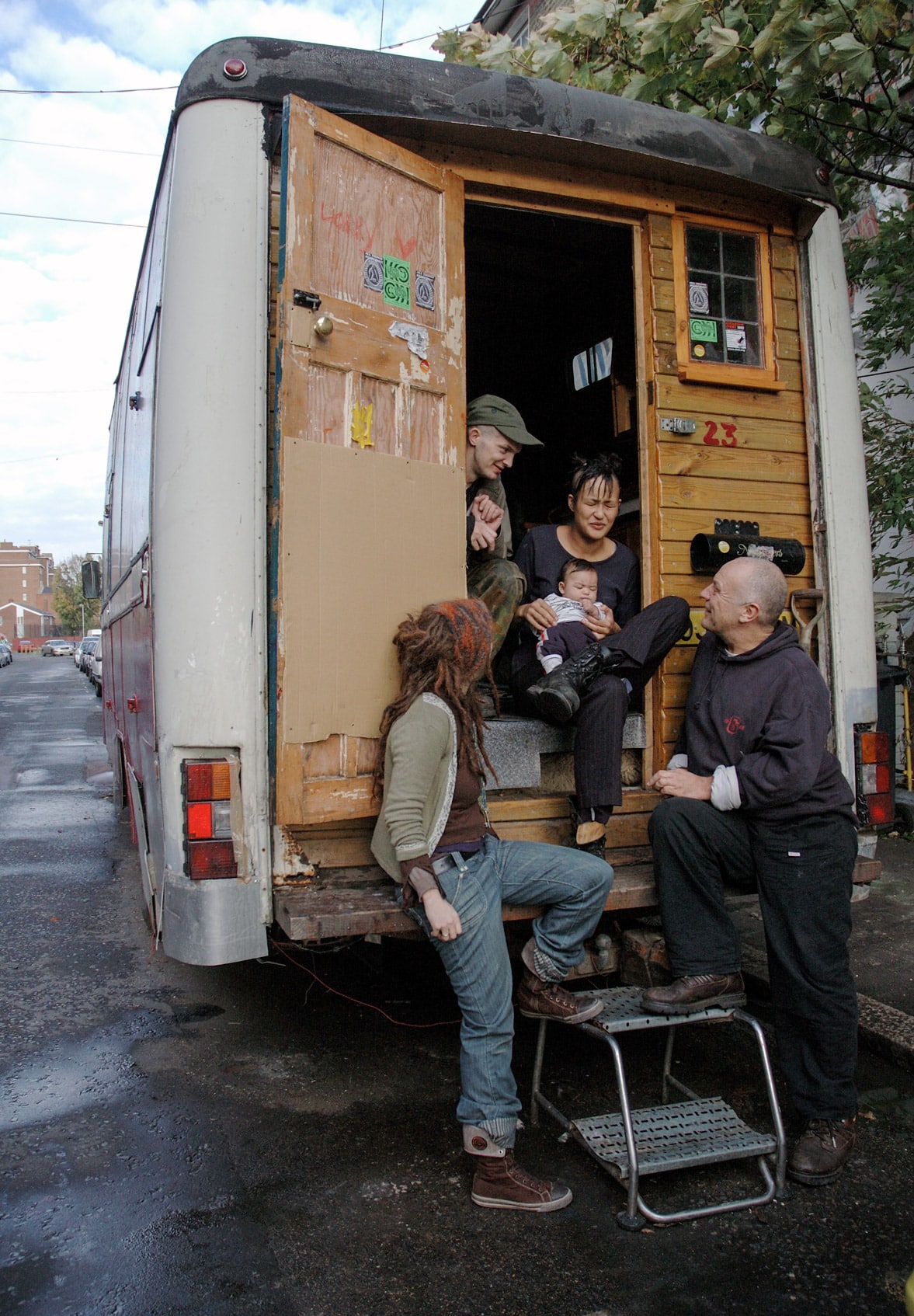
In one photograph, a man works away, wrench in hand, in a bathroom with paint-daubed walls. At St Agnes, to repair is as much an act of resistance as of reconstruction, in a space the state has condemned. Timnah, born here twenty years earlier, remembers: “When my dad first moved in, this house was a real wreck. There were no floorboards, nothing. My dad did everything.” Without hot water, the family bathed in a big tin tub, filled saucepan by saucepan. “No, really it wasn’t so bad. You get used to it. When I was little it was just normal.” At the time Janine Wiedel takes her portrait, Timnah is studying law at Guildhall.
One of the book’s most moving images captures a man wrapped in a trucker style sweater, cradling a newborn in the half-light of a narrow interior. The amber light envelops them like a veil; one could mistake it for a Flemish Nativity lost in a London squat. Elsewhere, “Greg and Laura paid tribute to the street by calling their baby ‘Agnes’,” Wiedel notes of a young couple. “She was the last child born in the squat.”
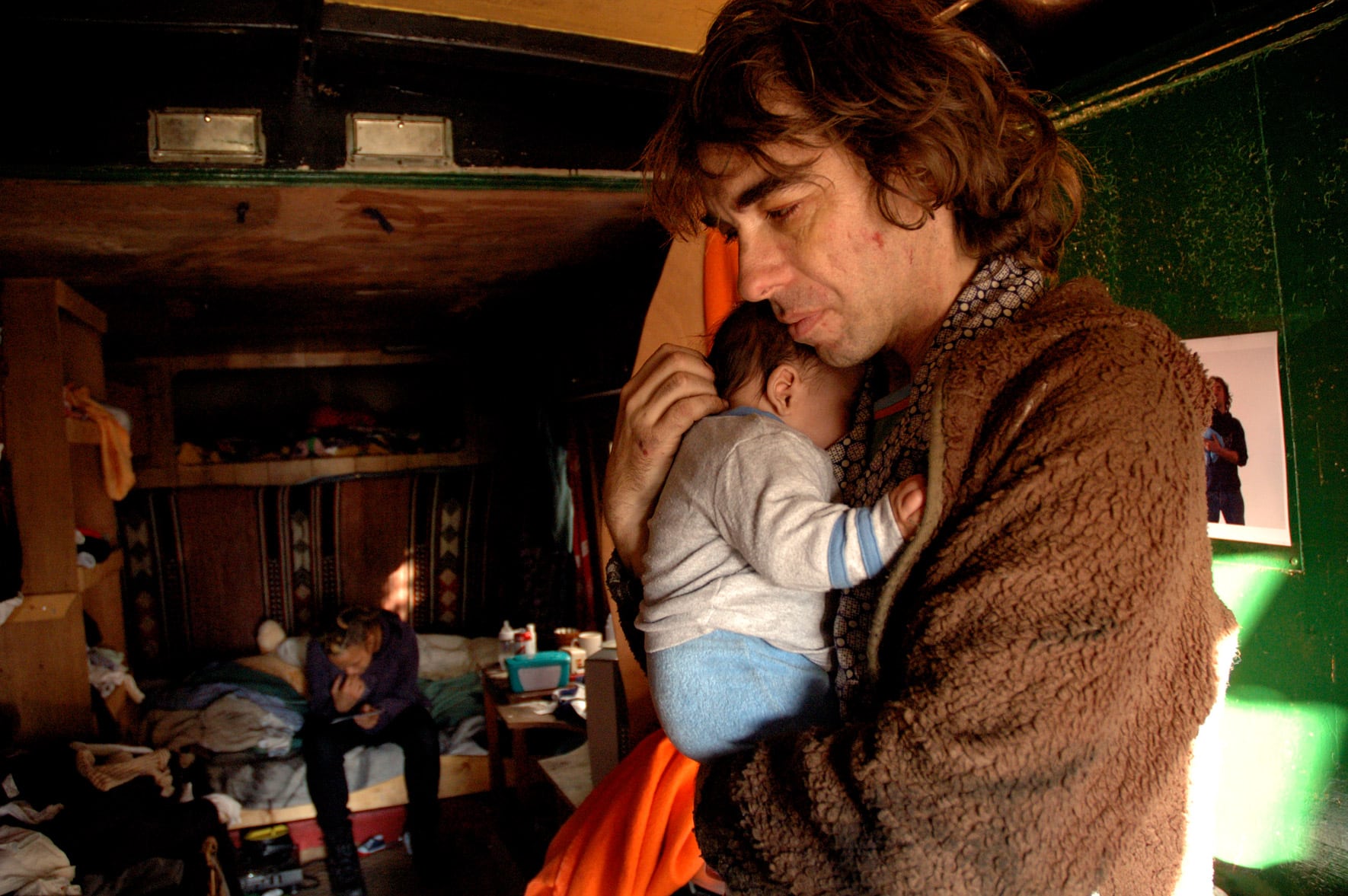
Rebuilding and bringing life into a place destined to disappear: the whole paradoxical vitality of St Agnes Place is contained in this gesture. “They were a very diverse group and yet all an important part of this amazingly supportive community which had survived for over 30 years,” Wiedel reflects, never yielding to pity. Every portrait is a frontal encounter with a face, an interior, a way of being in the world.
In one, a woman lies on a mattress in a room with scarlet walls, the words “Wee people live here” scrawled in marker above her. Litu, a South American tattoo artist, found the place by chance, wandering through London without a word of English. He recalls: “They took me in. I learned English here.” Tick arrived as a child, at ten years old: “It saved my life.” Craig, who has endured police violence and prison, confides: “I’m already rich. I’m rich cause I got nothing. It’s the richest state of mind.”
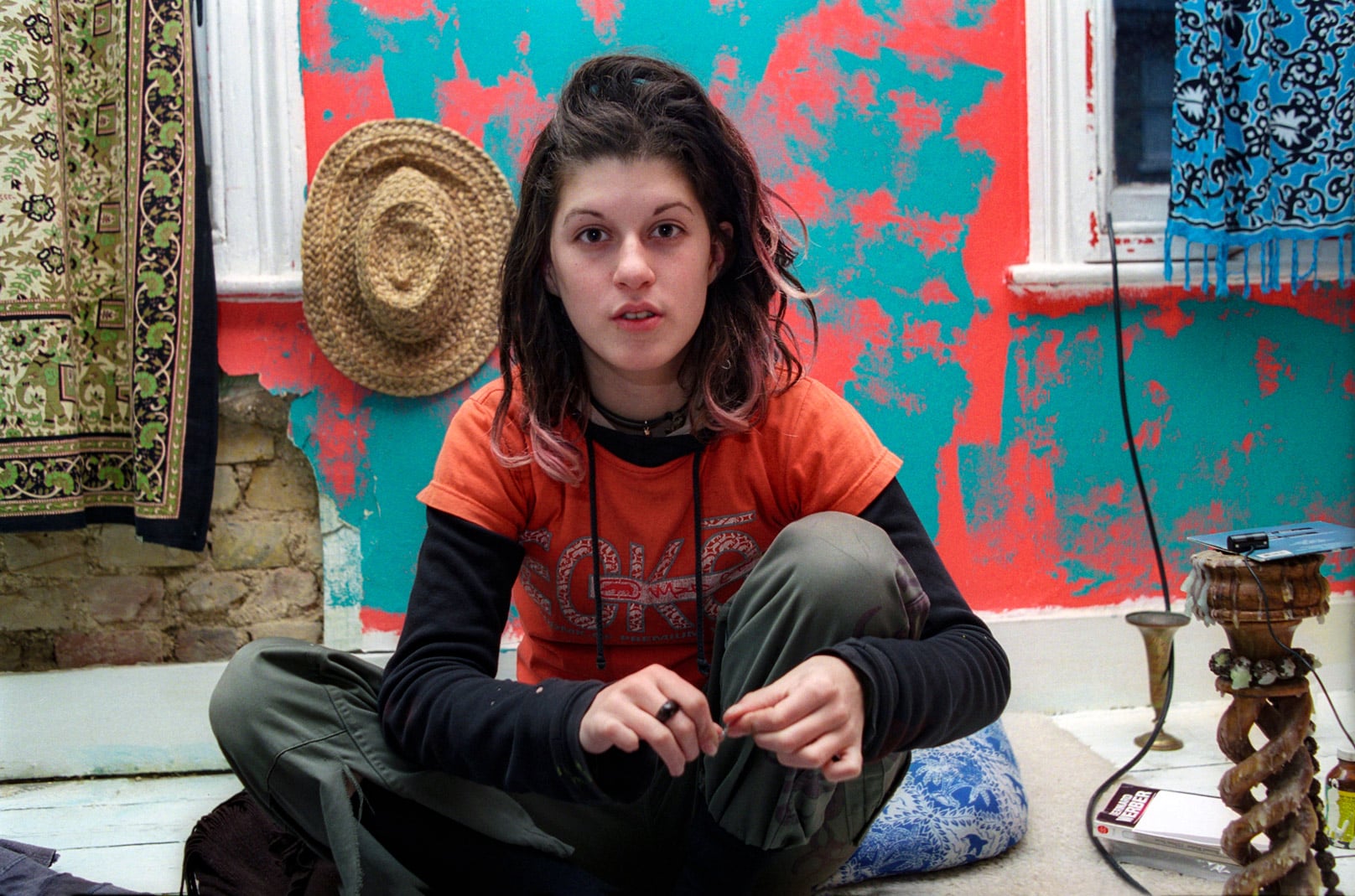
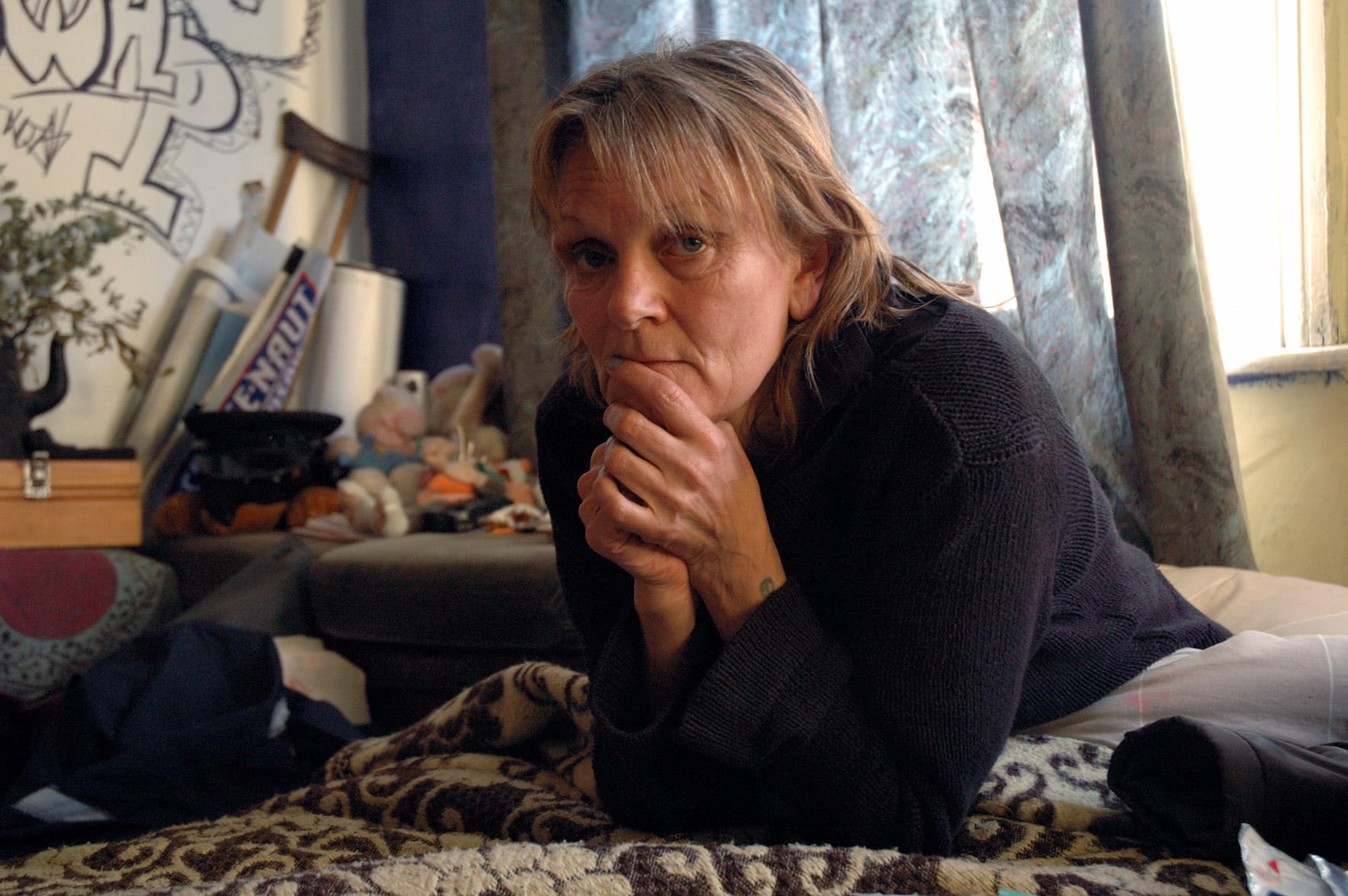
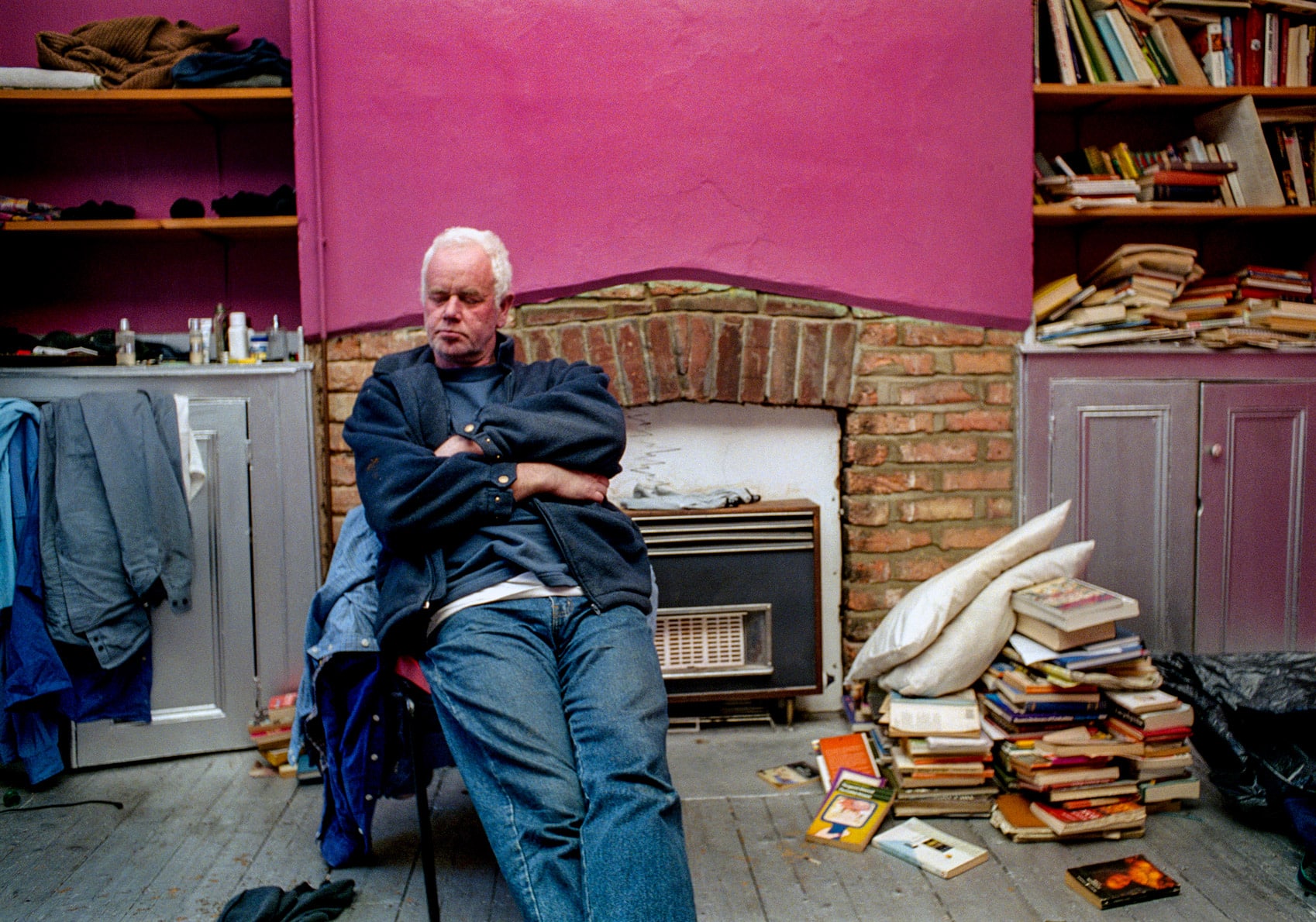
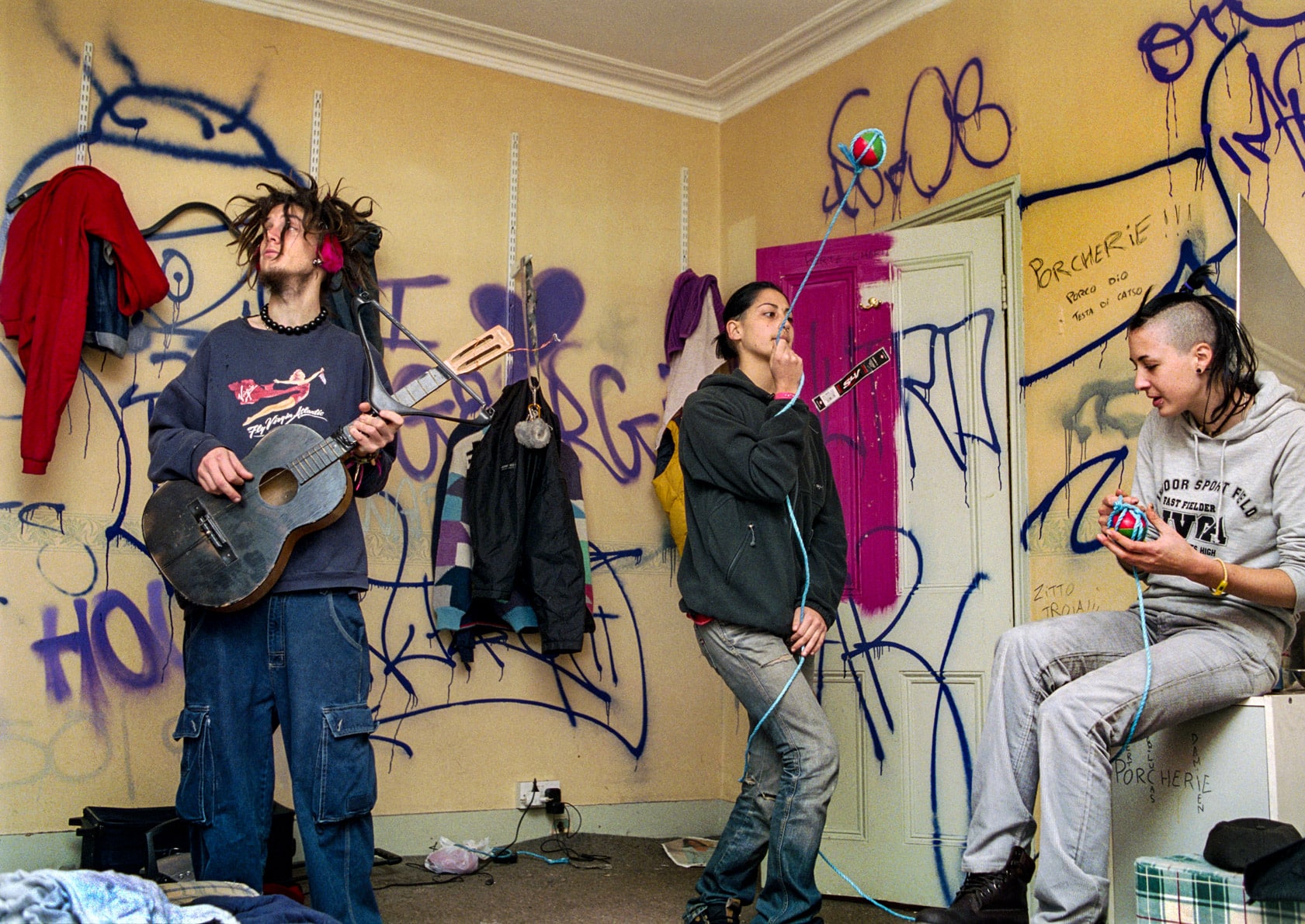
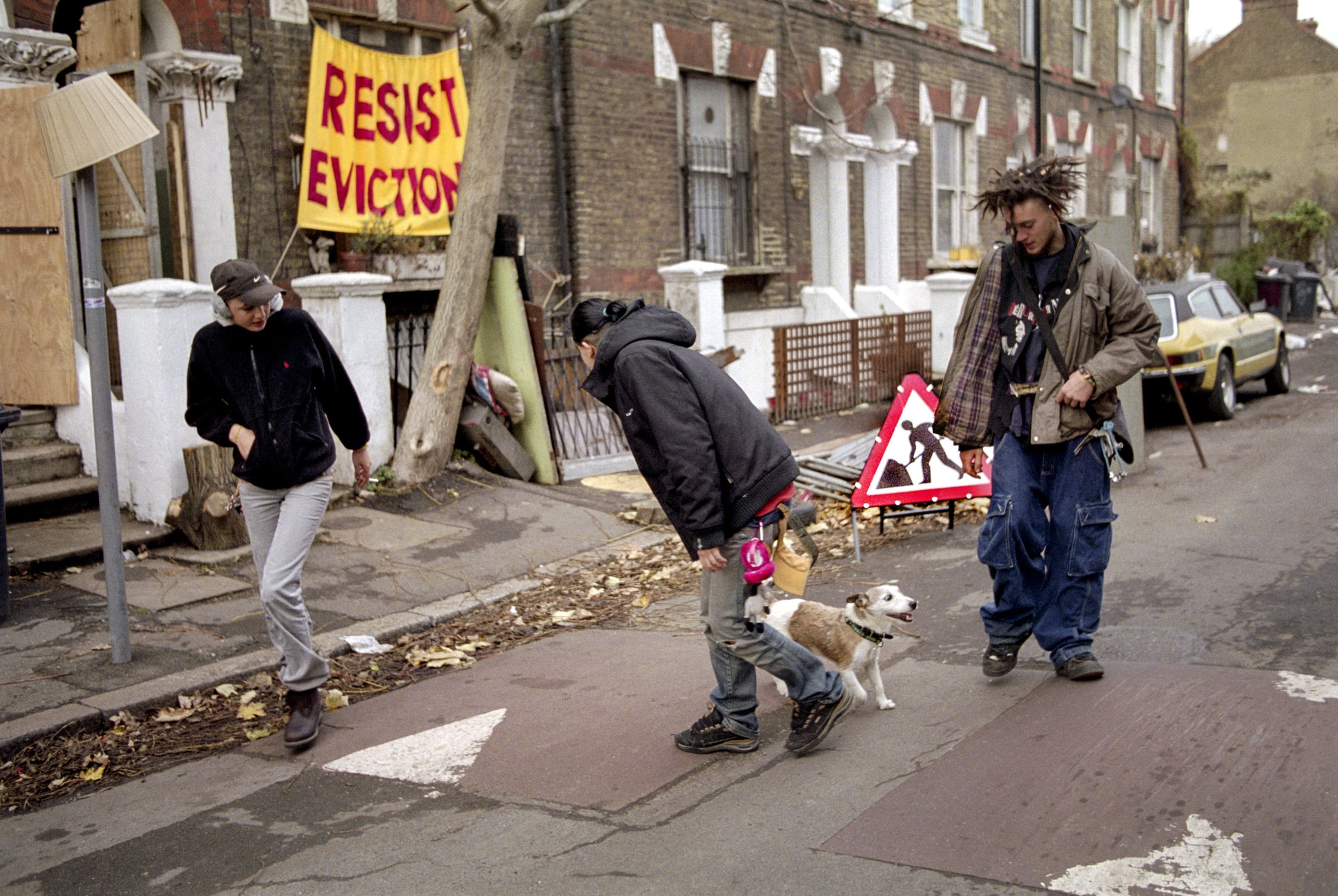
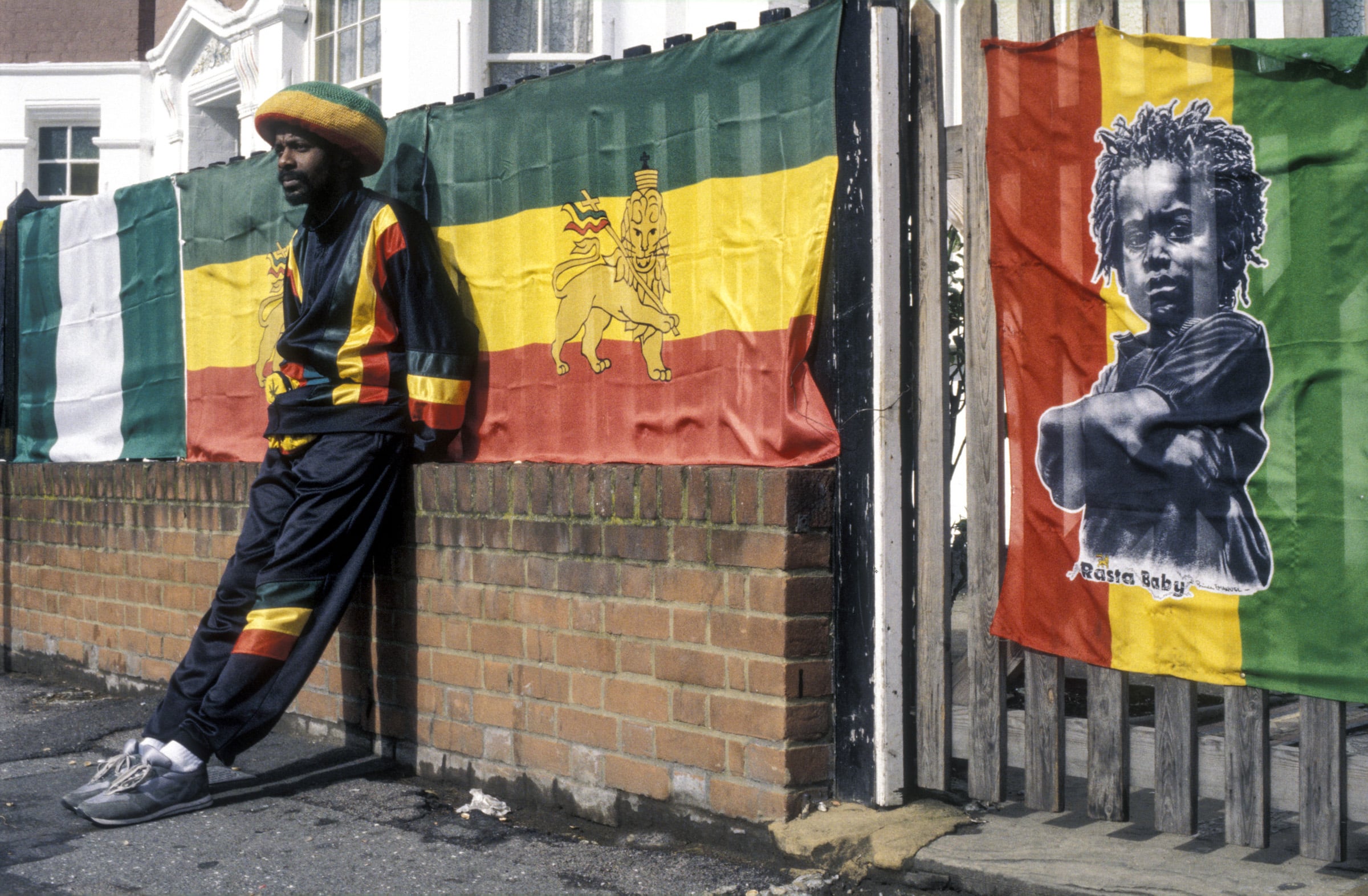
A third of St Agnes residents are Rastafarian, and the book devotes some of its most powerful pages to them. In one, a man of imposing bearing stands before an Ethiopian flag. Ras Napthalie, founder of Negusa Negast, remembers: “In ’76, we marched to Notting Hill Carnival dressed in red, gold and green. It was the first time the English public had seen a crowd of Rastas. All these whites were coming out of their houses, open mouthed with hands on their hips. It was exhilarating.” Bob Marley stayed here between 1976 and 1977, playing football in the street, he recalls. “St Agnes was his second home.”
Benj, who arrived from Jamaica in 1958 into an England rife with the racist violence of the Teddy Boys, bears witness to another side of the story: “When I came here in 1958 I was very lonely. It was distressing. I found somewhere to live but I couldn’t go out at night. We were used to nightlife, clubbing and singing and whatever in Jamaica and I come here and I was cooped up in a little flat. So after 6pm maybe it was like a prison really.”
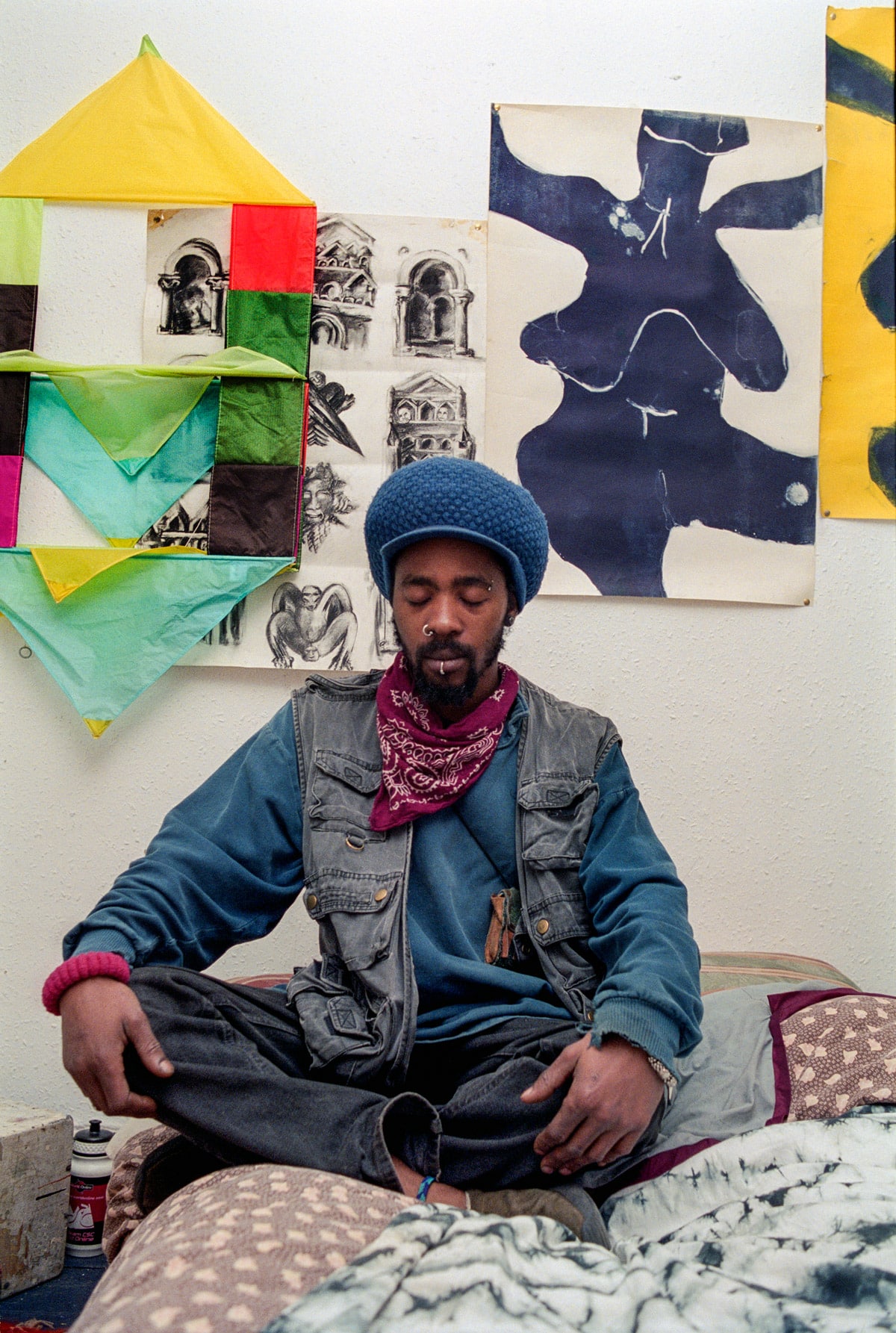
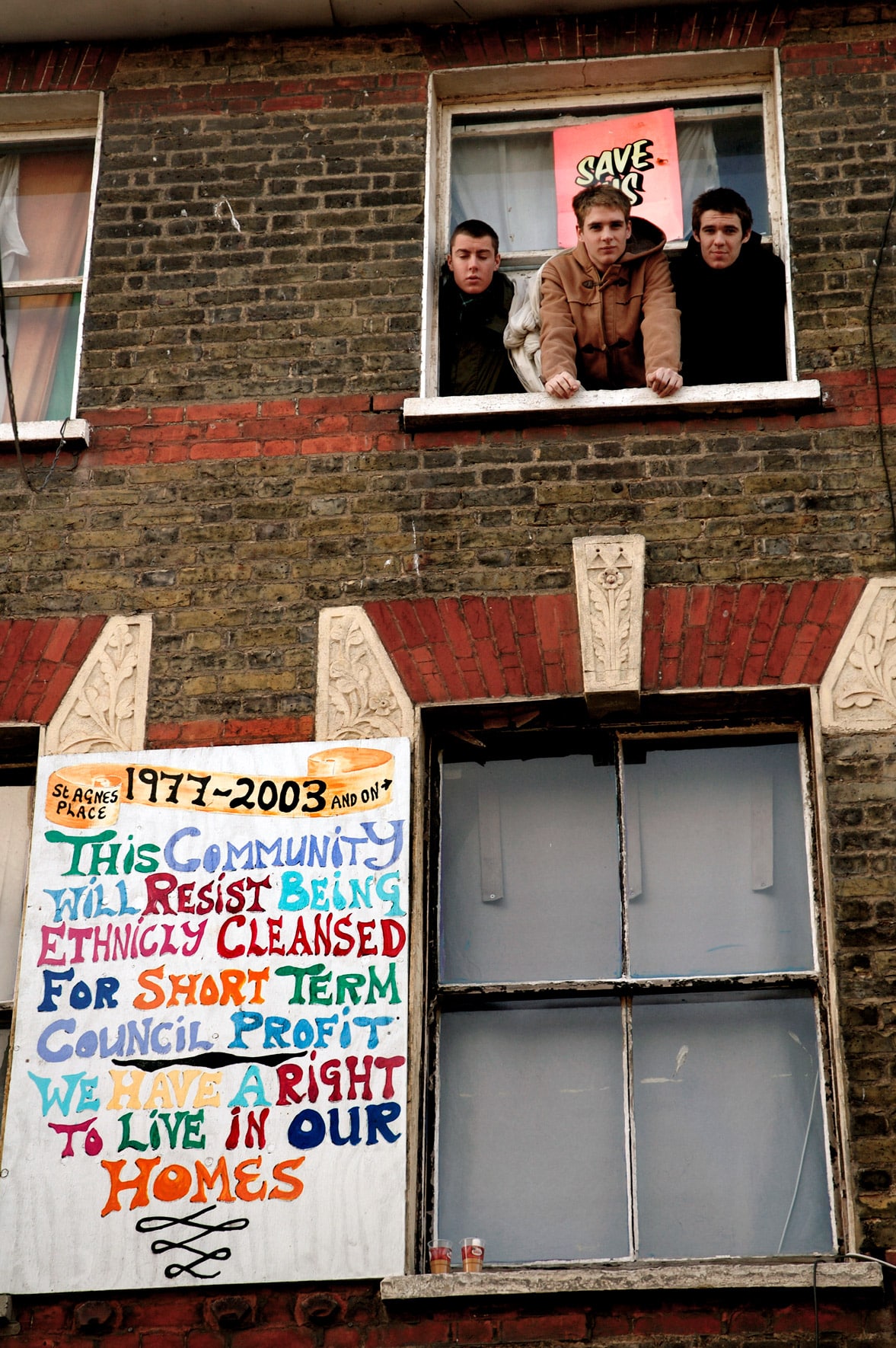
For these survivors, St Agnes is nothing short of a miracle. The street bears the name of a martyr. The Rastafarians who live there look towards Zion. All of them, in their own way, inhabit a grace as precarious as the walls that shelter them. For the threat has never ceased. On one wall, a banner reads: “1977–2003 — This community will resist being ethnically cleansed.” The residents have fought off several eviction attempts since the 1970s, when squatters prevented demolition in extremis.
But the fate of St Agnes is sealed. In November 2005, everything stops. Two hundred riot police descend on the street. One photograph captures a woman clutching a child, surrounded by black helmets, while workers in fluorescent vests wait behind, ready for demolition. “By midday, most residents had left quietly. John, who remained barricaded in one of the houses, was later severely beaten, receiving several brutal blows to the head with truncheons.”
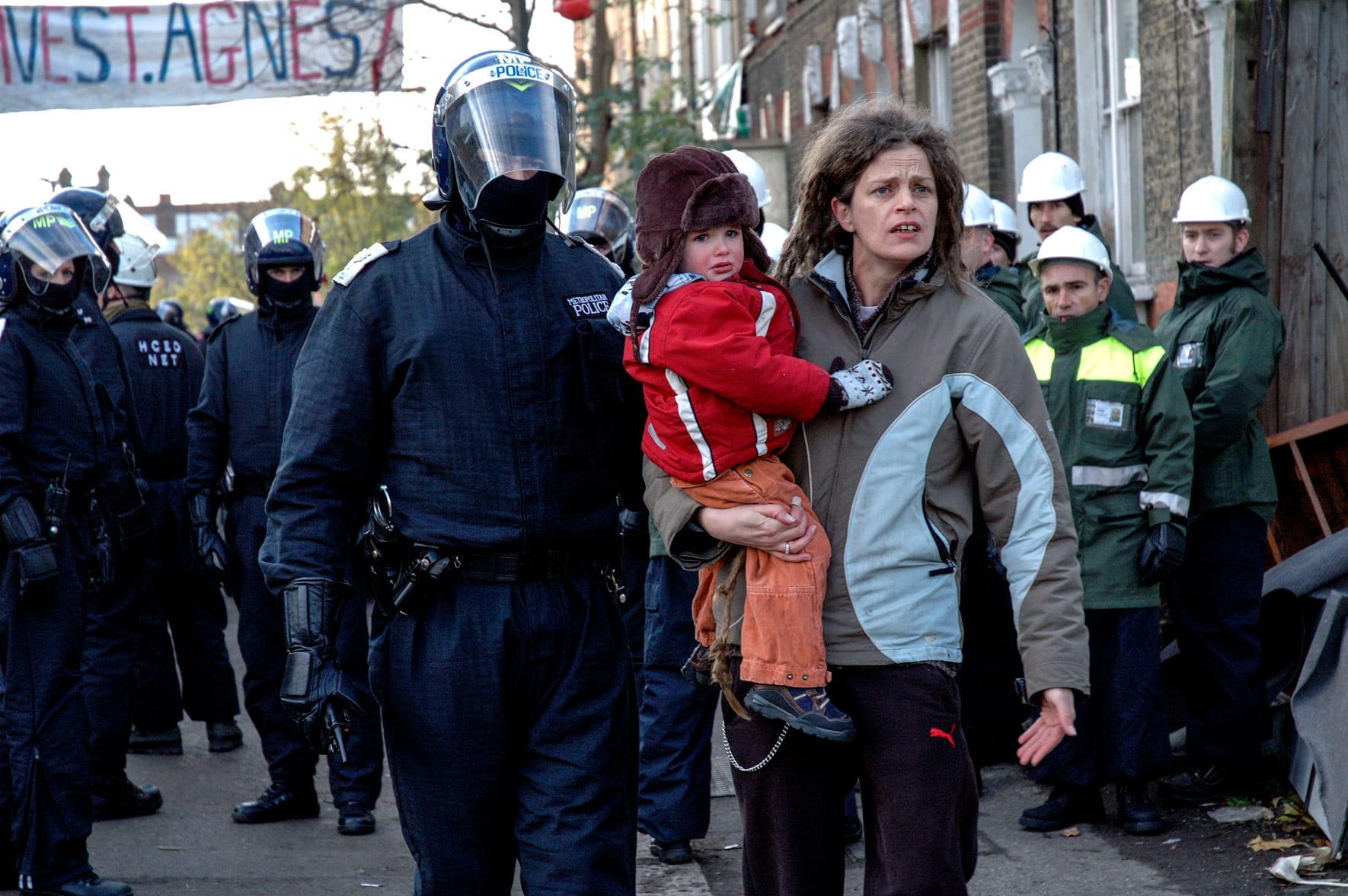
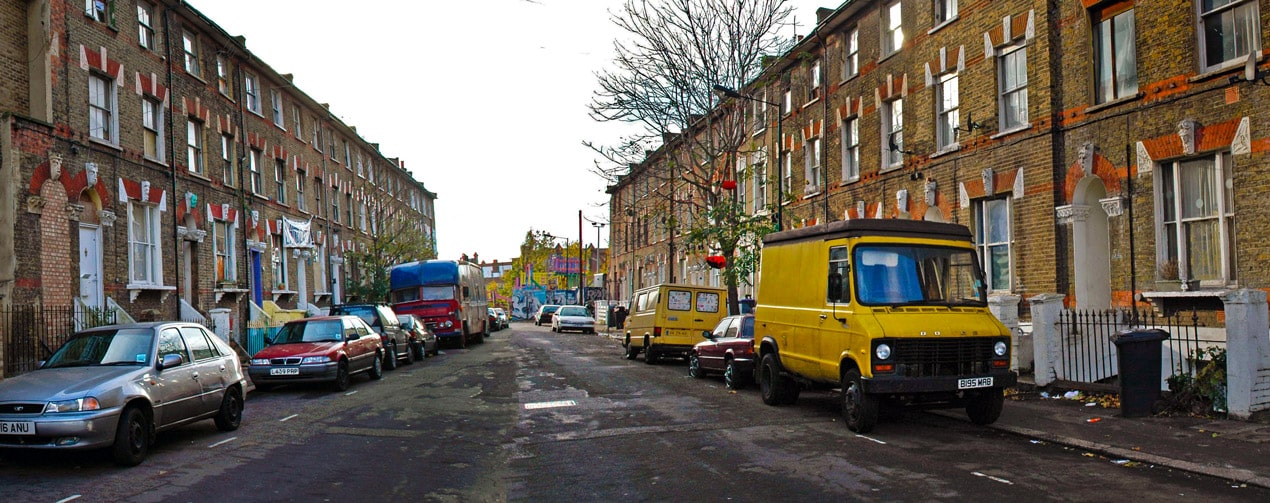
A hundred and fifty people find themselves on the street. Demolition begins within the hour. The Rastafarian Community Centre holds out a few months longer, until an overnight fire render it uninhabitable. A year later in 2007, the Rasta Temple and Headquarters are closed down. The land is handed over to the housing association London & Quadrant. The book’s photograph which takes in the whole of St Agnes Place: two rows of weathered Victorian facades, a yellow van on the wet tarmac, sculpted figure heads above each door and window—has now become a landscape that nothing, any longer, distinguishes from any other housing development.
Twenty years after the eviction, Janine Wiedel has kept in touch with some of the former residents and reconnected with others through this book. Quite a few have died. “The final brutal destruction of this community haunts not only those who lived there, but all of us who knew its story,” she concludes. “In seeking a collective solution, outside the norms of mainstream society, the residents of St Agnes Place created a distinctive community and mutually supportive environment that in some cases saved lives.”
St Agnes Place Squat by Janine Wiedel is published by RRB PhotoBooks and available at the price of 29€.