In Orlando, Florida, photographer David LaChapelle unfolds four decades of incandescent images in “As The World Turns,” the largest American retrospective devoted to his body of work.
By Guénola Pellen. Photos by David LaChapelle.
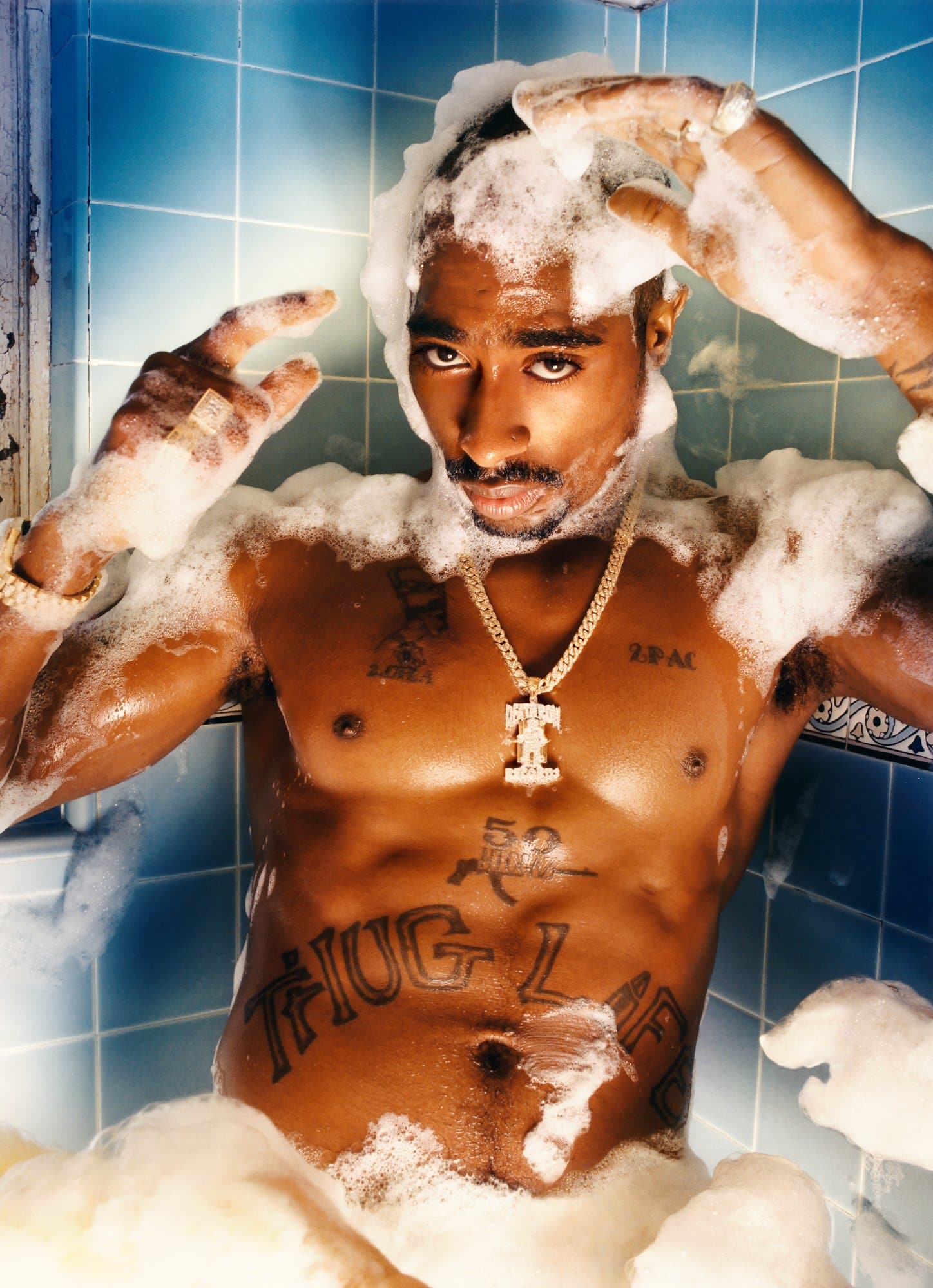
David LaChapelle, Tupac, Becoming Clean, Los Angeles, 1996.
In Tupac, Becoming Clean (1996), the rapper appears bare-chested, arms outstretched, in a gesture caught between redemption and vulnerability. The title carries a double edge, “becoming clean” as in purified by water, but also as in breaking free from the drugs that haunt the rap world. Water purifies; light anoints. Made the very year of his death, this portrait captures a disarmingly human Tupac, at once effeminate, Christlike, and devilishly sexy.
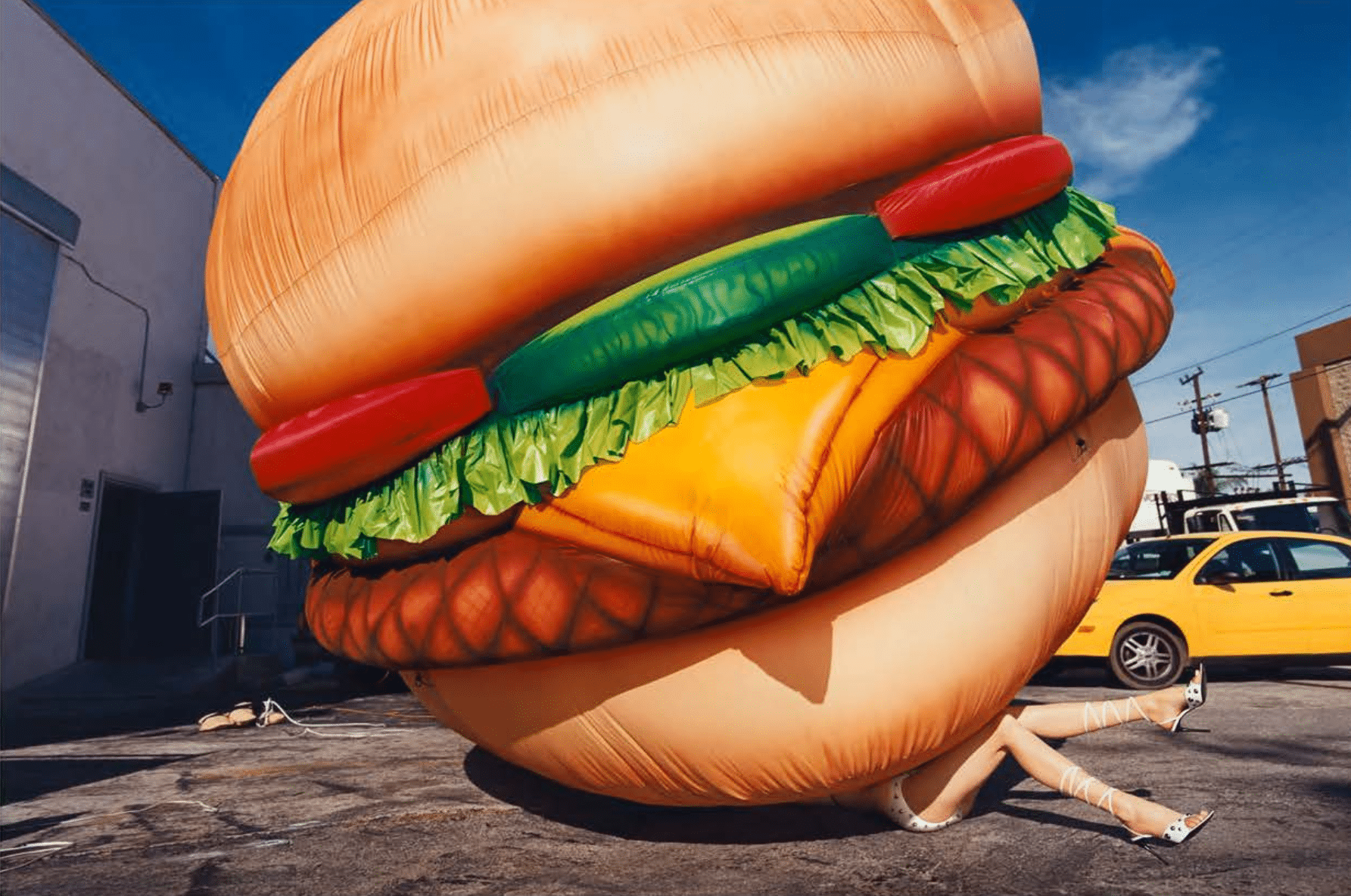
David LaChapelle, Doja Cat: Gone with the Wind, 2021.
Doja Cat: Gone with the Wind (2021) stages a pop mythology in which the singer reigns as a contemporary deity. The title, borrowed from the Southern epic, becomes an allegory of the ephemeral: all glory, however dazzling, is eventually carried off by the wind.
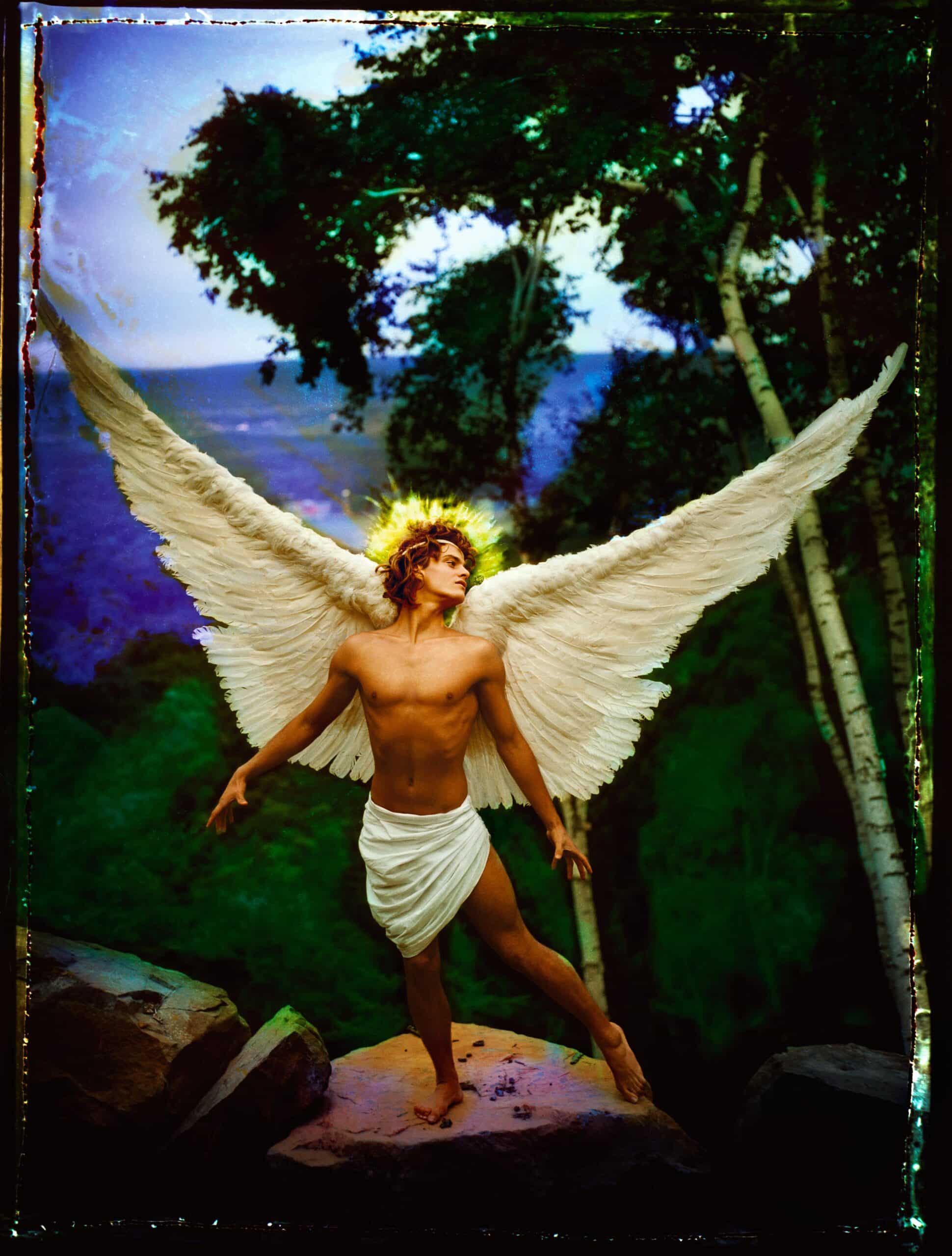
David LaChapelle, Archangel Uriel, 1985.
Archangel Uriel (1985) belongs to the photographer’s earliest visions, when the young LaChapelle, noticed by Andy Warhol, was already exploring the sacred with a burning fervour. The angel radiates, suspended between sky and earth, between flesh and grace — an annunciation of an entire body of work devoted to the sublime and to the cult of the body.
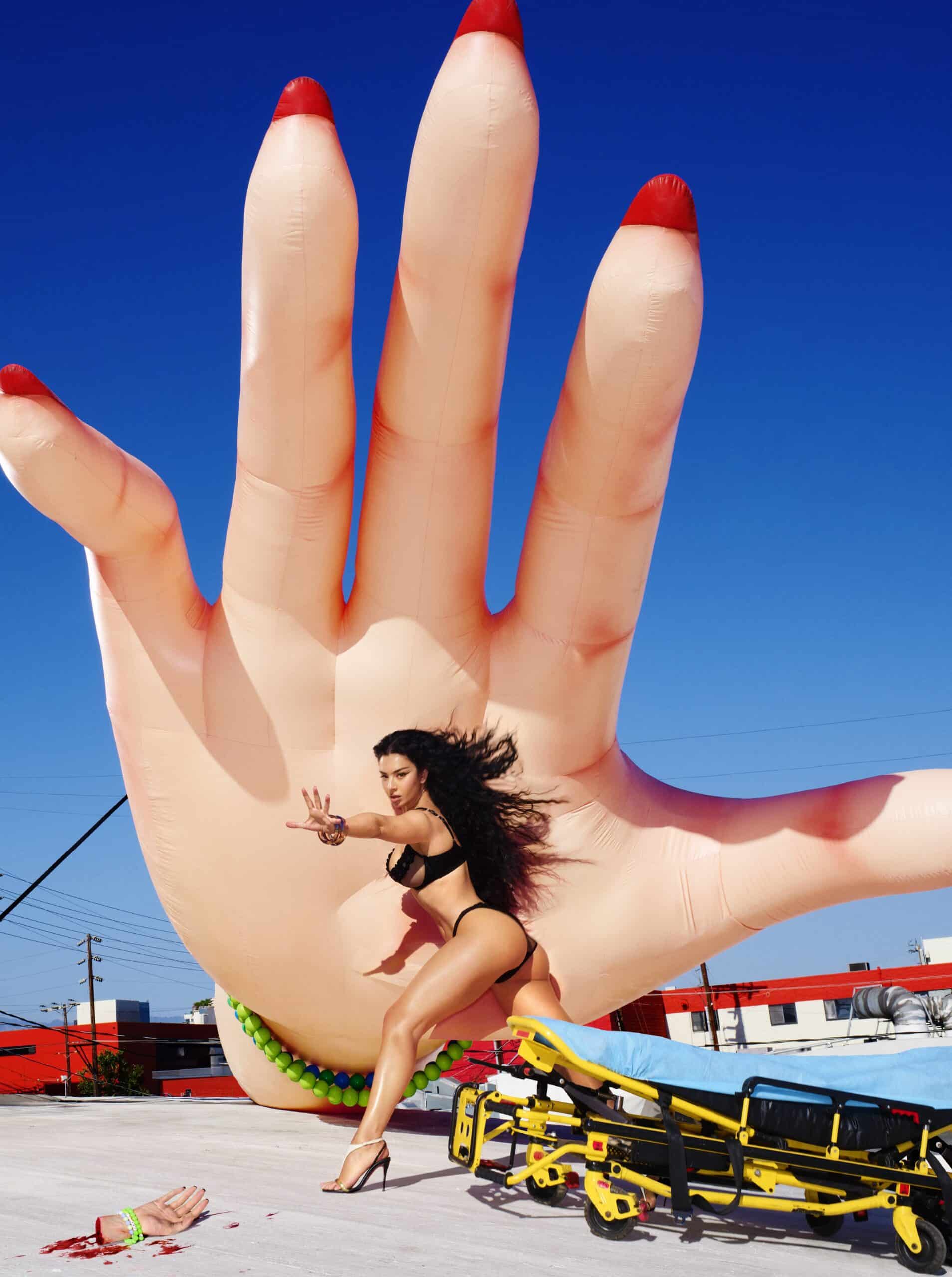
David LaChapelle, Charli XCX: Biting The Hand, 2024.
In Charli XCX: Biting The Hand (2024), the pop star takes a knife to the giant hands that could crush her, in a gesture of fierce rebellion. A crystalline metaphor for the artist against the industry, the image reminds us that in LaChapelle’s world, beauty and glory are never docile.