
“Ask questions that generate an intensity of looking, and writing, and thinking.” The instruction reads like a teaching prompt, but in Water Over Thunder — the first publication devoted to the writing of Larry Sultan — it functions as something closer to a self-portrait. Born in Brooklyn in 1946 and raised in California’s San Fernando Valley, Sultan was one of the most celebrated American photographers of the twentieth century, whose career stretched from the 1970s until his death in 2009 at the age of sixty-three. Best known for Pictures from Home, Evidence, and The Valley, he was a photographer who never stopped interrogating his own practice. This posthumous collection of journals, essays, dream diaries, shoot notes, and lecture extracts, assembled by his widow Kelly and son Maxwell, reveals a mind in perpetual, often doubting motion — and a generosity of spirit that runs through every page.
The book opens with a line from Antonio Machado, one of Sultan’s favourite poets: “Mankind owns four things / That are no good at sea: / Rudder, anchor, oars, / And the fear of going down.” It is a quietly perfect overture. Reading Water Over Thunder is less like studying an archive than navigating open water — dipping in and out of Sultan’s lectures, his notebooks, his dreams, his contradictions. We swim alongside him through decades of thought, self-doubt, and restless curiosity, never quite sure where the current will take us next.
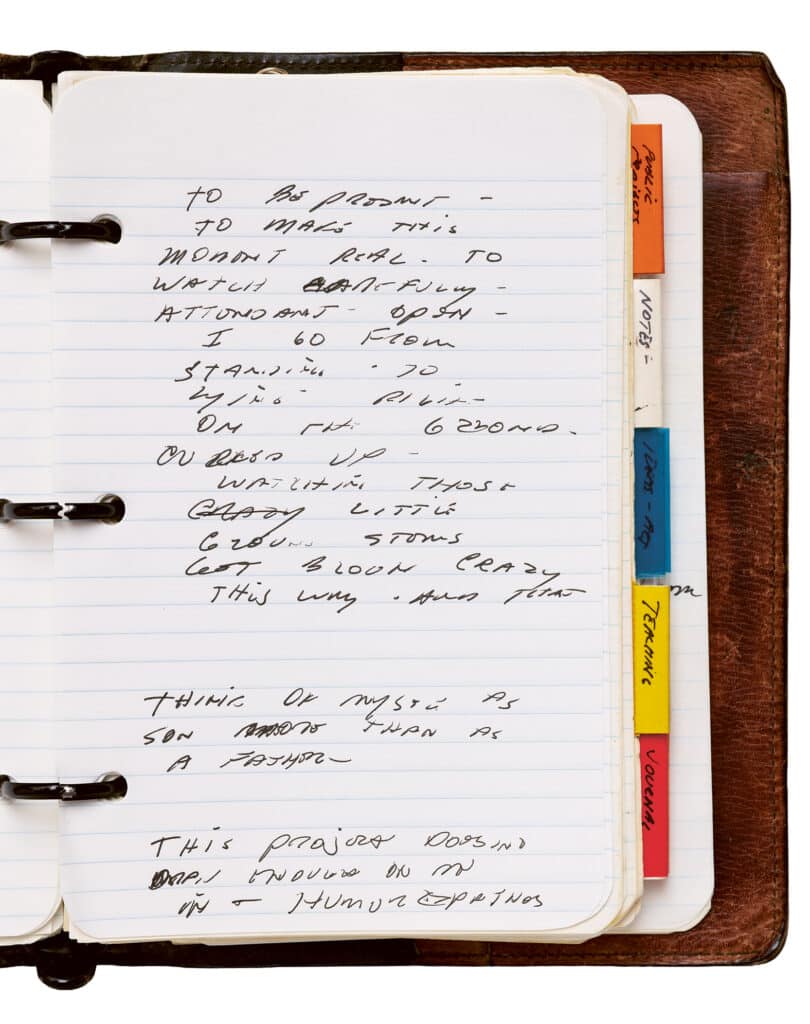
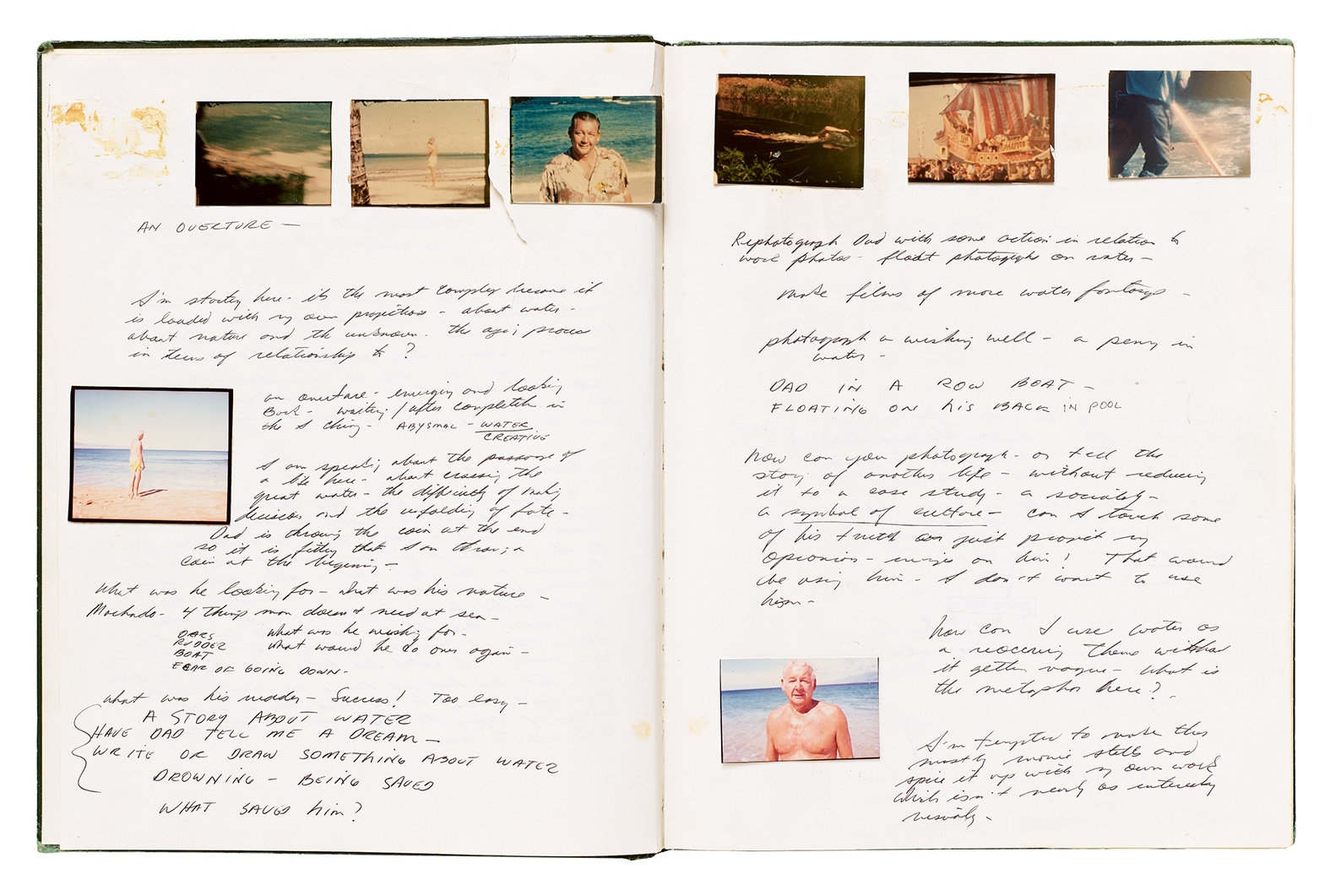
That sense of motion was built into the editing process from the start. “We always knew he was writing essays,” says Kelly Sultan, “but what we uncovered going through this vast archive was the degree to which he worked things out and wrote for the sake of writing in his journals and notebooks. You couldn’t extract writing from his practice — he continually conversed with himself.” Larry Sultan had, at one point, considered giving up photography for writing entirely. Kelly and Maxwell made the deliberate decision not to divide the book into chapters or separate the writings from the photographs, contact sheets, maquettes, and found imagery that punctuate them. “It did not make sense to separate photos from the writings,” Kelly Sultan explains. The result is a book that is as much visual as literary — the images do not illustrate the text so much as continue it, functioning as another register of the same ongoing thought. Proof prints, film stills, blurry vernacular snapshots, and grease-marked contact sheets accumulate into something that feels less like a monograph and more like a mind made visible: all fragments and process, beautiful precisely because nothing has been tidied away.
Sultan’s handwriting itself became an editorial guide for Kelly and Maxwell as they worked through the archive. Cursive entries were treated with caution — something private and unguarded — while block print felt more intentional, notes made to be re-read, signposts left for a future self or perhaps for someone else. “In this way,” Maxwell explains, “we were following Larry’s eye rather than our own.” The dream journals, vast and sometimes barely legible, were largely left untouched — though Kelly Sultan notes that some entries, rewritten in a larger, clearer hand, offered an unexpected window into his photographic vision: “They were so visual they almost became images in their own right.”

What continuously comes across those journals is the self-doubt: persistent, unresolved, and oddly clarifying. Larry Sultan describes his own work as being “so much about failure, so much about making pictures that are utterly boring. But in that process, you hopefully find something that draws you back and calls to you.” For a photographer whose finished work carries such apparent assurance, the admission reframes everything. A journal entry from the early 1980s, written as Sultan approached thirty-seven, captures this private uncertainty with unusual precision: “I am beginning to sense that — at or approaching 37, I feel that I am just beginning — or am renewing the beginning I entered unconsciously at 21.”
That uncertainty extended to the art world itself. Sultan had arrived at photography via an instinctive affinity for billboards, postcards, and the vernacular visual landscape of postwar California rather than through galleries or academic critique. This wariness of institutional framing runs directly into Evidence, the groundbreaking 1977 book he made with Mike Mandel from found corporate and government photographs. “There is something unsettling about pictures — scientific pictures,” Larry Sultan observed. “You change the context of the way you see something, and it becomes art. You put a silly little snapshot in a museum and it becomes an artifact.” The provocation is double-edged: aimed at the images themselves, but also at the systems that confer meaning upon them. For a photographer who had grown up more interested in the rhetoric of billboards than the authority of museums, that power to transform context was never something he took on trust. And however fluent he became in the language of contemporary art, something in him always retained the skepticism of an outsider: “No matter how much you work as an artist — a photographer — you are never in control.”
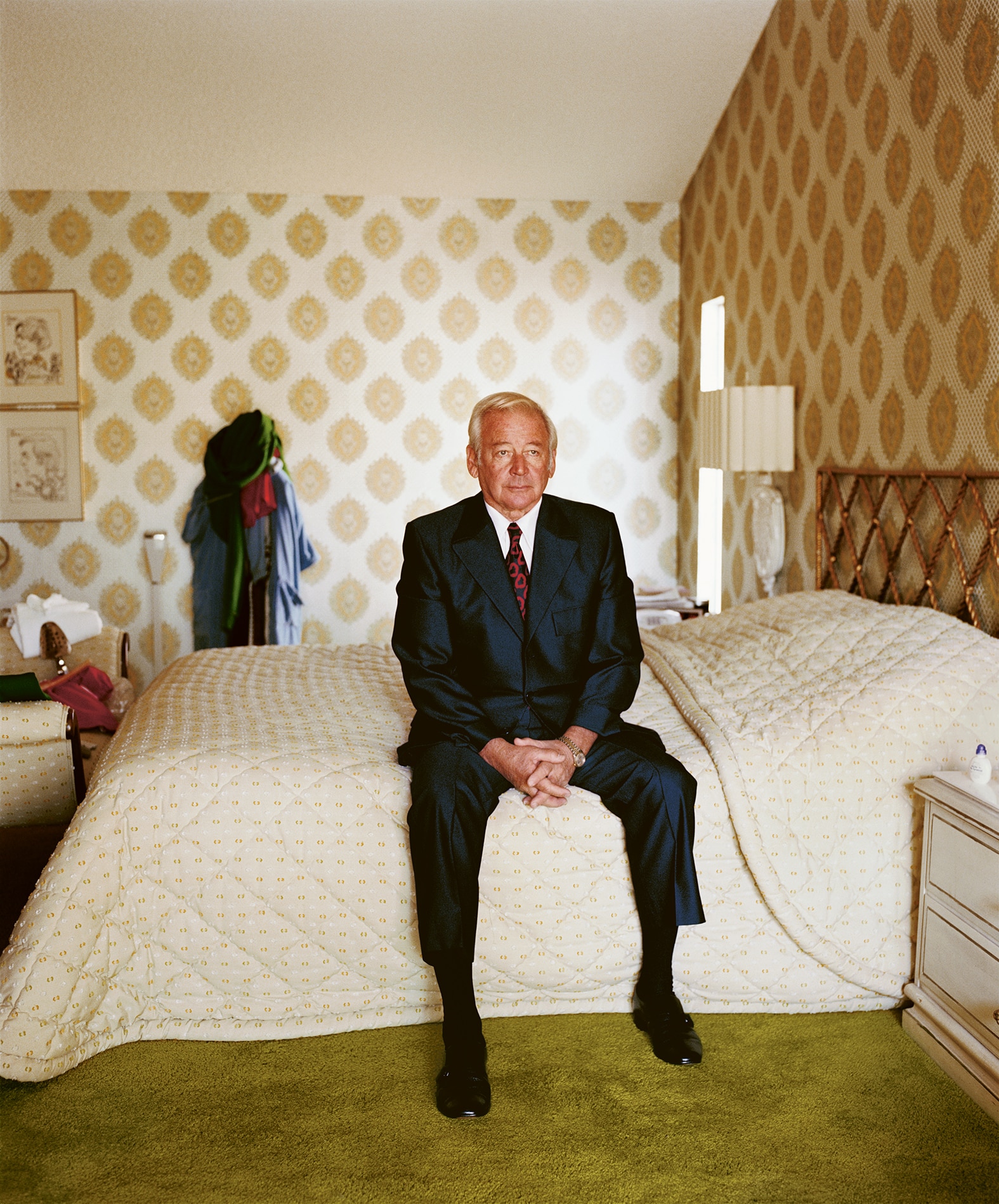
It is in Pictures from Home — the nine-year project photographing his ageing parents in their San Fernando Valley home — that this tension between control and surrender finds its most intimate expression. “I realized that these pictures would potentially outlive my parents,” Sultan wrote, “that I had a kind of responsibility that I never quite understood, that this was not sociology, but something much deeper. What I really wanted to do was the impossible — to transmit the feeling of a life being lived.”
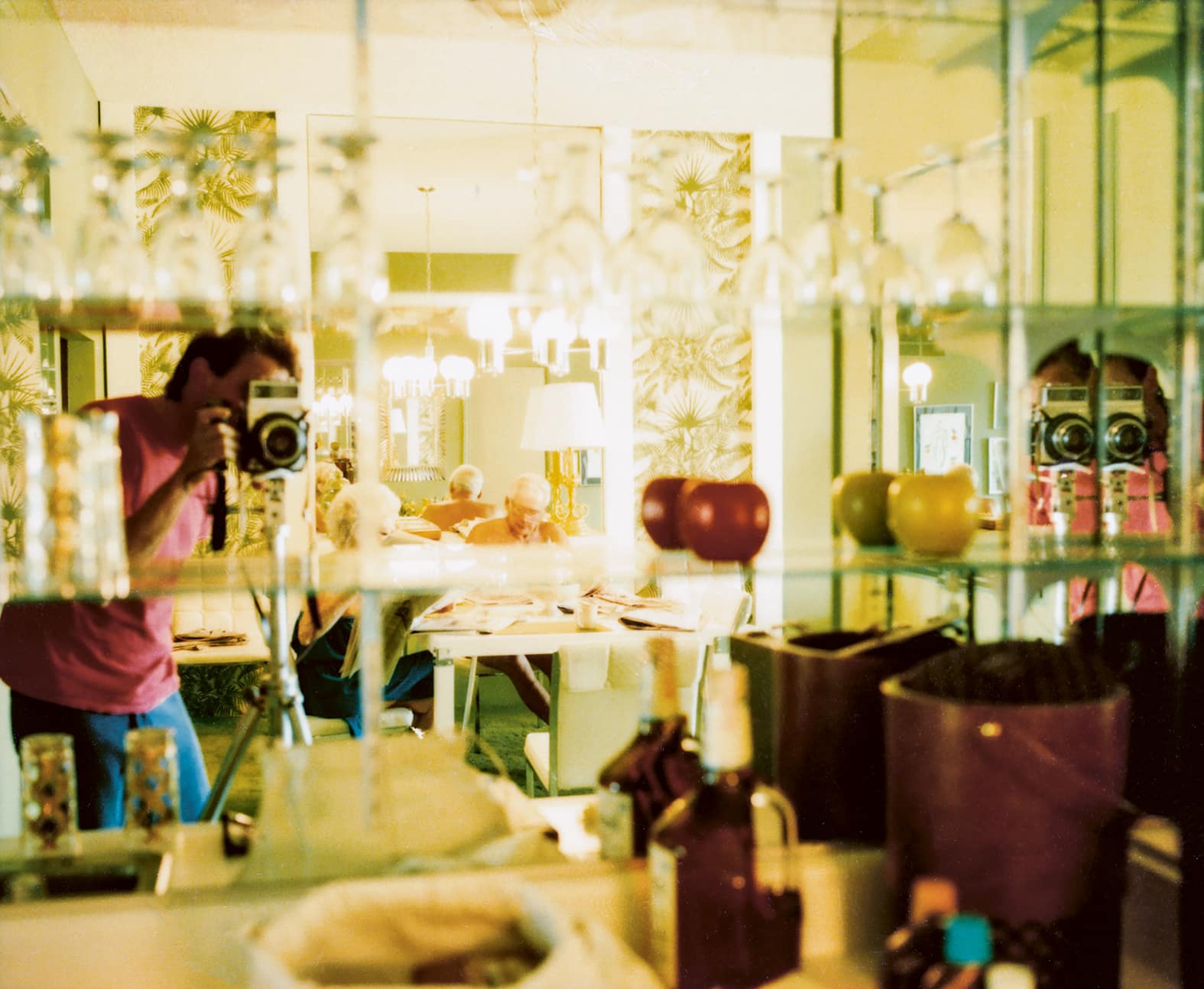
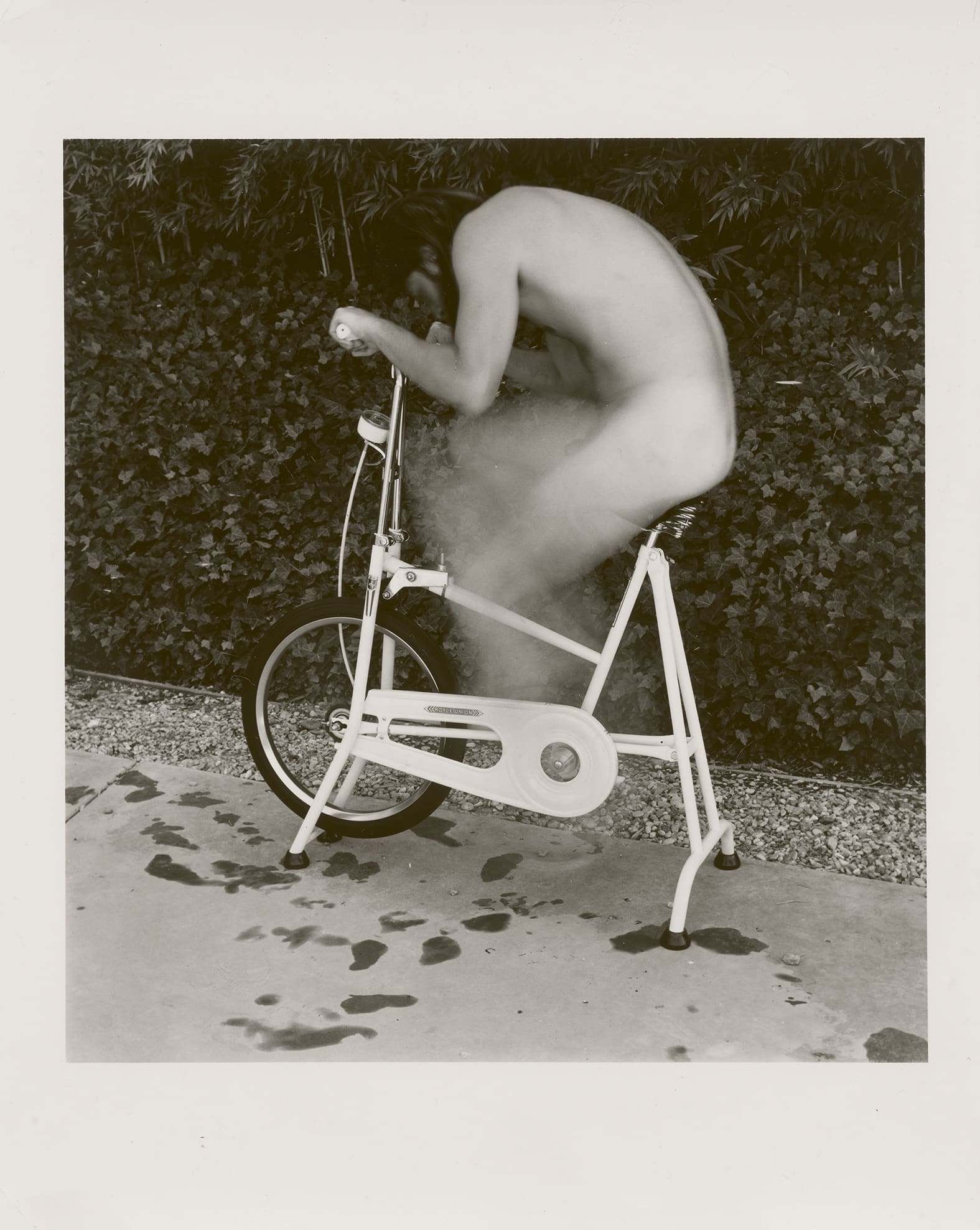
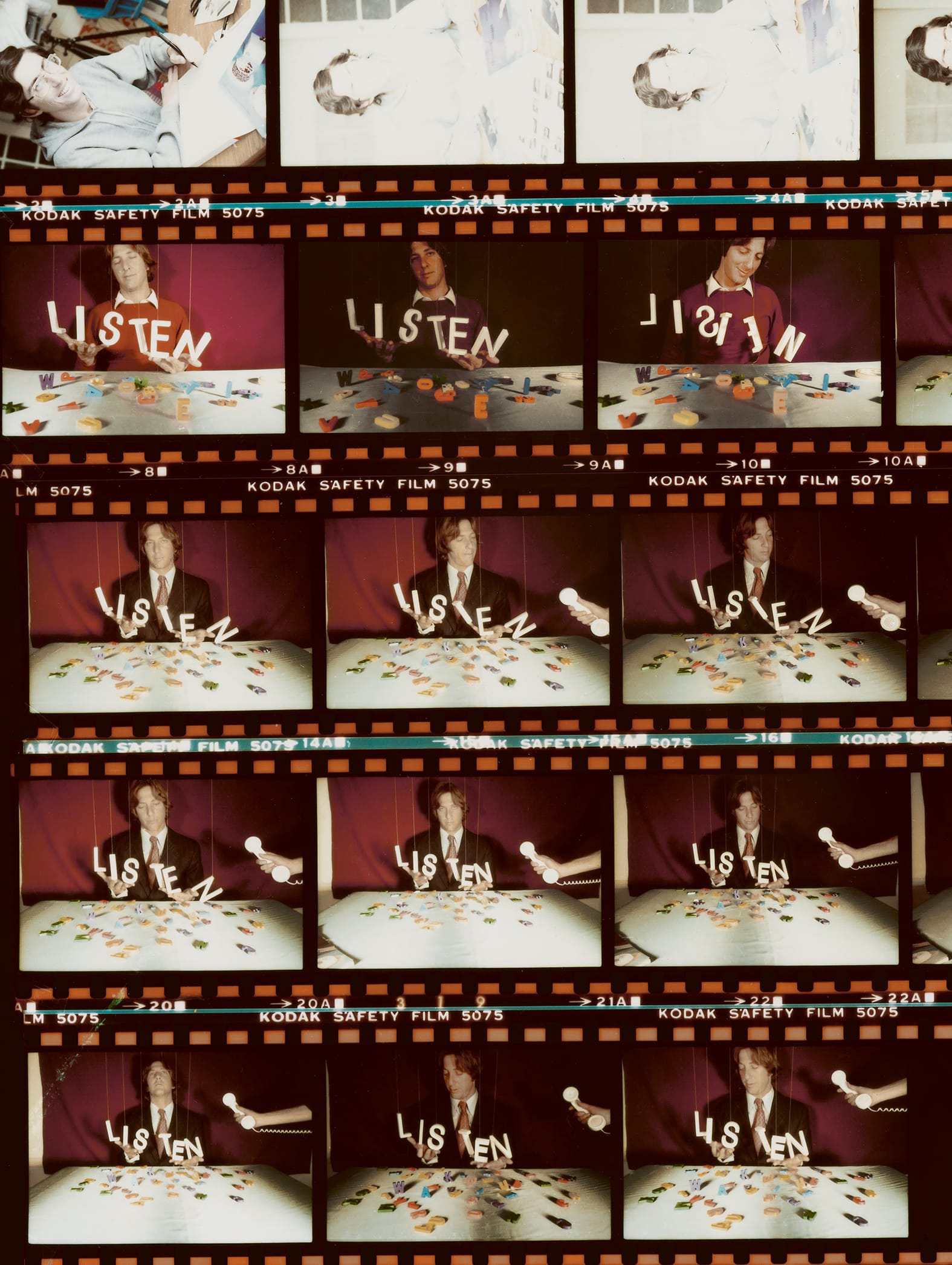
Water Over Thunder, in gathering all this process and vulnerability and unfinished thinking, arguably achieves exactly that — more fully, perhaps, than any single finished photograph could. Contact sheets with grease-pencil marks, blurred proof prints, handmade book maquettes, annotated manuscripts — all fragments of life reminding us that what is crucial and beautiful in art, as in life, is not the end result but the process, in all its imperfections and contradictions. It calls to mind Jonas Mekas’ As I Was Moving Ahead Occasionally I Saw Brief Glimpses of Beauty — that four-hour experimental film of family footage, poems, and self-questioning humour — in its refusal to tidy experience into conclusion.
What ultimately comes through in Water Over Thunder is the extent of Larry Sultan’s generosity: of thought, of sharing, of dissecting without resolution, of not shying away from deep humility and vulnerability. Kelly and Maxwell hoped the book would reflect not a formula for how he worked, but the questions he asked — and encouraged others to ask. It was important, Kelly Sultan says, for the book to remain open-ended, to ask more than it answers. And running beneath all of it, holding everything together, is something that could easily be overlooked in a work so rich with doubt and searching: humour. “He constantly reminded his students that you couldn’t take yourself so seriously — that’s the way to really kill something. And most importantly, to have fun.”
Water Over Thunder by Larry Sultan is published by MACK and available for £40.