
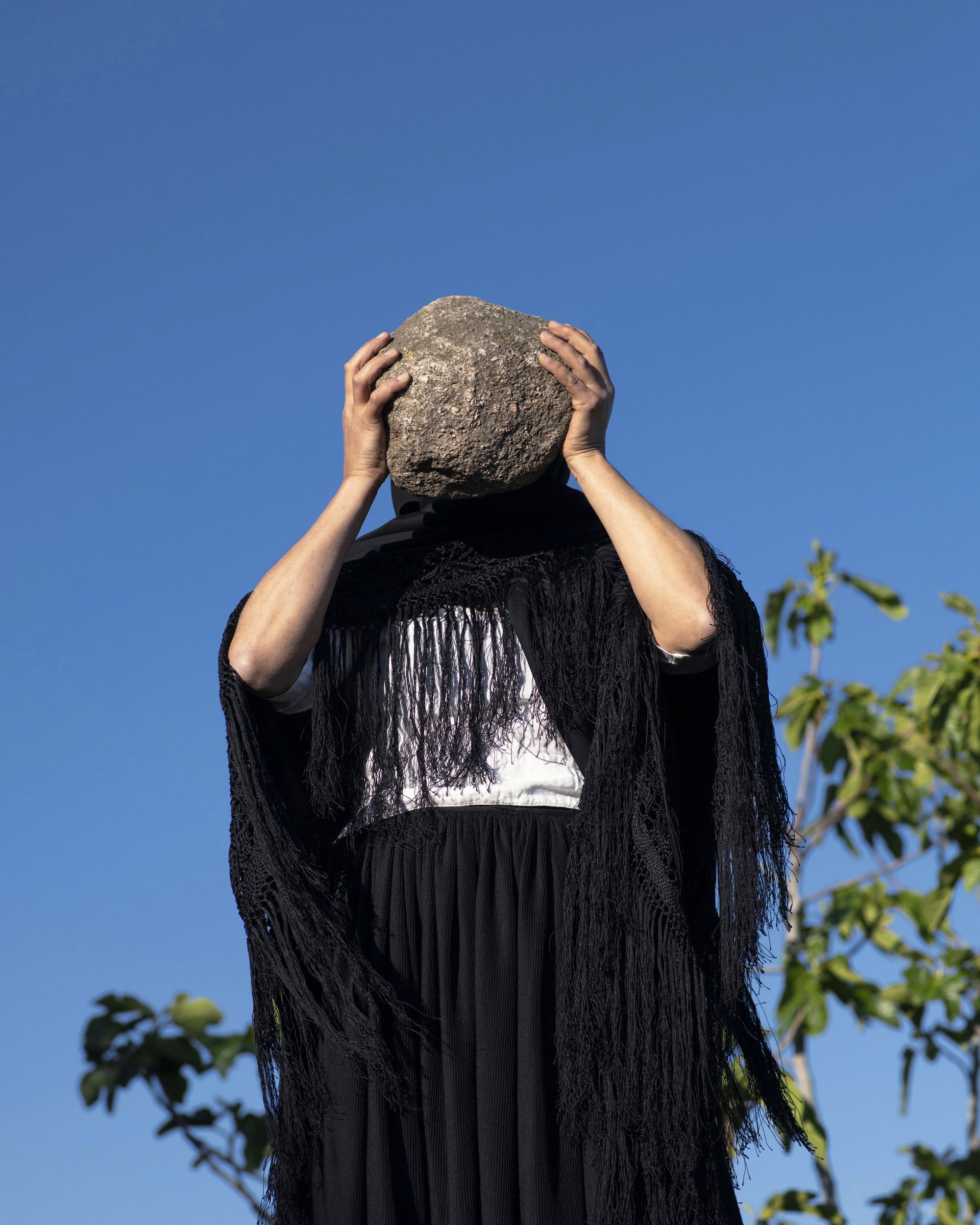
A figure in black stands against the Sardinian sky, arms raised, stone gripped in both hands. Actress Vittoria Marras is reenacting the 1868 uprising led by Paska Zau, a 60-year-old peasant woman who fought the sale of the island’s last communal lands. The scene captures Nicola Lo Calzo’s entire project: seizing the moment when dominated bodies rise up against erasure.
Born in Turin in 1979, the photographer has spent the past fifteen years on Cham/Kam, a vast documentary project tracing memories of the slave trade and colonial slavery from Benin to Guadeloupe, Haiti to Cuba. “What interests me is the beauty created in the face of that violence,” he told Blind in 2019. “It’s the humanity generated in opposition to that dehumanization.”
A teacher-researcher at the Ecole nationale supérieure d’arts in Paris-Cergy, Lo Calzo defended his PhD thesis Una fotografia queer e cimarrona in June 2025—a work refusing any separation between art and knowledge. “Tragedia” forms the final chapter of this long investigation. “Brigantinas,” while extending his research on subalternity, stands apart from the Cham/Kam project and explores a distinct territory: Sardinia. Both projects, however, focus on islands geographically distant but bound by a shared condition: peripheral territories where cultural resistance and extractivist violence have clashed for centuries.
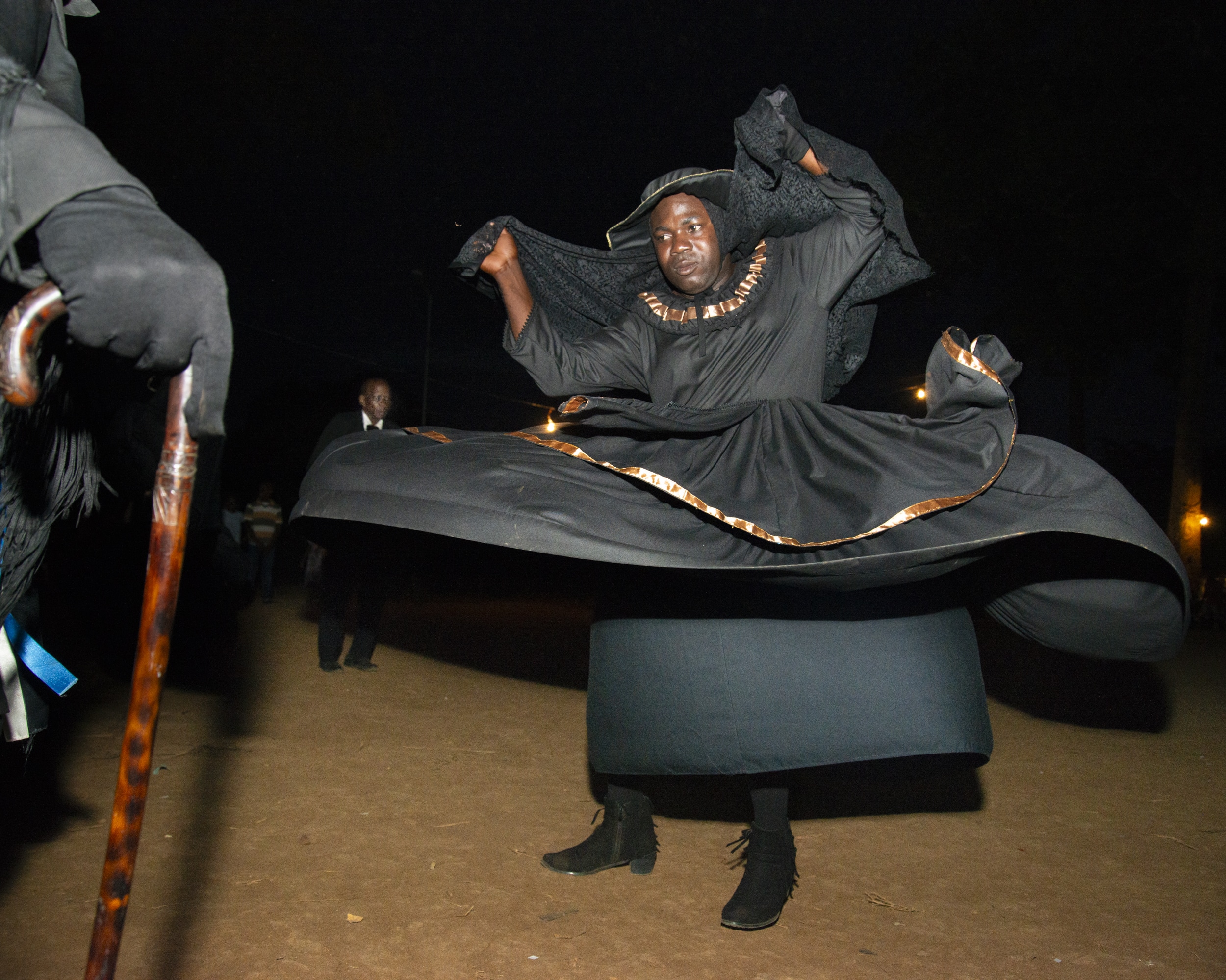
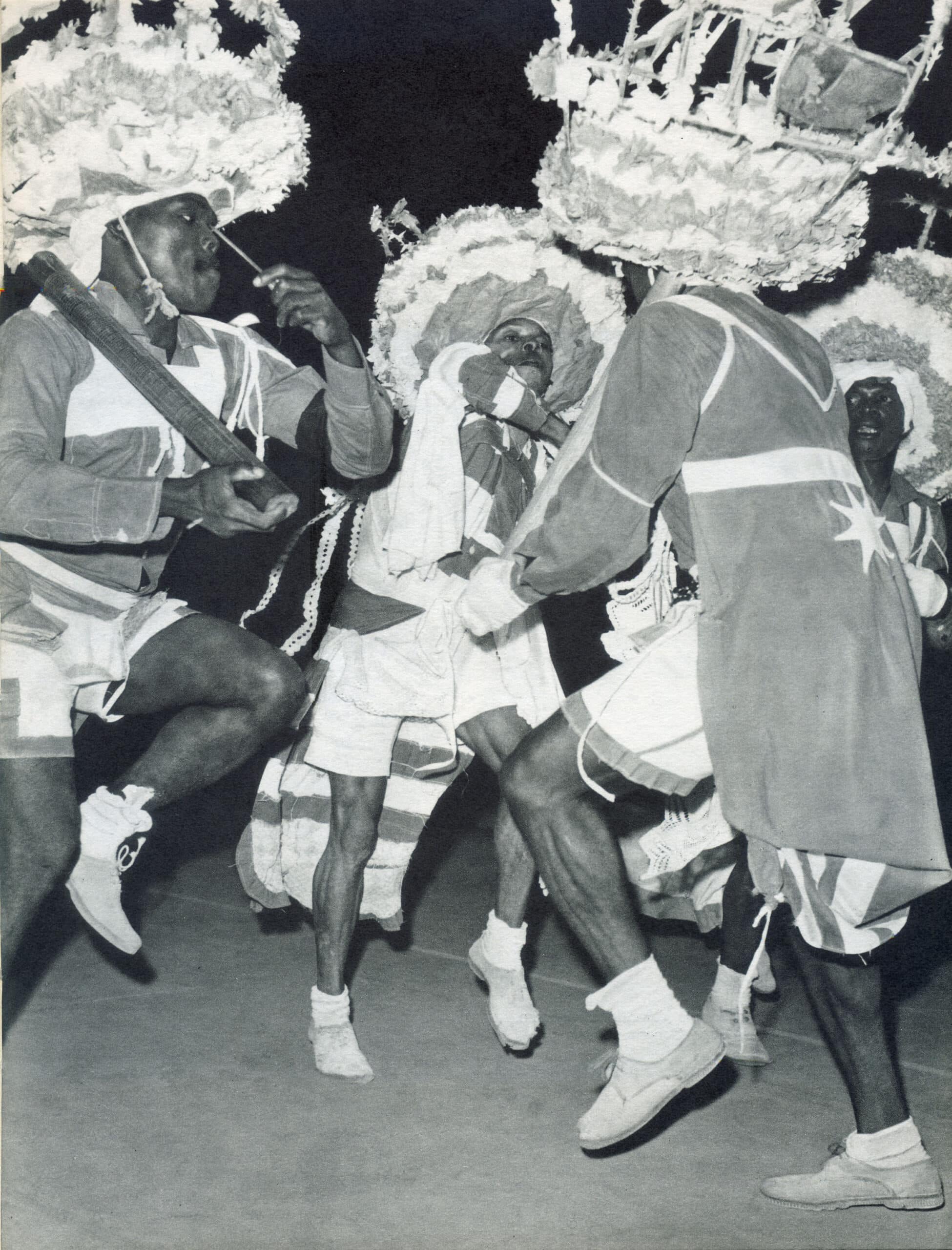
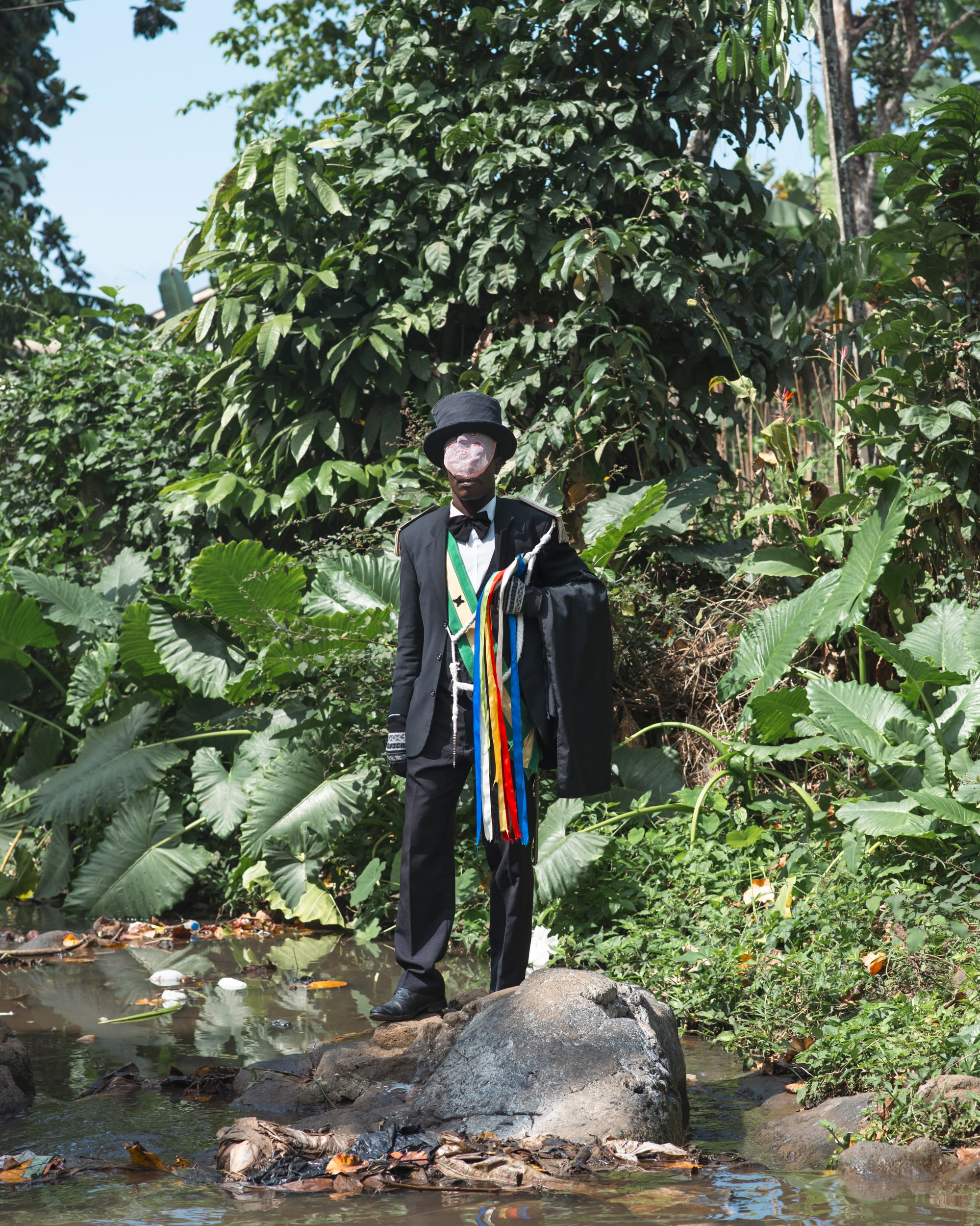
The history is brutal and worth recalling. Portuguese colonists arrived in São Tomé in 1471, establishing a plantation economy built on racial labor hierarchy. They brought Iberian and Christian theater with them. The enslaved populations soon appropriated it, turning it against their masters. Tchiloli radically subverts The Tragedy of the Marquis of Mantua, a 16th-century Iberian text: white-clad figures now move beneath the equatorial canopy around a coffin embodying the murdered soul.
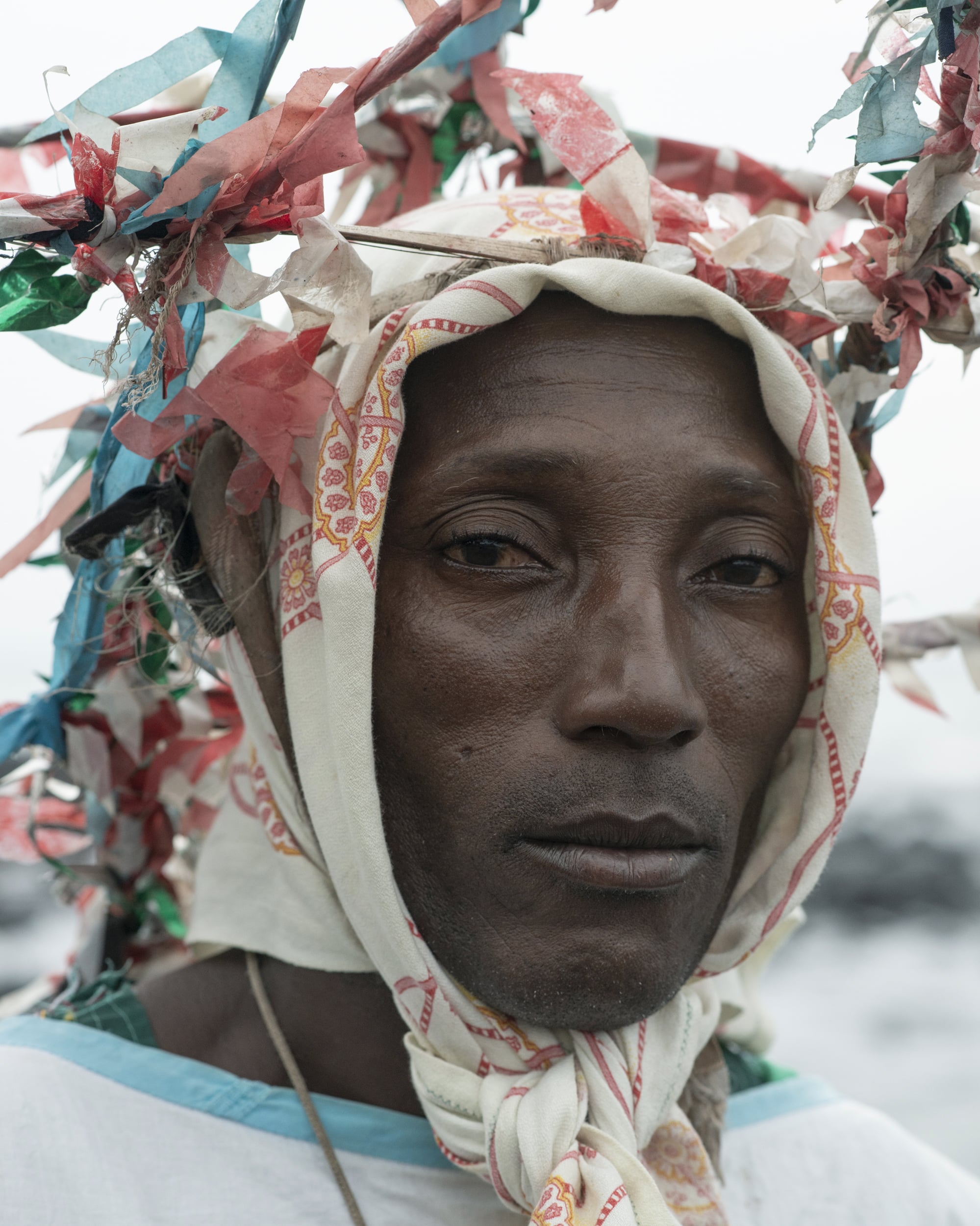
On the archipelago’s beaches, black silhouettes process toward the ocean. The danço congo summons Bantu rhythms and memories of the Kongo kingdom. “Every week, the art of tragédia reenacts present and past power relations,” Lo Calzo writes in the book’s prologue. “Through this tradition, we bring back to life the bond of our community’s memory, power struggles and our desire for justice,” states Simé, a fisherman and captain of Tragedia Danço Congo Masculino Vera Cruz. Founded by his father Roberto da Cruz Soares in 1950, it may be the island’s oldest troupe.
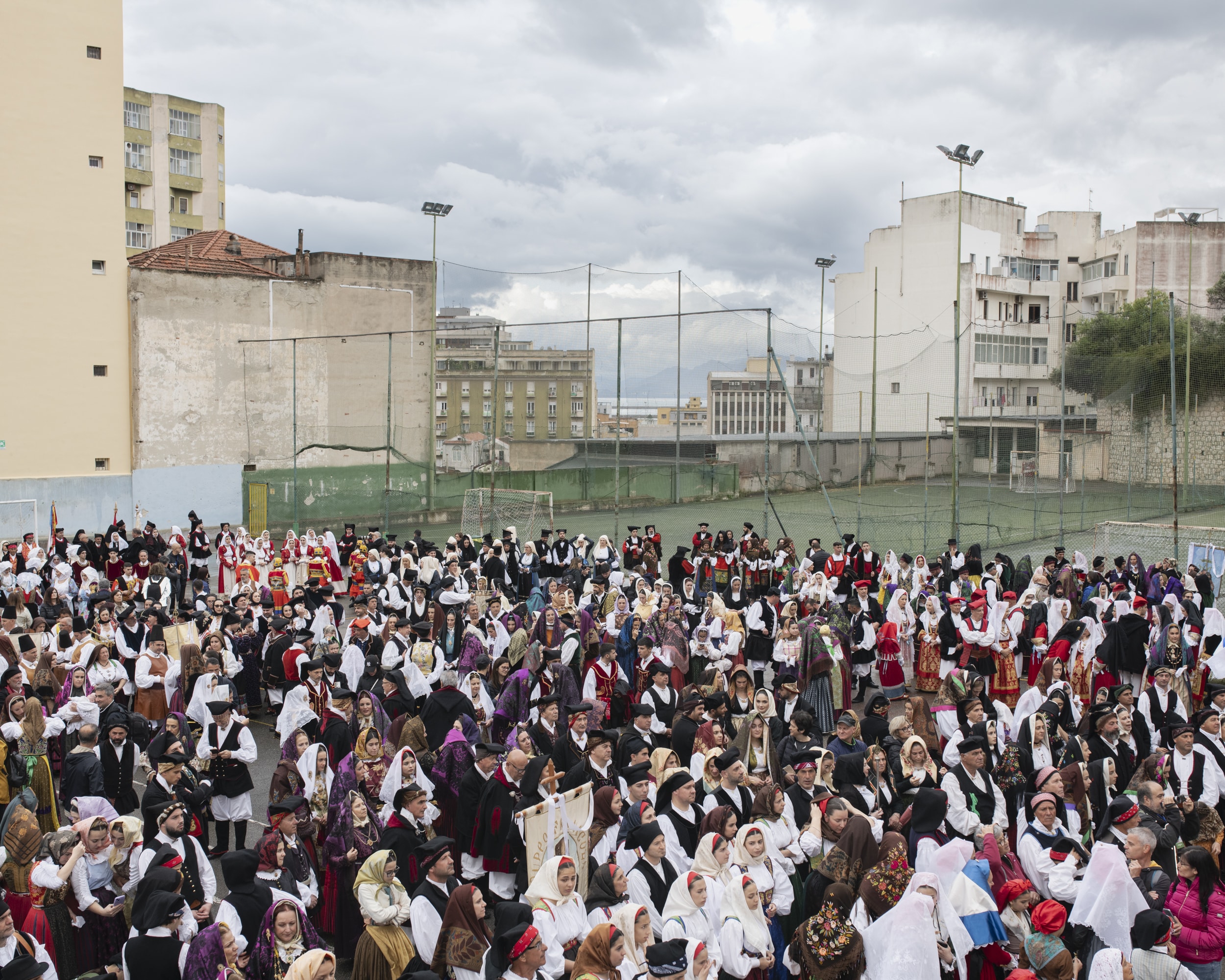
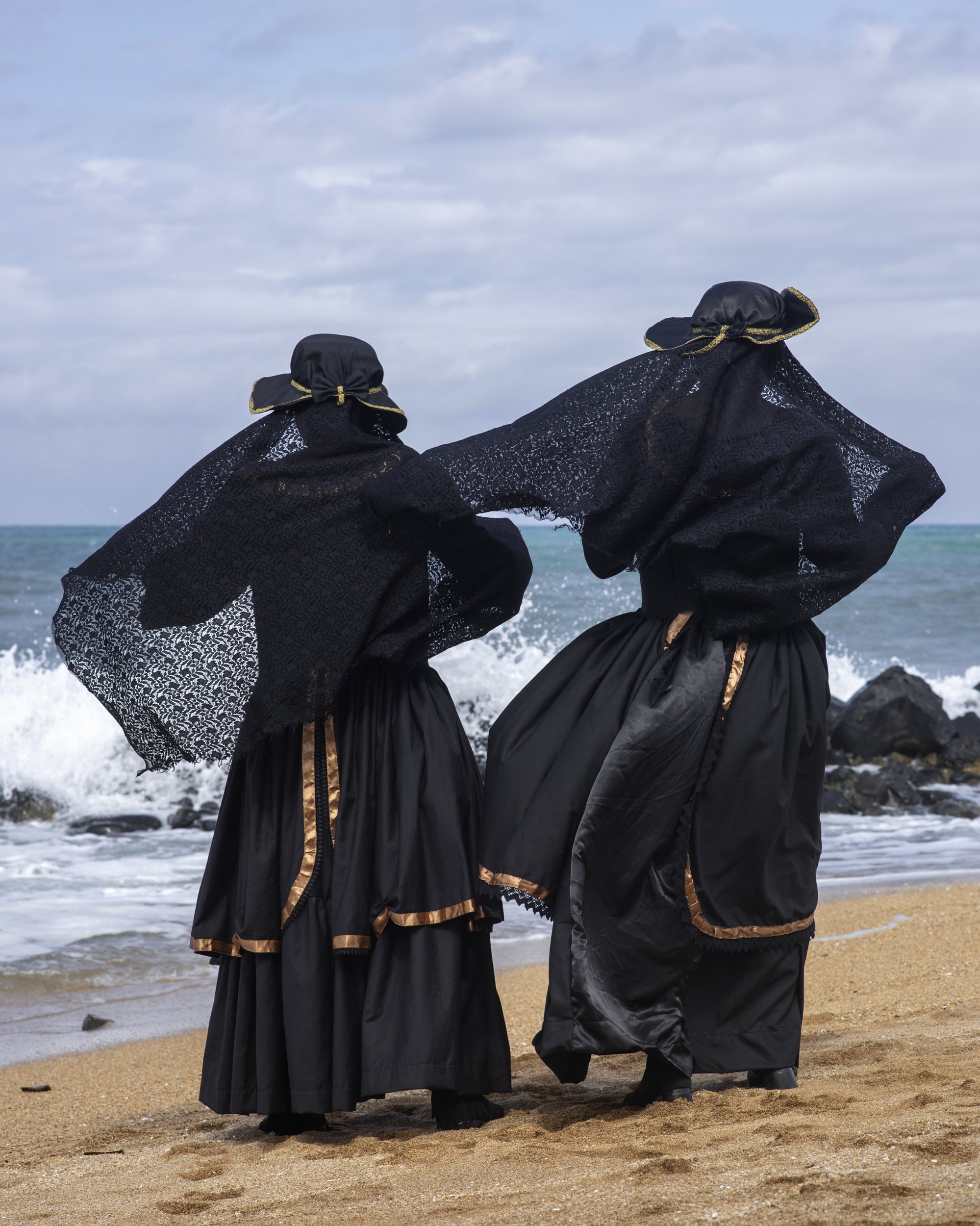
Far away, in Sardinia, the Festa di Sant’Efisio displays ambivalence: young women wear embroidered costumes, their bodies caught between identity affirmation and tourist spectacle.
The archive strikes back
In both archipelagos, the archive is a battlefield. The roças system—agrarian penitentiaries where rationalized terror reigned—still scars the São Toméan landscape. Ruins of a colonial plantation emerge on Fernão Dias Beach, an old world today devoured by vegetation. But let’s remember that the 1953 Batepá massacre killed several hundred inhabitants.
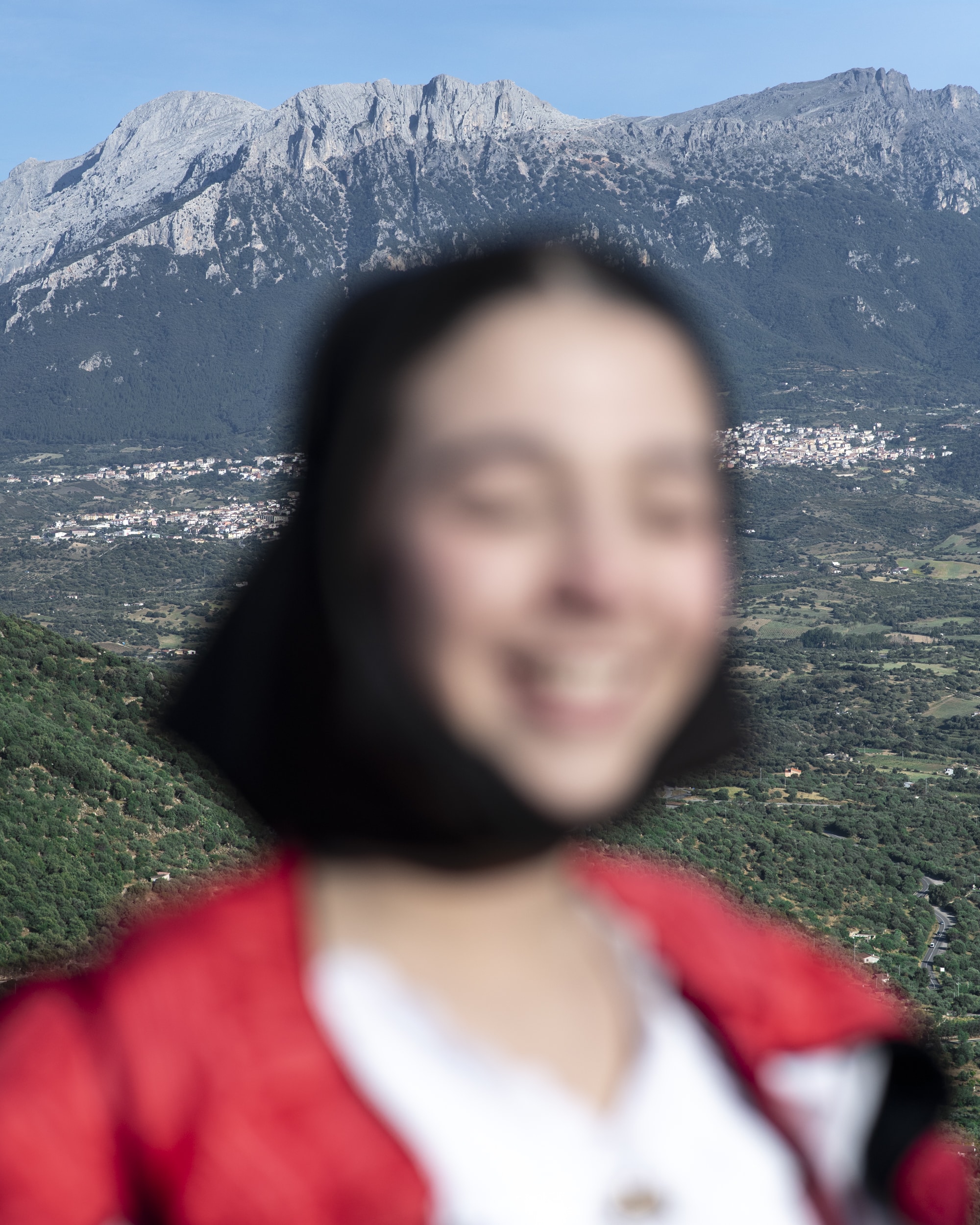
In Sardinia, Lo Calzo excavates something darker from Nuoro’s State Archives: anthropometric photographs of peasant women, filed and condemned. Frozen faces, frontal gazes, assigned by the state to one identity alone—criminal brigantesse. “Wasn’t exhibiting these photographs for the first time risking prolonging the initial violence?” he asked himself when he discovered the images with curators Elisa Medde and Giangavino Pazzola.
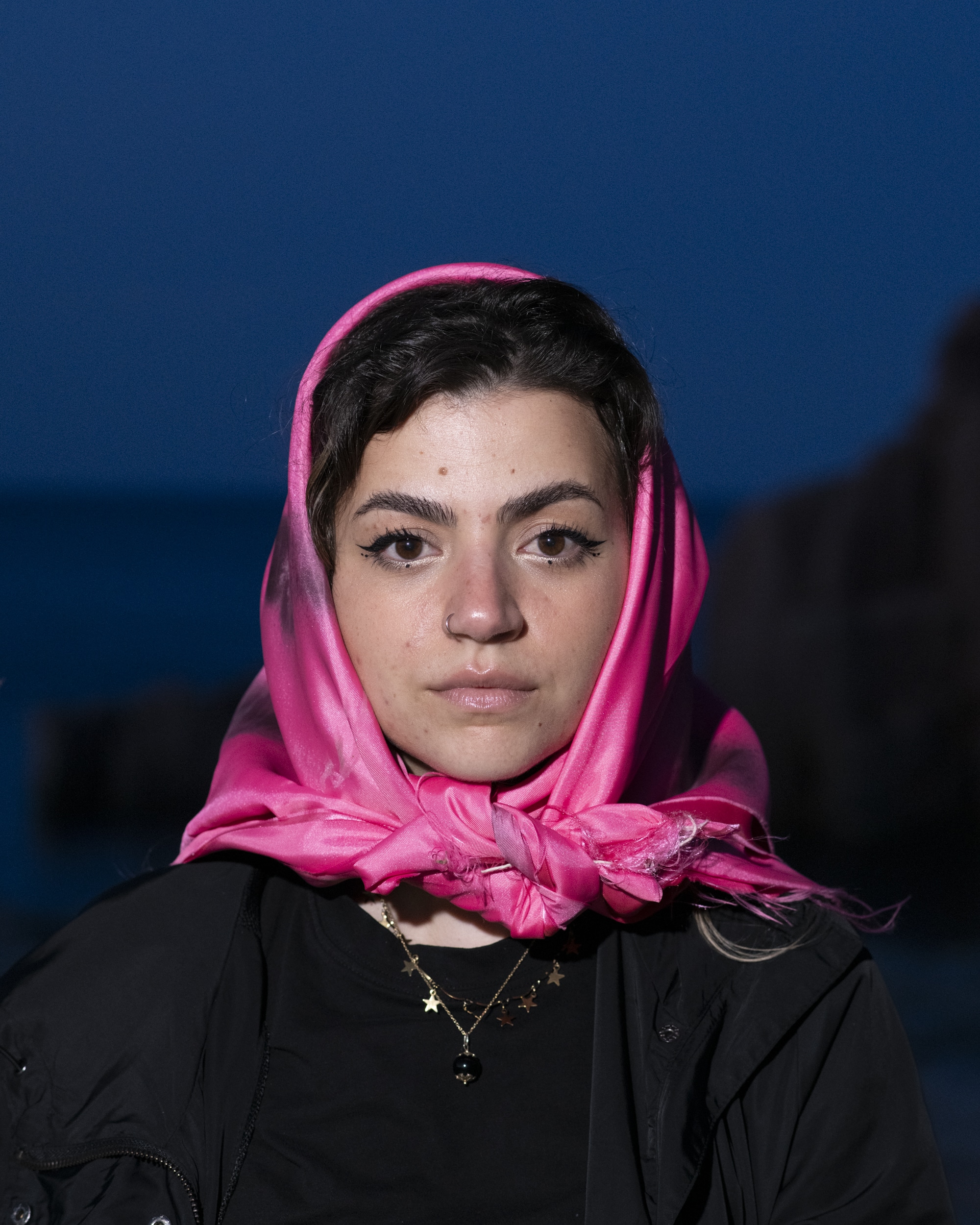
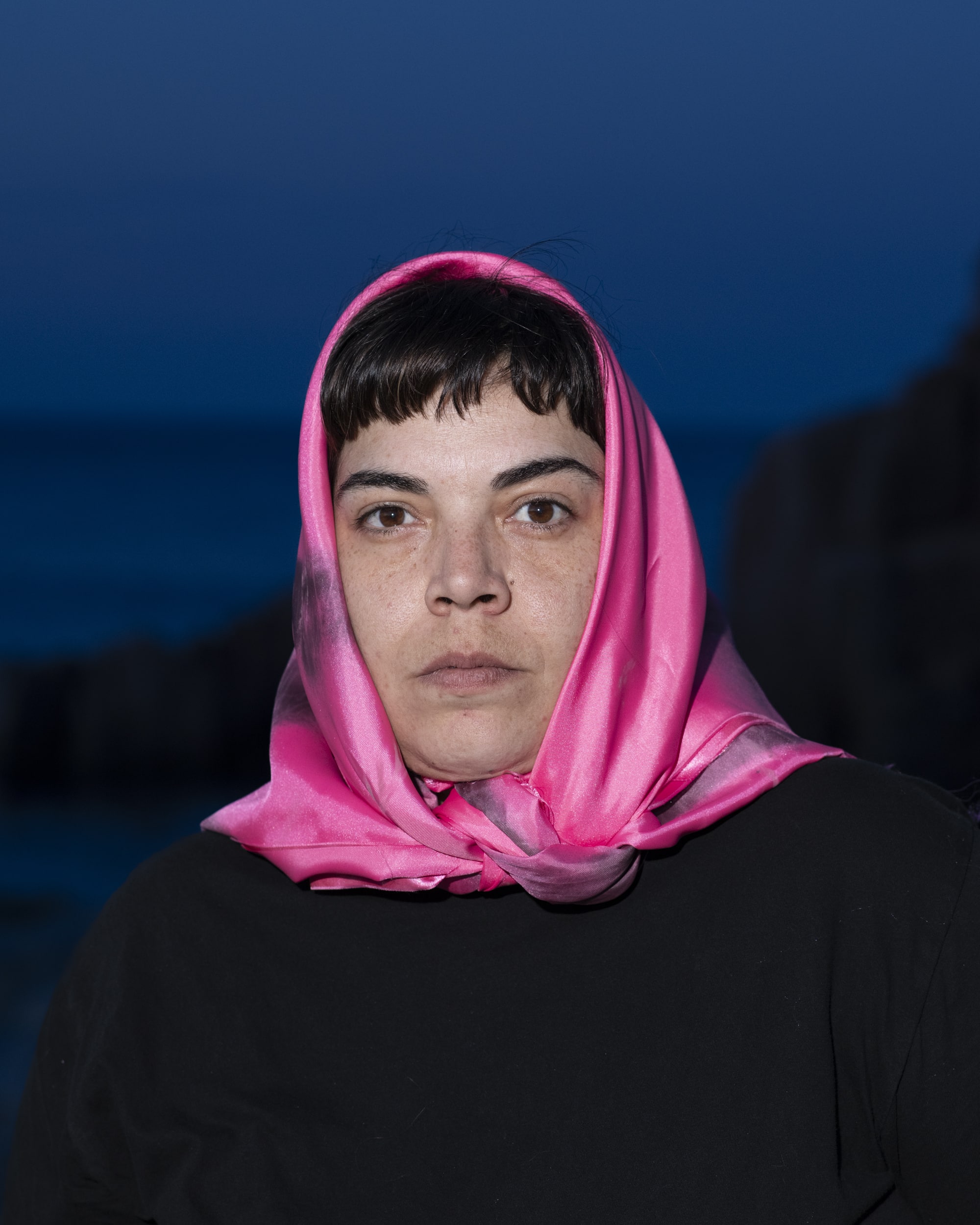
His response? Displacement. “Removing these images from the judicial files where they’d been locked away for over a hundred and thirty years, bringing them closer to contemporary portraits of Sardinian women—that’s a gesture of disorientation and re-signification,” he tells Blind. The police shots now sit beside portraits of transfeminist activists from the Bruxas Ogliastrinas collective in the book. A woman in a pink headscarf meets the camera’s gaze. She’s an heir, a century later, to bodies that power keeps trying to reduce. “They’re no longer proof of state control, but images opening a space of memory, resistance, and continuity.”
Tutelary figures thread through both books. Brigantinas opens with Romano Ruju’s verse: “It was my son. Yesterday I learned of his struggle and his solitude.” Eduardo Malé’s watercolors, Alda do Espírito Santo’s poems, Damarice Amao’s essay “São Tomé-et-Príncipe, the impossible postcard”—together they compose a polyphony in Tragédia. From Pratobello’s 1969 anti-NATO revolt to 2019’s milk uprising, from Sardinian insurrections to São Toméan theater’s daily resistance, both books weave past and present disobedience into one lineage.
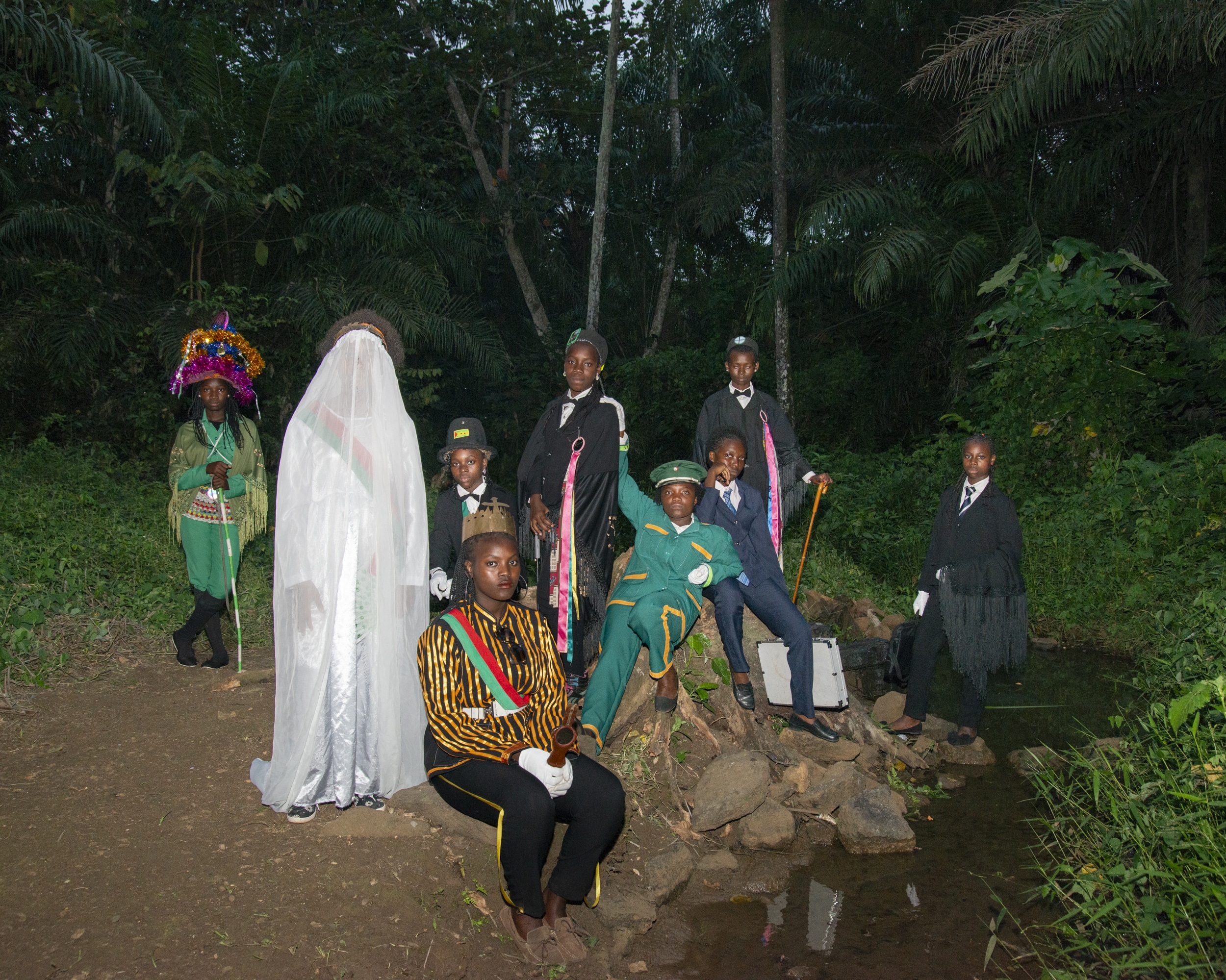
Queer experience runs underground through everything. Drawing from his own life, Lo Calzo builds a reflection on non-conforming identities and bodies. Criminalized female brigands, insurgent slaves, contemporary activists—all share the experience of assigned, surveilled, reduced bodies. This attention to margins extends to his technical choices.
Medium-format Zenza Bronica 6×6 for portraiture’s slow time. Digital for action’s quick reactions. Polaroid to anchor instants in fragile materiality. “Combining film, digital, and Polaroid answers both logistical needs and aesthetic choices,” Lo Calzo explains. “This plurality lets me make different temporalities and image regimes coexist in one project, inscribing my work in an archipelagic perspective—following Edouard Glissant’s thinking.”
Designer and artistic director Giulia Boccarossa translated this vision into Brigantinas’s layout, where criminal archives, ethnographic costumes, and militant portraits dialogue without hierarchy.
Invisible gestures
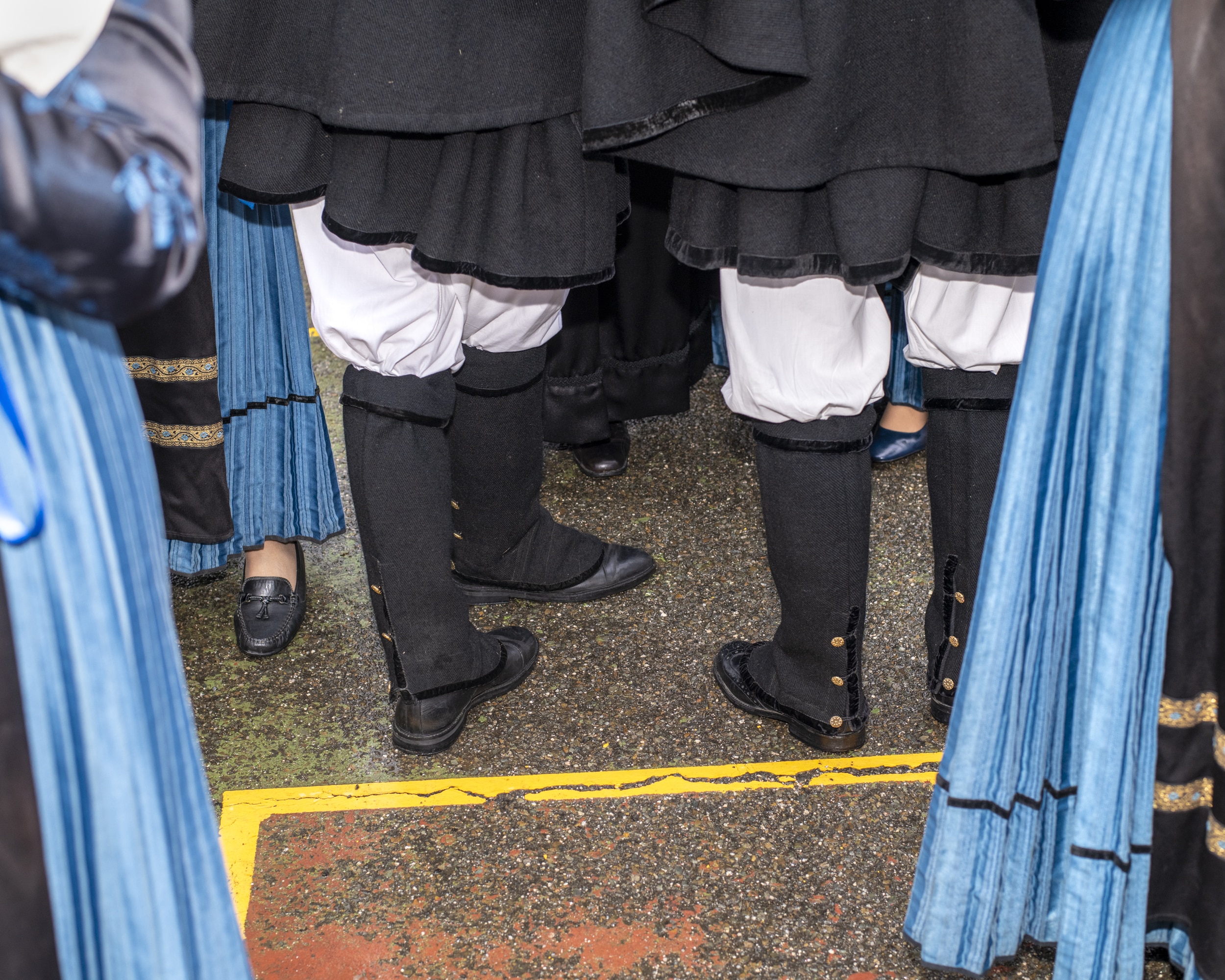
The body sits at the work’s center, but what interests Lo Calzo most are “the liminal moments when the body prepares, trains, heals, dresses.” He doesn’t chase performance’s ecstasy but what precedes and enables it. “These care moments let us grasp the complicity and entire social dimension of these practices,” he says.
Bodies in movement often appear frozen, seized by flash, hieratic—as if the image arrests performance energy to reveal otherwise invisible details. “So I’m not trying to capture only trance intensity, but the invisible gestures making performance possible, revealing the community supporting it.”
Nicola Lo Calzo defines himself as “a photographer who does research,” where “the main interest lies in photography as a language in its own right.” But the boundary between performance and documentation stays porous. “How to evoke this memory without staging?” he wonders. The question, never closed, grounds an ethics of long time. “This project can’t be done without self-questioning. That’s fundamental.”
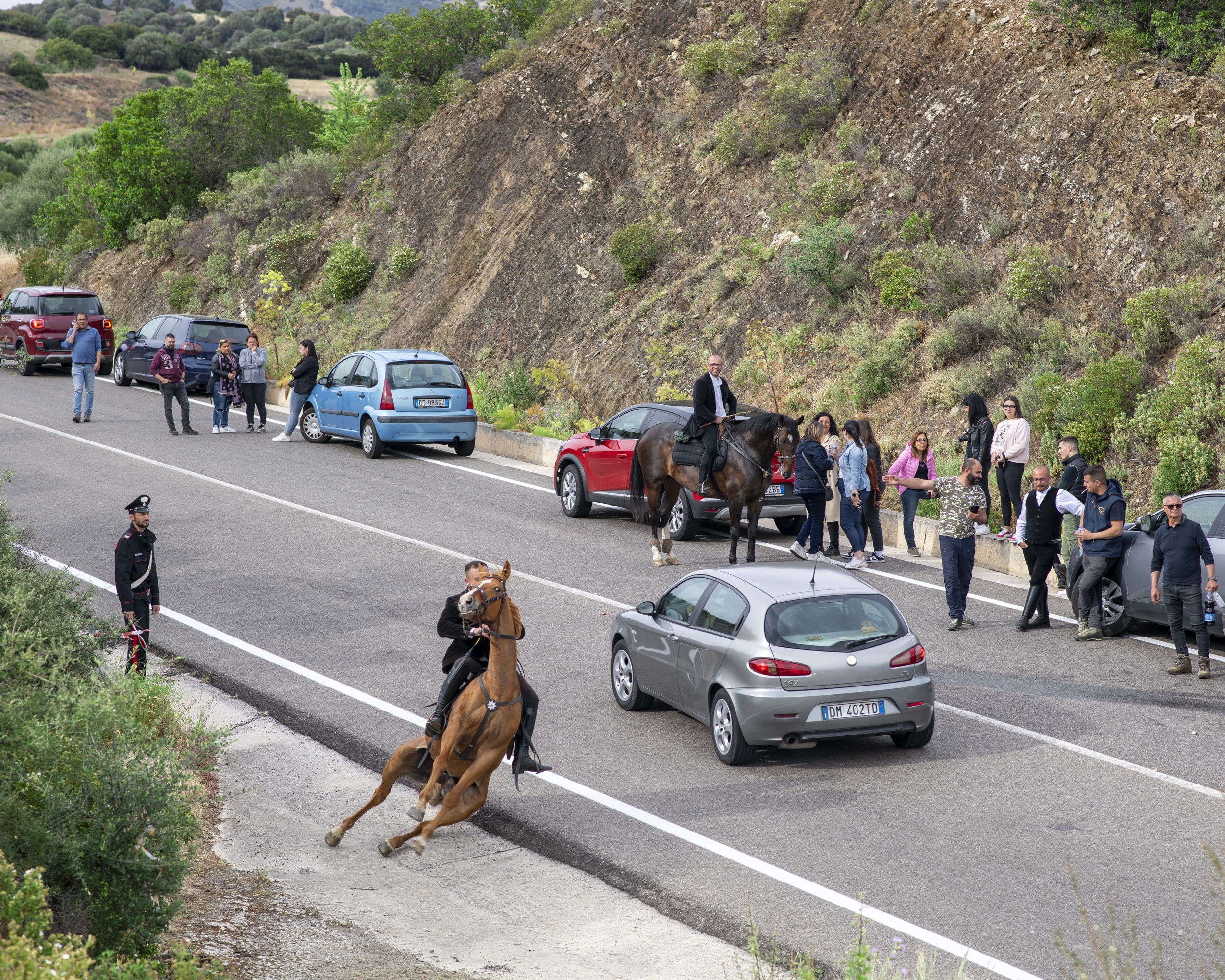
Self-criticism isn’t posture for him—it’s the primary condition. Communities share their memory, suffering, the beauty they’ve created. You must be worthy of that gift. “Ethics, which I define as building a relational, affective, responsible space with photographed people and field actors—it orients and shapes my aesthetic choices, my vision, and ultimately the images themselves,” he tells Blind.
By returning narrative control to São Toméan and Sardinian communities after its long confiscation, Nicola Lo Calzo doesn’t just inform or make beauty. His photography becomes a space of repair.
Nicola Lo Calzo’s Tragedia is published by L’Artiere and available for €60.
Nicola Lo Calzo’s Brigantinas is published by L’Artiere and available for €40.