Bamako-Coura, “New Bamako,” in the early 1930s. In the family carpentry workshop, a boy of about ten is assembling furniture, without imagining that he will become one of the greatest African photographers. Seydou Keïta was born around 1921 into a Malinké family firmly rooted in this neighborhood where the Niger River approached the old colonial city. His father Bâ Tièkòró and his uncle Tièmòkò were carpenters. Seydou did not go to school. By the age of ten, he was indeed making furniture on his own, and distinguished himself so well that he would one day win the July 14th engineering competition organized by the colonial administration. He became, according to his family, one of the best carpenters in the city.
In 1935, Uncle Tièmòkò returned from his annual pilgrimage to Senegal, where the Keïta family had a branch. In his luggage: a German Kodak Brownie, given as a parting gift. He gave it to Seydou. The fourteen-year-old was fascinated. He began photographing his family, his neighbors, then the entire neighborhood. He learned developing from Pierre Garnier, the son of a French merchant who spoke Bambara and Malinké, and honed his craft under Mountaga Dembélé, Mali’s first professional photographer. In 1948, Dembélé granted him a recognition that would decide everything: he lent him his darkroom.


Keïta opened his own studio that year, in front of the family home, facing the central prison. He set up a simple backdrop and pinned samples of his work on the walls. His practice was one of absolute economy: for financial reasons, he took only a single shot per session. It was not a constraint but a mastery. “The technique of photography is simple,” he later said, “but what really made the difference is that I always knew how to find the right position. I was never wrong. Head slightly turned, a serious face, the position of the hands… I was capable of making someone look really good.” Clients did not pay on credit. No refunds either. They left with a minimum of three prints.
The studio quickly became a landmark of Bamako life. Villagers from afar passed through, travelers riding the Dakar-Niger railway, notables in grand boubous, young zazous in wide-lapelled suits. Seydou Keïta offered props: watches, pens, radios, plastic flowers, and eventually his own Vespa — one of the first in the neighborhood. One evening, a client arrived late with an electric torch. He wanted to be photographed with it: “This torch is fashionable right now, and I want my family to know I have it here in Mali! Besides, I’ve sprayed myself with a lot of perfume!” This was the everyday life of the studio. People came to Keïta’s to exist. To show themselves as modern, as Bamakois, and free.
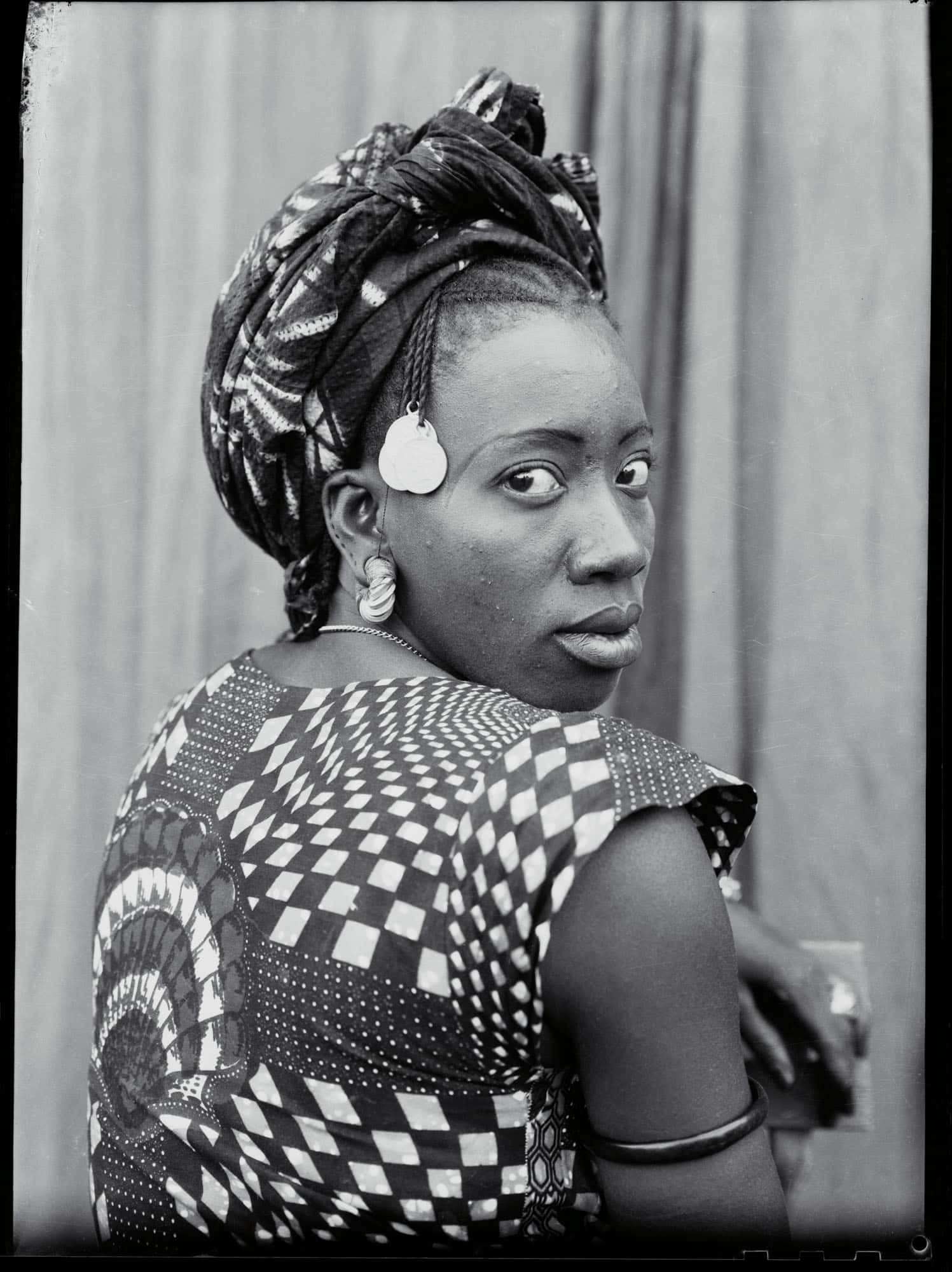
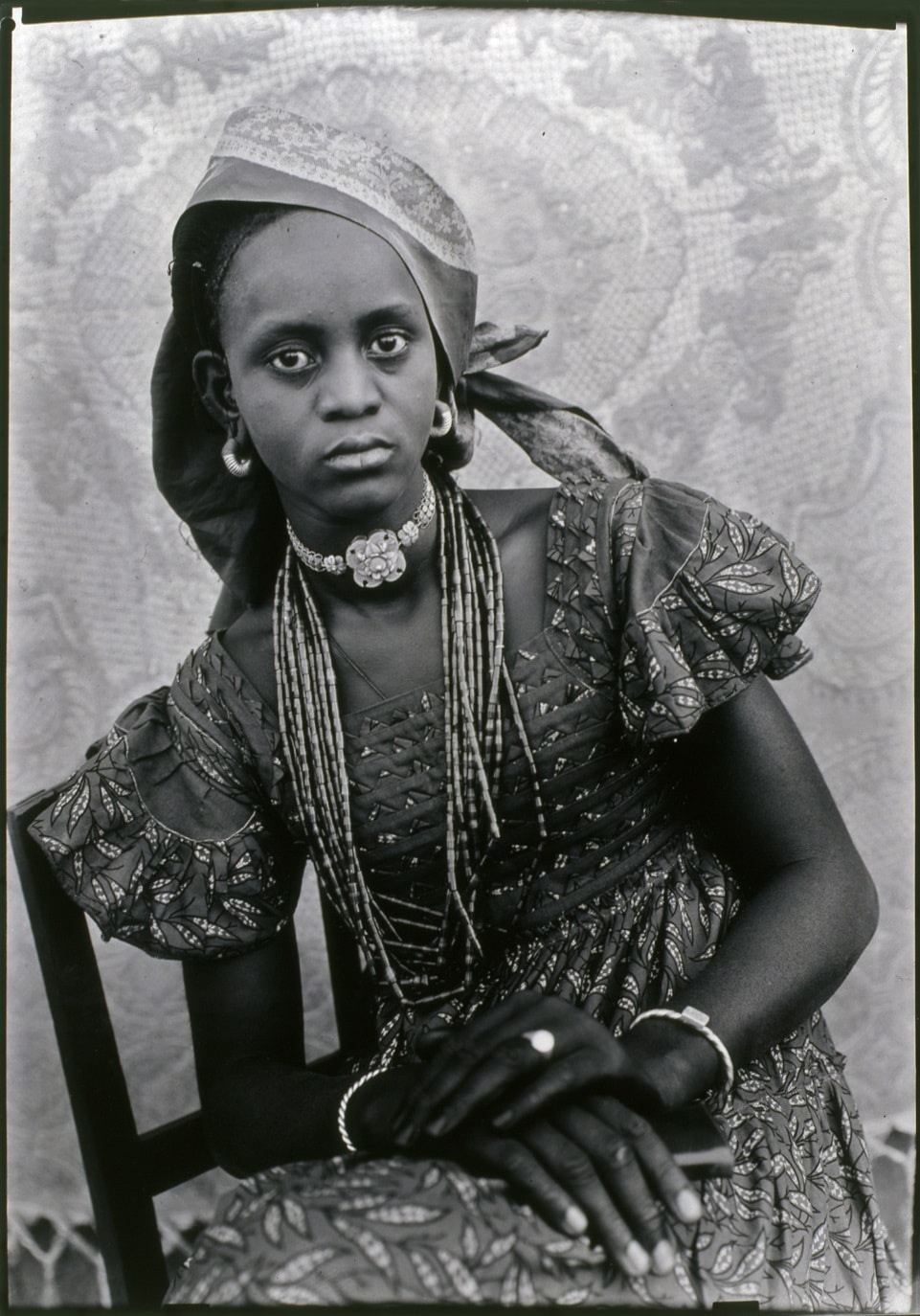
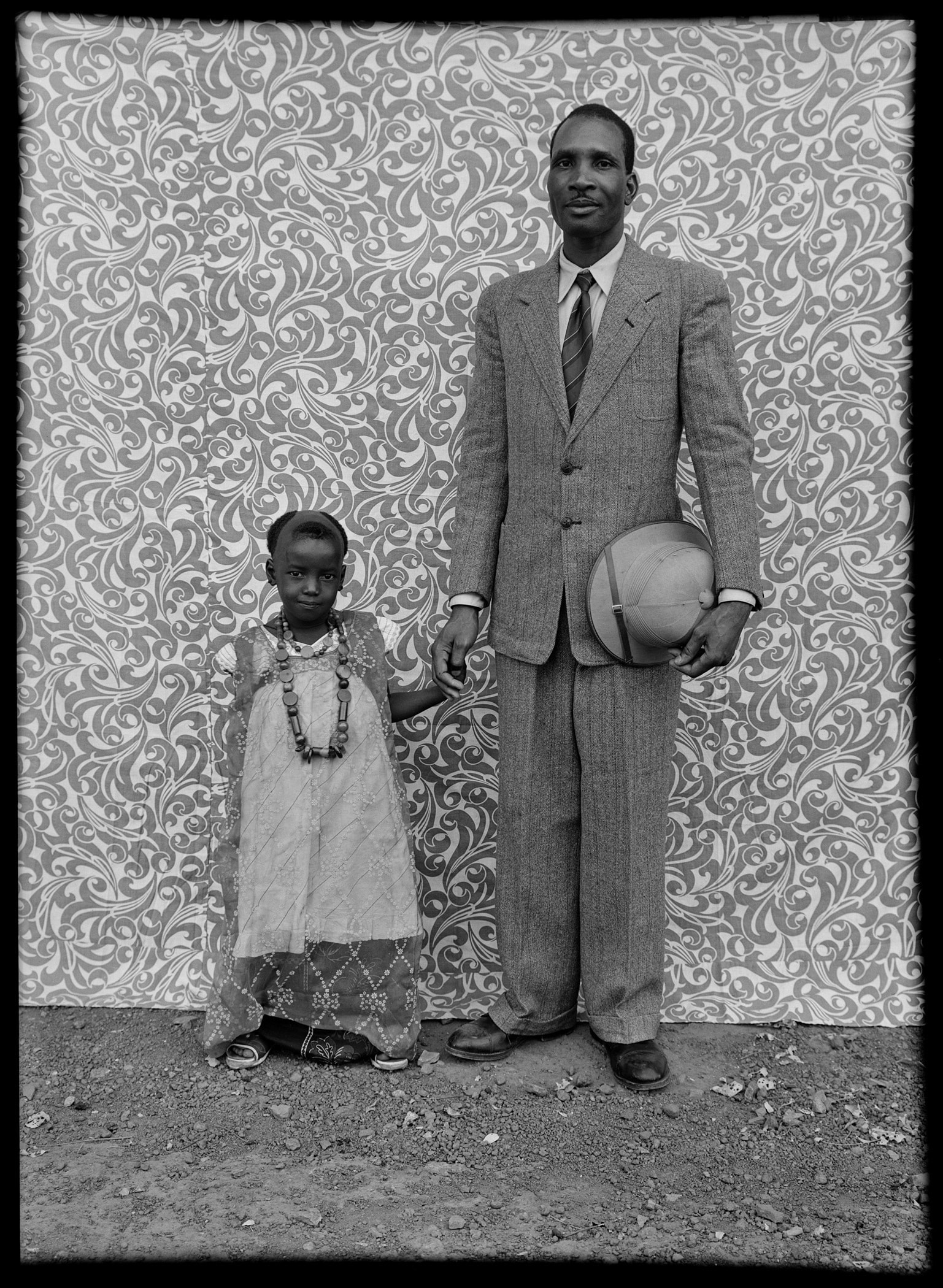
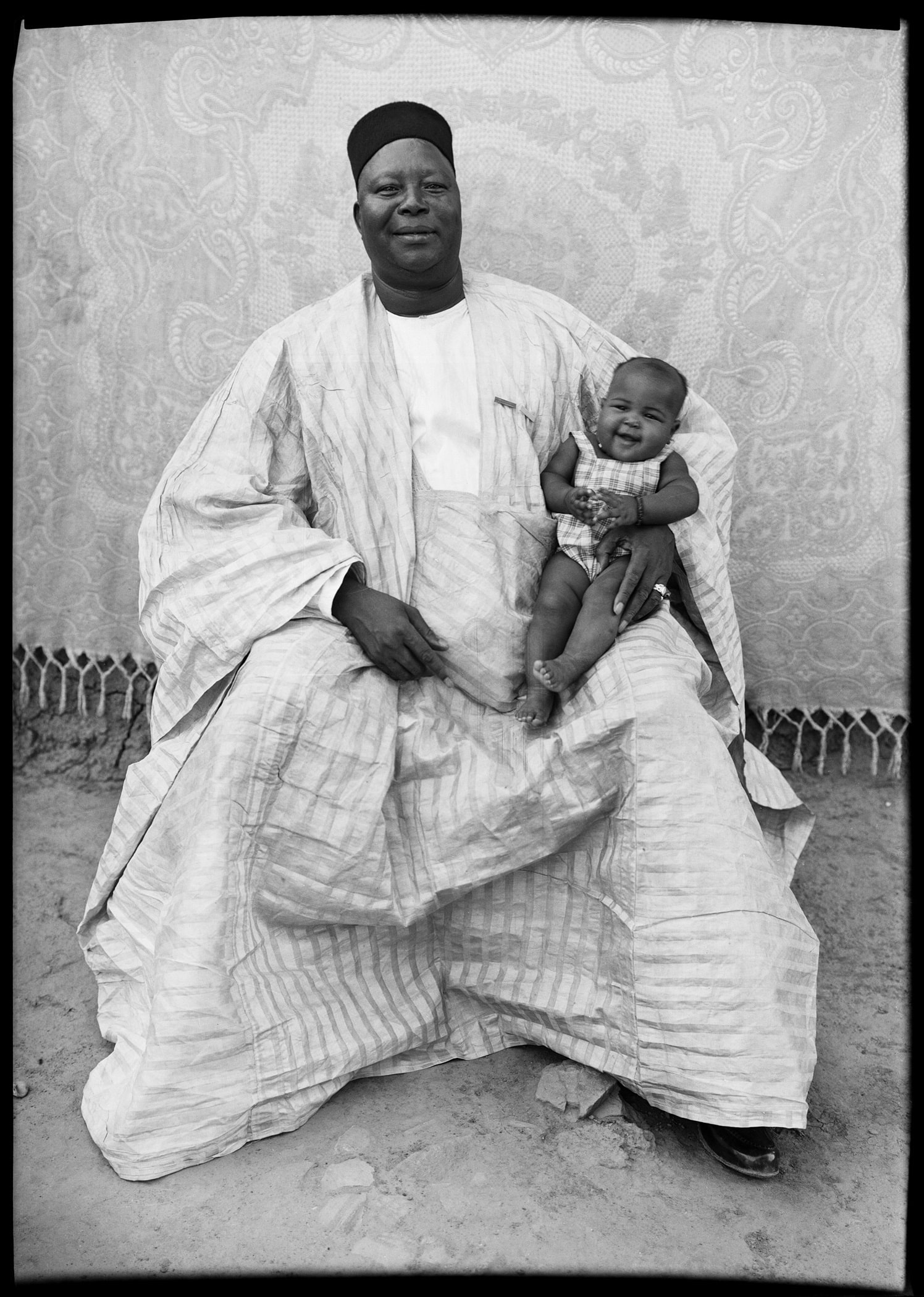
The photographer worked primarily in natural light — in the courtyard of the house, under the pure radiance of the Sahel. For artificial light, he had three lamps, which, according to one of his now-octogenarian clients, Madame Souncko Fofana, “amazed us, especially since there was no electricity here except at the Governor’s house and at the cinema.” His portraits of women were a high point. Keïta photographed them in ceremonial dress, adorned with gold jewelry, draped in hand-woven fabrics or bazin. The two Senegalese women who lived in the Wolof neighborhood, his brother Abdoulaye recalled, “had a habit of pestering Keïta every day to be photographed.”
The studio’s reputation quickly spread beyond Mali’s borders. Across West Africa, ambitious families sent their children to Bamako to be photographed. Each print bore the stamp “Photo SEYDOU KEÏTA”: a label, a guarantee of excellence. Keïta developed an immediately recognizable style — backdrops with geometric patterns, raking light that sculpted skin and fabric, poses co-constructed with his subjects. He knew how to sculpt a silhouette, to anticipate a desire.
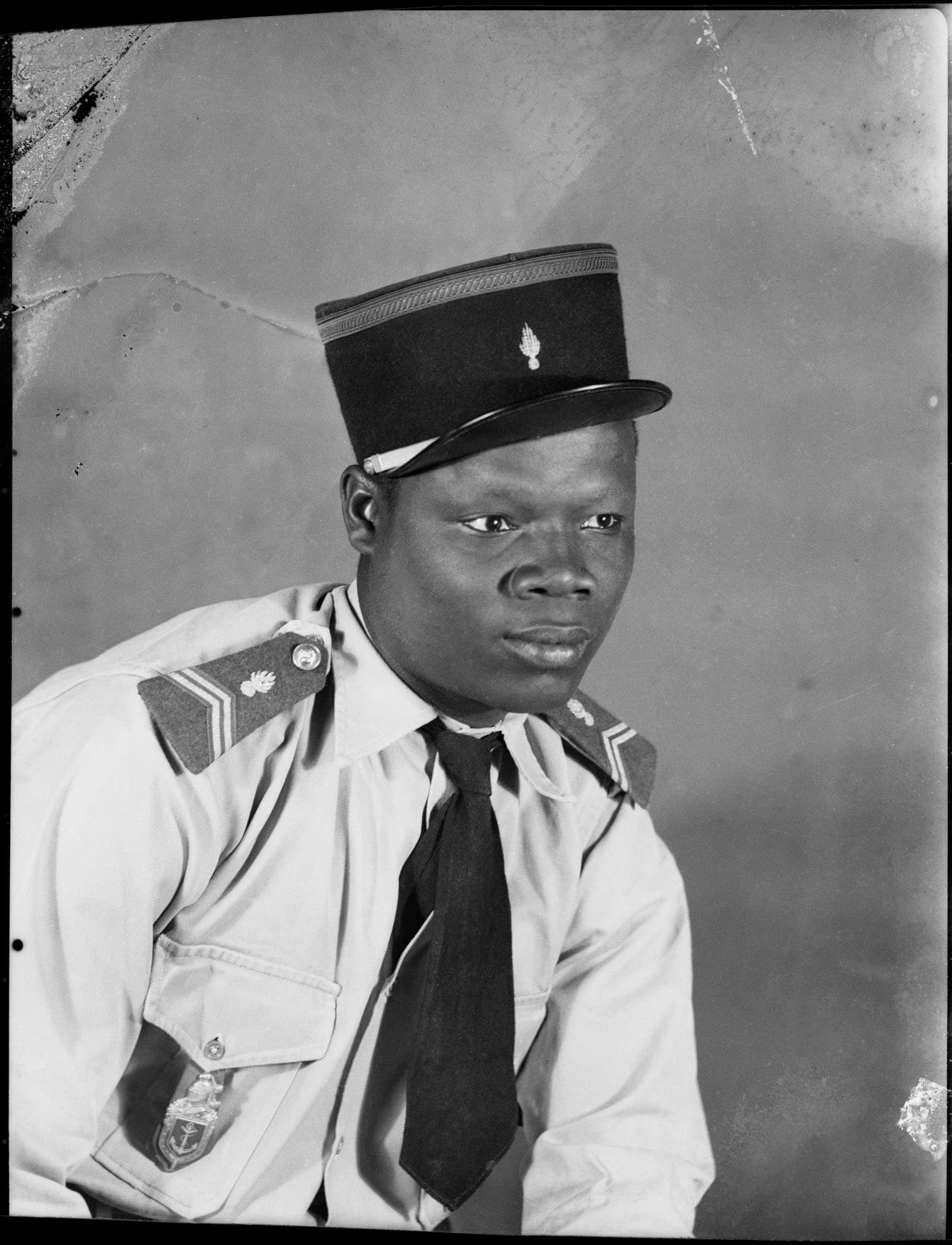
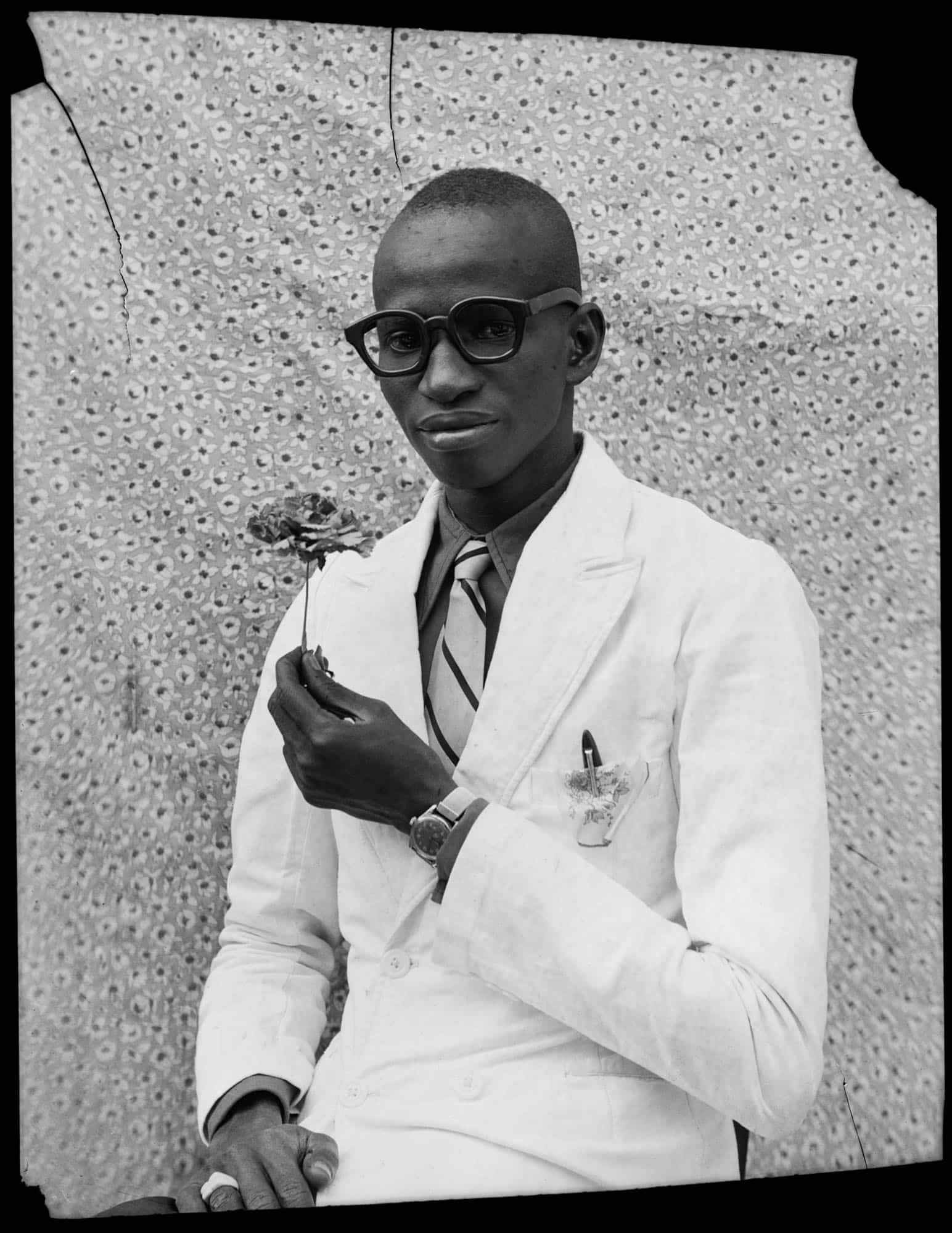
In 1962, everything stopped. The socialist Republic of independent Mali, under President Modibo Keïta, conscripted the photographer. He was forced to close his studio and become an official government photographer: state ceremonies, official portraits, and forensic work for increasingly repressive regimes. He endured. After the military coup of 1968, he finally obtained his retirement. He came home and opened the darkroom. “I couldn’t believe it. All the equipment, the cameras, the tripods, everything, except the enlarger and the three projectors — too heavy to carry — had been stolen,” he would recall. He reinvented himself repairing cameras and cars. The negatives, though, were there. Carefully stored in labeled boxes: full-length men, full-length women, busts, groups. Filed with a carpenter’s precision.
In May 1991, a New York exhibition revealed to the Western world an elegant couple in front of an arabesque hanging. The photograph was credited to an “unknown photographer, Bamako, Mali.” The curator Susan Vogel had purchased the negative during a research trip in 1975. Collector Jean Pigozzi and his curator André Magnin were intrigued. They flew to Bamako. With the help of photographer Malick Sidibé, they identified the author of the images. Magnin discovered the boxes of negatives — thousands of them — preserved in perfect order. He selected a portion for the Pigozzi collection.
In 1994, the Fondation Cartier presented Seydou Keïta’s first retrospective. For the first time, the photographer saw his images printed in large format. His reaction said it all: “You can’t imagine what it was like for me the first time I saw prints of my negatives in large format, spotless, clean and perfect. I knew then that my work was really, really good. The people in my pictures seem so alive, almost as if they were standing in front of me.” The exhibition landed like a bombshell. The world press seized on the phenomenon. Keïta became the defining figure of 20th-century African studio photography — a recognized peer of Irving Penn, August Sander, and Richard Avedon.

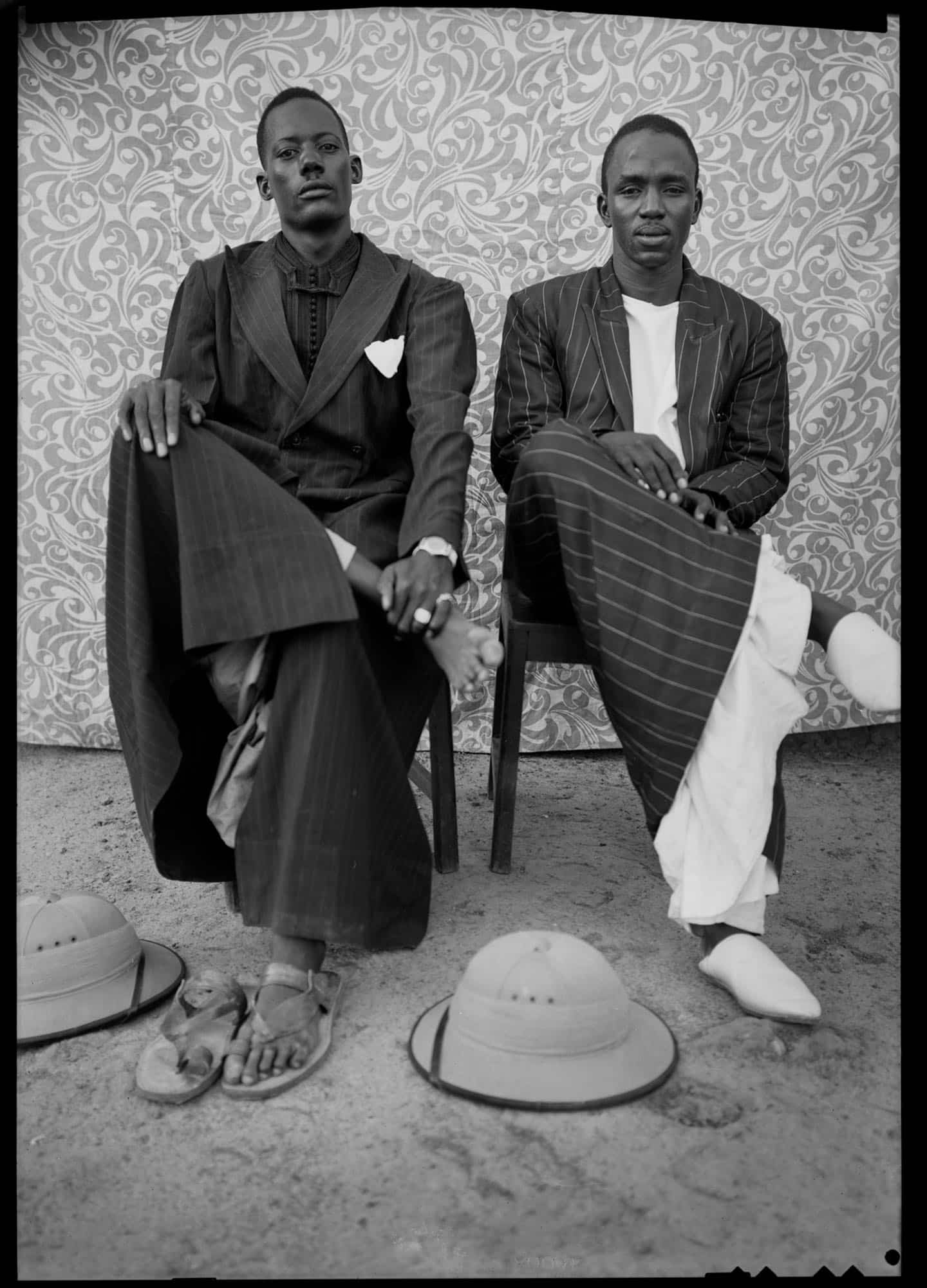
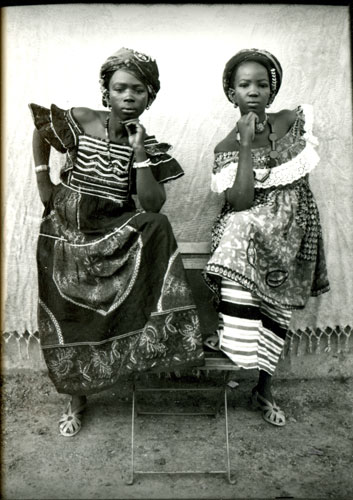
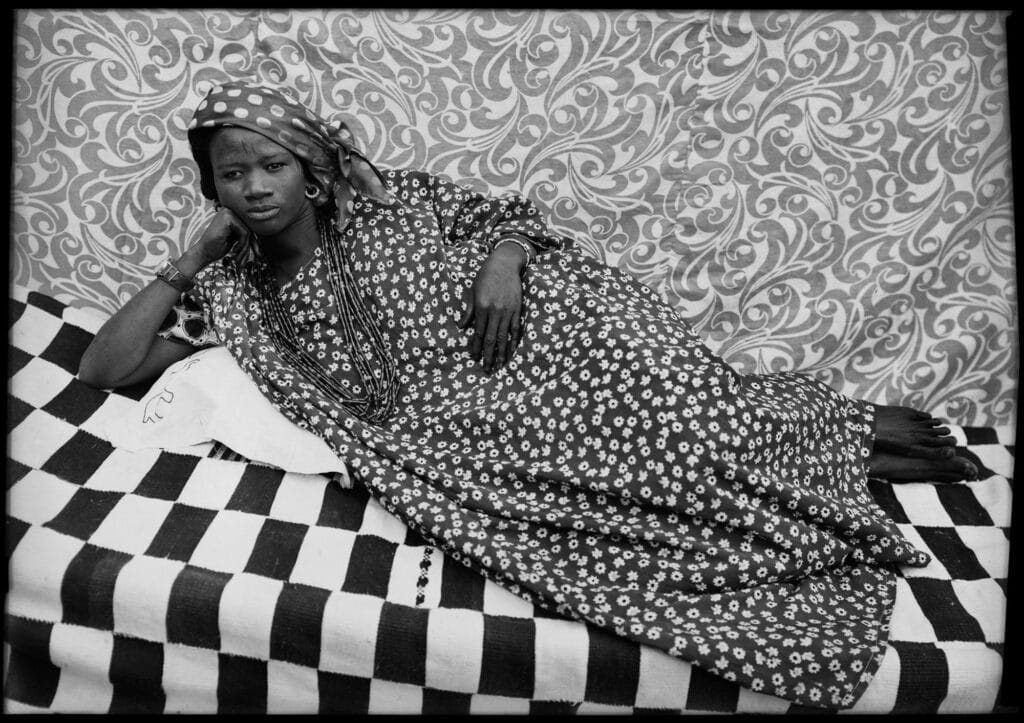
This belated fame was not without shadows. Seydou Keïta complained of having been exploited by European galleries that collected considerable sums reselling his work while leaving him a negligible share. Howard W. French, senior correspondent at The New York Times, met him in Bamako in 1997. He found him guarded at first — Keïta took him for a businessman. Once French clarified his intentions, the photographer opened up. He unspooled his life, long and eventful. Seydou Keïta died in Paris in 2001, having never truly resolved the question of recognition for his rights.It is this life that curator Catherine E. McKinley decided to tell in a new light, after years of research and numerous interviews with Keïta’s family. The exhibition “Seydou Keïta: A Tactile Lens”, on view at the Brooklyn Museum through May 17, 2026, presents over 280 works, including never-before-published negatives lent by the family, as well as textiles, jewelry, and personal objects visible in his portraits. For the first time, certain images are displayed on lightboxes. It is the largest presentation of his work ever organized in North America. “He had an extraordinary artist’s ability to render the tactile,” explains the curator. “We can visually ‘finger the grain’ of the sitter’s lives and better understand them beyond just their relationship to studio photography.”
“Seydou Keïta: A Tactile Lens”, is on view through May 17, 2026 at the Brooklyn Museum, Brooklyn, New York.